Sunday, January 11, 2015

The Latest From The Rag Blog-A Voice Of The Old New Left   


Click below to link to The Rag Blog  

Peter Paul Markin comment:

When we were young, meaning those of us who were militant leftist baby-boomers from the days that I now call the “Generation Of ‘68,” we would chuckle/gasp/shriek in horror when some Old Leftists tried to tell us a few of the ABCs of radical politics.(1968 being a watershed year for lots of things from Tet in Vietnam bringing home the reality of the lost war to the American bourgeois political upheavals that led to Chicago hell in the summer and the May events in Paris which showed the limits that a student-based vision of the "newer world" we sought.)

Those scorned old leftists, mainly old Stalinist Communist Party hangers-on who survived the 1950s red scare or moribund Trotskyist Socialist Workers Party members who survived the red scare and the Stalinists had come of political age in the 1930s and 1940s had nothing to tell us. Yes, we young stalwart in-your-face- rebels were going to re-invent the world we had not made and we needed no old fogies to put a damper on our efforts. See we were going to re-invent that world without the hurts and sorrows accumulated from millennia of previous struggles to push the rock up the hill of human progress.

Well, we fell significantly short of that aim, had that Promethean rock come speeding down over our heads the minute the American government felt the least bit threatened. (Chicago 1968, Kent State 1970 and for me personally May Day 1971 when we without anywhere near adequate forces or much of a strategy were going to shut down the government if it did not shut down the war stand as signposts to those failures.) Today I am still not sure whether in retrospect those scorned Old Leftists of old had anything going but all I know is we are now cast in somewhat the same light. We are now the Old New Leftists.
Problem is that unlike our 1960s generation, warts and all, there is no sizable younger crowd of young stalwart in-your-face-rebels to thumb their noses up at us. And there should be. That has not stopped many old radicals, many who have not succumbed to old age and hubris, from trying to be heard. And the place they have congregated, for better or worse, at least from what I can see is at this site.          

So I find this The Rag Blog website very useful to monitor for the latest in what is happening with past tense radical activists and activities. Anybody, with some kind of name, and who is still around from the 1960s has found a home here. The remembrances and recollections are helpful for today’s activists. Strangely the politics are almost non-existent, as least any that  would help today, except to kind of retroactively “bless” those old-time New Left politics that did nothing (well, almost nothing) but get us on the losing end of the class (and cultural) wars of the  last forty plus years. Still this is a must read blog for today’s young left-wing militants.

***************
A Frank Jackman comment (2014):

Recently I wrote a short piece in a left-wing political blog centered on the need for revolutionary intellectuals to take their rightful place on the active left, on the people’s side, and to stop sitting on the academic sidelines (or wherever they were hiding out). One of the reasons for that piece was that in the aftermath of the demise of the Occupy movement a few years back, the continuing failed efforts to stop the incessant American war machine, and the lack of serious and righteous response to the beating that the working classes and oppressed in this country (and internationally) have taken from the ruling class and their hangers-on a certain stock-taking was in order. A stock-taking at first centered on those young radical and revolutionaries that I had run into in the various campsites and had talked to on the flash mob marches who were disoriented and discouraged when their utopian dreams went up in smoke without a murmur of regret from the masses.

I noted there, and the point is germane here as I try to place the remnant of old New Left represented by the contributors in The Rag Blog in perspective, that is almost a political truism that each generation will find its own ways to cope with the political tasks that confront it. The international working class movement is no exception in that regard. Moreover, although the general outlines of Marxist theory which I mentioned in the article still holds true such tasks as the updating of the theory of imperialism to take into account the qualitative leap in its globalization is necessary (as is, as an adjunct to that, the significance of the gigantic increases in the size of the ‘third world’ proletariat). Also in need of freshening up is work on the contours of revolutionary political organization in the age of high speed communications, the increased weight that non-working-class specific questions play in world politics (the national question which if anything has had a dramatic uptick since the demise of the Soviet Union), religion (the almost universal trend for the extremes of religious expression to rear their ugly heads which needs to be combated), special racial and gender oppressions, and various other tasks that earlier generations had taken for granted or had not needed to consider. All this moreover has to be done in a political environment that sees Marxism, communism, even garden variety reform socialism as failed experiments. To address all the foregoing issues is where my call for a new crop of revolutionary intellectuals comes from.

That said I have also made a note that some of theories from the old days, now being re-tread by some of the old New Left denizens of this blog as if nothing had changed since the 1960s,  made me think that making the revolution the old-fashioned Marxist working class way is the beginning of wisdom. In the interest of full disclosure though back in the day I was as likely as anybody to adhere to all kinds of new theories (mainly because the old theories being old must be irrelevant, a notion that was widespread then) but life, political life, itself has already made its judgments on the worth of those theories for pulling humankind ahead. The class struggle exists, although in a very one-sided manner right now, one-sided on their side not ours, and any theory, any plan worth its salt, worth the righteous oppressed rising up against it should reflect that and at its core the teachings of Marx and his progeny still make sense.   
A Markin disclaimer:

I place some material in this space which I believe may be of interest to the radical public that I do not necessarily agree with or support. One of the worst aspects of the old New Left back in the 1970s as many turned to Marxism after about fifty other theories did not work out (mainly centered on some student-based movements that were somehow to bring down the beast without a struggle for state power) was replicating the worst of the old Old Left and freezing out political debate with other opponents on the Left to try to clarify the pressing issues of the day. That freezing out , more times than I care to mention including my own behavior a few times, included physical exclusion and intimidation. I have since come to believe that the fight around programs and politics is what makes us different, and more interesting. The mix of ideas, personalities and programs, will sort themselves out in the furnace of the revolution as they have done in the past. 

Off-hand, as I have mentioned before, I think it would be easier, infinitely easier, to fight for the socialist revolution straight up than some of the “remedies” provided by the commentators in these various blogs and other networking media. But part of that struggle for the socialist revolution is to sort out the “real” stuff from the fluff as we struggle for that more just world that animates our efforts. So read on. 

Paul Krassner :
‘Charlie Hebdo’ : Killing cartoonists


It’s an awesome outrage. Of course, some dinosaur Republicans might try to blame Obama.
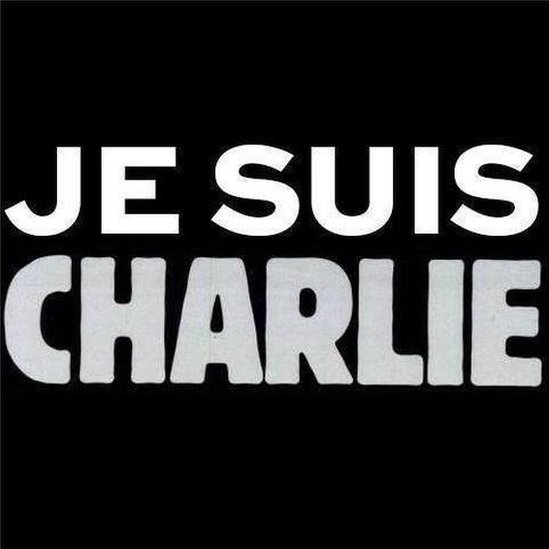
je suis charlie
“I am Charlie.” Screen grab from Charlie Hebdo‘s website,
January 7, 2015. Image from BBC News Europe.
By Paul Krassner | The Rag Blog | January 7, 2015

This massacre is an awesome outrage, even to liberals and conservatives alike, although some dinosaur Republicans might try to blame Obama. It’s a horrendous violation of semantic principles, such as “The menu is not the meal” and “The map is not the territory.” As an atheist, I perceive the irony of those assassins shouting “God is great” to justify their insane act in the name of a deity that I believe doesn’t exist.
And what could happen in America? Security guards protecting the Onion offices? Treat Funny or Die as Islamic marching orders? Invade the cyberspace of NBC for broadcasting Saturday Night Live until it morphs into Saturday Night Dead, if it’s not already deceased?
Continue reading
Free All Our Class-War Brother And Sister Political Prisoners Now-The Cause That Passes Through The Prisons  


The Latest From The Partisan Defense Committee Website-


James P.Cannon (center)-Founding leader of The International Labor Defense- a model for labor defense work in the 1920s and 1930s.

Click below to link to the Partisan Defense Committee website.

http://www.partisandefense.org/

Reposted from the American Left History blog, dated December 1, 2010, updated December 2014.

Markin comment:

I like to think of myself as a long-time fervent supporter of the Partisan Defense Committee, an organization committed to social and political defense cases and causes in the interests of the international working class. Cases from early on in the 1970s when the organization was founded and the committee defended the Black Panthers who were being targeted by every police agency that had an say in the matter, the almost abandoned by the left Weather Underground (in its various incantations) and Chilean miners in the wake of the Pinochet coup there in 1973 up to more recent times with the Mumia death penalty case, defense of the Occupy movement and the NATO three, and defense of the heroic Wiki-leaks whistle-blower Chelsea Manning (formerly Bradley).

Moreover the PDC is an organization committed, at this time of the year, to raising funds to support the class-war prisoners’ stipend program through the annual Holiday Appeal drive. Unfortunately having to raise these funds in support of political prisoners for many years now, too many years, as the American and international capitalist class and their hangers-on have declared relentless war, recently a very one-sided war, against those who would cry out against the monster. Attempting to silence voices from zealous lawyers like Lynne Stewart, articulate death-row prisoners like Mumia and the late Tookie Williams, anti-fascist street fighters like the Tingsley Five to black liberation fighters like the Assata Shakur, the Omaha Three and the Angola Three and who ended up on the wrong side of a cop and state vendetta and anti-imperialist fighters like the working-class based Ohio Seven and student-based Weather Underground who took Che Guevara’s admonition to wage battle inside the “belly of the beast” seriously. Others, other militant labor and social liberation fighters as well, too numerous to mention here but remembered.

Normally I do not need any prompting in the matter. This year tough I read the 25th Anniversary Appeal article in Workers Vanguard No. 969 where I was startled to note how many of the names, organizations, and political philosophies mentioned there hark back to my own radical coming of age, and the need for class-struggle defense of all our political prisoners in the late 1960s (although I may not have used that exact term at the time).

That recognition included names like black liberation fighter George Jackson’s present class-war prisoner Hugo Pinell’s San Quentin Six comrade; the Black Panthers in their better days, the days when the American state really was out to kill or detain every last supporter, and in the days when we needed, desperately needed, to fight for their defense in places from Oakland to New Haven,  as represented by two of the Omaha Three (Poindexter and wa Langa), in their younger days; the struggle, the fierce struggle, against the death penalty as represented in Mumia’s case today (also Black Panther-connected); the Ohio 7 and the Weather Underground who, rightly or wrongly, were committed to building a second front against American imperialism, and who most of the left, the respectable left, abandoned; and, of course, Leonard Peltier and the Native American struggles from Pine Ridge to the Southwest. It has been a long time and victories few. I could go on but you get the point.

That point also includes the hard fact that we have paid a high price, a very high price, for not winning back in the late 1960s and early 1970s when we last had this capitalist imperialist society on the ropes. Maybe it was political immaturity, maybe it was cranky theory, maybe it was elitism, hell, maybe it was just old-fashioned hubris but we let them off the hook. And have had to fight forty years of rear-guard “culture wars” since just to keep from falling further behind.

And the class-war prisoners, our class-war prisoners, have had to face their “justice” and their prisons. Many, too many for most of that time. That lesson should be etched in the memory of every pro-working class militant today. And this, as well, as a quick glance at the news these days should make every liberation fighter realize; the difference between being on one side of that prison wall and the other is a very close thing when the bourgeois decides to pull the hammer down. The support of class-war prisoners is thus not charity, as International Labor Defense founder James P. Cannon noted back in the 1920s, but a duty of those fighters outside the walls. Today I do my duty, and gladly. I urge others to do the same now at the holidays and throughout the year. The class-war prisoners must not stand alone. 

*Free The Last of the Ohio Seven-They Must Not Die In Jail

COMMENTARY

ONE OF THE OHIO SEVEN -RICHARD WILLIAMS- RECENTLY DIED IN PRISON (2006). THAT LEAVES JAAN LAAMAN AND TOM MANNING STILL IN PRISON. IT IS AN URGENT DUTY FOR THE INTERNATIONAL LABOR MOVEMENT AND OTHERS TO RAISE THE CALL FOR THEIR FREEDOM. FREE ALL CLASS WAR PRISONERS.


Free the last of the Seven. Below is a commentary written in 2006 arguing for their freedom.

The Ohio Seven, like many other subjective revolutionaries, coming out of the turbulent anti-Vietnam War and anti-imperialist movements, were committed to social change. The different is that this organization included mainly working class militants, some of whose political consciousness was formed by participation as soldiers in the Vietnam War itself. Various members were convicted for carrying out robberies, apparently to raise money for their struggles, and bombings of imperialist targets. Without going into their particular personal and political biographies I note that these were the kind of subjective revolutionaries that must be recruited to a working class vanguard party if there ever is to be a chance of bringing off a socialist revolution. In the absence of a viable revolutionary labor party in the 1970’s and 1980’s the politics of the Ohio Seven, like the Black Panthers and the Weathermen, were borne of despair at the immensity of the task and also by desperation to do something concrete in aid of the Vietnamese Revolution and other Third World struggles . Their actions in trying to open up a second front militarily in the United States in aid of Third World struggles without a mass base proved to be mistaken but, as the Partisan Defense Committee which I support has noted, their actions were no crime in the eyes of the international working class.

The lack of a revolutionary vanguard to attract such working class elements away from adventurism is rendered even more tragic in the case of the Ohio Seven. Leon Trotsky, a leader with Lenin of the Russian Revolution of 1917, noted in a political obituary for his fallen comrade and fellow Left Oppositionist Kote Tsintadze that the West has not produced such fighters as Kote. Kote, who went through all the phases of struggle for the Russian Revolution, including imprisonment and exile under both the Czar and Stalin benefited from solidarity in a mass revolutionary vanguard party to sustain him through the hard times. What a revolutionary party could have done with the evident capacity and continuing commitment of subjective revolutionaries like the Ohio Seven poses that question point blank. This is the central problem and task of cadre development in the West in resolving the crisis of revolutionary leadership.

Finally, I would like to note that except for the Partisan Defense Committee and their own defense organizations – the Ohio 7 Defense Committee and the Jaan Laaman Defense Fund- the Ohio Seven have long ago been abandoned by those New Left elements and others, who as noted, at one time had very similar politics. At least part of this can be attributed to the rightward drift to liberal pacifist politics by many of them, but some must be attributed to class. Although the Ohio Seven were not our people- they are our people. All honor to them. As James P Cannon, a founding leader of the International Labor Defense, forerunner of the Partisan Defense Committee, pointed out long ago –Solidarity with class war prisoners is not charity- it is a duty. Their fight is our fight! LET US DO OUR DUTY HERE. RAISE THE CALL FOR THE FREEDOM OF LAAMAN AND MANNING. MAKE MOTIONS OF SOLIDARITY IN YOUR POLITICAL ORGANIZATION, SCHOOL OR UNION.

YOU CAN GOOGLE THE ORGANIZATIONS MENTIONED ABOVE- THE PARTISAN DEFENSE COMMITTEE- THE OHIO 7 DEFENSE COMMITTEE- THE JAAN LAAMAN DEFENSE FUND.

 **

As The 100th Anniversary Of The First Year Of World War I (Remember The War To End All Wars) Continues ... Some Remembrances-Writers’ Corner  

In say 1912, 1913, hell, even the beginning of 1914, the first few months anyway, before the war clouds got a full head of steam in the summer they all profusely professed their unmitigated horror at the thought of war, thought of the old way of doing business in the world. Yes the artists of every school but the Cubist/Fauvists/Futurists and  Surrealists or those who would come to speak for those movements, those who saw the disjointedness of modern industrial society and put the pieces to paint, sculptors who put twisted pieces of metal juxtaposed to each other saw that building a mighty machine from which you had to run created many problems; writers of serious history books proving that, according to their Whiggish theory of progress,  humankind had moved beyond war as an instrument of policy and the diplomats and high and mighty would put the brakes on in time, not realizing that they were all squabbling cousins; writers of serious and not so serious novels drenched in platitudes and hidden gabezo love affairs put paid to that notion in their sweet nothing words that man and woman had too much to do, too much sex to harness to denigrate themselves by crying the warrior’s cry and by having half-virgin, neat trick, maidens strewing flowers on the bloodlust streets; musicians whose muse spoke of delicate tempos and sweet muted violin concertos, not the stress and strife of the tattoos of war marches with their tinny conceits; and poets, ah, those constricted poets who bleed the moon of its amber swearing, swearing on a stack of seven sealed bibles, that they would go to the hells before touching the hair of another man. They all professed loudly (and those few who did not profess, could not profess because they were happily getting their blood rising, kept their own consul until the summer), that come the war drums they would resist the siren call, would stick to their Whiggish, Futurist, Constructionist, Cubist worlds and blast the war-makers to hell in quotes, words, chords, clanged metal, and pretty pastels. They would stay the course.  

And then the war drums intensified, the people, their clients, patrons and buyers, cried out their lusts and they, they made of ordinary human clay as it turned out, poets, artists, sculptors, writers, serious and not, musicians went to the trenches to die deathless deaths in their thousands for, well, for humankind, of course, their always fate  ….            

Tommy's diary. Chronicle of a fallen English man

Book/Diary/Illustration

English


Allegedly the diary of a dead English soldier found on the battlefield, these ‘notes of a fallen Englishman’ tell the story of a naïve working-class youth who joins the army to escape a hard labouring life. When war breaks out he is sent to France where he is wounded and eventually killed in battle. This supposed ‘British Tommy’ produces typical German propagandist sentiments about greedy, warmongering British imperialism and the dauntless courage of the German troops. The British Army by contrast is portrayed as ill-equipped and ill-disciplined, its men lacking commitment to any cause except drinking. The real author, Norbert Willy, wrote a similar work purporting to be the diary of a French soldier who, like ‘Tommy’, comes to recognise the failings of his own country in the face of German superiority.
- See more at: http://www.bl.uk/collection-items/tommys-diary-chronicle-of-fallen-english-man#sthash.C8R7Kbtl.dpuf
video/photos-Boston First Night 2015 Against War And Police Violence
01 Jan 2015
Boston, Mass.-Dec. 31, 2014

New Years Eve 2015: Boston First Night Against The Wars took place in Copley Sq. in Boston in the midst of New Years Eve festivities. There was a standout between 12 noon and 6pm with anti-war banners and signs.
Click on image for a larger version

1 first night 2015 (12).jpg
About 4:30 Black Lives Matter-Anti-Police Violence protesters joined the anti-war standout, with a march, speakout, and "die-in" to symbolize all the people of color killed by the police; during the die-in, the names of those killed by the police were read aloud.

The Boston police who were there didn't interfere with the die-in, which lasted about 20 minutes. It was powerful street theater.I believe protesters were going to join the official First Night parade passing by on Boylston St. but I didn't stay for the march. A lot of mainstream media were there, and I saw coverage on channel 5, 11pm news.

Here are links to video and photos that I took--
VIDEO:
http://youtu.be/S8zIW3AVo0w

PHOTOS:
https://www.flickr.com/photos/protestphotos1/sets/72157647723284533/
Click on image for a larger version

1 first night 2015 (5).jpg
Click on image for a larger version

1 first night 2015 (2).jpg
Click on image for a larger version

1 first night 2015 (4).jpg
Click on image for a larger version

1 first night 2015 (9).jpg
Click on image for a larger version

1 first night 2015 (6).jpg
Click on image for a larger version

1 first night 2015 (10).jpg
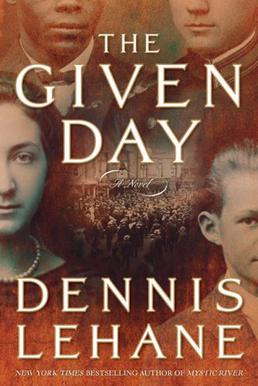
A Slice Of Boston Life After World War I- Dennis Lehane’s The Given Day


Book Review

From The Pen Of Frank Jackman

The Given Day, Dennis Lehane, William Morrow and Company, 2008  

Dennis Lehane, better known for his crime detection novels with PIs Pat and Angie in several previous books, a few of which have been adapted to the screen, had like many writers decided in 2008 to branch out, branch out a little, and immerse himself in a historical novel, The Given Day, centered as almost always with Lehane in Boston and its environs although here the old Southie Irish ghetto and the North End Italian ghetto gain center stage rather than his beloved Dorchester.

The key event which the novel is built around is the famous Boston Police Strike of 1919 (or infamous depending on your point of view, your view on unionization of public employees, on public sector strikes, or for that matter your view of whether the police are part of the labor movement) which then Massachusetts Governor Calvin (later accidental President “Silent Cal”) Coolidge had put down with a vengeance. Other events including the obligatory homage to the history of the Red Sox complete with bigger than life profile of George “Babe” Ruth in that year, the great molasses flood, the situation with blacks and what they created for themselves in Tulsa, Oklahoma, and the local ramifications of the “red scare” Palmer raids directed at radicals in general and anarchists, philosophical or bomb-throwing, add spice to the mix.              

Of course even something as historically note-worthy as that police strike which caused great riots among the populace to explode is thin gruel for an almost eight hundred page stretch so Mr. Lehane had filled it out with a three-pronged story line involving the “sultan of swat,” Babe Ruth during his short sojourn in Boston as a Red Sox, an up and coming young Irish Boston police officer steeped in family tradition on the force who gets “religion” over the unionization and strike issues, and, a young up and coming black man on the run from a troubled past who lands feet first in Boston where he comes of age as a man. I am not sure that the three prongs withstand the slight intersections that each story brings to the novel to try to tie the work together and to make some note-worthy social statement but separately they are of some interest as a fast-paced work.               

Of course for anyone familiar with Boston and who has lived there, like this reviewer, the rattling off of known areas of the city, known events, and known little habits of mind and thought is always a plus and such devices follow from Mr. Lehane’s previous works in his crime detection series. Boston then as now although the ethnic configuration has changed was made up of neighborhoods, mainly Irish and Italian where most of the action in the novel takes place. Lehane is at his best when he describes the up and coming Irish who are starting to assert themselves in this period on the political and social life of the city, starting to give that old WASP hierarchy a run for its money.

Lehane follows the central protagonist (if you star-struck in the first section cannot get beyond, do not count the “Babe” as such), Danny Coughlin through about a year or so of his life leading up to the police strike. Danny had been, like his father who rose from the ranks to become a captain in the department, driven to be the best cop he could be. But things got in the way, things like that immigrant shanty  Irish maid with an unspoken past and plenty of courage, Nora, in his father’s household (thus the reader knows, or should know, that the Coughlins have “arrived” in America being able to hire help, even “bog” Irish help just like the Mayfair swells on Beacon Hill) who disturbed his sleep and who does so one way or another all throughout the novel before they reunite. Things too like his quirky little affair with an Italian women who was also an ardent bomb-throwing anarchist who lurked behind the main story line and whose actions provide color to the post- World War I “red scare’ that had all people of property afraid for their lives. And which would look good on his upward mobile resume. Things like his turning from that up and coming cop to a “radical” in the formation of the police union that would eventually vote to go on strike with very severe consequences.

And things too like Danny’s budding friendship of sorts with the young black man on the run, Luther Lawrence, who for a time was a servant in Danny’s father’s house (alerting the reader to the fact that the Coughlins really, really have arrived in America to have both “bog “Irish and fashionable black help which also should make one wonder how that was done on a Boston police captain’s pay but the readercan figure that out just from life). In the end, police strike or not, Danny is destined to have to move on, to seek his destiny (and Nora hers) someplace other than Boston.          

Lawrence, the young black man, out of Tulsa, Oklahoma via Ohio also has some things, some things besides the obvious question of what being black in America in the time of Jim Crow down south and not much better up north, got in the way. Things like that gal who was back in Tulsa with his child, and she would adamantly not talk to him for a while. Things like a little off-hand multiple murders he committed to get out from under some serious problems he had with the king hell king black crime boss in Tulsa which necessitated his flight in frigid Boston. Things like being the target of some serious racial baiting and threatened murder if he did not flee Boston. So between the two young men from different cultural backgrounds a bond developed which helped both men survive and to overcome their separate problems. Whether in the Boston of 1919 such an interracial bond could have developed then given the subsequent history of the city is problematic but that is the virtue of historical fiction.       
January 11, 2002-13 Years Is Enough-Shut Down The Guantanamo Detention Hell-Hole-Return Guantanamo To Cuban Sovereignty!  


Saturday, January 10, 2015

Support The Boston Public School Bus Drivers!


Let All GLBTQ Groups, Veterans For Peace and All Peace Activists In The Annual Saint Patrick's Day Parade in 2015  

Veterans For Peace
 
For Immediate Release
 
Contact: Pat Scanlon, Office: 978-475-1776, Cell: 978-590-4248, email:Vets4PeaceChapter9@gmail.com 
 
Veterans For Peace applauds the decision by the Allied War Veterans Council to allow OUTVETS, a fledging new LGBT veterans group, to walk in the Saint Patrick’s Day Parade.
 
The LGBT community has been denied participation in the traditional Saint Patrick’s Day Parade for over twenty years. This certainly signals a step in the right direction.
 
It is wonderful that this group can participate. Now what about the rest of the LGBT community and area peace groups? “Now may be the time to invite Veterans For Peace and all the other LGBT groups and peace groups to participate in the celebration of Saint Patrick on this very special day,” stated Pat Scanlon, a Vietnam Veteran, and the Coordinator of the Boston area chapter of Veterans For Peace.
 
Veterans For Peace is a national veterans organization with headquarters in Saint Louis, Missouri. The organization has 140 chapters and 4,000 members across the country. One of the largest and most active chapters is known as the Smedley D. Butler Brigade right here in the Boston area. Several members of the local chapter are life long residents of South Boston yet are not allowed to march in the traditional parade because they advocate peace.
 
Veterans For Peace is the only veterans organization in the country that opposes war as an instrument of national policy, and advocates exhausting all avenues of diplomacy and negotiations before sending our young men and women into battle. Because of this stance veterans who have dutifully served this country, many who have experienced the horrors of war, are not allowed to participate in this historic parade because they now advocate peaceful resolution to conflict.
 
Five years ago Veterans For Peace applied to walk in the traditional parade and were denied. The stated reason for the denial was that the parade organizers “did not want the word peace associated with the word veteran.”. For the past five years Veterans For Peace have organized their own “Saint Patrick’s Peace Parade, the alternative parade for Peace, Equality, Jobs, Environmental Stewardship, Social and Economic Justice, that follows the same route as the first parade, but a mile behind. “Our parade is welcoming and inclusive of all groups especially the Boston area LGBT and peace groups because of their past exclusion,” added Scanlon. Last year the Saint Patrick’s Peace Parade had two thousand participants, eight divisions, eight bands and a lot of Irish revelry celebrating the patron saint of Ireland.
 
We think that the time has come to combine both parades and have one inclusive welcoming parade for all those wishing to celebrate Saint Patrick’s Day. Maybe this is year,” concluded Scanlon.
Web: smedleyvfp.org    Twitter: @smedleyVFP       Facebook: facebook.com/smedleyvfp
The Latest From The "Jobs With Justice Blog"-The Seemingly One-Sided Struggle Continues-It's High Time To Push Back-Push Back Hard-30 For 40 Is The Slogan Of The Day.


Click below to link to the Jobs With Justice Blog for the latest national and international labor news, and of the efforts to counteract the massively one-sided class struggle against the international working class movement.

http://www.jwjblog.org/
From the American Left History blog-Wednesday, June 17, 2009
 
With Unemployment Too High, Way Too High - The Call "30 For 40"- Now More Than Ever- The Transitional Socialist Program

Click Below To Link To The Full Transitional Program Of The Fourth International Adopted In 1938 As A Fighting Program In The Struggle For Socialism In That Era. Many Of The Points, Including The Headline Point Of 30 Hours Work For 40 Hours Pay To Spread The Work Around Among All Workers, Is As Valid Today As Then.

From The Transitional Program Of The Fourth International In 1938- Sliding Scale of Wages and Sliding Scale of Hours

Under the conditions of disintegrating capitalism, the masses continue to live the meagerized life of the oppressed, threatened now more than at any other time with the danger of being cast into the pit of pauperism. They must defend their mouthful of bread, if they cannot increase or better it. There is neither the need nor the opportunity to enumerate here those separate, partial demands which time and again arise on the basis of concrete circumstances – national, local, trade union. But two basic economic afflictions, in which is summarized the increasing absurdity of the capitalist system, that is, unemployment and high prices, demand generalized slogans and methods of struggle.

The Fourth International declares uncompromising war on the politics of the capitalists which, to a considerable degree, like the politics of their agents, the reformists, aims to place the whole burden of militarism, the crisis, the disorganization of the monetary system and all other scourges stemming from capitalism’s death agony upon the backs of the toilers. The Fourth International demands employment and decent living conditions for all.

Neither monetary inflation nor stabilization can serve as slogans for the proletariat because these are but two ends of the same stick. Against a bounding rise in prices, which with the approach of war will assume an ever more unbridled character, one can fight only under the slogan of a sliding scale of wages. This means that collective agreements should assure an automatic rise in wages in relation to the increase in price of consumer goods.

Under the menace of its own disintegration, the proletariat cannot permit the transformation of an increasing section of the workers into chronically unemployed paupers, living off the slops of a crumbling society. The right to employment is the only serious right left to the worker in a society based upon exploitation. This right today is left to the worker in a society based upon exploitation. This right today is being shorn from him at every step. Against unemployment,“structural” as well as “conjunctural,” the time is ripe to advance along with the slogan of public works, the slogan of a sliding scale of working hours. Trade unions and other mass organizations should bind the workers and the unemployed together in the solidarity of mutual responsibility. On this basis all the work on hand would then be divided among all existing workers in accordance with how the extent of the working week is defined. The average wage of every worker remains the same as it was under the old working week. Wages, under a strictly guaranteed minimum, would follow the movement of prices. It is impossible to accept any other program for the present catastrophic period.

Property owners and their lawyers will prove the “unrealizability” of these demands. Smaller, especially ruined capitalists, in addition will refer to their account ledgers. The workers categorically denounce such conclusions and references. The question is not one of a “normal” collision between opposing material interests. The question is one of guarding the proletariat from decay, demoralization and ruin. The question is one of life or death of the only creative and progressive class, and by that token of the future of mankind. If capitalism is incapable of satisfying the demands inevitably arising from the calamities generated by itself, then let it perish. “Realizability” or “unrealizability” is in the given instance a question of the relationship of forces, which can be decided only by the struggle. By means of this struggle, no matter what immediate practical successes may be, the workers will best come to understand the necessity of liquidating capitalist slavery.
************


HONOR THE THREE L’S-LENIN, LUXEMBURG, LIEBKNECHT-HONOR ROSA LUXEMBURG-THE ROSE OF THE REVOLUTION


 Every January leftists honor three revolutionaries who died in that month, V.I. Lenin of Russia in 1924, Karl Liebknecht of Germany and Rosa Luxemburg of Poland in 1919 murdered after leading the defeated Spartacist uprising in Berlin. Lenin needs no special commendation.  I will make my political points about the heroic Karl Liebknecht and his parliamentary fight against the German war budget in World War I in this space tomorrow so I would like to make some points here about the life of Rosa Luxemburg. These comments come at a time when the question of a woman President is the buzz in the political atmosphere in the United States in the lead up to the upcoming 2016 elections. Rosa, who died almost a century ago, puts all such pretenders to so-called ‘progressive’ political leadership in the shade.   
The early Marxist movement, like virtually all progressive political movements in the past, was heavily dominated by men. I say this as a statement of fact and not as something that was necessarily intentional or good. It is only fairly late in the 20th century that the political emancipation of women, mainly through the granting of the vote earlier in the century, led to mass participation of women in politics as voters or politicians. Although, socialists, particularly revolutionary socialists, have placed the social, political and economic emancipation of women at the center of their various programs from the early days that fact had been honored more in the breech than the observance.

All of this is by way of saying that the political career of the physically frail but intellectually robust Rosa Luxemburg was all the more remarkable because she had the capacity to hold her own politically and theoretically with the male leadership of the international social democratic movement in the pre-World War I period. While the writings of the likes of then leading German Social Democratic theoretician Karl Kautsky are safely left in the basket Rosa’s writings today still retain a freshness, insightfulness and vigor that anti-imperialist militants can benefit from by reading. Her book Accumulation of Capital , whatever its shortfalls alone would place her in the select company of important Marxist thinkers.
But Rosa Luxemburg was more than a Marxist thinker. She was also deeply involved in the daily political struggles pushing for left-wing solutions. Yes, the more bureaucratic types, comfortable in their party and trade union niches, hated her for it (and she, in turn, hated them) but she fought hard for her positions on an anti-class collaborationist, anti-militarist and anti-imperialist left-wing of the International of the social democratic movement throughout this period. And she did this not merely as an adjunct leader of a women’s section of a social democratic party but as a fully established leader of left-wing men and women, as a fully socialist leader. One of the interesting facts about her life is how little she wrote on the women question as a separate issue from the broader socialist question of the emancipation of women. Militant leftist, socialist and feminist women today take note.

One of the easy ways for leftists, particularly later leftists influenced by Stalinist ideology, to denigrate the importance of Rosa Luxemburg’s thought and theoretical contributions to Marxism was to write her off as too soft on the question of the necessity of a hard vanguard revolutionary organization to lead the socialist revolution. Underpinning that theme was the accusation that she relied too much on the spontaneous upsurge of the masses as a corrective to the lack of hard organization or the impediments that  reformist socialist elements threw up to derail the revolutionary process. A close examination of her own organization, The Socialist Party of the Kingdom of Poland and Lithuania, shows that this was not the case; this was a small replica of a Bolshevik-type organization. That organization, moreover, made several important political blocs with the Bolsheviks in the aftermath of the defeat of the Russian revolution of 1905. Yes, there were political differences between the organizations, particularly over the critical question for both the Polish and Russian parties of the correct approach to the right of national self-determination, but the need for a hard organization does not appear to be one of them.

Furthermore, no less a stalwart Bolshevik revolutionary than Leon Trotsky, writing in her defense in the 1930’s, dismissed charges of Rosa’s supposed ‘spontaneous uprising’ fetish as so much hot air. Her tragic fate, murdered with the complicity of her former Social Democratic comrades, after the defeated Spartacist uprising in Berlin in 1919 (at the same time as her comrade, Karl Liebknecht), had causes related to the smallness of the group, its  political immaturity and indecisiveness than in its spontaneousness. If one is to accuse Rosa Luxemburg of any political mistake it is in not pulling the Spartacist group out of Kautsky’s Independent Social Democrats (itself a split from the main Social Democratic party during the war, over the war issue) sooner than late 1918. However, as the future history of the communist movement would painfully demonstrate revolutionaries have to take advantage of the revolutionary opportunities that come their way, even if not the most opportune or of their own making.
All of the above controversies aside, let me be clear, Rosa Luxemburg did not then need nor does she now need a certificate of revolutionary good conduct from today’s leftists, from any  reader of this space or from this writer. For her revolutionary opposition to World War I when it counted, at a time when many supposed socialists had capitulated to their respective ruling classes including her comrades in the German Social Democratic Party, she holds a place of honor. Today, as we face the endless wars of imperialist intervention in the Middle East and elsewhere in Iraq we could use a few more Rosas, and a few less tepid, timid parliamentary opponents.  For this revolutionary opposition she went to jail like her comrade Karl Liebknecht. For revolutionaries it goes with the territory. And in jail she wrote, she always wrote, about the fight against the ongoing imperialist war (especially in the Junius pamphlets about the need for a Third International).  Yes, Rosa was at her post then. And she died at her post later in the Spartacist fight doing her internationalist duty trying to lead the German socialist revolution the success of which would have  gone a long way to saving the Russian Revolution. This is a woman leader I could follow who, moreover, places today’s bourgeois women parliamentary politicians in the shade. As the political atmosphere gets heated up over the next couple years, remember what a real fighting revolutionary woman politician looked like. Remember Rosa Luxemburg, the Rose of the Revolution.      

As The 100th Anniversary Of The First Year Of World War I (Remember The War To End All Wars) Continues ... Some Remembrances-Writers’ Corner  

In say 1912, 1913, hell, even the beginning of 1914, the first few months anyway, before the war clouds got a full head of steam in the summer they all profusely professed their unmitigated horror at the thought of war, thought of the old way of doing business in the world. Yes the artists of every school but the Cubist/Fauvists/Futurists and  Surrealists or those who would come to speak for those movements, those who saw the disjointedness of modern industrial society and put the pieces to paint, sculptors who put twisted pieces of metal juxtaposed to each other saw that building a mighty machine from which you had to run created many problems; writers of serious history books proving that, according to their Whiggish theory of progress,  humankind had moved beyond war as an instrument of policy and the diplomats and high and mighty would put the brakes on in time, not realizing that they were all squabbling cousins; writers of serious and not so serious novels drenched in platitudes and hidden gabezo love affairs put paid to that notion in their sweet nothing words that man and woman had too much to do, too much sex to harness to denigrate themselves by crying the warrior’s cry and by having half-virgin, neat trick, maidens strewing flowers on the bloodlust streets; musicians whose muse spoke of delicate tempos and sweet muted violin concertos, not the stress and strife of the tattoos of war marches with their tinny conceits; and poets, ah, those constricted poets who bleed the moon of its amber swearing, swearing on a stack of seven sealed bibles, that they would go to the hells before touching the hair of another man. They all professed loudly (and those few who did not profess, could not profess because they were happily getting their blood rising, kept their own consul until the summer), that come the war drums they would resist the siren call, would stick to their Whiggish, Futurist, Constructionist, Cubist worlds and blast the war-makers to hell in quotes, words, chords, clanged metal, and pretty pastels. They would stay the course.  

And then the war drums intensified, the people, their clients, patrons and buyers, cried out their lusts and they, they made of ordinary human clay as it turned out, poets, artists, sculptors, writers, serious and not, musicians went to the trenches to die deathless deaths in their thousands for, well, for humankind, of course, their always fate  ….            

Guide to the battlefields. Italian front, vol III, Piave-Cadore-Carnia

Guide to the battlefields. Italian front, vol III, Piave-Cadore-Carnia
Tourist guide, published in 1919, by an Italian Touring Club highlighting the importance of battlefields and monuments.
View images from this item  (8)

Differences between countries

During and after the war, the process of memorialisation posed a number of questions. The dead, in particular, were difficult. Where were they to be interred? How should their resting places be marked? How should the absent dead – those with no known grave and those buried in a field far from home – be represented? The answers related to wider questions that concerned the living. Which aspects of wartime behaviour should be commemorated for future generations? What versions of the war offered an acceptable ‘truth’? The answers were conditioned by practical issues of finance and manpower, but determined by factors that were cultural and political. For all these reasons, remembrance differed from country to country.

At a national level, differences in commemoration were born out of military and diplomatic realities. Was the tension that they had to resolve between mass bereavement and victory or mass bereavement and defeat? For the UK, the wave of commemoration that took place at the start of the 1920s – including the opening of the permanent Cenotaph in Whitehall, the burial of the Unknown Warrior in Westminster Abbey, and the construction of war grave cemeteries at home and overseas – was hardly triumphalist, but it was able to legitimate wartime death in terms of a crusade to defend civilisation. In Germany, the aftermath of defeat meant that it was longer before national monuments could be constructed. The Tannenberg Monument was opened in 1927 and an unknown soldier interred in Berlin in 1931. In comparison to the war’s victors, German memorials were even more sombre reminders of death: it was much harder for them to cast the war as moment of salvation or liberation.

The decision to convert the London Cenotaph from a temporary structure, built to represent the dead at the Peace Parade of 1919, to a permanent monument, was occasioned by the strength of public response to the original memorial. As this suggests, national remembrance could be a ‘bottom-up’ as well as a ‘top-down’ process, but it was never equal or all-inclusive. By its nature, commemorating the war meant privileging some versions of the war and discounting others: memorials were a means of forgetting as well as remembering. For example, remembrance reflected a world in which some empires had survived the war: beyond the Western Front, neither France nor Britain memorialised Asian and African service personnel in the same way as their white counterparts.
- See more at: http://www.bl.uk/world-war-one/articles/remembrance-and-memorials#sthash.QRj4gn4T.dpuf
As Obama, His House And Senate Allies, His “Coalition Of The Willing”    Ramp Up The War Drums-Again- Stop The Bombings-Stop The Incessant Escalations-- Immediate Withdrawal Of All U.S. Troops And Mercenaries From The Middle East! –Stop The U. S. Arms Shipments …


Frank Jackman comment:


Nobel “Peace” Prize Winner, U.S. President Barack Obama (and yes that word peace should be placed in quotation marks every time that award winning is referenced), abetted by the usual suspects in the House and Senate as well as internationally (Britain, France, the NATO guys, etc.),  has over the past several months ordered more air bombing strikes in the north of Iraq and in Syria, has sent more “advisers”, another fifteen hundred most recently, to “protect” American outposts in Iraq and buck up the feckless Iraqi Army, has sent seemingly limitless arms shipments to the Kurds now acting as on the ground agents of American imperialism whatever their otherwise supportable desires for a unified Kurdish state, and has authorized supplies of arms to the cutthroat and ghost-like moderate Syrian opposition if it can be found to give weapons to,  quite a lot of war-like actions for a “peace” guy (maybe those quotation mark should be used anytime anyone is talking about Obama). All these actions, and threatened future ones as well, have made guys who served in the American military during the Vietnam War and who, like me, belatedly, got “religion” on the war issue from the experience, have learned to think long and hard about the war drums rising as a kneejerk way to resolve the conflicts in this wicked old world have made us very skeptical. We might very well be excused for our failed suspension of disbelief when the White House keeps pounding out the propaganda that these actions are limited when all signs point to the slippery slope of escalation (and the most recent hike of fifteen hundred kind of puts paid to that thought).


And during all this deluge Obama and company saying with a straight face the familiar (Vietnam-era familiar updated for the present)-“we seek no wider war”-meaning no American combat troops. Well if you start bombing places back to the Stone Age, or trying to, if you cannot rely on the weak-kneed Iraqi troops who have already shown what they are made of and cannot rely on a now virtually non-existent “Syrian Free Army” which you are willing to give whatever they want and will still come up short what do you think the next step will be? Now not every event in history gets repeated exactly but given the recent United States Government’s history in Iraq those old time Vietnam vets who I like to hang around might be on to something. In any case dust off the old banners, placards, and buttons and get your voices in shape- just in case. No New War In Iraq!–Stop The Bombings !- Stop The Arms Shipments!-Vote Down The Syria-Iraq War Budget Appropriations!     


***

No Killer/No Spy Drones...


Ever since the early days of humankind's existence an argument has always been made by someone and not always the gung-ho warriors that with some new technology, some new strategic gee-gad, warfare, the killing on one of our own species, would become less deadly, would be more morally justified, would bring the long hoped for peace that lots of people have yacked about in the abstract until they get their war blood up. Don't believe that false bill of goods, don't believe the sanity war lies, its the same old killing machine that has gone on for eons. Enough said and enough of killer drones killing and spy drones spying too.