Monday, June 25, 2018

Once More, The Literary World Lamp Goes Dim Again-“Portnoy’s Complaint” Author Philip Roth Has Cashed His Check At 85
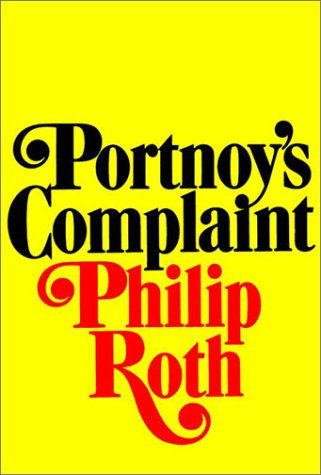
Once More, The Literary World Lamp Goes Dim Again-“Portnoy’s Complaint” Author Philip Roth Has Cashed His Check At 85


A link to an NPR Open Source program hosted by Christopher Lydon who interviewed Philip Roth at his Connecticut home in 2006

http://radioopensource.org/philip-roth/

By Bart Webber


As usual Scribe, the late Peter Paul Markin, who was what amounted to our intellectual-in- residence that residence being our 1960s corner boy haven in front of Tonio’s Pizza Parlor in the Acre neighborhood of North Adamsville, was the first to hip us to the recently deceased American author Philip Roth. The book he had hipped us to was the first big Roth novel Portnoy’s Complaint in 1969 while Scribe was doing his psychologically fatal tour of duty in Vietnam. (While I had already done my time in hell by then having gone in right after high school under the flag of patriotism, family tradition of military service, nothing better to do or you name it for why I went to that hellhole and kept quiet about it not warning Scribe of the horrors that would affect him much more dramatically than it did me-then). He kept raving about it being the first truly honest, if over the top, depiction of sexual acts including the no-no talk masturbation along with serious dirty language not known in earlier books, at least books we knew about. Of course when we were hanging out earlier in the decade in high school we would have never talked about such subjects and about strange sexual practices either because of our Catholic no talk heritage or lack of awareness that there are many, many ways to express oneself sexually or not.


Previously Scribe had like half the literary world touted guys like his heroes Hemingway and Fitzgerald, especially the latter’s The Great Gatsby who he claimed was one of our con artist forbears although as usual with Scribe when he got on his high horse about books we could have given a fuck if wasn’t about screwing girls, with a little John Dos Passos thrown in.  (It was mostly guys in his literary pantheon although Dorothy Parker because she wrote so strongly, I think he might have said like a man, and strangely high society novelist Edith Wharton which tells you more about Scribe than Wharton were on his top writers list). Beyond that he dared not go in our crowd, our crowd of Irish Catholic corner boys who while pissing against the wall about the ill effects of that doctrine, that see, hear, do nothing about those raging sex hormones on our love lives and our guilt trips still maintained some semblance of adherence if only as background noise in our brains.       
  
That Irish Catholic stranglehold was no small matter when it came to anything involving Jews back in high school although we got better later through breaking out of the Irish Catholic ghetto of our youth. That despite Vatican II of our later youth eliminating the idea of Jews as Christ-killers (my sainted pure Irish grandmother who had many good qualities never reconciled herself to that elimination of the bad guys and to her dying day cursed John XXIII for his infamy. She also hated the idea of the Mass in the vernacular thinking the rite had lost its mystery although she could speak no Latin phrases or jumbled them all up when in church). Mostly this was a “street” gentile anti-Semitism, a little Jew-baiting of Jewish kids in our high school who were all the smart ones in the academic sense and we, even Scribe for a time, hated that book smart idea. It was fine to be street smart like our leader Frankie Riley but book smart was off the charts. Except when Scribe went into one of his raves. He went to his grave from what Josh Breslin the last guy of our crowd to see him before he left for that fatal Mexico trip cursing himself for in high school not hanging out with the Jewish kids who filled up the Great Book Club. He had refused to join because of the ban on touting book smarts which even he tended to adhere to inside our corner boy circle. So this was not some neo-Nazi thing but a common, too common, gentile distaste and disparagement of the “other” (nice term, right). The one Jewish kid, a good kid and an athlete which held some cache with us, who tried to hang with us on the Tonio Pizza Parlor corner got the cold shoulder and after a while stopped trying to bust into our ignorant little crowd.         

The fact is part of the reason we didn’t go for book smarts, except as always when Scribe got on his high horse, was we, and I in particular then did not give a fuck about books, high-brow or low. Never read much except a few times to get next to some girl who would mention some book and asked me had I read it and off I would go to the Thomas Knowles Public Library and grab a copy. Most of the stuff was too gushy romance which I held my nose as I read. But such are the love battles. As for Jewish writers I would say I don’t remember reading any then, then in high school. Especially after Scribe would fill, try to fill, our lonely Friday nights reading some fag homo (our names for guy homosexually then which we are old as we are much better about now including if you can believe this marching in the streets in defense of gay marriage) named Allen Ginsberg, a friend of Jack Kerouac, who had written a poem Howl which he insisted that we let him read once he “discovered” the Beats. Jesus, a couple of guys, Timmy Riley for one who later on became one of the great drag queens in San Francisco after he came out of the closet and maybe Jack Callahan who holds the distinction of being the sole corner boy who stayed married to one woman for life almost tore Scribe apart one night to stop his madness. Later in the Summer of Love in 1967 we would be so stoned on drugs that when Scribe started to recite Howl we were all ears.

To cut to the chase about Philip Roth once Scribe gave the word that this guy had something to say even to us gentile anti-Semites about the new mores in book world where unlike in Hemingway and Fitzgerald say they merely alluded to various sexual practices and had their swears sanitized he let it all hang out we were all ears. Except here is the funny part we were talking that talk, except maybe the going on and on about masturbation and satisfaction that way in some strange ways much, out in the streets so I remember Frankie Riley who respected Scribe more than the rest of us wondering what the big deal was. So, yeah, Philip Roth wrote some good stuff, told a tale well, expanded the literary universe, or what was left of it back then and got a bunch of guys who probably would have not given a damn reason to read him. RIP, Philip Roth, RIP    

Sunday, June 24, 2018

The Night When The World Came Down Upon Peter Paul Markin’s Head-With Roy Lichtenstein’s 1968 Time Magazine Cover Of Bobby Kennedy In Mind


The Night When The World Came Down Upon Peter Paul Markin’s Head-With Roy Lichtenstein’s 1968 Time Magazine Cover Of Bobby Kennedy In Mind


By Bart Webber (with the ghost hand of Sam Lowell on his shoulder)


The ghost of the late sorely lamented Peter Paul Markin has hovered over this publication long after his early, too early demise back in the 1970s (and in its sister publications as well as a quick recent glance indicated starkly to me upon investigation). Maybe it because we have begun reaching a milestone, 50th anniversary commemorations of various youth-defining events, maybe arbitrary, maybe as the late scientist Steven Jay Gould was fond of saying mere man-made constructs and no more but which has infested a number of us older writers some of who knew Markin personally and others who have been influenced by the hairy tales of his existence. (The younger writers mostly, as one told me, could give a fuck about an old junkie has been who didn’t have sense enough to not try some crazy scheme to get rich quick in the cocaine trade against the growing Columbian cartels so what could he expect.) Almost every event during this commemoration period had Markin’s imprint on it. (We always called him Scribe but I will stick with his surname here.)


Therefore it does not take much to flicker a flame if something going back to those days jumpstarts renewed thoughts of Markin. That happened one afternoon recently when Si Lannon was on assignment to do an article on the Cezanne Portraits exhibition at the National Gallery and as is his wont (and Sam Lowell’s too especially if Laura Perkins is along) he runs up to the National Portrait Gallery to see what is up there. Not much since the last time he was there except on a wall on the first floor under the title Remembrance there was Roy Lichtenstein’s famous Time magazine cover of Robert Kennedy done in the spring of 1968 shortly before his assassination in California after his primary victory over Eugene in June of that year. Si was so shaken by that picture that he immediately called me and I thereafter called a few other guys and the mere mention of that cover got us back to Markin square one.


See Markin, beyond being the guy who in our circle named the fresh breeze coming through the land for what would be called by others the Generation of ’68 and which we thanks to Markin we were card-carrying members was also far and away the most political of us all. Saw that any dreams of that newer world he was always hassling us about was going to require serious changes in the political winds. Moreover Markin had from I don’t remember how early on but as long as I had known him tied his fate to becoming some kind of politician, some kind of mover and shaker in that newer world. As for me I could have given a damn about politics then since I was starting up my printing business and, truth, was busy trying to get into my girlfriend’s pants. Not Markin though he had spent that whole spring working his ass off for Robert Kennedy, had gone up and down the East Coast trying to recruit resistant students not only to vote for Bobby but get out on the trail. That student resistance factored in by the fact that Bobby had not gotten into the presidential contest until after Lyndon Baines Johnson the sitting President and odds on favored in 1968 to win the election decided after the debacle of Vietnam, of Tet, not to run and the previously “Clean for Gene” crowd was reluctant to go with Bobby. Saw him as an interloper.       


Here is the beauty, maybe treachery now that I think about the matter, of that bloody bastard Markin before Lyndon blew himself up and Bobby entered the fray he was sitting on his freaking hands perfectly willing to      

give Johnson a pass as vile as Vietnam was against the expected contest against Richard Nixon. Didn’t think whatever lukewarm and ill-formed sympathy he had for McCarthy’s anti-war positions he could beat Nixon (or anybody else he once mentioned after the New Hampshire primary upended politics for good that year with McCarthy’s better than expected showing-wasn’t Bobby-like ruthless enough). Two minutes after Bobby announced he called up some Bobby operatives he knew from the Boston mayor’s fight in 1967 and was on his way.     


When Bobby went down I think, and this is only speculation on my part since I didn’t see him much after he went into the Army and then afterward headed out to California to start “a new life,” something went out of Markin, some sense that the whole thing had been a mirage and that he was doomed. He always thought of himself as doomed, spoke of it sometimes when he was depressed, or things were tough at home. So as the ghost of Bobby Kennedy showed up on that Lichtenstein cover know this the ghost of Markin is right there too.           

Stop ICE and Border Patrol! Quick reply all Reply Forward Delete Actions American Friends Service Committee


American Friends Service Committee


Iowa rally
Dear Amy,

Last month, 20-year-old Claudia Patricia Gomez Gonzalez was killed by a single bullet to the head from the gun of a Border Patrol agent in Texas. Claudia was an indigenous Maya Mam woman from the highlands of Guatemala who had studied to become an accountant. She was driven to the U.S. by the lack of opportunity at home.

Just days later, Roxsana Hernandez died while in the custody of Immigration and Customs Enforcement (ICE). She had traveled from Honduras and requested asylum based on the deadly persecution of transgender women like herself. Instead, she died after spending eight days without proper medical care in freezing temperatures in ICE and Customs and Borders Protection (CBP) detention facilities.

Claudia and Roxsana are just two of the countless people who have been victimized by ICE and CBP—and it’s time we stop these agencies for good. Tell Congress today: Defund ICE and CBP!

In the last few months, border and immigration agents have ripped away hundreds of migrant children from their parents under the Trump administration’s “zero-tolerance" policy—which the United Nations has denounced as a violation of human rights and international law. The policy includes criminally prosecuting anyone who crosses the border and detaining parents who request asylum.

While these abuses have grabbed the attention of Americans in recent weeks, we know that they’re not new. Since their inception, both agencies have separated families and caused the deaths of people fleeing poverty and violence—with little accountability. AFSC has worked for decades to demand justice for dozens of people killed by Border Patrol, but not a single agent has ever been held accountable. And since last October, at least six people have died in ICE custody.

It’s time to put an end to the cruelty and dehumanization of immigrants by ICE and CBP. Tell Congress today: Stop funding ICE and CBP! 

In peace,

Kathryn Johnson
Policy and Advocacy Coordinator 

American Friends Service Committee
1501 Cherry Street
Philadelphia, PA 19102
United States
AFSC.org  |  unsubscribe  | 
Follow us online:
Facebook | Twitter | Instagram
--
You received this message because you are subscribed to the Google Groups "MAPA Nuclear Disarmament" group.
To unsubscribe from this group and stop receiving emails from it, send an email to mapa-nuclear-disarmament+unsubscribe@googlegroups.com.
To post to this group, send email to mapa-nuclear-disarmament@googlegroups.com.
To view this discussion on the web visit https://groups.google.com/d/msgid/mapa-nuclear-disarmament/03ea01d3ff61%247447ced0%245cd76c70%24%40texnology.com.
For more options, visit https://groups.google.com/d/optout.

In Honor Of Our Class-War Prisoners- Free All The Class-War Prisoners!-Larry Hoover

In Honor Of Our Class-War Prisoners- Free All The Class-War Prisoners!-Larry Hoover


http://www.thejerichomovement.com/prisoners.html


A link above to more information about the class-war prisoner honored in this entry.

Make June Class-War Prisoners Freedom Month 

Markin comment (reposted from 2010)


In “surfing” the National Jericho Movement Website recently in order to find out more, if possible, about class- war prisoner and 1960s radical, Marilyn Buck, whom I had read about in a The Rag Blog post I linked to the Jericho list of class war prisoners. I found Marilyn Buck listed there but also others, some of whose cases, like that of the “voice of the voiceless” Pennsylvania death row prisoner, Mumia Abu-Jamal, are well-known and others who seemingly have languished in obscurity. All of the cases, at least from the information that I could glean from the site, seemed compelling. And all seemed worthy of far more publicity and of a more public fight for their freedom.

That last notion set me to the task at hand. Readers of this space know that I am a longtime supporter of the Partisan Defense Committee, a class struggle, non-sectarian legal and social defense organization which supports class war prisoners as part of the process of advancing the international working class’ struggle for socialism. In that spirit I am honoring the class war prisoners on the National Jericho Movement list this June as the start of what I hope will be an on-going attempt by all serious leftist militants to do their duty- fighting for freedom for these brothers and sisters. We will fight out our political differences and disagreements as a separate matter. What matters here and now is the old Wobblie (IWW) slogan - An injury to one is an injury to all.

Note: This list, right now, is composed of class-war prisoners held in American detention. If others are likewise incarcerated that are not listed here feel free to leave information on their cases in the comment section. Likewise any cases, internationally, that come to your attention. I am sure there are many, many such cases out there. Make this June, and every June, a Class-War Prisoners Freedom Month- Free All Class-War Prisoners Now!


  • The Bolshevik Revolution and Women’s Liberation

    Workers Vanguard No. 1107
    10 March 2017

    TROTSKY

    LENIN
    The Bolshevik Revolution and Women’s Liberation
    (Quote of the Week)
    On International Women’s Day in Petrograd in March 1917, a mass outpouring of working women sparked the revolutionary upheaval that culminated in the Russian October Revolution. The smashing of capitalist class rule brought unheard-of gains for women in all areas of public and private life. Despite economic backwardness and poverty, the young Soviet workers government sought to undermine the material foundations of women’s oppression, which is rooted in the institution of the family. The Bolsheviks understood that complete social equality could only be attained with the abolition of classes in a world socialist society. In a 1920 commemoration of International Working Women’s Day, Bolshevik leader V.I. Lenin underscored the fact that the fight for women’s liberation is inseparable from the fight for international socialist revolution.
    Capitalism combines formal equality with economic and, consequently, social inequality. That is one of the principal features of capitalism, one that is deliberately obscured by the supporters of the bourgeoisie, the liberals, and is not understood by petty-bourgeois democrats. This feature of capitalism, incidentally, renders it necessary for us in our resolute fight for economic equality openly to admit capitalist inequality, and even, under certain conditions, to make this open admission of inequality the basis of the proletarian statehood (the Soviet Constitution).
    But even in the matter of formal equality (equality before the law, the “equality” of the well-fed and the hungry, of the man of property and the propertyless), capitalism cannot be consistent. And one of the most glaring manifestations of this inconsistency is the inequality of women. Complete equality has not been granted even by the most progressive republican, and democratic bourgeois states.
    The Soviet Republic of Russia, on the other hand, at once swept away all legislative traces of the inequality of women without exception, and immediately ensured their complete equality before the law.
    It is said that the best criterion of the cultural level is the legal status of women. This aphorism contains a grain of profound truth. From this standpoint only the dictatorship of the proletariat, only the socialist state could attain, as it has attained, the highest cultural level. The new, mighty and unparalleled stimulus given to the working women’s movement is therefore inevitably associated with the foundation (and consolidation) of the first Soviet Republic—and, in addition to and in connection with this, with the Communist International.
    Since mention has been made of those who were oppressed by capitalism, directly or indirectly, in whole or in part, it must be said that the Soviet system, and only the Soviet system, guarantees democracy. This is clearly shown by the position of the working class and the poor peasants. It is clearly shown by the position of women.
    But the Soviet system is the last decisive struggle for the abolition of classes, for economic and social equality. Democracy, even democracy for those who were oppressed by capitalism, including the oppressed sex, is not enough for us.
    It is the chief task of the working women’s movement to fight for economic and social equality, and not only formal equality, for women. The chief thing is to get women to take part in socially productive labour, to liberate them from “domestic slavery,” to free them from their stupefying and humiliating subjugation to the eternal drudgery of the kitchen and the nursery.
    This struggle will be a long one, and it demands a radical reconstruction both of social technique and of morals. But it will end in the complete triumph of communism.
    —V.I. Lenin, “International Working Women’s Day” (4 March 1920)

    *In Honor Of Our Class-War Prisoners- Free All The Class-War Prisoners!- Abdullah Ka'bah, (aka Jeff Fort)

    *In Honor Of Our Class-War Prisoners- Free All The Class-War Prisoners!- Abdullah Ka'bah, (aka Jeff Fort)
     
     
    http://www.thejerichomovement.com/prisoners.html
     
    A link above to more information about the class-war prisoner honored in this entry.

    Make June Class-War Prisoners Freedom Month 

    Markin comment (reposted from 2010)

    In “surfing” the National Jericho Movement Website recently in order to find out more, if possible, about class- war prisoner and 1960s radical, Marilyn Buck, whom I had read about in a The Rag Blog post I linked to the Jericho list of class war prisoners. I found Marilyn Buck listed there but also others, some of whose cases, like that of the “voice of the voiceless” Pennsylvania death row prisoner, Mumia Abu-Jamal, are well-known and others who seemingly have languished in obscurity. All of the cases, at least from the information that I could glean from the site, seemed compelling. And all seemed worthy of far more publicity and of a more public fight for their freedom.
    That last notion set me to the task at hand. Readers of this space know that I am a longtime supporter of the Partisan Defense Committee, a class struggle, non-sectarian legal and social defense organization which supports class war prisoners as part of the process of advancing the international working class’ struggle for socialism. In that spirit I am honoring the class war prisoners on the National Jericho Movement list this June as the start of what I hope will be an on-going attempt by all serious leftist militants to do their duty- fighting for freedom for these brothers and sisters. We will fight out our political differences and disagreements as a separate matter. What matters here and now is the old Wobblie (IWW) slogan - An injury to one is an injury to all.
    Note: This list, right now, is composed of class-war prisoners held in American detention. If others are likewise incarcerated that are not listed here feel free to leave information on their cases in the comment section. Likewise any cases, internationally, that come to your attention. I am sure there are many, many such cases out there. Make this June, and every June, a Class-War Prisoners Freedom Month- Free All Class-War Prisoners Now! 

    *Songs To While Away The Class Struggle By-Peggy Seeger's "Sing About These Hard Times"

    *Songs To While Away The Class Struggle By-Peggy Seeger's "Sing About These Hard Times"


    In this series, presented under the headline “Songs To While Away The Class Struggle By”, I will post some songs that I think will help us get through the “dog days” of the struggle for our communist future. I do not vouch for the political thrust of the songs; for the most part they are done by pacifists, social democrats, hell, even just plain old ordinary democrats. And, occasionally, a communist, although hard communist musicians have historically been scarce on the ground. Thus, here we have a regular "popular front" on the music scene. While this would not be acceptable for our political prospects, it will suffice for our purposes here. Markin.


    SING ABOUT THESE HARD TIMES
    words and music and © 2003 Peggy Seeger
    administered by harmony music, ltd.


    Chorus: Sing about these hard times,
    Sing all about these hard old times,
    Sing about these hard times
    When will the good times roll?

    I worked hard, I played my part
    That's what I did right from the start
    But these hard times are gonna break my heart
    When will the good times roll? (chorus)

    Life gets harder every year
    Those with the least have the most to fear
    Those with the most just don't care
    When will the good times roll? (chorus)

    The big corporations got no home
    And the men on the Hill got hearts of stone
    They worry my life like a dog with a bone
    When will the good times roll? (chorus)

    They moved my job to Mexico
    Where the children slave and the pay is low
    How I'm gonna live I just don't know
    When will the good times roll? (chorus)

    O, the world is ill divided
    Those who work most are the least provided
    & When they got a war they want US to fight it
    When will the good times roll? (chorus)

    Created for an event at the Asheville Arts Museum on March 23, 2003, this song was originally entitled 'Sing about Those Hard Times'. That version dealt with the late 1920s and the Depression because the occasion was a celebration of the work of the great North American artist Ben Shahn (1898-1969). There were rooms and rooms of his paintings, drawing and photographs. I updated the song to the hard times we are going through now and changed Those to These. If you are interested in using folksong tunes as a resource for writing new songs you might take a peek at the song "Down to the River to Pray", popularised in the movie O Brother Where Art Thou? There are most definitely resonances between that tune and mine.

    When Studs Terkel Spoke Truth To Power In A Sullen World -A Tribute From NPR’s Christopher Lydon’s “Open Source”


    When Studs Terkel Spoke Truth To Power In A Sullen World -A Tribute From NPR’s Christopher Lydon’s “Open Source”


    A link to NPR's Christopher Lydon's Open Source show on the late Studs Terkel:

    radioopensource.org/sound-of-studs-terkel/


    By Si Lannon


    It was probably Studs Terkel via a series of book reviews of his interviews trying to get a feel for the soul of the American from Sam Lowell that I first heard the expression “speaking truth to power.” Maybe I am off a bit and it was not Studs but if it was not him then it was certainly the way that he conducted himself in the world, in the attempt to give what Si Lannon always has called “giving voice to the voiceless,” the small everyday people who filled Studs’ ears. Spoke that message to a sullen world then, back in the day when people would queue up to have their say (and mostly although not always in a civilized manner, especially around race the bedrock on which America was founded and has not found a way to get away from except to attempt to flee from it at every opportunity). Unfortunately since that time the world had not gotten less sullen. Nor has the need to speak truth to power dissipated since Studs passed from this mortal coil of a world that he did so much to give ear and eye to. The problem, the real problem is that we in America no longer produce that pied piper, that guy who will tell the tale the way it has to be told. Something about those gals and guys who waded through the Great Depression, saw firsthand in the closed South Side Chicago factories when people lusted to work but were unceremoniously shut out that something was desperately wrong with the way society operated. Then slogged through World War II and didn’t go face down in the post-war dead ass could war night spoke of grit and of a feeling that the gritty would not let you down when the deal went down. When Mister (Peabody, James Crow, Robber Baron you name it) called the bluff and you, you alone maybe with family but not more, stood there naked and raw.        


    Fellow Chicagoan writer Nelson Algren (he of The Man With The Golden Arm and Walk On The Wild Side) put the kind of gals and guys Studs looked around for in gritty urban sinkhole lyrical form but Studs is the guy who found the gritty unwashed masses to sing of. (It is not surprising that when Algren went into decline, wrote less lucid prose Stud grabbed him by the lapels and did a big- time boost on one of his endless radio talks to let a candid world know that they were missing a guy who know how to give voice to the voiceless, the people with small voices who are still getting the raw end of the deal, getting fucked over if you really want to nitty-gritty truth to power). Check this Open Source link with Christopher Lydon out to see what it was like when writers and journalists went down in the mud, went deep into the recesses to get to the spine of society.     

    The Struggle Continues...Supporter The Military Resisters-Support G.I. Voice

    The Struggle Continues...Supporter The Military Resisters-Support G.I. Voice    


    By Frank Jackman

    The late Peter Paul Markin had gotten “religion” on the questions of war and peace the hard way. Had before that baptism accepted half-knowingly (his term) against his better judgment induction into the Army when his “friends and neighbors” at his local draft board in North Adamsville called him up for military service back in hard-shell hell-hole Vietnam War days when the country was coming asunder, was bleeding from all pores around 1968. Markin had had some qualms about going into the service not only because the reasoning given by the government and its civilian hangers-on for the tremendous waste of human and material resources had long seemed preposterous but because he had an abstract idea that war was bad, bad for individuals, bad for countries, bad for civilization in the late 20th century. Was a half-assed pacifist if he had though deeply about the question, which he had not.

    But everything in his blessed forsaken scatter-shot life pushed and pushed hard against his joining the ranks of the draft resisters at the Boston sanctuary for that cohort, the Arlington Street Church, whom he would hear about and see every day then as he passed on his truck route which allowed him to pay his way through college. Markin had assumed that since he was not a Quaker, Shaker, Mennonite, Brethren of the Common Life adherent but rather a bloody high-nosed Roman Catholic with their slimy “just war” theory that seemed to justify every American war courtesy of their leading American Cardinal, France Spellman, that he could not qualify for conscientious objector status on that basis. And at the time that he entered the Army that was probably true even if he had attempted to do so. Later, as happened with his friend, Jack Callahan, he could at least made the case based on the common Catholic upbringing.  Right then though he was not a total objector to war but only of what he saw in front of him, the unjustness of the Vietnam War.

    That was not the least of his situation though. That half-knowingly mentioned above had been overridden by his whole college Joe lifestyle where he was more interested in sex, drink, and rock and roll (the drugs would not come until later), more interested in bedding women than thinking through what he half-knew would be his fate once he graduated from college as the war slowly dragged on and his number was coming up. Moreover there was not one damn thing in his background that would have given pause about his future course. A son of the working-class, really even lower than that the working poor a notch below, there was nobody if he had bothered to seek some support for resistance who would have done so. Certainly not his quiet but proud ex-World War II Marine father, not his mother whose brother was a rising career Army senior NCO, not his older brothers who had signed up as a way to get out of hell-hole North Adamsville, and certainly not his friends from high school half of whom had enlisted and a couple from his street who had been killed in action over there. So no way was an Acre boy with the years of Acre mentality cast like iron in his head about servicing if called going to tip the cart that way toward straight out resistance.         

    Maybe he should have, at least according to guys he met in college like Brad Fox and Fritz Taylor, or guys who he met on the hitchhike road going west like Josh Breslin and Captain Crunch (his moniker not real name which Josh could not remember). The way they heard the story from Markin after he got out of the Army, after he had done his hell-hole thirteen months in Vietnam as an infantryman, twice wounded, and after he had come back to the “real” world was that on about the third day in basis training down in Fort Jackson in South Carolina he knew that he had made a mistake by accepting induction. But maybe there was some fate-driven reason, maybe as he received training as an infantryman and he and a group of other trainees talked about but did not refuse to take machine-gun training, maybe once he received orders for Vietnam and maybe once he got “in-country” he sensed that something had gone wrong in his short, sweet life but he never attempted to get any help, put in any applications, sought any relief from what was to finally crack him. That, despite tons of barracks anti-war blather on his part from Fort Jackson to Danang.     

    Here’s the reason though why the late Peter Paul Markin’s story accompanies this information about G.I. rights even for those who nowadays enter the military voluntarily, as voluntarily as any such decision can be without direct governmental coercion. Markin, and this part is from Josh Breslin the guy he was closest to toward the end, the guy who had last seen him in the States before that fateful trip to Mexico, to Sonora when it all fell apart one day, had a very difficult time coming back to what all the returnees called the “real” world after Vietnam service. Had drifted to drug, sex and rock and roll out on the West Coast where Josh had first met him in San Francisco until he tired of that, had started to have some bad nights.

    Despite the bad nights though he did have a real talent for writing, for journalism. Got caught up in writing a series about what would be later called the “brothers under the bridge” about guys like him down in Southern California who could not adjust to the real world after ‘Nam and had tried to keep body and soul together by banding together in the arroyos, along the railroad tracks and under the bridges and creating what would today be called a “safe space.”

    Markin’s demons though were never far from the surface. Got worse when he sensed that the great wash that had come over the land during the counter-cultural 1960s that he had just caught the tail-end had run its course, had hit ebb tide. Then in the mid-1970s to relieve whatever inner pains were disturbing him he immersed himself in the cocaine culture that was just rearing its head in the States. That addiction would lead him into the drug trade, would eventually lead him as if by the fateful numbers to sunny Mexico, to lovely Sonora way where he met his end. Josh never found out all the details about Markin’s end although a few friends had raised money to send a detective down to investigate. Apparently Markin got mixed up with some local bad boys in the drug trade. Tried to cut corners, or cut into their market. One day he was found in a dusty back street with two slugs in his head. He lies down there in some unknown potter’s field mourned, moaned and missed until this very day.  

    Oh what might have been if he had sought out help in attempting to work out the better angels of his nature before all hell broke loose around his too futile head.