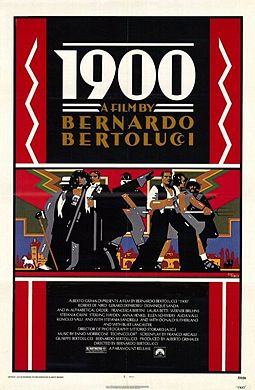
From The Archives -Honor The 90th Anniversary Of The Communist International!- Leon Trotsky's "Manifesto Of The Communist International"

Click Below To Link The Leon Trotsky Internet Archives For "An Invitation To The First World Congress Of The Communist International" In 1919.
http://www.marxists.org/archive/trotsky/1924/ffyci-1/app04.htm
Commentary
This year marks the 90th Anniversary of the founding of the Communist International. The Communist International in its early heroic days represented the hopes and aspirations of the advanced guard of the international working class in the wake of the promise presented by the Russian Bolshevik Revolution of 1917. In the end, that was not to be (Stalin unceremoniously liquidated it during World War II in 1943, long after it revolutionary potential had been exhausted). However today it continues to be desperately necessary to fight for those goals outlined in the first four Congresses. In short, Labor must rule. Below is Leon Trotsky's "Manifesto of the Communist International". It still reads pretty well today. Forward
Leon Trotsky
The First Five Years of the Communist International
Volume 1
--------------------------------------------------------------------------------
Manifesto of the Communist International
to the Workers of the World [1]
SEVENTY-TWO YEARS AGO the Communist Party proclaimed its program to the world in the form of a Manifesto written by the greatest heralds of the proletarian revolution, Karl Marx and Frederick Engels. Even at that time Communism no sooner entered the arena of struggle than it was beset by baiting, lies, hatred and persecution of the possessing classes who rightfully sensed their mortal enemy in Communism. The development of Communism during this three-quarters of a century proceeded along complex paths: side by side with periods of stormy upsurge it knew periods of decline; side by side with successes – cruel defeats. But essentially the movement proceeded along the path indicated in advance by the Communist Manifesto. The epoch of final, decisive struggle has come later than the apostles of the socialist revolution had expected and hoped. But it has come. We Communists, the representatives of the revolutionary proletariat of the various countries of Europe, America and Asia who have gathered in Soviet Moscow, feel and consider ourselves to be the heirs and consummators of the cause whose program was affirmed 72 years ago. Our task is to generalize the revolutionary experience of the working class, to purge the movement of the corroding admixture of opportunism and social-patriotism, to unify the efforts of all genuinely revolutionary parties of the world proletariat and thereby facilitate and hasten the victory of the Communist revolution throughout the world.
* * *
Today when Europe is covered with debris and smoking ruins, the worst pyromaniacs in history are busy seeking out the criminals responsible for the war. In their wake follow their servants – professors, members of parliament, journalists, social-patriots and other political pimps of the bourgeoisie.
For many years the Socialist movement predicted the inevitability of the imperialist war, seeing its causes in the insatiable greed of the property-owning classes of the two chief camps and, generally, of all capitalist countries. At the Basle Congress [2], two years before the war exploded, the responsible Socialist leaders of all countries branded imperialism as bearing the guilt for the impending war, and threatened the bourgeoisie with the socialist revolution which would descend upon the bourgeoisie’s head as the proletarian retribution for the crimes of militarism. Today after the experience of the last five years, after history, having laid bare the predatory appetites of Germany, is unmasking the no less criminal acts of the Allies, the state-Socialists of the Entente countries continue in the wake of their respective governments to discover the war criminal in the person of the overthrown German Kaiser. On top of this, the German social-patriots who in August 1914 proclaimed Hohenzollern’s diplomatic White Book to be the holiest evangel of the peoples are nowadays following in the footsteps of the Entente Socialists and are with vile subservience indicting the overthrown German monarchy, which they had so slavishly served, as the chief war criminal. They thus hope to obscure their own role and at the same time to worm their way into the good graces of the conquerors. But in the light of unfolding events and diplomatic revelations, side by side with the role of the toppled dynasties – the Romanovs, the Hohenzollerns, and the Habsburgs – and of the capitalist cliques of these countries, the role of the ruling classes of France, England, Italy and the United States stands out in all its boundless criminality.
English diplomacy did not lift its visor of secrecy up to the very outbreak of war. The government of the City [3] obviously feared to reveal its intention of entering the war on the side of the Entente lest the Berlin government take fright and be compelled to eschew war. In London they wanted war. That is why they conducted themselves in such a way as to raise hopes in Berlin and Vienna that England would remain neutral, while Paris and Petrograd firmly counted on England’s intervention.
Prepared by the entire course of development over a number of decades, the war was unleashed through the direct and conscious provocation of Great Britain. The British government thereby calculated on extending just enough aid to Russia and France, while they became exhausted, to exhaust England’s mortal enemy, Germany. But the might of German militarism proved far too formidable and demanded of England not token but actual intervention in the war. The role of a gleeful third partner to which Great Britain, following her ancient tradition, aspired, fell to the lot of the United States.
The Washington government became all the more easily reconciled to the English blockade which one-sidedly restricted American stock market speculation in European blood, because the countries of the Entente reimbursed the American bourgeoisie with lush profits for violations of “international law.” However, the Washington government was likewise constrained by the enormous military superiority of Germany to drop its fictitious neutrality. In relation to Europe as a whole the United States assumed the role which England had taken in previous wars and which she tried to take in the last war in relation to the continent, namely: weakening one camp by playing it against another, intervening in military operations only to such an extent as to guarantee her all the advantages of the situation. According to American standards of gambling, Wilson’s stake was not very high, but it was the final stake, and consequently assured his winning the prize.
As a result of the war the contradictions of the capitalist system confronted mankind in the shape of pangs of hunger, exhaustion from cold, epidemics and moral savagery. This settled once and for all the academic controversy within the Socialist movement over the theory of impoverishment [4] and the gradual transition from capitalism to socialism. Statisticians and pedants of the theory that contradictions were being blunted, had for decades fished out from all the corners of the globe real or mythical facts testifying to the rising well-being of various groups and categories of the working class. The theory of mass impoverishment was regarded as buried, amid contemptuous jeers from the eunuchs of bourgeois professordom and mandarins of Socialist opportunism. At the present time this impoverishment, no longer only of a social but also of a physiological and biological kind, rises before us in all its shocking reality.
The catastrophe of the imperialist war has completely swept away all the conquests of trade union and parliamentary struggles. For this war itself was just as much a product of the internal tendencies of capitalism as were those economic agreements and parliamentary compromises which the war buried in blood and muck.
Finance capital, which plunged mankind into the abyss of war, itself underwent a catastrophic change in the course of this war. The dependency of paper money upon the material foundation of production has been completely disrupted. Progressively losing its significance as the means and regulator of capitalist commodity circulation, paper money became transformed into an instrument of requisition, of seizure and military-economic violence in general.
The debasement of paper money reflects the general mortal crisis of capitalist commodity circulation. During the decades preceding the war, free competition, as the regulator of production and distribution, had already been thrust aside in the main fields of economic life by the system of trusts and monopolies; during the course of the war the regulating-directing role was torn from the hands of these economic groups and transferred directly into the hands of militarystate power. The distribution of raw materials, the utilization of Baku or Rumanian oil, Donbas coal, Ukrainian wheat, the fate of German locomotives, freight cars and automobiles, the rationing of relief for starving Europe – all these fundamental questions of the world’s economic life are not being regulated by free competition, nor by associations of national and international trusts and consortiums, but by the direct application of military force, for the sake of its continued preservation. If the complete subjection of the state power to the power of finance capital had led mankind into the imperialist slaughter, then through this slaughter finance capital has succeeded in completely militarizing not only the state but also itself; and it is no longer capable of fulfilling its basic economic functions otherwise than by means of blood and iron.
The opportunists, who before the World War summoned the workers to practice moderation for the sake of gradual transition to socialism, and who during the war demanded class docility in the name of civil peace and national defense, are again demanding self-renunciation of the proletariat – this time for the purpose of overcoming the terrible consequences of the war. If these preachments were to find acceptance among the working masses, capitalist development in new, much more concentrated and monstrous forms would be restored on the bones of several generations – with the perspective of a new and inevitable world war. Fortunately for mankind this is not possible.
The state-ization of economic life, against which capitalist liberalism used to protest so much, has become an accomplished fact. There is no turning back from this fact – it is impossible to return not only to free competition but even to the domination of trusts, syndicates and other economic octopuses. Today the one and only issue is: Who shall henceforth be the bearer of state-ized production – the imperialist state or the state of the victorious proletariat?
In other words: Is all toiling mankind to become the bond slaves of victorious world cliques who, under the firm-name of the League of Nations [5] and aided by an “international” army and “international” navy, will here plunder and strangle some peoples and there cast crumbs to others, while everywhere and always shackling the proletariat – with the sole object of maintaining their own rule? Or shall the working class of Europe and of the advanced countries in other parts of the world take in hand the disrupted and ruined economy in order to assure its regeneration upon socialist principles?
It is possible to shorten the epoch of crisis through which we are living only by measures of the proletarian dictatorship which does not look back to the past, which respects neither inherited privileges nor property rights, which takes as its starting point the need of saving the starving masses; and to this end mobilizes all forces and resources, introduces universal labor conscription, establishes the regime of labor discipline in order in the course of a few years not only to thus heal the gaping wounds inflicted by war but also to raise mankind to new and unprecedented heights.
* * *
The national state which gave a mighty impulsion to capitalist development has become too narrow for the further development of productive forces. This renders all the more precarious the position of small states, hemmed in by the major powers of Europe and scattered through other sections of the world. These small states, which have arisen at different times as fragments chipped from bigger ones, as so much small change in payment for various services rendered and as strategic buffers, retain their own dynasties, their own ruling cliques, their own imperialist pretensions, their own diplomatic intrigues. Prior to the war, their phantom independence rested on the selfsame thing as the equilibrium of Europe: the uninterrupted antagonism between the two imperialist camps. The war has disrupted this equilibrium. By giving at first an enormous preponderance to Germany, the war compelled the small states to seek their salvation under the magnanimous wings of German militarism. After Germany was crushed, the bourgeoisie of the small states, together with their respective patriotic “Socialists,” turned their faces to the victorious Allied imperialism and began seeking guarantees for their continued independent existence in the hypocritical points of the Wilsonian program. At the same time the number of small states has increased; out of the Austro-Hungarian monarchy, out of portions of the former Czarist empire, new states [6] have been carved, which were no sooner born than they flung themselves at one another’s throats over the question of state boundaries. The Allied imperialists are meanwhile preparing such combinations of small powers, both old and new, as would be bound to themselves through the hold of mutual hatreds and common impotence. While oppressing and violating the small and weak peoples, while dooming them to starvation and destruction, the Allied imperialists, like the imperialists of the Central Empire a brief while ago, do not stop talking about the right of self-determination, which is today being trampled underfoot in Europe as in all other parts of the world.
The small peoples can be assured the opportunity of free existence only by the proletarian revolution which will free the productive forces of all countries from the tentacles of the national states, unifying the peoples in closest economic collaboration on the basis of a common economic plan, and offering the weakest and smallest people an opportunity of freely and independently directing their national cultural affairs without any detriment to the unified and centralized European and world economy.
The last war, which was by and large a war for colonies, was at the same time a war conducted with the help of colonies. The colonial populations were drawn into the European war on an unprecedented scale. Indians, Negroes, Arabs and Madagascans fought on the territories of Europe – for the sake of what? For the sake of their right to continue to remain the slaves of England and France. Never before has the infamy of capitalist rule in the colonies been delineated so clearly; never before has the problem of colonial slavery been posed so sharply as it is today.
A number of open insurrections and the revolutionary ferment in all the colonies have hence arisen. In Europe itself, Ireland [7] keeps signaling through sanguinary street battles that she still remains and still feels herself to be an enslaved country. In Madagascar [8], Annam [9] and elsewhere the troops of the bourgeois republic have more than once quelled the uprisings of colonial slaves during the war. In India the revolutionary movement has not subsided for a single day and has recently led to the greatest labor strikes in Asia, which the English government has met by ordering its armored cars into action in Bombay.
The colonial question has been thus posed in its fullest measure not only on the maps at the diplomatic congress in Paris but also within the colonies themselves. At best, Wilson’s program [10] has as its task: to effect a change of labels with regard to colonial slavery. The emancipation of thecolonies is conceivable only in conjunction with the emancipation of the working class in the metropolises. The workers and peasants not only of Annam, Algiers [11], and Bengal [12], but also of Persia and Armenia [13],; will gain their opportunity of independent existence only in that hour when the workers of England and France, having overthrown Lloyd George [14] and Clemenceau [15], will have taken state power into their own hands. Even now the struggle in the more developed colonies, while taking place only under the banner of national liberation, immediately assumes a more or less clearly defined social character. If capitalist Europe has violently dragged the most backward sections of the world into the whirlpool of capitalist relations, then socialist Europe will come to the aid of liberated colonies with her technology, her organization and her ideological influence in order to facilitate their transition to a planned and organized socialist economy.
Colonial slaves of Africa and Asia! The hour of proletarian dictatorship in Europe will strike for you as the hour of your own emancipation!
The entire bourgeois world accuses the Communists of destroying freedom and political democracy. These are lies. Upon assuming power, the proletariat merely lays bare the complete impossibility of employing the methods of bourgeois democracy and creates the conditions and forms of a new and much higher workers’ democracy. The whole course of capitalist development, especially during its final imperialist epoch, has acted to undermine political democracy not only by dividing nations into two irreconcilably hostile classes, but also by condemning numerous petty-bourgeois and proletarian layers, as well as the most disinherited lowest strata of the proletariat, to economic debilitation and political impotence.
In those countries where historical development provided the opportunity, the working class has utilized the regime of political democracy in order to organize against capitalism. The same thing will likewise take place in the future in those countries where conditions for the proletarian revolution have not yet matured. But broad intermediate masses not only in the villages but also in the cities are being held back by capitalism, lagging entire epochs behind historical development.
The peasant in Bavaria [16] and Baden [17] who still cannot sec beyond the spires of his village church, the small French wine producer who is being driven into bankruptcy by the large-scale capitalists who adulterate wine, and the small American farmer fleeced and cheated by bankers and Congressmen – all these social layers thrust back by capitalism away from the mainstream of development are called upon, on paper, by the regime of political democracy to assume the direction of the state. But in reality, on all the basic questions which determine the destinies of the peoples, the financial oligarchy makes the decision behind the back of parliamentary democracy. Such was previously the ease on the question of war; such is now the ease on the question of peace. To the extent that the financial oligarchy still bothers to obtain the sanction of parliamentary ballots for its acts of violence, there are at the disposal of the bourgeois state for obtaining the necessary results all the instruments of lies, demagogy, baiting, calumny, bribery and terror, inherited from the centuries of class slavery and multiplied by all the miracles of capitalist technology.
To demand of the proletariat that it devoutly comply with rules and regulations of political democracy in the final life-and-death combat with capitalism is like demanding of a man, fighting for his life against cutthroats, that he observe the artificial and restrictive rules of French wrestling, which the enemy introduces but fails to observe.
In this kingdom of destruction where not only the means of production and transport but also the institutions of political democracy are heaps of blood-soaked stumps, the proletariat is compelled to create its own apparatus designed first and foremost to cement the inner ties of the working class and to assure the possibility of its revolutionary intervention into the future development of mankindÇ This apparatus is represented by the Workers’ Soviets. The old parties, the old organizations of trade unions have in the persons of their leading summits proved incapable not only of solving but even of understanding the tasks posed by the new epoch. The proletariat has created a new type of organization, a broad organization which embraces the working masses independently of trade or level of political development already attained; a flexible apparatus which permits of continual renovation and extension; and is capable of attracting into its orbit ever newer layers, opening wide its doors to the toiling layers in the city and the country who are close to the proletariat. This irreplaceable organization of working-class self-rule, this organization of its struggle for and later of its conquest of state power, has been tested in the experience of various countries and constitutes the mightiest conquest and weapon of the proletariat in our epoch.
In those countries where the toiling masses live a conscious life, Soviets of Workers’, Soldiers’ and Peasants’ Deputies are now being built and will continue to be built. To strengthen the Soviets, to raise their authority, to counterpose them to the state apparatus of the bourgeoisie – this is today the most important task of the class-conscious and honest workers of all countries. Through the medium of Soviets the working class can save itself from the decomposition which is introduced into its midst by the hellish sufferings of war, by starvation, by the violence of the possessing classes and by the treachery of its former leaders. Through the medium of Soviets the working class will be able to come to power most surely and easily in all countries where the Soviets are able to rally the majority of the toilers. Through the medium of Soviets the working class, having conquered power, will exercise its sway over all spheres of the country’s economic and cultural life, as is the ease at present in Russia. The foundering of the imperialist state, from the Czarist state to the most “democratic” ones, is taking place simultaneously with the foundering of the imperialist military system. The multimillioned armies mobilized by imperialism could only be maintained so long as the proletariat remained obediently under the yoke of the bourgeoisie. The crack-up of national unity signifies the inevitable crackup of the army. This is what happened first in Russia, then in Germany and Austria-Hungary. The same thing may be expected to occur in other imperialist countries as well. The uprising of the peasant against the landlord, of the worker against the capitalist, and of both against the monarchical or “democratic” bureaucracy, inevitably brings in its train the uprising of soldiers against the commanders and subsequently – a deep cleavage between the proletarian and bourgeois elements of the army. Imperialist war, which pitted one nation against another, has passed and is passing over into civil war which pits class against class.
The wails of the bourgeois world against civil war and against Red Terror represent the most monstrous hypocrisy yet known in the history of political struggles. There would be no civil war if the clique of exploiters who have brought mankind to the very brink of ruin did not resist every forward step of the toiling masses, if they did not organize conspiracies and assassinations, and did not summon armed assistance from without in order to maintain or restore their thievish privileges.
Civil war is imposed upon the working class by its mortal enemies. Without renouncing itself and its own future, which is the future of all mankind, the working class cannot fail to answer blow for blow.
While never provoking civil war artificially, the Communist parties seek to shorten as much as possible the duration of civil war whenever the latter does arrive with iron necessity; they seek to reduce to a minimum the number of victims and, above all, to assure victory to the proletariat. Hence flows the necessity of disarming the bourgeoisie in time, of arming the workers in time, of creating in time the Communist army to defend the workers’ power and to preserve its socialist construction inviolate. Such is the Red Army of Soviet Russia which arose and exists as the bulwark of the conquests of the working class against all attacks from within and without. The Soviet Army is inseparable from the Soviet State.
Recognizing the world character of their tasks, the advanced workers have from the very first steps of the organized Socialist movement striven to unify it on an international scale. The beginnings were made in 1864 in London by the First International. The Franco-Prussian War out of which emerged the Germany of the Hohenzollerns [18] cut the ground from under the First International and at the same time gave impetus to the development of national workers’ parties. As far back as 1889 these parties came together in the Congress of Paris and created the organization of the Second International. But the center of gravity of the labor movement during that period remained wholly on national soil, wholly within the framework of national states, upon the foundation of national industry, within the sphere of national parliamentarianism. The decadeÇs of reformist organizational activity gave birth to an entire generation of leaders, the majority of whom recognized in words the program of the social revolution but renounced it in deeds, becoming mired in reformism, in a docile adaptation to the bourgeois state. The opportunist character of the leading parties of the Second International has been completely disclosed; and it led to the greatest collapse in world history at a moment when the march of historic events demanded revolutionary methods of struggle from the working-class parties. If the war of 1870 dealt a blow to the First International, disclosing that there was as yet no fused mass force behind its social-revolutionary program, then the war of 1914 killed the Second International, disclosing that the mightiest organizations of the working masses were dominated by parties which had become transformed into auxiliary organs of the bourgeois state!
This applies not only to the socialpatriots who have today clearly and openly gone over to the camp of the bourgeoisie, who have become the latter’s favorite plenipotentiaries and trustees and the most reliable executioners of the working class; it also applies to the amorphous and unstable tendency of the Socialist Center [19] which seeks to reestablish the Second International, that is, to reestablish the narrowness, the opportunism and the revolutionary impotence of its leading summits. The Independent Party of Germany, the present majority of the Socialist Party of France, the Menshevik group of Russia, the Independent Labor Party of England and other similar groups are actually trying to fill the place which had been occupied prior to the war by the old official parties of the Second International. They come forward as hitherto with the ideas of compromise and conciliationism; with all the means at their disposal, they paralyze the energy of the proletariat, prolonging the crisis and thereby redoubling Europe’s calamities. The struggle against the Socialist Center is the indispensable premise for the successful struggle against imperialism.
Sweeping aside the halfheartedness, lies and corruption of the outlived official Socialist parties, we Communists, united in the Third International, consider ourselves the direct continuators of the heroic endeavors and martyrdom of a long line of revolutionary generations from Babeuf [20] – to Karl Liebknecht [21] and Rosa Luxemburg. [22]
If the First International presaged the future course of development and indicated its paths; if the Second International gathered and organized millions of workers; then the Third International is the International of open mass action, the International of revolutionary realization, the International of the deed.
Bourgeois world order has been sufficiently lashed by Socialist criticism. The task of the International Communist Party consists in overthrowing this order and erecting in its place the edifice of the socialist order. We summon the working men and women of all countries to unite under the Communist banner which is already the banner of the first great victories.
Workers of the World – in the struggle against imperialist barbarism, against monarchy, against the privileged estates, against the bourgeois state and bourgeois property, against all kinds and forms of class or national oppression – Unite!
Under the banner of Workers’ Soviets, under the banner of revolutionary struggle for power and the dictatorship of the proletariat, under the banner of the Third International – Workers of the World Unite!
--------------------------------------------------------------------------------
Notes
1. The Manifesto of the Communist International was adopted unanimously at the last (fifth) session of the First World Congress on March 6, 1919. It was published in the first issue of Communist International, organ of the Comintern which appeared in Russian, German, French and English, and which began publication in May 1919, with Zinoviev as editor.
2. The last pre-war Congress of the Second International took place in 1912 at Basle, Switzerland. Only one point was on the agenda of this Congress, namely, the struggle against the war danger. After Jaurès delivered his report, a revolutionary resolution was adopted.
3. City – that section of London where the biggest English banks are located.
4. The term “theory of impoverishment” was invented by Bernstein, the father of revisionism, in 1890. Bernstein leveled his criticism especially against Marx’s famous assertion that the poverty of the proletariat as a whole tends to increase with the development of capitalism. “Along with the constantly diminishing number of the magnates of capital, who usurp and monopolise all advantages of this process or transformation, grows the mass misery, oppression, slavery, degradation, exploitation ...” (Karl Marx, Capital, Vol.I, p.836.) Marx and Engels first propounded this in the Communist Manifesto in 1848. Most of the theoreticians of the Second International made a concession to Bernstein by arguing that Marx had allegedly referred to the relative and not at all to the absolute impoverishment of the masses. “The proposition in the Manifesto concerning the tendency of capitalism to lower the living standards of the workers, and even to transform them into paupers, has been subjected to a heavy barrage. Parsons, professors, ministers, journalists, Social-Democratic theoreticians, and trade union leaders come to the front against the so-called ‘theory of impoverishment.’ They invariably discovered signs of growing prosperity among the toilers, palming off the labor aristocracy as the proletariat, or taking a fleeting tendency as permanent. Meanwhile, even the development of the mightiest capitalism in the world, namely US capitalism, has transformed millions of workers into paupers who are maintained at the expense of federal, municipal, or private charity.” (Leon Trotsky, 90 Years of the Communist Manifesto, New International, Vol.4 No.2, Feb. 1938, p.54)
5. The League of Nations – the “thieves’ kitchen” as Lenin called it – was created at the Versailles Conference convened by the victors of the first imperialist war early in 1919. At its inception and for many years thereafter the League prohibited the entry of the conquered countries. It was one of the instruments which helped prepare the Second World War.
6. It was in this way that Czechoslovakia, Hungary, Poland, Yugoslavia and other countries were formed in 1919.
7. In 1916 uprisings occurred in Ireland against England which were crushed with typical imperialist brutality.
8. Madagascar, an island off the coast of Africa, is part of the French colonial empire.
9.Annam was a French colony on the eastern shore of the Indo-China peninsula, i.e. present-day Vietnam.
10. Woodrow Wilson was President of the US 1912-20. During the first imperialist world war Wilson offered to mediate between the Allies and Germany, proposing that a peace be negotiated without annexations or reparations, etc., etc. This pacifist program for world peace, along with the notorious “14 points” and League of Nations as a “world tribunal,” etc., etc., were hailed by all the liberals and social-chauvinists. Every one of the Wilsonian ideas and “ideals” proved absolutely bankrupt and a complete fraud.
11.Algiers was then a French colony in North Africa. Now the state of Algeria.
12. Bengal was then the largest province of India. East Bengal now forms the state of Bangladesh and West Bengal a state of India.
13. Armenia was then a de facto protectorate of England.
14. Lloyd George, one of the authors of the Versailles Treaty, was the head of the English government during the First World War. Beginning his career as a liberal reformer, he came into prominence in 1908 as the sponsor of the 8-hour day for the miners. Thereafter he instituted (1909) arbitration bodies, comprising representatives of the government, labor and the “public,” to regulate wages in the most back-ward branches of English industry; and in 1911, he sponsored laws covering unemployment insurance, sick benefits, etc. (compare Roosevelt’s “New Deal”). Naturally, this record qualified him eminently to serve as the leader of the imperialist bourgeoisie during the First World War and in the critical period following this war. While propagandizing the war as a “war for democracy” Lloyd George, hand in hand with the Tories, bolstered up the dictatorship of the English imperialist clique, undermined the previous conquests of the English working class, introduced conscription, crushed the uprisings in Ireland and so on. In the postwar epoch, he resorted to compromise in order to restore capitalist equilibrium. After the Soviets had crushed ail the attempts of the imperialist intervention and of the counter-revolution he became one of the advocates of re-establishing economic ties with the Soviet Union. In November 1922, Lloyd George and his Liberal Party suffered defeat in the parliamentary elections, and the Tories took over the reins directly.
15. Clemenceau, chief inspirer of Versailles, was in his youth a radical, called himself a Socialist and was even for a time member of the French Socialist Party. Later he became the beloved leader of the French big bourgeoisie – its “Tiger.” In the days of the Versailles Conference and during the era of the First World Congress of the Communist International, Clemenceau headed the French cabinet.
16. Bavaria – one of the autonomous states of the old German empire. Its population is predominantly rural, the largest section of this rural population consisting of the so-called “strong” or middle farmer.
17. Baden – a South German state with the same characteristics as Bavaria.
18. Up to the Franco-Prussian War (1870), Germany was divided into a number of independent states. The war with France and the victory over Napoleon III eliminated the chief opponent of their unification. The modern German empire was founded in 1871 with the Prussian King Wilhelm I at the head.
19. “The Socialist Center,” or the Centrists in the labor movement – in 1914-18 and throughout the era of the first four Congresses of the Comintern constituted chiefly by the German and Austrian follower of Karl Kautsky. Kautsky preached that the basic task of the labor movement after the last war was to reestablish a united Second International; and he pleaded with the Socialists of all countries that they mutually forgive and forget their respective sins.
20.Babeuf was the leader of the extreme wing of the French plebeian revolutionists at the end of the eighteenth century. Babeuf and his followers were the first ones in history to attempt a revolutionary overturn in order to establish the dictatorship of the toilers. Babeuf’s conspiracy was discovered and, together with a number of his followers, he was executed in 1797.
21. Karl Liebknecht (1891-1919) – leader of the German revolutionary labor movement, founder with Rosa Luxemburg of the German Communist Party, founder of the Communist Youth movement. Long before the First World War, he earned revolutionary renown by his struggle against militarism. He was sentenced to 18 months in prison for writing his pamphlet, Militarism and Anti-Militarism. Liebknecht’s name is a symbol of revolutionary internationalism and irreconcilable opposition to imperialist war. On August 3, 1914 he opposed voting for war credits at a session of the Social-Democratic parliamentary fraction; but under the pressure of party discipline he voted together with the entire party fraction at the Reichstag session on August 4, 1914. When the next vote was taken, on December 2, 1914, he was the only deputy who cast his vote against. But even before that, in October of the same year, he published, jointly with Rosa Luxemburg, Franz Mehring and Clara Zetkin, a statement against the official party position in the Swiss Social-Democratic press. In March 1915, when the Reichstag took a vote on war credits, 30 Social Democrats left the chambers and the only ones who voted against were Liebknecht and Otto Rühle. In 1915 he began to organize the Spartacus League and started the publication of the famous Spartacus Letters. When the Zimmerwald Conference convened, Liebknecht was drafted into the army and could not attend, but he forwarded a letter to this conference which closed with the following words: “Not civil peace, but civil war – that is our slogan.” On January 12, 1916 the Social-Democratic fraction expelled him from its ranks. On May Day 1916 he distributed anti-war leaflets in Potsdam Square in Berlin, was arrested and sentenced to hard labor. The victory of the Russian October found him in prison where he greeted the conquest of the Russian workers and peasants, and summoned the German workers to follow this great example. The November 1918 revolution in Germany freed him from prison, untying his hands for a direct struggle against the social-chauvinists and their centrist allies. Together with Rosa Luxemburg and Leo Jogiches (Tyshko) he organized the Communist Party of Germany which in December 1919 broke all connections with the Independent Social-Democratic Party, headed by Kautsky and Haase. As member of the revolutionary committee, he headed the uprising of the Berlin workers in January 1919. After this uprising was suppressed he was arrested by the Scheidemann government and on January 15, 1919 was assassinated together with Rosa Luxemburg by a gang of German officers, covertly abetted by the Scheidemannists.
22. Rosa Luxemburg (1871-1919) – the theoretician of German Communism and author of a number of theoretical books on economics, politics and other questions. She played a very prominent role in the labor movement before the First World War and was the leader of its left wing. She participated in the Polish and Russian revolutionary movements; and from 1910 headed the revolutionary opposition within the German Social Democracy. In 1918, together with Liebknecht, she founded the German Communist Party. Rosa, “our Rosa” as the old revolutionary movement knew her, was born in Poland. At the age of eighteen she was forced to migrate because of her revolutionary activities to Zurich, Switzerland. In 1893 she founded the Polish Social-Democratic Party (later known as the Social-Democratic Party of Poland and Lithuania). In 1897 she began participating in the German socialist movement. It was Luxemburg, Mehring and Plekhanov who initiated the struggle against revisionism within the Second International (Bernsteinism and Millerandism) and compelled Kautsky to take a position against it. At the 1907 London Congress of the Russian party she supported the Bolsheviks against the Mensheviks on all the key problems of the Russian revolution. The same year, in autumn, together with Lenin she introduced at the Stuttgart Congress of the Second International the revolutionary anti-war resolution which was adopted in essence by that Congress. Long before the war she came into conflict with Kautsky and other Centrists in the German party. When the First World War broke out, she took an internationalist position from the outset. From jail – she was incarcerated in February 1915 – she collaborated in the illegally published Spartacus Letters, and in the work of the Spartacus League. In the spring of 1916 she wrote in jail, under the pseudonym of Junius, the famous pamphlet The Crisis of the Social Democracy in which she pointed out the urgent need of creating the Third International. After the November 1918 revolution in Germany she was freed and joined in the work of creating the Communist Party, being the founder and editor of Rote Fahne, the party’s central organ. After the crushing of the 1919 uprising in Berlin she was arrested and murdered together with Karl Liebknecht.
As is always appropriate on international working class holidays and days of remembrance here is the song most closely associated with that movement “The Internationale” in English, French and German. I will not vouch for the closeness of the translations but certainly of the spirit. Workers Of The World Unite!
The Internationale [variant words in square brackets]
Arise ye workers [starvelings] from your slumbers
Arise ye prisoners of want
For reason in revolt now thunders
And at last ends the age of cant.
Away with all your superstitions
Servile masses arise, arise
We'll change henceforth [forthwith] the old tradition [conditions]
And spurn the dust to win the prize.
So comrades, come rally
And the last fight let us face
The Internationale unites the human race.
So comrades, come rally
And the last fight let us face
The Internationale unites the human race.
No more deluded by reaction
On tyrants only we'll make war
The soldiers too will take strike action
They'll break ranks and fight no more
And if those cannibals keep trying
To sacrifice us to their pride
They soon shall hear the bullets flying
We'll shoot the generals on our own side.
No saviour from on high delivers
No faith have we in prince or peer
Our own right hand the chains must shiver
Chains of hatred, greed and fear
E'er the thieves will out with their booty [give up their booty]
And give to all a happier lot.
Each [those] at the forge must do their duty
And we'll strike while the iron is hot.
________________________________________
L'Internationale
Debout les damnés de la terre
Debout les forçats de la faim
La raison tonne en son cratère
C'est l'éruption de la fin
Du passe faisons table rase
Foules, esclaves, debout, debout
Le monde va changer de base
Nous ne sommes rien, soyons tout
C'est la lutte finale
Groupons-nous, et demain (bis)
L'Internationale
Sera le genre humain
Il n'est pas de sauveurs suprêmes
Ni Dieu, ni César, ni tribun
Producteurs, sauvons-nous nous-mêmes
Décrétons le salut commun
Pour que le voleur rende gorge
Pour tirer l'esprit du cachot
Soufflons nous-mêmes notre forge
Battons le fer quand il est chaud
L'état comprime et la loi triche
L'impôt saigne le malheureux
Nul devoir ne s'impose au riche
Le droit du pauvre est un mot creux
C'est assez, languir en tutelle
L'égalité veut d'autres lois
Pas de droits sans devoirs dit-elle
Egaux, pas de devoirs sans droits
Hideux dans leur apothéose
Les rois de la mine et du rail
Ont-ils jamais fait autre chose
Que dévaliser le travail
Dans les coffres-forts de la bande
Ce qu'il a crée s'est fondu
En décrétant qu'on le lui rende
Le peuple ne veut que son dû.
Les rois nous saoulaient de fumées
Paix entre nous, guerre aux tyrans
Appliquons la grève aux armées
Crosse en l'air, et rompons les rangs
S'ils s'obstinent, ces cannibales
A faire de nous des héros
Ils sauront bientôt que nos balles
Sont pour nos propres généraux
Ouvriers, paysans, nous sommes
Le grand parti des travailleurs
La terre n'appartient qu'aux hommes
L'oisif ira loger ailleurs
Combien, de nos chairs se repaissent
Mais si les corbeaux, les vautours
Un de ces matins disparaissent
Le soleil brillera toujours.
________________________________________
Die Internationale
Wacht auf, Verdammte dieser Erde,
die stets man noch zum Hungern zwingt!
Das Recht wie Glut im Kraterherde
nun mit Macht zum Durchbruch dringt.
Reinen Tisch macht mit dem Bedranger!
Heer der Sklaven, wache auf!
Ein nichts zu sein, tragt es nicht langer
Alles zu werden, stromt zuhauf!
Volker, hort die Signale!
Auf, zum letzten Gefecht!
Die Internationale
Erkampft das Menschenrecht
Es rettet uns kein hoh'res Wesen
kein Gott, kein Kaiser, noch Tribun
Uns aus dem Elend zu erlosen
konnen wir nur selber tun!
Leeres Wort: des armen Rechte,
Leeres Wort: des Reichen Pflicht!
Unmundigt nennt man uns Knechte,
duldet die Schmach langer nicht!
In Stadt und Land, ihr Arbeitsleute,
wir sind die starkste Partei'n
Die Mussigganger schiebt beiseite!
Diese Welt muss unser sein;
Unser Blut sei nicht mehr der Raben
und der machtigen Geier Frass!
Erst wenn wir sie vertrieben haben
dann scheint die Sonn' ohn' Unterlass!

Click Below To Link The Leon Trotsky Internet Archives For "An Invitation To The First World Congress Of The Communist International" In 1919.
http://www.marxists.org/archive/trotsky/1924/ffyci-1/app04.htm
Commentary
This year marks the 90th Anniversary of the founding of the Communist International. The Communist International in its early heroic days represented the hopes and aspirations of the advanced guard of the international working class in the wake of the promise presented by the Russian Bolshevik Revolution of 1917. In the end, that was not to be (Stalin unceremoniously liquidated it during World War II in 1943, long after it revolutionary potential had been exhausted). However today it continues to be desperately necessary to fight for those goals outlined in the first four Congresses. In short, Labor must rule. Below is Leon Trotsky's "Manifesto of the Communist International". It still reads pretty well today. Forward
Leon Trotsky
The First Five Years of the Communist International
Volume 1
--------------------------------------------------------------------------------
Manifesto of the Communist International
to the Workers of the World [1]
SEVENTY-TWO YEARS AGO the Communist Party proclaimed its program to the world in the form of a Manifesto written by the greatest heralds of the proletarian revolution, Karl Marx and Frederick Engels. Even at that time Communism no sooner entered the arena of struggle than it was beset by baiting, lies, hatred and persecution of the possessing classes who rightfully sensed their mortal enemy in Communism. The development of Communism during this three-quarters of a century proceeded along complex paths: side by side with periods of stormy upsurge it knew periods of decline; side by side with successes – cruel defeats. But essentially the movement proceeded along the path indicated in advance by the Communist Manifesto. The epoch of final, decisive struggle has come later than the apostles of the socialist revolution had expected and hoped. But it has come. We Communists, the representatives of the revolutionary proletariat of the various countries of Europe, America and Asia who have gathered in Soviet Moscow, feel and consider ourselves to be the heirs and consummators of the cause whose program was affirmed 72 years ago. Our task is to generalize the revolutionary experience of the working class, to purge the movement of the corroding admixture of opportunism and social-patriotism, to unify the efforts of all genuinely revolutionary parties of the world proletariat and thereby facilitate and hasten the victory of the Communist revolution throughout the world.
* * *
Today when Europe is covered with debris and smoking ruins, the worst pyromaniacs in history are busy seeking out the criminals responsible for the war. In their wake follow their servants – professors, members of parliament, journalists, social-patriots and other political pimps of the bourgeoisie.
For many years the Socialist movement predicted the inevitability of the imperialist war, seeing its causes in the insatiable greed of the property-owning classes of the two chief camps and, generally, of all capitalist countries. At the Basle Congress [2], two years before the war exploded, the responsible Socialist leaders of all countries branded imperialism as bearing the guilt for the impending war, and threatened the bourgeoisie with the socialist revolution which would descend upon the bourgeoisie’s head as the proletarian retribution for the crimes of militarism. Today after the experience of the last five years, after history, having laid bare the predatory appetites of Germany, is unmasking the no less criminal acts of the Allies, the state-Socialists of the Entente countries continue in the wake of their respective governments to discover the war criminal in the person of the overthrown German Kaiser. On top of this, the German social-patriots who in August 1914 proclaimed Hohenzollern’s diplomatic White Book to be the holiest evangel of the peoples are nowadays following in the footsteps of the Entente Socialists and are with vile subservience indicting the overthrown German monarchy, which they had so slavishly served, as the chief war criminal. They thus hope to obscure their own role and at the same time to worm their way into the good graces of the conquerors. But in the light of unfolding events and diplomatic revelations, side by side with the role of the toppled dynasties – the Romanovs, the Hohenzollerns, and the Habsburgs – and of the capitalist cliques of these countries, the role of the ruling classes of France, England, Italy and the United States stands out in all its boundless criminality.
English diplomacy did not lift its visor of secrecy up to the very outbreak of war. The government of the City [3] obviously feared to reveal its intention of entering the war on the side of the Entente lest the Berlin government take fright and be compelled to eschew war. In London they wanted war. That is why they conducted themselves in such a way as to raise hopes in Berlin and Vienna that England would remain neutral, while Paris and Petrograd firmly counted on England’s intervention.
Prepared by the entire course of development over a number of decades, the war was unleashed through the direct and conscious provocation of Great Britain. The British government thereby calculated on extending just enough aid to Russia and France, while they became exhausted, to exhaust England’s mortal enemy, Germany. But the might of German militarism proved far too formidable and demanded of England not token but actual intervention in the war. The role of a gleeful third partner to which Great Britain, following her ancient tradition, aspired, fell to the lot of the United States.
The Washington government became all the more easily reconciled to the English blockade which one-sidedly restricted American stock market speculation in European blood, because the countries of the Entente reimbursed the American bourgeoisie with lush profits for violations of “international law.” However, the Washington government was likewise constrained by the enormous military superiority of Germany to drop its fictitious neutrality. In relation to Europe as a whole the United States assumed the role which England had taken in previous wars and which she tried to take in the last war in relation to the continent, namely: weakening one camp by playing it against another, intervening in military operations only to such an extent as to guarantee her all the advantages of the situation. According to American standards of gambling, Wilson’s stake was not very high, but it was the final stake, and consequently assured his winning the prize.
As a result of the war the contradictions of the capitalist system confronted mankind in the shape of pangs of hunger, exhaustion from cold, epidemics and moral savagery. This settled once and for all the academic controversy within the Socialist movement over the theory of impoverishment [4] and the gradual transition from capitalism to socialism. Statisticians and pedants of the theory that contradictions were being blunted, had for decades fished out from all the corners of the globe real or mythical facts testifying to the rising well-being of various groups and categories of the working class. The theory of mass impoverishment was regarded as buried, amid contemptuous jeers from the eunuchs of bourgeois professordom and mandarins of Socialist opportunism. At the present time this impoverishment, no longer only of a social but also of a physiological and biological kind, rises before us in all its shocking reality.
The catastrophe of the imperialist war has completely swept away all the conquests of trade union and parliamentary struggles. For this war itself was just as much a product of the internal tendencies of capitalism as were those economic agreements and parliamentary compromises which the war buried in blood and muck.
Finance capital, which plunged mankind into the abyss of war, itself underwent a catastrophic change in the course of this war. The dependency of paper money upon the material foundation of production has been completely disrupted. Progressively losing its significance as the means and regulator of capitalist commodity circulation, paper money became transformed into an instrument of requisition, of seizure and military-economic violence in general.
The debasement of paper money reflects the general mortal crisis of capitalist commodity circulation. During the decades preceding the war, free competition, as the regulator of production and distribution, had already been thrust aside in the main fields of economic life by the system of trusts and monopolies; during the course of the war the regulating-directing role was torn from the hands of these economic groups and transferred directly into the hands of militarystate power. The distribution of raw materials, the utilization of Baku or Rumanian oil, Donbas coal, Ukrainian wheat, the fate of German locomotives, freight cars and automobiles, the rationing of relief for starving Europe – all these fundamental questions of the world’s economic life are not being regulated by free competition, nor by associations of national and international trusts and consortiums, but by the direct application of military force, for the sake of its continued preservation. If the complete subjection of the state power to the power of finance capital had led mankind into the imperialist slaughter, then through this slaughter finance capital has succeeded in completely militarizing not only the state but also itself; and it is no longer capable of fulfilling its basic economic functions otherwise than by means of blood and iron.
The opportunists, who before the World War summoned the workers to practice moderation for the sake of gradual transition to socialism, and who during the war demanded class docility in the name of civil peace and national defense, are again demanding self-renunciation of the proletariat – this time for the purpose of overcoming the terrible consequences of the war. If these preachments were to find acceptance among the working masses, capitalist development in new, much more concentrated and monstrous forms would be restored on the bones of several generations – with the perspective of a new and inevitable world war. Fortunately for mankind this is not possible.
The state-ization of economic life, against which capitalist liberalism used to protest so much, has become an accomplished fact. There is no turning back from this fact – it is impossible to return not only to free competition but even to the domination of trusts, syndicates and other economic octopuses. Today the one and only issue is: Who shall henceforth be the bearer of state-ized production – the imperialist state or the state of the victorious proletariat?
In other words: Is all toiling mankind to become the bond slaves of victorious world cliques who, under the firm-name of the League of Nations [5] and aided by an “international” army and “international” navy, will here plunder and strangle some peoples and there cast crumbs to others, while everywhere and always shackling the proletariat – with the sole object of maintaining their own rule? Or shall the working class of Europe and of the advanced countries in other parts of the world take in hand the disrupted and ruined economy in order to assure its regeneration upon socialist principles?
It is possible to shorten the epoch of crisis through which we are living only by measures of the proletarian dictatorship which does not look back to the past, which respects neither inherited privileges nor property rights, which takes as its starting point the need of saving the starving masses; and to this end mobilizes all forces and resources, introduces universal labor conscription, establishes the regime of labor discipline in order in the course of a few years not only to thus heal the gaping wounds inflicted by war but also to raise mankind to new and unprecedented heights.
* * *
The national state which gave a mighty impulsion to capitalist development has become too narrow for the further development of productive forces. This renders all the more precarious the position of small states, hemmed in by the major powers of Europe and scattered through other sections of the world. These small states, which have arisen at different times as fragments chipped from bigger ones, as so much small change in payment for various services rendered and as strategic buffers, retain their own dynasties, their own ruling cliques, their own imperialist pretensions, their own diplomatic intrigues. Prior to the war, their phantom independence rested on the selfsame thing as the equilibrium of Europe: the uninterrupted antagonism between the two imperialist camps. The war has disrupted this equilibrium. By giving at first an enormous preponderance to Germany, the war compelled the small states to seek their salvation under the magnanimous wings of German militarism. After Germany was crushed, the bourgeoisie of the small states, together with their respective patriotic “Socialists,” turned their faces to the victorious Allied imperialism and began seeking guarantees for their continued independent existence in the hypocritical points of the Wilsonian program. At the same time the number of small states has increased; out of the Austro-Hungarian monarchy, out of portions of the former Czarist empire, new states [6] have been carved, which were no sooner born than they flung themselves at one another’s throats over the question of state boundaries. The Allied imperialists are meanwhile preparing such combinations of small powers, both old and new, as would be bound to themselves through the hold of mutual hatreds and common impotence. While oppressing and violating the small and weak peoples, while dooming them to starvation and destruction, the Allied imperialists, like the imperialists of the Central Empire a brief while ago, do not stop talking about the right of self-determination, which is today being trampled underfoot in Europe as in all other parts of the world.
The small peoples can be assured the opportunity of free existence only by the proletarian revolution which will free the productive forces of all countries from the tentacles of the national states, unifying the peoples in closest economic collaboration on the basis of a common economic plan, and offering the weakest and smallest people an opportunity of freely and independently directing their national cultural affairs without any detriment to the unified and centralized European and world economy.
The last war, which was by and large a war for colonies, was at the same time a war conducted with the help of colonies. The colonial populations were drawn into the European war on an unprecedented scale. Indians, Negroes, Arabs and Madagascans fought on the territories of Europe – for the sake of what? For the sake of their right to continue to remain the slaves of England and France. Never before has the infamy of capitalist rule in the colonies been delineated so clearly; never before has the problem of colonial slavery been posed so sharply as it is today.
A number of open insurrections and the revolutionary ferment in all the colonies have hence arisen. In Europe itself, Ireland [7] keeps signaling through sanguinary street battles that she still remains and still feels herself to be an enslaved country. In Madagascar [8], Annam [9] and elsewhere the troops of the bourgeois republic have more than once quelled the uprisings of colonial slaves during the war. In India the revolutionary movement has not subsided for a single day and has recently led to the greatest labor strikes in Asia, which the English government has met by ordering its armored cars into action in Bombay.
The colonial question has been thus posed in its fullest measure not only on the maps at the diplomatic congress in Paris but also within the colonies themselves. At best, Wilson’s program [10] has as its task: to effect a change of labels with regard to colonial slavery. The emancipation of thecolonies is conceivable only in conjunction with the emancipation of the working class in the metropolises. The workers and peasants not only of Annam, Algiers [11], and Bengal [12], but also of Persia and Armenia [13],; will gain their opportunity of independent existence only in that hour when the workers of England and France, having overthrown Lloyd George [14] and Clemenceau [15], will have taken state power into their own hands. Even now the struggle in the more developed colonies, while taking place only under the banner of national liberation, immediately assumes a more or less clearly defined social character. If capitalist Europe has violently dragged the most backward sections of the world into the whirlpool of capitalist relations, then socialist Europe will come to the aid of liberated colonies with her technology, her organization and her ideological influence in order to facilitate their transition to a planned and organized socialist economy.
Colonial slaves of Africa and Asia! The hour of proletarian dictatorship in Europe will strike for you as the hour of your own emancipation!
The entire bourgeois world accuses the Communists of destroying freedom and political democracy. These are lies. Upon assuming power, the proletariat merely lays bare the complete impossibility of employing the methods of bourgeois democracy and creates the conditions and forms of a new and much higher workers’ democracy. The whole course of capitalist development, especially during its final imperialist epoch, has acted to undermine political democracy not only by dividing nations into two irreconcilably hostile classes, but also by condemning numerous petty-bourgeois and proletarian layers, as well as the most disinherited lowest strata of the proletariat, to economic debilitation and political impotence.
In those countries where historical development provided the opportunity, the working class has utilized the regime of political democracy in order to organize against capitalism. The same thing will likewise take place in the future in those countries where conditions for the proletarian revolution have not yet matured. But broad intermediate masses not only in the villages but also in the cities are being held back by capitalism, lagging entire epochs behind historical development.
The peasant in Bavaria [16] and Baden [17] who still cannot sec beyond the spires of his village church, the small French wine producer who is being driven into bankruptcy by the large-scale capitalists who adulterate wine, and the small American farmer fleeced and cheated by bankers and Congressmen – all these social layers thrust back by capitalism away from the mainstream of development are called upon, on paper, by the regime of political democracy to assume the direction of the state. But in reality, on all the basic questions which determine the destinies of the peoples, the financial oligarchy makes the decision behind the back of parliamentary democracy. Such was previously the ease on the question of war; such is now the ease on the question of peace. To the extent that the financial oligarchy still bothers to obtain the sanction of parliamentary ballots for its acts of violence, there are at the disposal of the bourgeois state for obtaining the necessary results all the instruments of lies, demagogy, baiting, calumny, bribery and terror, inherited from the centuries of class slavery and multiplied by all the miracles of capitalist technology.
To demand of the proletariat that it devoutly comply with rules and regulations of political democracy in the final life-and-death combat with capitalism is like demanding of a man, fighting for his life against cutthroats, that he observe the artificial and restrictive rules of French wrestling, which the enemy introduces but fails to observe.
In this kingdom of destruction where not only the means of production and transport but also the institutions of political democracy are heaps of blood-soaked stumps, the proletariat is compelled to create its own apparatus designed first and foremost to cement the inner ties of the working class and to assure the possibility of its revolutionary intervention into the future development of mankindÇ This apparatus is represented by the Workers’ Soviets. The old parties, the old organizations of trade unions have in the persons of their leading summits proved incapable not only of solving but even of understanding the tasks posed by the new epoch. The proletariat has created a new type of organization, a broad organization which embraces the working masses independently of trade or level of political development already attained; a flexible apparatus which permits of continual renovation and extension; and is capable of attracting into its orbit ever newer layers, opening wide its doors to the toiling layers in the city and the country who are close to the proletariat. This irreplaceable organization of working-class self-rule, this organization of its struggle for and later of its conquest of state power, has been tested in the experience of various countries and constitutes the mightiest conquest and weapon of the proletariat in our epoch.
In those countries where the toiling masses live a conscious life, Soviets of Workers’, Soldiers’ and Peasants’ Deputies are now being built and will continue to be built. To strengthen the Soviets, to raise their authority, to counterpose them to the state apparatus of the bourgeoisie – this is today the most important task of the class-conscious and honest workers of all countries. Through the medium of Soviets the working class can save itself from the decomposition which is introduced into its midst by the hellish sufferings of war, by starvation, by the violence of the possessing classes and by the treachery of its former leaders. Through the medium of Soviets the working class will be able to come to power most surely and easily in all countries where the Soviets are able to rally the majority of the toilers. Through the medium of Soviets the working class, having conquered power, will exercise its sway over all spheres of the country’s economic and cultural life, as is the ease at present in Russia. The foundering of the imperialist state, from the Czarist state to the most “democratic” ones, is taking place simultaneously with the foundering of the imperialist military system. The multimillioned armies mobilized by imperialism could only be maintained so long as the proletariat remained obediently under the yoke of the bourgeoisie. The crack-up of national unity signifies the inevitable crackup of the army. This is what happened first in Russia, then in Germany and Austria-Hungary. The same thing may be expected to occur in other imperialist countries as well. The uprising of the peasant against the landlord, of the worker against the capitalist, and of both against the monarchical or “democratic” bureaucracy, inevitably brings in its train the uprising of soldiers against the commanders and subsequently – a deep cleavage between the proletarian and bourgeois elements of the army. Imperialist war, which pitted one nation against another, has passed and is passing over into civil war which pits class against class.
The wails of the bourgeois world against civil war and against Red Terror represent the most monstrous hypocrisy yet known in the history of political struggles. There would be no civil war if the clique of exploiters who have brought mankind to the very brink of ruin did not resist every forward step of the toiling masses, if they did not organize conspiracies and assassinations, and did not summon armed assistance from without in order to maintain or restore their thievish privileges.
Civil war is imposed upon the working class by its mortal enemies. Without renouncing itself and its own future, which is the future of all mankind, the working class cannot fail to answer blow for blow.
While never provoking civil war artificially, the Communist parties seek to shorten as much as possible the duration of civil war whenever the latter does arrive with iron necessity; they seek to reduce to a minimum the number of victims and, above all, to assure victory to the proletariat. Hence flows the necessity of disarming the bourgeoisie in time, of arming the workers in time, of creating in time the Communist army to defend the workers’ power and to preserve its socialist construction inviolate. Such is the Red Army of Soviet Russia which arose and exists as the bulwark of the conquests of the working class against all attacks from within and without. The Soviet Army is inseparable from the Soviet State.
Recognizing the world character of their tasks, the advanced workers have from the very first steps of the organized Socialist movement striven to unify it on an international scale. The beginnings were made in 1864 in London by the First International. The Franco-Prussian War out of which emerged the Germany of the Hohenzollerns [18] cut the ground from under the First International and at the same time gave impetus to the development of national workers’ parties. As far back as 1889 these parties came together in the Congress of Paris and created the organization of the Second International. But the center of gravity of the labor movement during that period remained wholly on national soil, wholly within the framework of national states, upon the foundation of national industry, within the sphere of national parliamentarianism. The decadeÇs of reformist organizational activity gave birth to an entire generation of leaders, the majority of whom recognized in words the program of the social revolution but renounced it in deeds, becoming mired in reformism, in a docile adaptation to the bourgeois state. The opportunist character of the leading parties of the Second International has been completely disclosed; and it led to the greatest collapse in world history at a moment when the march of historic events demanded revolutionary methods of struggle from the working-class parties. If the war of 1870 dealt a blow to the First International, disclosing that there was as yet no fused mass force behind its social-revolutionary program, then the war of 1914 killed the Second International, disclosing that the mightiest organizations of the working masses were dominated by parties which had become transformed into auxiliary organs of the bourgeois state!
This applies not only to the socialpatriots who have today clearly and openly gone over to the camp of the bourgeoisie, who have become the latter’s favorite plenipotentiaries and trustees and the most reliable executioners of the working class; it also applies to the amorphous and unstable tendency of the Socialist Center [19] which seeks to reestablish the Second International, that is, to reestablish the narrowness, the opportunism and the revolutionary impotence of its leading summits. The Independent Party of Germany, the present majority of the Socialist Party of France, the Menshevik group of Russia, the Independent Labor Party of England and other similar groups are actually trying to fill the place which had been occupied prior to the war by the old official parties of the Second International. They come forward as hitherto with the ideas of compromise and conciliationism; with all the means at their disposal, they paralyze the energy of the proletariat, prolonging the crisis and thereby redoubling Europe’s calamities. The struggle against the Socialist Center is the indispensable premise for the successful struggle against imperialism.
Sweeping aside the halfheartedness, lies and corruption of the outlived official Socialist parties, we Communists, united in the Third International, consider ourselves the direct continuators of the heroic endeavors and martyrdom of a long line of revolutionary generations from Babeuf [20] – to Karl Liebknecht [21] and Rosa Luxemburg. [22]
If the First International presaged the future course of development and indicated its paths; if the Second International gathered and organized millions of workers; then the Third International is the International of open mass action, the International of revolutionary realization, the International of the deed.
Bourgeois world order has been sufficiently lashed by Socialist criticism. The task of the International Communist Party consists in overthrowing this order and erecting in its place the edifice of the socialist order. We summon the working men and women of all countries to unite under the Communist banner which is already the banner of the first great victories.
Workers of the World – in the struggle against imperialist barbarism, against monarchy, against the privileged estates, against the bourgeois state and bourgeois property, against all kinds and forms of class or national oppression – Unite!
Under the banner of Workers’ Soviets, under the banner of revolutionary struggle for power and the dictatorship of the proletariat, under the banner of the Third International – Workers of the World Unite!
--------------------------------------------------------------------------------
Notes
1. The Manifesto of the Communist International was adopted unanimously at the last (fifth) session of the First World Congress on March 6, 1919. It was published in the first issue of Communist International, organ of the Comintern which appeared in Russian, German, French and English, and which began publication in May 1919, with Zinoviev as editor.
2. The last pre-war Congress of the Second International took place in 1912 at Basle, Switzerland. Only one point was on the agenda of this Congress, namely, the struggle against the war danger. After Jaurès delivered his report, a revolutionary resolution was adopted.
3. City – that section of London where the biggest English banks are located.
4. The term “theory of impoverishment” was invented by Bernstein, the father of revisionism, in 1890. Bernstein leveled his criticism especially against Marx’s famous assertion that the poverty of the proletariat as a whole tends to increase with the development of capitalism. “Along with the constantly diminishing number of the magnates of capital, who usurp and monopolise all advantages of this process or transformation, grows the mass misery, oppression, slavery, degradation, exploitation ...” (Karl Marx, Capital, Vol.I, p.836.) Marx and Engels first propounded this in the Communist Manifesto in 1848. Most of the theoreticians of the Second International made a concession to Bernstein by arguing that Marx had allegedly referred to the relative and not at all to the absolute impoverishment of the masses. “The proposition in the Manifesto concerning the tendency of capitalism to lower the living standards of the workers, and even to transform them into paupers, has been subjected to a heavy barrage. Parsons, professors, ministers, journalists, Social-Democratic theoreticians, and trade union leaders come to the front against the so-called ‘theory of impoverishment.’ They invariably discovered signs of growing prosperity among the toilers, palming off the labor aristocracy as the proletariat, or taking a fleeting tendency as permanent. Meanwhile, even the development of the mightiest capitalism in the world, namely US capitalism, has transformed millions of workers into paupers who are maintained at the expense of federal, municipal, or private charity.” (Leon Trotsky, 90 Years of the Communist Manifesto, New International, Vol.4 No.2, Feb. 1938, p.54)
5. The League of Nations – the “thieves’ kitchen” as Lenin called it – was created at the Versailles Conference convened by the victors of the first imperialist war early in 1919. At its inception and for many years thereafter the League prohibited the entry of the conquered countries. It was one of the instruments which helped prepare the Second World War.
6. It was in this way that Czechoslovakia, Hungary, Poland, Yugoslavia and other countries were formed in 1919.
7. In 1916 uprisings occurred in Ireland against England which were crushed with typical imperialist brutality.
8. Madagascar, an island off the coast of Africa, is part of the French colonial empire.
9.Annam was a French colony on the eastern shore of the Indo-China peninsula, i.e. present-day Vietnam.
10. Woodrow Wilson was President of the US 1912-20. During the first imperialist world war Wilson offered to mediate between the Allies and Germany, proposing that a peace be negotiated without annexations or reparations, etc., etc. This pacifist program for world peace, along with the notorious “14 points” and League of Nations as a “world tribunal,” etc., etc., were hailed by all the liberals and social-chauvinists. Every one of the Wilsonian ideas and “ideals” proved absolutely bankrupt and a complete fraud.
11.Algiers was then a French colony in North Africa. Now the state of Algeria.
12. Bengal was then the largest province of India. East Bengal now forms the state of Bangladesh and West Bengal a state of India.
13. Armenia was then a de facto protectorate of England.
14. Lloyd George, one of the authors of the Versailles Treaty, was the head of the English government during the First World War. Beginning his career as a liberal reformer, he came into prominence in 1908 as the sponsor of the 8-hour day for the miners. Thereafter he instituted (1909) arbitration bodies, comprising representatives of the government, labor and the “public,” to regulate wages in the most back-ward branches of English industry; and in 1911, he sponsored laws covering unemployment insurance, sick benefits, etc. (compare Roosevelt’s “New Deal”). Naturally, this record qualified him eminently to serve as the leader of the imperialist bourgeoisie during the First World War and in the critical period following this war. While propagandizing the war as a “war for democracy” Lloyd George, hand in hand with the Tories, bolstered up the dictatorship of the English imperialist clique, undermined the previous conquests of the English working class, introduced conscription, crushed the uprisings in Ireland and so on. In the postwar epoch, he resorted to compromise in order to restore capitalist equilibrium. After the Soviets had crushed ail the attempts of the imperialist intervention and of the counter-revolution he became one of the advocates of re-establishing economic ties with the Soviet Union. In November 1922, Lloyd George and his Liberal Party suffered defeat in the parliamentary elections, and the Tories took over the reins directly.
15. Clemenceau, chief inspirer of Versailles, was in his youth a radical, called himself a Socialist and was even for a time member of the French Socialist Party. Later he became the beloved leader of the French big bourgeoisie – its “Tiger.” In the days of the Versailles Conference and during the era of the First World Congress of the Communist International, Clemenceau headed the French cabinet.
16. Bavaria – one of the autonomous states of the old German empire. Its population is predominantly rural, the largest section of this rural population consisting of the so-called “strong” or middle farmer.
17. Baden – a South German state with the same characteristics as Bavaria.
18. Up to the Franco-Prussian War (1870), Germany was divided into a number of independent states. The war with France and the victory over Napoleon III eliminated the chief opponent of their unification. The modern German empire was founded in 1871 with the Prussian King Wilhelm I at the head.
19. “The Socialist Center,” or the Centrists in the labor movement – in 1914-18 and throughout the era of the first four Congresses of the Comintern constituted chiefly by the German and Austrian follower of Karl Kautsky. Kautsky preached that the basic task of the labor movement after the last war was to reestablish a united Second International; and he pleaded with the Socialists of all countries that they mutually forgive and forget their respective sins.
20.Babeuf was the leader of the extreme wing of the French plebeian revolutionists at the end of the eighteenth century. Babeuf and his followers were the first ones in history to attempt a revolutionary overturn in order to establish the dictatorship of the toilers. Babeuf’s conspiracy was discovered and, together with a number of his followers, he was executed in 1797.
21. Karl Liebknecht (1891-1919) – leader of the German revolutionary labor movement, founder with Rosa Luxemburg of the German Communist Party, founder of the Communist Youth movement. Long before the First World War, he earned revolutionary renown by his struggle against militarism. He was sentenced to 18 months in prison for writing his pamphlet, Militarism and Anti-Militarism. Liebknecht’s name is a symbol of revolutionary internationalism and irreconcilable opposition to imperialist war. On August 3, 1914 he opposed voting for war credits at a session of the Social-Democratic parliamentary fraction; but under the pressure of party discipline he voted together with the entire party fraction at the Reichstag session on August 4, 1914. When the next vote was taken, on December 2, 1914, he was the only deputy who cast his vote against. But even before that, in October of the same year, he published, jointly with Rosa Luxemburg, Franz Mehring and Clara Zetkin, a statement against the official party position in the Swiss Social-Democratic press. In March 1915, when the Reichstag took a vote on war credits, 30 Social Democrats left the chambers and the only ones who voted against were Liebknecht and Otto Rühle. In 1915 he began to organize the Spartacus League and started the publication of the famous Spartacus Letters. When the Zimmerwald Conference convened, Liebknecht was drafted into the army and could not attend, but he forwarded a letter to this conference which closed with the following words: “Not civil peace, but civil war – that is our slogan.” On January 12, 1916 the Social-Democratic fraction expelled him from its ranks. On May Day 1916 he distributed anti-war leaflets in Potsdam Square in Berlin, was arrested and sentenced to hard labor. The victory of the Russian October found him in prison where he greeted the conquest of the Russian workers and peasants, and summoned the German workers to follow this great example. The November 1918 revolution in Germany freed him from prison, untying his hands for a direct struggle against the social-chauvinists and their centrist allies. Together with Rosa Luxemburg and Leo Jogiches (Tyshko) he organized the Communist Party of Germany which in December 1919 broke all connections with the Independent Social-Democratic Party, headed by Kautsky and Haase. As member of the revolutionary committee, he headed the uprising of the Berlin workers in January 1919. After this uprising was suppressed he was arrested by the Scheidemann government and on January 15, 1919 was assassinated together with Rosa Luxemburg by a gang of German officers, covertly abetted by the Scheidemannists.
22. Rosa Luxemburg (1871-1919) – the theoretician of German Communism and author of a number of theoretical books on economics, politics and other questions. She played a very prominent role in the labor movement before the First World War and was the leader of its left wing. She participated in the Polish and Russian revolutionary movements; and from 1910 headed the revolutionary opposition within the German Social Democracy. In 1918, together with Liebknecht, she founded the German Communist Party. Rosa, “our Rosa” as the old revolutionary movement knew her, was born in Poland. At the age of eighteen she was forced to migrate because of her revolutionary activities to Zurich, Switzerland. In 1893 she founded the Polish Social-Democratic Party (later known as the Social-Democratic Party of Poland and Lithuania). In 1897 she began participating in the German socialist movement. It was Luxemburg, Mehring and Plekhanov who initiated the struggle against revisionism within the Second International (Bernsteinism and Millerandism) and compelled Kautsky to take a position against it. At the 1907 London Congress of the Russian party she supported the Bolsheviks against the Mensheviks on all the key problems of the Russian revolution. The same year, in autumn, together with Lenin she introduced at the Stuttgart Congress of the Second International the revolutionary anti-war resolution which was adopted in essence by that Congress. Long before the war she came into conflict with Kautsky and other Centrists in the German party. When the First World War broke out, she took an internationalist position from the outset. From jail – she was incarcerated in February 1915 – she collaborated in the illegally published Spartacus Letters, and in the work of the Spartacus League. In the spring of 1916 she wrote in jail, under the pseudonym of Junius, the famous pamphlet The Crisis of the Social Democracy in which she pointed out the urgent need of creating the Third International. After the November 1918 revolution in Germany she was freed and joined in the work of creating the Communist Party, being the founder and editor of Rote Fahne, the party’s central organ. After the crushing of the 1919 uprising in Berlin she was arrested and murdered together with Karl Liebknecht.
As is always appropriate on international working class holidays and days of remembrance here is the song most closely associated with that movement “The Internationale” in English, French and German. I will not vouch for the closeness of the translations but certainly of the spirit. Workers Of The World Unite!
The Internationale [variant words in square brackets]
Arise ye workers [starvelings] from your slumbers
Arise ye prisoners of want
For reason in revolt now thunders
And at last ends the age of cant.
Away with all your superstitions
Servile masses arise, arise
We'll change henceforth [forthwith] the old tradition [conditions]
And spurn the dust to win the prize.
So comrades, come rally
And the last fight let us face
The Internationale unites the human race.
So comrades, come rally
And the last fight let us face
The Internationale unites the human race.
No more deluded by reaction
On tyrants only we'll make war
The soldiers too will take strike action
They'll break ranks and fight no more
And if those cannibals keep trying
To sacrifice us to their pride
They soon shall hear the bullets flying
We'll shoot the generals on our own side.
No saviour from on high delivers
No faith have we in prince or peer
Our own right hand the chains must shiver
Chains of hatred, greed and fear
E'er the thieves will out with their booty [give up their booty]
And give to all a happier lot.
Each [those] at the forge must do their duty
And we'll strike while the iron is hot.
________________________________________
L'Internationale
Debout les damnés de la terre
Debout les forçats de la faim
La raison tonne en son cratère
C'est l'éruption de la fin
Du passe faisons table rase
Foules, esclaves, debout, debout
Le monde va changer de base
Nous ne sommes rien, soyons tout
C'est la lutte finale
Groupons-nous, et demain (bis)
L'Internationale
Sera le genre humain
Il n'est pas de sauveurs suprêmes
Ni Dieu, ni César, ni tribun
Producteurs, sauvons-nous nous-mêmes
Décrétons le salut commun
Pour que le voleur rende gorge
Pour tirer l'esprit du cachot
Soufflons nous-mêmes notre forge
Battons le fer quand il est chaud
L'état comprime et la loi triche
L'impôt saigne le malheureux
Nul devoir ne s'impose au riche
Le droit du pauvre est un mot creux
C'est assez, languir en tutelle
L'égalité veut d'autres lois
Pas de droits sans devoirs dit-elle
Egaux, pas de devoirs sans droits
Hideux dans leur apothéose
Les rois de la mine et du rail
Ont-ils jamais fait autre chose
Que dévaliser le travail
Dans les coffres-forts de la bande
Ce qu'il a crée s'est fondu
En décrétant qu'on le lui rende
Le peuple ne veut que son dû.
Les rois nous saoulaient de fumées
Paix entre nous, guerre aux tyrans
Appliquons la grève aux armées
Crosse en l'air, et rompons les rangs
S'ils s'obstinent, ces cannibales
A faire de nous des héros
Ils sauront bientôt que nos balles
Sont pour nos propres généraux
Ouvriers, paysans, nous sommes
Le grand parti des travailleurs
La terre n'appartient qu'aux hommes
L'oisif ira loger ailleurs
Combien, de nos chairs se repaissent
Mais si les corbeaux, les vautours
Un de ces matins disparaissent
Le soleil brillera toujours.
________________________________________
Die Internationale
Wacht auf, Verdammte dieser Erde,
die stets man noch zum Hungern zwingt!
Das Recht wie Glut im Kraterherde
nun mit Macht zum Durchbruch dringt.
Reinen Tisch macht mit dem Bedranger!
Heer der Sklaven, wache auf!
Ein nichts zu sein, tragt es nicht langer
Alles zu werden, stromt zuhauf!
Volker, hort die Signale!
Auf, zum letzten Gefecht!
Die Internationale
Erkampft das Menschenrecht
Es rettet uns kein hoh'res Wesen
kein Gott, kein Kaiser, noch Tribun
Uns aus dem Elend zu erlosen
konnen wir nur selber tun!
Leeres Wort: des armen Rechte,
Leeres Wort: des Reichen Pflicht!
Unmundigt nennt man uns Knechte,
duldet die Schmach langer nicht!
In Stadt und Land, ihr Arbeitsleute,
wir sind die starkste Partei'n
Die Mussigganger schiebt beiseite!
Diese Welt muss unser sein;
Unser Blut sei nicht mehr der Raben
und der machtigen Geier Frass!
Erst wenn wir sie vertrieben haben
dann scheint die Sonn' ohn' Unterlass!