Tuesday, January 07, 2014

The Latest From The "Jobs With Justice Blog"-The Seemingly One-Sided Struggle Continues-It's High Time To Push Back-Push Back Hard-30 For 40 Is The Slogan Of The Day.


Click below to link to the Jobs With Justice Blog for the latest national and international labor news, and of the efforts to counteract the massively one-sided class struggle against the international working class movement.

http://www.jwjblog.org/

From the American Left History blog-Wednesday, June 17, 2009

With Unemployment Too High, Way Too High - The Call "30 For 40"- Now More Than Ever- The Transitional Socialist Program
 
Click Below To Link To The Full Transitional Program Of The Fourth International Adopted In 1938 As A Fighting Program In The Struggle For Socialism In That Era. Many Of The Points, Including The Headline Point Of 30 Hours Work For 40 Hours Pay To Spread The Work Around Among All Workers, Is As Valid Today As Then.


From The Transitional Program Of The Fourth International In 1938- Sliding Scale of Wages and Sliding Scale of Hours


Under the conditions of disintegrating capitalism, the masses continue to live the meagerized life of the oppressed, threatened now more than at any other time with the danger of being cast into the pit of pauperism. They must defend their mouthful of bread, if they cannot increase or better it. There is neither the need nor the opportunity to enumerate here those separate, partial demands which time and again arise on the basis of concrete circumstances – national, local, trade union. But two basic economic afflictions, in which is summarized the increasing absurdity of the capitalist system, that is, unemployment and high prices, demand generalized slogans and methods of struggle.


The Fourth International declares uncompromising war on the politics of the capitalists which, to a considerable degree, like the politics of their agents, the reformists, aims to place the whole burden of militarism, the crisis, the disorganization of the monetary system and all other scourges stemming from capitalism’s death agony upon the backs of the toilers. The Fourth International demands employment and decent living conditions for all.


Neither monetary inflation nor stabilization can serve as slogans for the proletariat because these are but two ends of the same stick. Against a bounding rise in prices, which with the approach of war will assume an ever more unbridled character, one can fight only under the slogan of a sliding scale of wages. This means that collective agreements should assure an automatic rise in wages in relation to the increase in price of consumer goods.


Under the menace of its own disintegration, the proletariat cannot permit the transformation of an increasing section of the workers into chronically unemployed paupers, living off the slops of a crumbling society. The right to employment is the only serious right left to the worker in a society based upon exploitation. This right today is left to the worker in a society based upon exploitation. This right today is being shorn from him at every step. Against unemployment,“structural” as well as “conjunctural,” the time is ripe to advance along with the slogan of public works, the slogan of a sliding scale of working hours. Trade unions and other mass organizations should bind the workers and the unemployed together in the solidarity of mutual responsibility. On this basis all the work on hand would then be divided among all existing workers in accordance with how the extent of the working week is defined. The average wage of every worker remains the same as it was under the old working week. Wages, under a strictly guaranteed minimum, would follow the movement of prices. It is impossible to accept any other program for the present catastrophic period.


Property owners and their lawyers will prove the “unrealizability” of these demands. Smaller, especially ruined capitalists, in addition will refer to their account ledgers. The workers categorically denounce such conclusions and references. The question is not one of a “normal” collision between opposing material interests. The question is one of guarding the proletariat from decay, demoralization and ruin. The question is one of life or death of the only creative and progressive class, and by that token of the future of mankind. If capitalism is incapable of satisfying the demands inevitably arising from the calamities generated by itself, then let it perish. “Realizability” or “unrealizability” is in the given instance a question of the relationship of forces, which can be decided only by the struggle. By means of this struggle, no matter what immediate practical successes may be, the workers will best come to understand the necessity of liquidating capitalist slavery.





The Latest From The “Veterans For Peace” Facebook Page-Gear Up For The Winter 2014 Anti-War Season-Troops Out Of Afghanistan Now!-Hands Off The World!


Click below to link to the Veterans For Peace Facebook page for the latest news on what anti-war front the organization is working on.

http://www.facebook.com/#!/pages/Veterans-For-Peace/49422026153
 
A Stroll In The Park On Veterans Day-Monday November 11, 2013 - Immediate, Unconditional Withdrawal Of All U.S. Troops From Afghanistan! Hands Off Syria! Hands Off Iran! Hands Off The World!


Peter Paul Markin comment:


Back on Veterans Day 2010 I happened to be at the Boston Common located just off the downtown section when I came across some white flags, maybe twenty, waving in the distance over near when Charles Street intersects Beacon Street (the main street of the famous Beacon Hill section of Boston). Since I was heading that way I decided to check out what those flags were all about. Upon investigation I found that the white flags also contained in black outline a peace dove symbol and the words Veterans for Peace. Yah, sign me up, my kind of guys and gals. So, to make a long story short,  I marched with the contingent that year in their spot behind, and not part of, the official parade sponsored by the city (the reason for that separation will be described in more detail below) and have marched each year since, including this year. Previously in promoting and commemorating this peace event I have recycled my sketch from 2010 out of laziness, hubris, or the basic sameness of the yearly event. I have updated that sketch a bit here to reflect on this year’s event.    
**********
Listen, I have been to many marches and demonstrations for democratic, progressive, and socialist causes in my long political life. Some large, many small but both necessary. However, of all those events none, by far, has been more satisfying that to march alongside my fellow ex-soldiers who have, like I have, “switched” over to the other side, have gotten “religion” on the questions of war and peace and what to do about it, have exposed the better angels of their nature after the long hard thrust of war, and preparations for war have lost their allure, and are now part of the struggle against war, the hard, hard struggle against the permanent war machine that this imperial system has embarked upon.
From as far back as in the Vietnam Veterans Against the War (VVAW) days (the days when even guys like the present Secretary of State John Forbes Kerry had to march in the streets to allay their angers and hurts) I have always felt that ex-soldiers (hell, active soldiers too, if you can get them out of the barracks, off the bases, and into the streets as happened a little as the Vietnam War moved relentlessly onward ) have had just a little bit more “street cred” on the war issue than the professors, pacifists and little old ladies in tennis sneakers who have traditionally led the anti-war movements. Maybe those brothers (and in my generation it was mainly only brothers) and now sisters may not quite pose the questions of war and peace the way I do, or the way that I would like them to do, don’t do a bookish analysis, complete with footnotes, of the imperial system and their cog part in it, but they are kindred spirits.

Now normally in Boston, and in most places, a Veterans Day parade means a bunch of Veterans of Foreign Wars (VFW) or American Legion-types taking time off from drinking at their post bars (the infamous “battle of the barstool,” no, battles) and donning the old overstuffed moth-eaten uniform and heading out on to Main Street to be waved at, and cheered on, by like-minded, thankful citizens. And of course that happened in 2010 (and this year) as well. What also happened in Boston this year as in 2010 (and other years but I had not been involved in prior marches) was that the Smedley Butler Brigade of Veterans for Peace (VFP) organized an anti-war march as part of their “Veterans Day” program. Said march to be held at the same place and time as the official one, one o’clock in the afternoon in downtown Boston near the Common.

Previous to 2010 there had been a certain amount of trouble, although I am not sure that it came to blows, between the two groups. (I have only heard third-hand reports on previous events so all I know is that were some heated disputes) You know the "super-patriots" vs. “commie symps” thing that has been going on as long, maybe before, as there have been ex-soldiers (and others) who have differed from the bourgeois parties’ pro-war line. In any case the way this impasse had been resolved previously, and the way the parameters were set in 2010 and this year as well, was that the VFP took up the rear of the official parade, and took up the rear in an obvious way. Separated that year, if you can believe this, from the main body of the official parade by a medical emergency truck. This year by a phalanx of Boston Police motorcycle cops. Nice, right? Something of the old "I’ll take my ball and bat and go home" by the "officials" was in the air on that one on every occasion.

In the event this year’s march went off as usual for both parties, as we waited behind the motorcycle cordon for the “officials” to pass by. While waiting I noticed that while the anti-war contingent was about the same size as it has been for the past few years that I have participated, filled out with other peace activists from Quakers and shakers to ranters and chanters and ant-drone folk (strolling along with a mobile replica of a drone to make their point nicely), all angelic, or at least all also on the right side of the angels, the VFP component looked a little smaller. This reflecting the inevitable aging, can’t make the walk, reality that VFP like myriad peace and social justice-oriented organizations are now peopled, alarmingly so, mainly by older activists who cut their teeth in the struggles of the 1960s (or earlier).
Equally as alarming was the sight of more of my Vietnam era veterans using canes, walkers and other aids to either walk the parade or to get around and listen to the program at the end of the march at the Samuel Adams Park at Fanuiel Hall. The hopeful sign though was an increased number of Iraq (Iraq 2003) and Afghanistan veterans who have had enough time to reflect on their war experiences and made a decision to come over to the side of the angels. One such veteran spoke from platform, as did veterans from the Korean and Vietnam War eras, as well as a speaker on behalf of Chelsea Manning, the heroicWikileaks whistle-blower soldier.            
But here is where there is a certain amount of rough plebeian justice, a small dose for those on the side of the angels, in this wicked old world. In order to form up, and this was done knowingly by VFP organizers in 2010 and this year well, the official marchers, the bands and battalions that make up such a march, had to “run the gauntlet” of dove emblem-emblazoned VFP banners waving frantically directly in front of their faces as they passed by. Moreover, although we again this year formed the caboose of this thing the crowds along the parade route actually waited for us after the official paraders had marched by and waved, clapped, and flashed the ubiquitous peace sign at our procession from the sidelines. Be still my heart.
That response just provides another example of the "street cred” that ex-soldiers have on the anti-war question. Now, if there is to be any really serious justice in the world, if only these fellow vets would go beyond then “bring the troops home” and pacific vigil tactics and embrace- immediate, unconditional withdrawal of all U.S./Allied Troops from everywhere, embrace a more studied response to the nature of war policy “in the belly of the beast” then we could maybe start to get somewhere out on those streets. But today, like at that first white flag sighting in 2010 I was very glad to be fighting for our socialist future among those who know first-hand about the dark side of the American experience. No question.


*******


From The Archives-The Struggle To Win The Youth To The Fight For Our Communist Future-


Organization Rules of theYoung Communist League of America


Logo Of The Communist Youth International

Click on headline to link to titled article 

Markin comment on this series:

One of the declared purposes of this space is to draw the lessons of our left-wing past here in America and internationally, especially from the pro-communist wing. To that end I have made commentaries and provided archival works in order to help draw those lessons for today’s left-wing activists to learn, or at least ponder over. More importantly, for the long haul, to help educate today’s youth in the struggle for our common communist future. That is no small task or easy task given the differences of generations; differences of political milieus worked in; differences of social structure to work around; and, increasingly more important, the differences in appreciation of technological advances, and their uses.

There is no question that back in my youth I could have used, desperately used, many of the archival materials available today. When I developed political consciousness very early on, albeit liberal political consciousness, I could have used this material as I knew, I knew deep inside my heart and mind, that a junior Cold War liberal of the American For Democratic Action (ADA) stripe was not the end of my leftward political trajectory. More importantly, I could have used a socialist or communist youth organization to help me articulate the doubts I had about the virtues of liberal capitalism and be recruited to a more left-wing world view. As it was I spent far too long in the throes of the left-liberal/soft social-democratic milieu where I was dying politically. A group like the Young Communist League (W.E.B. Dubois Clubs in those days), the Young People’s Socialist League, or the Young Socialist Alliance representing the youth organizations of the American Communist Party, American Socialist Party and the Socialist Workers Party (U.S.) respectively would have saved much wasted time and energy. I knew they were around but not in my area.

The archival material to be used in this series is weighted heavily toward the youth movements of the early American Communist Party and the Socialist Workers Party (U.S). For more recent material I have relied on material from the Spartacus Youth Clubs, the youth group of the Spartacist League (U.S.), both because they are more readily available to me and because, and this should give cause for pause, there are not many other non-CP, non-SWP youth groups around. As I gather more material from other youth sources I will place them in this series.

Finally I would like to finish up with the preamble to the Spartacist Youth Club’s What We Fight For statement of purpose:

"The Spartacus Youth Clubs intervene into social struggles armed with the revolutionary internationalist program of Marx, Engels, Lenin and Trotsky. We work to mobilize youth in struggle as partisans of the working class, championing the liberation of black people, women and all the oppressed. The SYCs fight to win youth to the perspective of building the Leninist vanguard party that will lead the working class in socialist revolution, laying the basis for a world free of capitalist exploitation and imperialist slaughter."

This seems to me be somewhere in the right direction for what a Bolshevik youth group should be doing these days; a proving ground to become professional revolutionaries with enough wiggle room to learn from their mistakes, and successes. More later.
***************


Organization Rules of theYoung Communist League of America

(Adopted by the National Committee of the YCL)

[circa March 1921]

1

A document in the Comintern Archive, f. 515, op. 1, d. 79, l. 3.


The organization of a permanent Young

Communist League in this country has been

definitely begun. The United communist Party

decided at its recent convention [2nd: January

1921, Kingston, NY] to take the initiative in this

matter. It is making all arrangements and carrying

out all the preliminary organization work, preparatory

to calling the first national convention

of the YCL.

While the convention will elect its own

officials, determine all matters of policy, etc., the

basic organization form will have to remain unaltered

since the affiliation with the Communist

International and cooperation with its party in

this country remains, according to capitalist law,

a crime punishable by long prison terms. This is

why the YCL is likewise being organized illegally.

1. The name of the organization shall be the

Young Communist League of America — Section

of the Young Communist International.

2. The purpose of the organization shall be:

The communist education of the young workers;

active participation in the struggle to overthrow

capitalism; (defense of the proletarian dictatorship

and the workers soviets after the seizure of power);

reorganization of labor; and the cultural development

of the working youth along the lines of communist

principles.

3. The organization units shall be the group,

consisting of no more than ten members. The

group shall elect its own group organizer, who

serves as the medium between the group and the

next higher body, namely, the city central unit.

The city central unit shall consist of all the group

organizers in the city. Together with the city organizer

and the Party advisor it shall have complete

jurisdiction over the city organization, being responsible

only to the National Committee of the

Young Communist League.

4. Each city unit shall elect a delegate to act

as fraternal delegate to the United Communist

Party city unit in its vicinity. The United Communist

Party shall likewise send a fraternal delegate

to the YCL city unit.

5. The dues of the organization shall be 25¢

per month. An organization stamp costing 50¢

must be purchased by every person joining the

organization. All dues and other payments must

be made to the respective group organizer, who

shall turn over same to the city organizer, who in

turn will forward them to the National Committee

of the YCL.

6. Every group shall function (1) as a study

class; (2) as a propaganda body. In its first aspect,

it must study (a) the Theses and Statutes of the

Communist International (including theses on the

Young Communist organizations adopted by the

Executive Committee of the Communist International);

(b) Program of the UCP; (c) special lessons

sent to it by the National Educational Committee

of the UCP. As a propaganda body, it must

distribute all literature sent to it (legal and ille2


Organizational Rules of the YCLA [circa March 1921]

gal); it must win over the best elements from the

Young Socialist Leagues, by showing them the futility

of their present position; it must organize

meetings and study classes of all kinds where it

can spread the ideas of Communism to young and

old; it must assist the UCP in its propaganda work.

7. Every individual and unit of the organization

must abide by the decisions of the higher

units. Breach of discipline will lead to expulsion

from the organization.

8. Every member should purchase the official

Party organ of the UCP [The Communist].


9. All members are urged to join the UCP

as soon as they are eligible.

10. All units shall immediately begin discussing

matters which they consider necessary to be

taken up by the First National Convention of the

YCL, which will be held in the near future.

11. Other rules necessary for the welfare of

the organization will be submitted to the membership

from time to time by the National Committee

of the YCL.

National Committee of the

Young Communist League of America.

Published by 1000 Flowers Publishing, Corvallis, OR, 2006. • Non-commercial reproduction permitted.


http://www.


From The Pen Of Vladimir Lenin -Leader Of The Russian October 1917 Revolution   


Click on the headline to link to the Lenin Internet Archives.


http://www.marxists.org/archive/lenin/


Markin comment from the American Left History blog:

DVD REVIEW

LENIN-VOICE OF THE REVOLUTION, A&E PRODUCTION, 2005

Every militant who wants to fight for socialism, or put the fight for socialism back on the front burner, needs tocome to terms with the legacy of Vladimir Lenin and his impact on 20th century revolutionary thought. Every radical who believes that society can be changed by just a few adjustments needs to address this question as well in order to understand the limits of such a position. Thus, it is necessary for any politically literate person of this new generation to go through the arguments both politically and organizationally associated with Lenin’s name. Before delving into his works a review of his life and times would help to orient those unfamiliar with the period. Obviously the best way to do this is read one of the many biographies about him. There is not dearth of such biographies although they overwhelmingly tend to be hostile. But so be it. For those who prefer a quick snapshot view of his life this documentary, although much, much too simply is an adequate sketch of the highlights of his life. It is worth an hour of your time, in any case.

The film goes through Lenin's early childhood, the key role that the execution of older brother Alexander for an assassination attempt on the Czar played in driving him to revolution, his early involvement in the revolutionary socialist movement, his imprisonment and various internal and external exiles, his role in the 1905 Revolution, his role in the 1917 Revolution, his consolidation of power through the Bolshevik Party and his untimely death in 1924. An added feature, as is usual in these kinds of films, is the use of ‘talking heads’ who periodically explain what it all meant. I would caution those who are unfamiliar with the history of the anti-Bolshevik movement that three of the commentators, Adam Ulam, Richard Daniels and Robert Conquest were ‘stars’ of that movement at the height of the anti-Soviet Cold War. I would also add that nothing presented in this biography, despite the alleged additional materials available with the‘opening’ of the Soviet files, that has not been familiar for a long time.


From The Pages Of The Communist International- In Honor Of The 94th Anniversary Of The Founding Of The Communist International (1919)


Click below to link to the Communist International Internet Archives"

http://www.marxists.org/history/international/comintern/index.htm

Markin comment from the American Left History blog (2007):

BOOK REVIEW

‘LEFT-WING’ COMMUNISM-AN INFANTILE DISORDER, V.I. LENIN, UNIVERSITY PRESS OF THE PACIFIC, CALIFORNIA, 2001

An underlying premise of the Lenin-led Bolshevik Revolution in Russia in 1917 was that success there would be the first episode in a world-wide socialist revolution. While a specific timetable was not placed on the order of the day the early Bolshevik leaders, principally Lenin and Trotsky, both assumed that those events would occur in the immediate post-World War I period, or shortly thereafter. Alas, such was not the case, although not from lack of trying on the part of an internationalist-minded section of the Bolshevik leadership.

Another underlying premise, developed by the Leninists as part of their opposition to the imperialist First World War, was the need for a new revolutionary labor international to replace the compromised and moribund Socialist International (also known as the Second International) which had turned out to be useless as an instrument for revolution or even of opposition to the European war. The Bolsheviks took that step after seizing power and established the Communist International (also known as the Comintern or Third International) in 1919. As part of the process of arming that international with a revolutionary strategy (and practice) Lenin produced this polemic to address certain confusions, some willful, that had arisen in the European left and also attempted to instill some of the hard-learned lessons of the Russian revolutionary experience in them.

The Russian Revolution and after it the Comintern in the early heroic days, for the most part, drew the best and most militant layers of the working class and radical intellectuals to their defense. However, that is not the same as drawing experienced Bolsheviks to that defense. Many militants were anti-parliamentarian or anti-electoral in principle after the sorry experiences with the European social democracy. Others wanted to emulate the old heroic days of the Bolshevik underground party or create a minority, exclusive conspiratorial party.

Still others wanted to abandon the reformist bureaucratically-led trade unions to their then current leaderships, and so on. Lenin’s polemic, and it nothing but a flat-out polemic against all kinds of misconceptions of the Bolshevik experience, cut across these erroneous ideas like a knife. His literary style may not appeal to today’s audience but the political message still has considerable application today. At the time that it was written no less a figure than James P. Cannon, a central leader of the American Communist Party, credited the pamphlet with straightening out that badly confused movement (Indeed, it seems every possible political problem Lenin argued against in that pamphlet had some following in the American Party-in triplicate!). That alone makes it worth a look at.

I would like to highlight one point made by Lenin that has currency for leftists today, particularly American leftists. At the time it was written many (most) of the communist organizations adhering to the Comintern were little more than propaganda groups (including the American party). Lenin suggested one of the ways to break out of that isolation was a tactic of critical support to the still large and influential social democratic organizations at election time. In his apt expression- to support those organizations "like a rope supports a hanging man".

However, as part of my political experiences in America around election time I have run into any number of ‘socialists’ and ‘communists’ who have turned Lenin’s concept on its head. How? By arguing that militants needed to ‘critically support’ the Democratic Party (who else, right?) as an application of the Leninist criterion for critical support. No, a thousand times no. Lenin’s specific example was the reformist British Labor Party, a party at that time (and to a lesser extent today) solidly based on the trade unions- organizations of the working class and no other. The Democratic Party in America was then, is now, and will always be a capitalist party. Yes, the labor bureaucrats and ordinary workers support it, finance it, drool over it but in no way is it a labor party. That is the class difference which even sincere militants have broken their teeth on for at least the last seventy years. And that, dear reader, is another reason why it worthwhile to take a peek at this book.


From The Massachusetts Citizens Against The Death Penalty Website


Click below to link to the Massachusetts Citizens Against The Death Penalty website.

http://www.mcadp.org/
************
Markin comment:
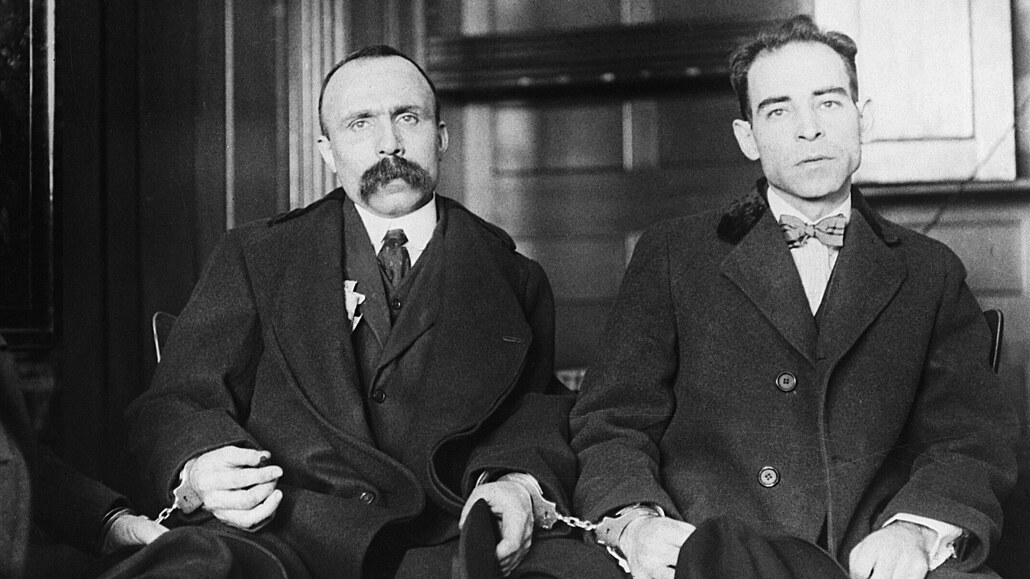
I have been an opponent of the death penalty for as long as I have been a political person, a long time. While I do not generally agree with the thrust of the Massachusetts Citizens Against The Death Penalty Committee’s strategy for eliminating the death penalty nation-wide almost solely through legislative and judicial means (think about the 2011 Troy Davis case down in Georgia for a practical example of the limits of that strategy) I am always willing to work with them when specific situations come up. In any case they have a long pedigree extending, one way or the other, back to Sacco and Vanzetti and that is always important to remember whatever our political differences.


rom The Pen Of American Communist Party Founder And Trotskyist Leader James P. Cannon


Click below to link to the “James P. Cannon Internet Archives.”

http://www.marxists.org/archive/cannon/works/index.htm
*************

Markin comment on founding member James P. Cannon and the early American Communist Party taken from a book review on the “American Left History” blog:

If you are interested in the history of the American Left or are a militant trying to understand some of the past mistakes of our history and want to know some of the problems that confronted the early American Communist Party and some of the key personalities, including James Cannon, who formed that party this book is for you.

At the beginning of the 21st century after the demise of the Soviet Union and the apparent ‘death of communism’ it may seem fantastic and utopian to today’s militants that early in the 20th century many anarchist, socialist, syndicalist and other working class militants of this country coalesced to form an American Communist Party. For the most part, these militants honestly did so in order to organize an American socialist revolution patterned on and influenced by the Russian October Revolution of 1917. James P. Cannon represents one of the important individuals and faction leaders in that effort and was in the thick of the battle as a central leader of the Party in this period. Whatever his political mistakes at the time, or later, one could certainly use such a militant leader today. His mistakes were the mistakes of a man looking for a revolutionary path.

For those not familiar with this period a helpful introduction by the editors gives an analysis of the important fights which occurred inside the party. That overview highlights some of the now more obscure personalities (a helpful biographical glossary is provided), where they stood on the issues and insights into the significance of the crucial early fights in the party.

These include questions which are still relevant today; a legal vs. an underground party; the proper attitude toward parliamentary politics; support to third party bourgeois candidates ;trade union policy; class war defense as well as how to rein in the intense internal struggle of the various factions for organizational control of the party. This makes it somewhat easier for those not well-versed in the intricacies of the political disputes which wracked the early American party to understand how these questions tended to pull it in on itself. In many ways, given the undisputed rise of American imperialism in the immediate aftermath of World War I, this is a story of the ‘dog days’ of the party. Unfortunately, that rise combined with the international ramifications of the internal disputes in the Russian Communist Party and in the Communist International shipwrecked the party as a revolutionary party toward the end of this period.

In the introduction the editors motivate the purpose for the publication of the book by stating the Cannon was the finest Communist leader that America had ever produced. This an intriguing question. The editors trace their political lineage back to Cannon’s leadership of the early Communist Party and later after his expulsion to the Trotskyist Socialist Workers Party so their perspective is obvious. What does the documentation provided here show? I would argue that the period under study represented Cannon’s apprenticeship. Although the hothouse politics of the early party clarified some of the issues of revolutionary strategy for him I believe that it was not until he linked up with Trotsky in the late 1920’s that he became the kind of leader who could lead a revolution. Of course, since Cannon never got a serious opportunity to lead revolutionary struggles in America this is mainly reduced to speculation on my part. Later books written by him make the case better. One thing is sure- in his prime he had the instincts to want to lead a revolution.

As an addition to the historical record of this period this book is a very good companion to the two-volume set by Theodore Draper - The Roots of American Communism and Soviet Russia and American Communism- the definitive study on the early history of the American Communist Party. It is also a useful companion to Cannon’s own The First Ten Years of American Communism. I would add that this is something of a labor of love on the part of the editors. This book was published at a time when the demise of the former Soviet Union and Eastern Europe was in full swing and anything related to Communist studies was deeply discounted. Nevertheless, for better or worse, the American Communist Party (and its offshoots) needs to be studied as an ultimately flawed example of a party that failed in its mission to create a radical version of society in America. Now is the time to study this history.

****************
 
Interview I conducted regarding US State Department diplomatic cables from Cambodia (July 2011) alexaobrien.com/secondsight/in… #cablegate #Cambodia
04 Jan
The following interview was conducted with a Cambodian American that the interviewer knows personally as someone who has written extensively on Cambodian issues and is a very active member of the Cambodian community in…
"Dear New York Times Editors: If Snowden Is a Whistleblower, What Is Chelsea Manning?" dissenter.firedoglake.com/2014/01/02/dea… #FreeChelsea #Transparency
03 Jan
The New York Times Editorial Board is to be highly praised for finally publishing a strong defense of former NSA contractor Edward Snowden, one which not
1

Monday, January 06, 2014

HONOR THE THREE L’S-LENIN, LUXEMBURG, LIEBKNECHT-Honor An Historic Leader Of The American Labor Movement-“Big Bill Haywood  


 EVERY JANUARY WE HONOR LENIN OF RUSSIA, ROSA LUXEMBURG OF POLAND, AND KARL LIEBKNECHT OF GERMANY AS THREE LEADERS OF THE INTERNATIONAL WORKING CLASS MOVEMENT. DURING THE MONTH WE ALSO HONOR OTHER HISTORIC LEADERS AS WELL ON THIS SITE.

Book Review

Big Bill Haywood, Melvyn Dubofsky, Manchester University Press, Manchester England, 1987

If you are sitting around today wondering, as I occasionally do, what a modern day radical labor leader should look like then one need go no further than to observe the career, warts and all, of the legendary Bill Haywood. To previous generations of radicals that name would draw an automatic response. Today’s radicals, and others interested in social solutions to the pressing problems that have been bestowed on us by the continuation of the capitalist mode of production, may not be familiar with the man and his program for working class power. Professor Dubofsky’s little biographical sketch is thus just the cure for those who need a primer on this hero of the working class.

The good professor goes into some detail, despite limited accessibility, about Haywood’s early life out in the Western United States in the late 19th century. Those hard scrabble experiences made a huge imprint on the young Haywood as he tramped from mining camp to mining camp and tried to make ends mean, any way he could. Haywood, moreover, is the perfect example of the fact that working class political consciousness is not innate but gained through the hard experiences of life under the capitalist system. Thus, Haywood moved from itinerant miner to become a leading member of the Western Federation of Miners (WFM) and moved leftward along the political spectrum along the way. Not a small part in that was due to his trial on trumped up charges in Idaho for murder as part of a labor crackdown against the WFM by the mine owners and their political allies there.

As virtually all working class militants did at the turn of the 20th century, Big Bill became involved with the early American socialist movement and followed the lead of the sainted Eugene V. Debs. As part of the ferment of labor agitation during this period the organization that Haywood is most closely associated with was formed-The Industrial Workers of the World (hereafter IWW, also known as Wobblies). This organization- part union, part political party- was the most radical expression (far more radical than the rather tepid socialist organizations) of the American labor movement in the period before World War I.

The bulk of Professor Dubofsky’s book centers, as it should, on Haywood’s exploits as a leader of the IWW. Big Bill’s ups and downs mirrored the ups and downs of the organization. The professor goes into the various labor fights that Haywood led highlighted by the great 1912 Lawrence strike (of bread and roses fame), the various free speech fights but also the draconian Wilsonian policy toward the IWW after America declared war in 1917. That governmental policy essentially crushed the IWW as a mass working class organization. Moreover, as a leader Haywood personally felt the full wrath of the capitalist government. Facing extended jail time Haywood eventually fled to the young Soviet republic where he died in lonely exile in 1928.

The professor adequately tackles the problem of the political and moral consequences of that escape to Russia for the IWW and to his still imprisoned comrades so I will not address it here. However, there are two points noted by Dubofsky that warrant comment. First, he notes that Big Bill was a first rate organizer in both the WFM and the IWW. Those of us who are Marxists sometimes tend to place more emphasis of the fact that labor leaders need to be “tribunes of the people” that we sometimes neglect the important “trade union secretary” part of the formula. Haywood seems to have had it all. Secondly, Haywood’s and the IWW’s experience with government repression during World War I, repeated in the “Red Scare” experience of the 1950’s against Communists and then later against the Black Panthers in the 1960’s should be etched into the brain of every militant today. When the deal goes down the capitalists and their hangers-on will do anything to keep their system. Anything. That said, read this Haywood primer. It is an important contribution to the study of American labor history.