Monday, April 27, 2015

In The Hills And Hollows Again- With Mountain Music Man Norman Blake In Mind    


In The Hills And Hollows Again- With Mountain Music Man Norman Blake In Mind    


Recently in discussing Sam Lowell’s relationship with mountain music, the music from down in the hills and hollows of Kentucky where his father and his people before him had lived dirt poor for generations eking almost nothing out of the land that had been abandoned decades before by some going west driven spirits who played the land out and moved on, some moving on until they reached ocean edge California, Bart Webber noticed that he had concentrated a little too heavily on the music of Sam’ s father’s  Kentucky hills and hollows. There were other places down south like in the Piedmont of North Carolina where a cleaner picking style had been developed by the likes of Etta Baker and exemplified more recently by Norman Blake who has revived the work of performers like Aunt Helen Alder and Pappy Sims by playing the old tunes. There are other places as well like down in the inner edges of Tennessee and Georgia where the kindred also dwelled, places as well where if the land had played out there they, the ones who stayed behind in there tacky cabins barely protected against the weathers, their lack of niceties of modern existence a result not because they distained such things but down in the hollows they did not know about them, did not seem to notice the bustling outside world.
 
They all, all the hills and hollows people, just kept plucking away barely making ends meet, usually not doing so in some periods, and once they had abandoned cultivating the land these sedentary heredity “master-less men” thrown out their old countries, mainly the British Isles, for any number of petty crimes, but crimes against property and so they had to go on their own or face involuntary transportation they went into the “black god” mines or sharecropping for some Mister to live short, nasty, brutish lives before the deluge.
But come Saturday night, come old Fred Brown’s worn out in need of paint red barn the hill people, the mountain people, the piedmont brethren, hell, maybe a few swamp-dwellers too, would gather up their instruments, their sweet liquor jugs, their un-scrubbed bare-foot children or their best guy or gal and play the night away as the winds came down the mountains. This DNA etched in his bones by his father and the kindred is what Sam had denied for much of his life.          
But like Bart had mentioned when discussing the matter with Sam one night sometimes “what goes around comes around” as the old-time expression had it. Take for example Sam Lowell’s youthful interest in folk music back in the early 1960s when it had crashed out of exotic haunts like Harvard Square, Ann Arbor, Old Town Chi Town and North Beach/Berkeley out in Frisco. Crashed out by word of mouth at first and ran into a lot of kids, a lot of kids like Sam, who got his word from Diana Nelson who got it from a cousin from North Adamsville nearer Boston who frequented the coffeehouse on Beacon Hill and Harvard Square who had “hipped” her to this new folk music program that he had found flipping the dial of his transistor radio one Sunday night.
 
See Sam and Diana were tucked away from the swirl down in Carver about thirty miles as the crow flies from Boston and Cambridge but maybe a million social miles from those locales and had picked up the thread somewhat belatedly. He, along with his corner boys, had lived in their little corner boy cocoon out in front of Jimmy Jack’s Diner figuring out ways to get next to girls like Diana but who were stuck, stuck like glue to listening to the “put to sleep” music that was finding its way to clog up Jimmy Jack’s’ hither-to-fore “boss” jukebox. Christ, stuff like Percy Faith’s Moon River that parents could swoon over, and dance to. Had picked the sound up belatedly when they were fed up with what was being presented on American Bandstand and WJDA the local rock station, while they were looking for something different, something that they were not sure of but that smelled, tasted, felt, and looked different from a kind of one-size-fits-all vanilla existence.
Oh sure, as Bart recognized once he thought about it for a while, every generation in their youth since the days when you could draw a distinction between youth and adulthood a century or so ago and have it count has tried to draw its own symbolic beat but this was different, this involved a big mix of things all jumbled together, political, social, economic, cultural, the whole bag of societal distinctions which would not be settled until the end of that decade, maybe the first part of the next. That big picture is what interested him. What Sam was interested then down there in Carver about thirty miles south of Boston was the music, his interest in the other trends did not come until later, much later long after the whole thing had ebbed and they were fighting an unsuccessful rearguard action against the night-takers and he was forced to consider other issues. And Sam had been like that ever after. 
 
The way Sam told it one night a few years back, according to Bart, some forty or so years after his ear changed forever that change had been a bumpy road. Sam had been at his bi-weekly book club in Plymouth where the topic selected for the next meeting was the musical influences, if any, that defined one’s tastes and he had volunteered to speak then since he had just read a book, The Mountain View, about the central place of mountain music, for lack of a better term, in the American songbook. He had along with Bart and Jack Dawson also had been around that time discussing how they had been looking for roots as kids. Musical roots which were a very big concern for a part of their  generation, a generation that was looking for roots, for rootedness not just in music but in literature, art, and even in the family tree.
 
Their parents’ generation no matter how long it had been since the first family immigration wave had spilled them onto these shores was in the red scare Cold War post-World War II period very consciously ignoring every trace of roots in order to be fully vanilla Americanized. So their generation had had to pick up the pieces not only of that very shaky family tree but everything else that had been downplayed during that period.
 
Since Sam had tired of the lazy hazy rock and roll that was being produced and which the local rock radio stations were force- feeding him and others like him looking to break out through their beloved transistor radios he had started looking elsewhere on the tiny dial for something different after Diana had clued him in about that folk music program. Although for a while he could not find that particular program or Carver was out of range for the airwaves. But like a lot of young people, as he would find out later when he would meet kindred in Harvard Square, the Village, Ann Arbor, Berkeley he fortunately had been looking for that something different at just that moment when something called folk music, roots music, actually was being played on select stations for short periods of time each week and so it was before long that he was tuned in.
 
His own lucky station had been a small station, an AM station, from Providence in Rhode Island which he would find out later had put the program on Monday nights from eight to eleven at the request of Brown and URI students who had picked up the folk music bug on trips to the Village (Monday a dead music night in advertising circles then, maybe now too, thus fine for talk shows, community service programs and odd-ball stuff like roots music to comply with whatever necessary FCC mandates went with the license.) That is where he first heard the likes of Bob Dylan, Joan Baez, Tom Paxton, Dave Von Ronk, a new guy named Tom Rush from Harvard whom he would hear in person many times over the years, and another guy, Eric Von Schmidt whom he would meet later in one of the Harvard Square coffeehouses that were proliferating to feed the demand to hear folk music. Those coffeehouses were manna from heaven, well, because they were cheap for guys with little money. Cheap alone or on a date, basically as Sam related to his book club listeners for a couple of bucks at most admission, the price of a cup of coffee to keep in front of you and thus your place, maybe a pastry if alone and just double that up for a date except share the pasty you had your date deal all set for the evening hearing performers perfecting their acts before hitting the A-list clubs.
 
He listened to it all, liked some of it, other stuff, the more protest stuff he could take or leave depending on the performer but what drew his attention, strangely then was when somebody on the radio or on stage performed mountain music, you know, the music of the hills and hollows that came out of Appalachia mainly down among the dust and weeds. Things like Bury Me Under The Weeping Willow, Gold Watch and Chain, Fair and Tender Ladies, Pretty Saro, and lots of instrumentals by guys like Buell Kazee, Hobart Smith, The Charles River Boys. Norman Blake just starting his rise along with various expert band members to bring bluegrass to the wider younger audience that did not relate to guys like Bill Monroe and his various band combinations, and some other bluegrass bands as well that had now escaped his memory.
 
This is where it all got jumbled up for him Sam said since he was strictly a city boy, made private fun of the farm boys, the cranberry boggers, who then made up a significant part of his high school. He furthermore had no interest in stuff like the Grand Ole Opry and that kind of thing, none. Still he always wondered about the source, about why he felt some kinship with the music of the Saturday night red barn, probably broken down, certainly in need of paint, and thus available for the dance complete with the full complement of guitars, fiddles, bass, mandolin and full complement too of Bobby Joe’s just made white lightening, playing plainsong for the folk down in the wind-swept hills and hollows.  
 
Then one night, a Sunday night after he had picked up the Boston folk program station on the family radio (apparently the weak transistor radio did not have the energy to pick up a Boston station) he was listening to the Carter Family’s Wildwood Flower when his father came in and began singing along. After asking Sam about whether he liked the song and Sam answered that he did but could not explain why his father told him a story that maybe put the whole thing in perspective. After Sam’s older brother, Lawrence, had been born and things looked pretty dicey for a guy from the South with no education and no skill except useless coal-mining his father decided that maybe they should go back to Kentucky and see if things were better for a guy like him there. No dice, after had been in the north, after seeing the same old tacky cabins, the played out land, the endless streams of a new generation of shoeless kids Sam’s father decided to head back north and try to eke something out in a better place. But get this while Sam’s parents were in Kentucky Sam had been conceived. Yeah, so maybe it was in the genes all along.          

In Honor Of The 99th Anniversary Of The Irish Easter Uprising, 1916-Sean Flynn’s Fight-Take Two 


A word on the Easter Uprising


In the old Irish working-class neighborhoods where I grew up the aborted Easter Uprising of 1916 was spoken of in mythical hushed reverent tones as the key symbol of the modern Irish liberation struggle from bloody England. The event itself provoked such memories of heroic “boyos”  (and “girlos” not acknowledged) fighting to the end against great odds that a careful analysis of what could, and could not be, learned from the mistakes made at the time entered my head. That was then though in the glare of boyhood infatuations. Now is the time for a more sober assessment. 


The easy part of analyzing the Irish Easter Uprising of 1916 is first and foremost the knowledge, in retrospect, that it was not widely supported by people in Ireland, especially by the “shawlies” in Dublin and the cities who received their sons’ military pay from the Imperial British Army for service in the bloody trenches of Europe which sustained them throughout the war. That factor and the relative ease with which the uprising had been militarily defeated by the British forces send in main force to crush it lead easily to the conclusion that the adventure was doomed to failure. Still easier is to criticize the timing and the strategy and tactics of the planned action and of the various actors, particularly in the leadership’s underestimating the British Empire’s frenzy to crush any opposition to its main task of victory in World War I. (Although, I think that frenzy on Mother England’s part would be a point in the uprising’s favor under the theory that England’s [or fill in the blank of your favorite later national liberation struggle] woes were Ireland’s [or fill in the blank ditto on the your favorite oppressed peoples struggle] opportunities.


The hard part is to draw any positive lessons of that national liberation struggle experience for the future. If nothing else remember this though, and unfortunately the Irish national liberation fighters (and other national liberation fighters later, including later Irish revolutionaries) failed to take this into account in their military calculations, the British (or fill in the blank) were savagely committed to defeating the uprising including burning that colonial country to the ground if need be in order to maintain control. In the final analysis, it was not part of their metropolitan homeland, so the hell with it. Needless to say, cowardly British Labor’s position was almost a carbon copy of His Imperial Majesty’s. Labor Party leader Arthur Henderson could barely contain himself when informed that James Connolly had been executed. That should, even today, make every British militant blush with shame. Unfortunately, the demand for British militants and others today is the same as then if somewhat attenuated- All British Troops Out of Ireland.

In various readings on national liberation struggles I have come across a theory that the Easter Uprising was the first socialist revolution in Europe, predating the Bolshevik Revolution by over a year. Unfortunately, there is little truth to that idea. Of the Uprising’s leaders only James Connolly was devoted to the socialist cause. Moreover, while the Irish Volunteers and the Irish Citizen Army were prototypical models for urban- led national liberation forces such organizations, as we have witnessed in later history, are not inherently socialistic. The dominant mood among the leadership was in favor of political independence and/or fighting for a return to a separate traditional Irish cultural hegemony. (“Let poets rule the land”).

As outlined in the famous Proclamation of the Republic posted on the General Post Office in Dublin, Easter Monday, 1916 the goal of the leadership appeared to be something on the order of a society like those fought for in the European Revolutions of 1848, a left bourgeois republic. A formation on the order of the Paris Commune of 1871 where the working class momentarily took power or the Soviet Commune of 1917 which lasted for a longer period did not figure in the political calculations at that time. As noted above, James Connolly clearly was skeptical of his erstwhile comrades on the subject of the nature of the future state and apparently was prepared for an ensuing class struggle following the establishment of a republic.

That does not mean that revolutionary socialists could not support such an uprising. On the contrary, Lenin, who was an admirer of Connolly for his anti-war stance in World War I, and Trotsky stoutly defended the uprising against those who derided the Easter rising for involving bourgeois elements. Participation by bourgeois and petty bourgeois elements is in the nature of a national liberation struggle. The key, which must be learned by militants today, is who leads the national liberation struggle and on what program. As both Lenin and Trotsky made clear later in their own experiences in Russia revolutionary socialists have to lead other disaffected elements of society to overthrow the existing order. There is no other way in a heterogeneous class-divided society. Moreover, in Ireland, the anti-imperialist nature of the action against British imperialism during wartime on the socialist principle that the defeat of your own imperialist overlord in war as a way to open the road to the class struggle merited support on that basis alone. Chocky Ar La.

********

Here is a little commemorative piece based on the exploits of Frankie Riley from the old neighborhood grand-uncle’s, Sean Flynn, who gave a good account of himself when the time for fighting came:

Funny, Sean Flynn thought, about how words and phrases can capture a moment, capture an Irish poetic moment, of which in the benighted history of this benighted isle there were few and far between. He had been reading, really re-reading, William Butler Yeats’ homage to the men of Easter 1916, his men (although he had been a mere slip of a boy, if a tall manly looking boy then), and about that powerful refrain that ended a few verses -“a terrible beauty was born.” Yes, Sean thought, that phrase fit the occasion to a tee, fit those working men like himself and his brother, Seamus, who gave their all those bloody April days to free Ireland from the English yoke. Yes, funny too how an Anglo-Irishman, a bloody heathen if you really thought about it, captured the spirit of those times, of those times when men, a few men , had to step up and be counted. Ordinary working men mostly, the ones from his Irish Citizens’ Army, the one Jimmy Connolly (the late lamented martyred James Connolly to most) put together to defend the neighborhoods against the bloody reprisals after the big 1914 strike. The others too, too few others in Dublin no question what with all the confusion, mainly poets and students caught up in some professor’s exaltations.

Sean remembered, distinctly remembered, how nervous he had been waiting, eternally waiting for the sign of the uprising to take place-he knew for sure it would not be like some Wolfe Tone thing, or the rising of the moon. Not this time not when the Irish finally had the British at a disadvantage. That big war in Europe was actually to their benefit. Oh no, not at first when everybody, even hot-headed Irishmen if one could believe that, was ready to give his or her all for the bloody King of England against the damn Huns. No, rather later once everybody knew that England was so desperate to beat the Huns in Europe with everything they had that a small military encounter with whatever remnants the British left behind to garrison the Irish colony could be disposed of with ease and a free Ireland delivered at little cost. The question that made Sean nervous, made many a man nervous, was when. As 1915 slipped into 1916 those nerves only got more frayed since there were constant rumors that the war in Europe would soon be over and a chance to gain the upper hand would be lost.       

Finally, finally word filtered down to the “boyos” that the Irish Citizens’ Army (meaning James Connolly above all others) would join with the Irish Volunteers (Patrick Pearse’s operation, among others) to declare a republic and stand and fight. Naturally there were more delays as the chieftains (now including the previously non-committal Irish Republican Brotherhood) argued about the necessity, the validity, and then the timing of a rising. (All this not known until later after the smoke had cleared and the survivors could take stock of who, and who did not, do what, who did, and did not, show up, and what else went wrong.) Then that Easter week came and the order to arm came. And all arms to head to Dublin, to the strategic General Post Office (their, the bloody English’s post office). Sean got there just in time to hear the Proclamation read and posted. The battle was on and suddenly all of Sean’s nervousness about being exposed, about not being a military man, about being shy around guns evaporated.                
Support "Courage To Resist"-The Organization Supporting Military Resisters And Chelsea Manning -The Latest Newsletter


Frank Jackman comment on Courage To Resist and military resisters: 

I have always admired military resisters having, frankly, done my time in the military, Vietnam Era time, without any serious reflection about the military, my role in the military, or what was just and unjust about that war until after I got out. After I got out, began to see thing through the fog of war and got serious “religion” on the questions of war and peace from several sources. At first working with the Cambridge Quakers who I had noticed around the fringes of anti-war GI work in the early 1970s when there was a serious basis for doing such work as the American army one way or another was half in mutiny toward the end of American involvement in that war. And a serious need as guys, guys who get their “religion” in the service needed civilian help to survive the military maze that they were trying to fight. This connection with the Quakers had been made shortly after I got out of the service when my doubts crept in about what I had done in the service, and why I had let myself be drafted when I had expressed serious anti-war doubts before induction about what the American government was doing in Vietnam to its own soldiers. But, more importantly, and this was the real beginning of wisdom and something I am keenly aware every time the American government ratchets up the war hysteria for its latest adventure, to the Vietnamese who to paraphrase the great boxer Mohammed Ali (then Cassius Clay) had never done anything to me, never posed any threat to me and mine. But as much as I admired the Quakers and their simple peace witness, occasionally attended their service and briefly had a Quaker girlfriend, I was always a little jumpy around them, my problem not theirs, since their brand of conscientious objection to all wars was much broader than my belief in just and unjust wars.

Later I worked with a couple of anti-war collectives that concentrated on anti-war GI work among active GIs through the vehicle of coffeehouses located near Fort Devens in Massachusetts and Fort Dix down in New Jersey. That work while satisfying and rewarding by actually working with guys who knew the score, knew the score from the inside, and had plenty to tell, especially those who had gotten “religion” under fire was short-lived once American on the ground involvement in Vietnam was minimalized and the horrific draft was abolished as a means of grabbing “cannon fodder” for the damn war. Once the threat of being sent to Vietnam diminished the soldiers drifted off and the anti-war cadre that held things together as well.

What really drove the issue of military resistance home to me though, what caused some red-faced shame was something that I did not find out about until well after my own military service was over. A few years later when I went back to my hometown on some family-related business I found out after meeting him on the street coming out of a local supermarket that my best friend from high school, Sean Kiley, had been a military resister, had refused to go to Vietnam, and had served about two years in various Army stockades for his efforts. Had done his “duty” as he saw it. Had earned his “anti-war” colors the hard way.    

See Sean like me, like a lot of working-class kids from places like our hometown, Gloversville, up in Massachusetts, maybe had a few doubts about the war but had no way to figure out what to do and let himself be drafted for that very reason. What would a small town boy whose citizens supported the Vietnam War long after it made even a smidgen of sense, whose own parents were fervent “hawks,” whose older brother had won the DSC in Vietnam, and whose contemporaries including me did their service without a public murmur know of how to maneuver against the American military monster machine. But what Sean saw early on, from about day three of basis training, told him he had made a big error, that his grandmother who grew up in Boston and had been an old Dorothy Day Catholic Worker supporter had been right that there was no right reason for him to be in that war. And so when he could, after receiving orders for Vietnam, he refused to go (I will tell you more of the details some time when I ask him some questions about events that I have forgotten) and did his time in the military that way.          

Sean’s story, and in a sense my belated story, are enough reasons to support Courage to Resist since, unfortunately, there are today very few organizations dedicated to providing informational, legal, and social support for the military resisters of the heinous onslaughts in Iraq and Afghanistan. The organization needs the help of every ex-soldier who got “religion,” of every anti-war activist, and of every honest citizen who realizes, now more than ever, that the short way to end the endless wars of this generation is to get to the soldiers, get to the cadre on the ground fighting the damn wars. Enough said.     


Sunday, April 26, 2015

One More Time Down 1950s Record Memory Lane


Sam Lowell, ex-corner boy in the early 1960s when in the working-class neighborhoods of America you had best have had corner boy comrades when you hung out on date-less, girl-less, dough-less Friday and Saturday nights to have your back if trouble brewed, ex-hippie “flower child” along with his long mourned and lamented friend the late Peter Paul Markin heading out west on the hitchhike roads when the world turned upside down later in the decade, now a sedate grandfatherly lawyer filled with respectability and memories had to laugh about how much he of late had been thinking about the 1950s. The 1950s when he came of age, came of musical age, drawing away from the music on his parents’ family living room radio and their cranky old record player after they had, to insure domestic peace and tranquility if he remembered correctly, his first transistor radio down at the now long gone Radio Shack store and he could sit up in his room and dream of whatever coming of age boys dreamed about, mainly how those last year bothersome girls became this year’s interesting objects of discussion (by the way that room, shared with his two brothers also a beauty of hold up to your ear transistor radio and drown out the world of brotherly scuffings). 

More than that though, more than just thinking about the old days he had via the beauties of the Internet been purchasing several record compilations of the “best of” that period from a commercial distributor (and also keeping up to date on various versions of the songs on YouTube) and through his friend and old corner boy Frankie Riley been spilling plenty of cyber-ink on Frankie’s blog, In The Be-Bop ‘50s Night, going back to the now classic age of rock and roll. He had to laugh about that as well since he had been well known back on the corner, back holding up the wall in front of Jimmy Jack’s Diner on those date-less, girl-less, dough-less Friday and Saturday nights for proclaiming to all who would listen (mainly Frankie, Markin, Jimmy Jenkins, Jack Callahan, Kenny Hogan and Johnny “Thunder” Thornton and an occasional girl who wondered what he was talking about) that “rock and roll will never die.”

Mainly, through the archival marvels of modern technology, it had not died although it clearly no longer provided the same fuel for later generations more into hip-hop-ish music. But funny when kids, his grandkids, for example, hear (and see) Elvis, all steamy, smoldering and swiveling in something like the film clip in Jailhouse Rock, Bo Diddley proclaiming that he put the rock in rock and roll, Chuck Berry telling a candid world, a candid teenage world which after all was all that counted then, now too from what he had heard, that Mister Beethoven from the old fogy music museum had better take himself and move over because a new be-bop daddy was taking taking the reins, curl-in-hair Buddy Holly pining away for his Peggy Sue, Jerry Lee Lewis sitting, maybe standing for all Sam knew telling that same candid world that everybody had to do the high school hop bop, confidentially, Wanda Jackson proclaiming that it was party time and an endless host of one hit wonders and wanna-bes they went crazy. Yeah, just like the young Sam who could not believe his ears when he had come of age and, yeah, those same guys who formed his musical tastes back in the 1950s when he had come of age, musical age anyway. Jesus, Jesus too when he came of teenage age and all that meant of angst and alienation.

Sam had thought again recently about going back to those various commercially-produced compilations put out by demographically savvy media companies to cull out the better songs, some which he had on the tip of his tongue almost continuously since the 1950s(the Dubs Could This Be Magic the great last chance dance song that bailed him out of being shut out of more than one dance night although his partner’s feet borne the brunt of the battle, and the Teen Queens Eddie My Love, where Eddie took advantage of the girl and she is wondering when he is coming back, a great love ‘em and leave ‘em song and the answer is still he’s never coming back, are two examples that quickly came to his mind). Others like Johnny Ace’s Pledging My Love or The Crows Oh-Gee though needed some coaxing by the compilations to remember.

But Sam, old lawyerly Sam, had finally found a sure-fire method to aid in that memory coaxing. Just go back in memory’s mind and picture scenes from teenage days and figure the songs that went with such scenes (this is not confined to 1950s aficionados anybody can imagine their youth times and play). But even using that method Sam believed that he was cheating a little, harmlessly cheating but still cheating. When he (or anybody familiar with the times) looked at the artwork on most of the better 1950s CD compilations one could not help but notice the excellent artwork that highlights various institutions illustrated back then. The infamous drive-in movies where you gathered about six people (hopefully three couples but six anyway) and paid for two the other four either on the back seat floor or in the trunk. They always played music at intermission when we gathered at the refreshment stand to grab inedible hot dogs, stale popcorn, or fizzled out sods, although who cared, especially if that three couples thing was in play, and that scene had always been associated in Sam’s mind with Frankie Lyman and the Teenager’s Why Do Fools Fall In Love.

So that is how Sam played the game. Two (or more) can play so he said he would just set the scenes and others can fill in their own musical selections. Here goes: the first stirrings of interest in the opposite sex at Doc’s Drugstore with his soda fountain AND jukebox; the drive-in restaurant with you and yours in the car, yours or father borrowed for an end of the night bout with cardboard hamburgers, ultra-greasy french fries and diluted soda; the Spring Frolic Dance (or name your seasonal dance) your hands all sweaty, trying to disappear into the wall, waiting, waiting to perdition for that last dance so that you could ask that he or she that you had been eyeing all evening to dance that slow one  all dreamy; down at the beach on day one of out of school for the summer checking out the scene between the two boat clubs where all the guys and gals who counted hung out; the night before Thanksgiving football rally where he or she said they would be, how about you; on poverty nights sitting up in your bedroom listening to edgy WMEX on your transistor radio away from prying adult eyes; another poverty night you and your boys, girls, boys and girls sitting in the family room spinning platters; that first sixth grade “petting” party (no more explanation needed right); cruising Main Street with your boys or girls looking for, well, you figure it out listening to the radio in that “boss” Chevy, hopefully; and, sitting in the balcony “watching” the double feature at the Strand Theater on Saturday afternoon when younger and at night when older. Okay, Sam has given enough cues. Fill in the dots, oops, songs and add scenes too.                      


As The 100th Anniversary Of The First Year Of World War I (Remember The War To End All Wars) Continues ... Some Remembrances-Artists’ Corner-Paul Klee 
 
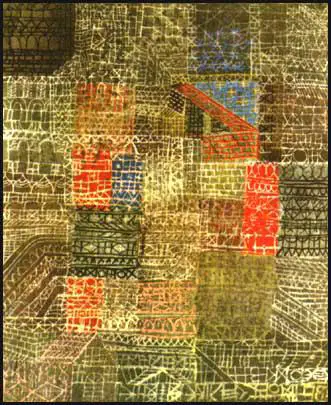
Paul Klee, Structural II (1934)

In say 1912, 1913, hell, even the beginning of 1914, the first few months anyway, before the war clouds got a full head of steam in the summer they all profusely professed their unmitigated horror at the thought of war, thought of the old way of doing business in the world. Yes the artists of every school the Cubist/Fauvists/Futurists/Constructivists, Surrealists or those who would come to speak for those movements (hell even the Academy spoke the pious words when there was sunny weather), those who saw the disjointedness of modern industrial society and put the pieces to paint, sculptors who put twisted pieces of metal juxtaposed to each other saw that building a mighty machine from which you had to run created many problems; writers of serious history books proving that, according to their Whiggish theory of progress,  humankind had moved beyond war as an instrument of policy and the diplomats and high and mighty would put the brakes on in time, not realizing that they were all squabbling cousins; writers of serious and not so serious novels drenched in platitudes and hidden gazebo love affairs put paid to that notion in their sweet nothing words that man and woman had too much to do, too much sex to harness to denigrate themselves by crying the warrior’s cry and by having half-virgin, neat trick, maidens strewing flowers on the bloodlust streets; musicians whose muse spoke of delicate tempos and sweet muted violin concertos, not the stress and strife of the tattoos of war marches with their tinny conceits; and poets, ah, those constricted poets who bleed the moon of its amber swearing, swearing on a stack of seven sealed bibles, that they would go to the hells before touching the hair of another man, putting another man to ground or lying their own heads down for some imperial mission. They all professed loudly (and those few who did not profess, could not profess because they were happily getting their blood rising, kept their own consul until the summer), that come the war drums they would resist the siren call, would stick to their Whiggish, Futurist, Constructionist, Cubist worlds and blast the war-makers to hell in quotes, words, chords, clanged metal, and pretty pastels. They would stay the course.  

And then the war drums intensified, the people, their clients, patrons and buyers, cried out their lusts and they, they made of ordinary human clay as it turned out, poets, beautiful poets like Wilfred Owens who would sicken of war before he passed leaving a beautiful damnation on war, its psychoses, and broken bones and dreams, and the idiots who brought humankind to such a fate, like e. e. cummings who drove through sheer hell in those rickety ambulances floors sprayed with blood, man blood, angers, anguishes and more sets of broken bones, and broken dreams, like Rupert Brooke all manly and old school give and go, as they marched in formation leaving the ports and then mowed down like freshly mown grass in their thousands as the charge call came and they rested, a lot of them, in those freshly mown grasses, like Robert Graves all grave all sputtering in his words confused about what had happened, suppressing, always suppressing that instinct to cry out against the hatred night, like old school, old Thomas Hardy writing beautiful old English pastoral sentiments before the war and then full-blown into imperium’s service, no questions asked old England right or wrong, like old stuffed shirt himself T.S. Eliot speaking of hollow loves, hollow men, wastelands, and such in the high club rooms on the home front, and like old brother Yeats speaking of terrible beauties born in the colonies and maybe at the home front too as long as Eliot does not miss his high tea. Jesus what a blasted night that Great War time was.   

And do not forget when the war drums intensified, and the people, their clients, patrons and buyers, cried out their lusts and they, they, other creative souls made of ordinary human clay as it turned out

And then the war drums intensified, the people, their clients, patrons and buyers, cried out their lusts and they, they made of ordinary human clay as it turned out, artists, beautiful artists like Fernand Leger who could no longer push the envelope of representative art because it had been twisted by the rubble of war, by the crashing big guns, by the hubris of commanders and commanded and he turned to new form, tubes, cubes, prisms, anything but battered humankind in its every rusts and lusts, all bright and intersecting once he got the mustard gas out of his system, once he had done his patria duty, like speaking of mustard gas old worn out John Singer Sargent of the three name WASPs forgetting Boston Brahmin society ladies in decollage, forgetting ancient world religious murals hanging atop Boston museum and spewing trench warfare and the blind leading the blind out of no man’s land, out of the devil’s claws, like Umberto Boccioni, all swirls, curves, dashes, and dangling guns as the endless charges endlessly charge, like Gustav Klimt and his endlessly detailed gold dust opulent Asiatic dreams filled with lovely matrons and high symbolism and blessed Eve women to fill the night, Adam’s night after they fled the garden, like Joan Miro and his infernal boxes, circles, spats, eyes, dibs, dabs, vaginas, and blots forever suspended in deep space for a candid world to fret through, fret through a long career, and like poor maddened rising like a phoenix in the Spartacist uprising George Grosz puncturing the nasty bourgeoisie, the big bourgeoisie the ones with the real dough and their overfed dreams stuffed with sausage, and from the bloated military and their fat-assed generals stuff with howitzers and rocket shells, like Picasso, yeah, Picasso taking the shape out of recognized human existence and reconfiguring the forms, the mesh of form to fit the new hard order, like, Braque, if only because if you put the yolk on Picasso you have to tie him to the tether too.           

And do not forget when the war drums intensified, and the people, their clients, patrons and buyers, cried out their lusts and they, they, other creative souls made of ordinary human clay as it turned out sculptors, writers, serious and not, musicians went to the trenches to die deathless deaths in their thousands for, well, for humankind, of course, their always fate ….            
From #Un-Occupied Boston-This Is Class War-We Say No More-Defend Our Unions! - Defend The Working Class! Take The Offensive! - A Five Point Program For Discussion


Leon Trotsky -Lessons Of The Paris Commune-Listen Up
Fight-Don’t Starve-We Created The Wealth, Let's Take It Back! Labor And The Oppressed Must Rule!

*******

A Five-Point Program As Talking Points

*Jobs For All Now!-“30 For 40”- A historic demand of the labor movement going back to the 1930s Great Depression the last time that unemployment, under-employment, and those who have just plain quit looking for work was this high in the American labor force. Thirty hours work for forty hours pay is a formula to spread the available work around. This is no mere propaganda point but shows the way forward toward a more equitable distribution of available work.

The basic scheme, as was the case with the early days of the longshoremen’s and maritime unions, is that the work would be divided up through local representative workers’ councils that would act, in one of its capacities, as a giant hiring hall where the jobs would be parceled out. This would be a simpler task now than when it was when first proposed in the 1930s with the vast increase in modern technology that could fairly accurately, via computers, target jobs that need filling and equitably divide up current work.
Without the key capitalist necessity of keeping up the rate of profit the social surplus created by that work could be used to redistribute the available work at the same agreed upon rate rather than go into the capitalists’ pockets. The only catch, a big catch one must admit, is that no capitalist, and no capitalist system, is going to do any such thing as to implement “30 for 40” so that it will, in the end, be necessary to fight for and win a workers government to implement this demand.

Organize the unorganized is a demand that cries out for solution today now that the organized sectors of the labor movement, both public and private, in America are at historic lows, just over ten percent of the workforce. Part of the task is to reorganize some of the old industries like the automobile industry, now mainly unorganized as new plants come on line and others are abandoned, which used to provide a massive amount of decent jobs with decent benefits but which now have fallen to globalization and the “race to the bottom” bad times. The other sector that desperately need to be organized is to ratchet up the efforts to organize the service industries, hospitals, hotels, hi-tech, restaurants and the like, that have become a dominant aspect of the American economy.

Organize the South-this low wage area, this consciously low-wage area, where many industries land before heading off-shore to even lower wage places cries out for organizing, especially among black and Hispanic workers who form the bulk of this industrial workforce. A corollary to organizing the South is obviously to organize internationally to keep the “race to the bottom” from continually occurring short of being resolved in favor of an international commonwealth of workers’ governments. Nobody said it was going to be easy.

Organize Wal-Mart- millions of workers, thousands of trucks, hundreds of distribution centers. A victory here would be the springboard to a revitalized organized labor movement just as auto and steel lead the industrial union movements of the 1930s. To give an idea of how hard this task might be though someone once argued that it would be easier to organize a workers’ revolution that organize this giant. Well, that’s a thought.

Defend the right of public and private workers to unionize. Simple-No more Wisconsins, no more attacks on collective bargaining the hallmark of a union contract. No reliance on labor boards, arbitration, courts or bourgeois recall elections either. Unions must keep their independent from government interference. Period.
* Defend the independence of the working classes! No union dues for Democratic (or the stray Republican) candidates. In 2008 labor, organized labor, spent around 450 million dollars trying to elect Barack Obama and other Democrats (mainly). The results speak for themselves. For those bogus efforts the labor skates should have been sent packing long ago. The idea then was (and is, as we come up to the 2012 presidential election cycle) that the Democrats (mainly) were “friends of labor.” The past period of cuts-backs, cut-in-the-back give backs should put paid to that notion. Although anyone who is politically savvy at all knows that is not true, not true for the labor skates at the top of the movement.

The hard reality is that the labor skates, not used to any form of class struggle or any kind of struggle, know no other way than class-collaboration, arbitration, courts, and every other way to avoid the appearance of strife, strife in defense of the bosses’profits. The most egregious recent example- the return of the Verizon workers to work after two weeks last summer (2011) when they had the company on the run and the subsequent announcement by the company of record profits. That sellout strategy may have worked for the bureaucrats, or rather their “fathers” for a time back in the 1950s “golden age” of labor, but now we are in a very hard and open class war. The rank and file must demand an end to using their precious dues payments period for bourgeois candidates all of whom have turned out to be sworn enemies of labor from Obama on down.

This does not mean not using union dues for political purposes though. On the contrary we need to use them now more than ever in the class battles ahead. Spent the dough on organizing the unorganized, organizing the South, organizing Wal-Mart, and other pro-labor causes. Think, for example, of the dough spent on the successful November, 2011 anti-union recall referendum in Ohio. That type of activity is where labor’s money and other resources should go. And not on recall elections, like in Wisconsin, as substitutes for class struggle

*End the endless wars!- As the so-called draw-down of American and Allied troops in Iraq reaches it final stages, the draw- down of non-mercenary forces anyway, we must recognize that we anti-warriors failed, and failed rather spectacularly, to affect that withdrawal after a promising start to our opposition in late 2002 and early 2003 (and a little in 2006).As the endless American-led wars (even if behind the scenes, as in Libya and other proxy wars) continue we had better straighten out our anti-war, anti-imperialist front quickly if we are to have any effect on the troop withdrawal from Afghanistan. Immediate, Unconditional Withdrawal Of All U.S./Allied Troops (And Mercenaries) From Afghanistan! Hands Off Pakistan!

U.S. Hands Off Iran! Hands Off Syria!- American (and world) imperialists are ratcheting up their propaganda war (right now) and increased economic sanctions that are a prelude to war well before the dust has settled on the now unsettled situation in Iraq and well before they have even sniffed at an Afghan withdrawal of any import. We will hold our noses, as we did with the Saddam leadership in Iraq and on other occasions, and call for the defense of Iran against the American imperial monster. A victory for the Americans (and their junior partner, Israel) in Iran is not in the interests of the international working class. Especially here in the “belly of the beast” we are duty-bound to call not just for non-intervention but for defense of Iran. We will, believe me we will, deal with the mullahs, the Revolutionary Guards, and the Islamic fundamentalist in Iran in our own way in our own time.

U.S. Hands Off The World!- With the number of “hot spots” that the American imperialists, or one or another of their junior allies, have their hands on in this wicked old world this generic slogan would seem to fill the bill.

Down With The War Budget! Not One Penny, Not One Person For The Wars! Honor World War I German Social-Democratic Party MP, Karl Liebknecht, who did just that. The litmus test for every political candidate must be first opposition to the war budgets(let’s see, right now winding up Iraq, Afghanistan, Pakistan, Iran preparations, China preparations, etc. you get my drift). Then that big leap. The whole damn imperialist military budget. Again, no one said it would be simple. Revolution may be easier that depriving the imperialists of their military money. Well….okay.

*Fight for a social agenda for working people! Free Quality Healthcare For All! This would be a no-brainer in any rationally based society. The health and welfare of any society’s citizenry is the simple glue that holds that society together. It is no accident that one of the prime concerns of workers states like Cuba, whatever their other political problems, has been to place health care and education front and center and to provide to the best of their capacity for free, quality healthcare and education for all. Even the hide-bound social-democratic-run capitalist governments of Europe have, until recently anyway, placed the “welfare state” protections central to their programs.

Free, quality higher education for all! Nationalize the colleges and universities under student-teacher-campus worker control! One Hundred, Two Hundred, Many Harvards!

This would again be a no-brainer in any rationally based society. The struggle to increase the educational level of a society’s citizenry is another part of the simple glue that holds that society together. Today higher education is being placed out of reach for many working-class and minority families. Hell, it is getting tough for the middle class as well.

Moreover the whole higher educational system is increasing skewed toward those who have better formal preparation and family lives leaving many deserving students in the wilderness. Take the resources of the private institutions and spread them around, throw in hundreds of billions from the government (take from the military budget and the bank bail-out money), get rid of the top heavy and useless college administration apparatuses, mix it up, and let students, teachers, and campus workers run the thing through councils on a democratic basis.

Forgive student debt! The latest reports indicate that college student debt is something like a trillion dollars, give or take a few billion but who is counting. The price of tuition and expenses has gone up dramatically while services have not kept pace. What has happened is that the future highly educated workforce that a modern society, and certainly a socialist society, desperately needs is going to be cast in some form of indentured servitude to the banks or other lending agencies for much of their young working lives. Let the banks take a “hit” for a change!

Stop housing foreclosures now! Hey, everybody, everywhere in the world not just in America should have a safe, clean roof over their heads. Hell, even a single family home that is part of the “American dream,” if that is what they want. We didn’t make the housing crisis in America (or elsewhere, like in Ireland, where the bubble has also burst). The banks did. Their predatory lending practices and slip-shot application processes were out of control. Let them take the “hit” here as well.

*We created the wealth, let’s take it back. Karl Marx was right way back in the 19th century on his labor theory of value, the workers do produce the social surplus appropriated by the capitalists. Capitalism tends to beat down, beat down hard in all kinds of ways the mass of society for the benefit of the few. Most importantly capitalism, a system that at one time was historically progressive in the fight against feudalism and other ancient forms of production, has turned into its opposite and now is a fetter on production. The current multiple crises spawned by this system show there is no way forward, except that unless we push them out, push them out fast, they will muddle through, again.

Take the struggle for our daily bread off the historic agenda. Socialism is the only serious answer to the human crisis we face economically, socially, culturally and politically. This socialist system is the only one calculated to take one of the great tragedies of life, the struggle for daily survival in a world that we did not create, and replace it with more co-operative human endeavors.

Build a workers party that fights for a workers government to unite all the oppressed. None of the nice things mentioned above can be accomplished without as serious struggle for political power. We need to struggle for an independent working-class-centered political party that we can call our own and where our leaders act as “tribunes of the people” not hacks. The creation of that workers party, however, will get us nowhere unless it fights for a workers government to begin the transition to the next level of human progress on a world-wide scale.

************

As Isaac Deutscher said in his speech “On Socialist Man” (1966):

“We do not maintain that socialism is going to solve all predicaments of the human race. We are struggling in the first instance with the predicaments that are of man’s making and that man can resolve. May I remind you that Trotsky, for instance, speaks of three basic tragedies—hunger, sex and death—besetting man. Hunger is the enemy that Marxism and the modern labour movement have taken on.... Yes, socialist man will still be pursued by sex and death; but we are convinced that he will be better equipped than we are to cope even with these.”

Emblazon on our red banner-Labor and the oppressed must rule!
**************
Markin comment October 1, 2011:

There is a lot of naive expressed about the nature of capitalism, capitalists, and the way to win in the class struggle by various participants in this occupation. Many also have attempted to make a virtue out of that naive, particularly around the issues of effective democratic organization and relationships with the police (they are not our friends, no way, when the deal goes down). However, their spirit is refreshing, they are acting out of good subjective anti-capitalist motives and, most importantly, even those of us who call themselves "reds" (communists), including this writer, started out from liberal premises as naive, if not more so, than those encountered at the occupation site. We can all learn something but in the meantime we must defend the "occupation" and the occupiers. More later as the occupation continues.
****
Markin comment October 9, 2011:
Word comes, via National Public Radio (NPR), that Mayor Menino believes that the time to shut down the Occupy Boston site at Dewey Square is nearing. That despite the hard facts that there have been no problems, no trouble caused, and nothing but good-will on the part of the occupation forces. We must all tell, loudly tell, Mayor Menino- Hands Off The Occupy Boston Site! Hands Off The Occupiers!
*******
Markin comment October 11, 2011:

Around two o’clock in the morning Boston Police swooped in on a second occupation site established to handle the growing number of people who waned to camp out. The city, Mayor Menino, decided to draw the line at that second site. The Occupy Boston movement decided, after meeting in a democratic General Assembly, to defend the right to use that new space. As a result the police came and arrested about one hundred defenders. Today’s headline in this space says it all. Defend The Occupation Sites And The Occupiers! Drop All The Charges Against The Occupation Defenders!