Tuesday, April 28, 2015

No medical execution of Mumia!
 
Click HERE to view in browser     PLEASE SHARE WIDELY     FacebookTwitterAddthis
URGENT!  URGENT!  URGENT!
Mon. April 6 national call in: No medical execution of Mumia!
SAVE THE LIFE OF MUMIA ABU-JAMAL!
STOP HIS EXECUTION BY MEDICAL NEGLECT!
DON’T LET THE STATE MURDER ANOTHER BLACK LEADER!
SHUT IT DOWN FOR MUMIA!
Stopped from carrying out the death penalty against Mumia Abu-Jamal by a worldwide movement that spanned three decades, the Pennsylvania Department of Corrections has been attempting over the past three months to execute him by medical neglect.
On March 30, Abu-Jamal was rushed, unconscious, to the Schuylkill Medical Center in Pottsville, Pa., suffering from diabetic shock, with a dangerously high blood sugar level of 779.   After just two days of treatment in the hospital’s ICU, on April 1, Abu-Jamal was returned to the prison infirmary at SCI Mahanoy in Frackville, Pa., into the hands of the very same doctors whose medical neglect and mistreatment nearly killed him.
Prison officials initially denied visits by family members, supporters and Abu-Jamal’s attorneys and only backed down after receiving thousands of calls. Those able to visit Mumia on April 3 reported he was extremely weak, had lost 80 pounds, and still had elevated blood sugar levels over 300. For lunch that day the prison fed him spaghetti, one of the worst foods to give a diabetic patient.
The murder of aging political prisoners by denying them inadequate health care has happened before. Earlier this year, MOVE 9 member Phil Africa died under suspicious circumstances at SCI Dallas. The lack of standard medical treatment impacts all prisoners, particularly those over 55.
We are demanding that the state of Pennsylvania cease and desist in their attempts to murder political prisoner Mumia Abu-Jamal:
●Allow daily visits by Mumia’s family, friends and attorneys. Their support and protection at this time of vulnerability should not be restricted.
●Allow Mumia’s choice of specialist doctors to examine and schedule treatment for him -- NOW. Neither the prison staff at SCI Mahanoy nor the Schuylkill Medical Center has a diabetes specialist. There is precedent in Pennsylvania for this. Prisoner John E. du Pont, an heir to the du Pont chemical fortune, was allowed care by private doctors during imprisonment. Mumia deserves the same.
●Release Mumia’s medical records to his attorneys.
●Release from prison all the elderly age 55 and over. Mumia will turn 61 on April 24.
●Allowa full investigation of prison health care in Pennsylvania.
●Mumia is innocent and should never have been incarcerated. We demand his immediate release.
We are calling on everyone to participate in the following actions over the next few days:
Twitter widely using the hashtags #mumiamustlive,  #saveMumia and #Blacklivesmatter.
Call, fax and email the following state officials to raise the above demands:
~ DOC Secretary John Wetzel: 717-728-4109; crpadocsecretary@pa.gov.
~ Gov. Tom Wolf: 717-772-5000; fax 717-772-8284; governor@pa.gov.
~ Prison Superintendent John Kerestes: 570-773-2158; contact.doc@pa.gov.
MONDAY, APRIL 6: A car caravan will demand to see Pennsylvania Department of Corrections Superintendent John Wetzel at the DOC office: 1920 Technology Parkway, Mechanicsburg, PA 17050 at 11 a.m. Cars leaving Philadelphia will gather at 7 a.m. on JFK Boulevard between 30th and 31st Streets (across from Bolt and Mega buses). If you can offer rides or need a ride, call or text Joe Piette at 610-931-2615 or email jpiette660@hotmail.com.
TUESDAY, APRIL 7: Press conference in Philadelphia at 11 a.m. outside
District Attorney Seth Williams’ office at Juniper Street & South Penn Square (across from City Hall, near Macy’s).
FRIDAY, APRIL 10: Organize a demonstration in your city, on your campus, wherever you can get out word to stop this attempt to murder Mumia. We need to SHUT IT DOWN FOR MUMIA!

Mumia's family and supporters present demands to the Dept. of Corrections, Mechanicsburg, PA 4/3/2015  
  https://youtu.be/1VSYaj9Ab8U

Video link by Power to the People Radio Program

April 3 NYC emergency protest: No medical execution of Mumia Abu-Jamal!

https://youtu.be/-kAkhjJsNXQ

Video link by Peoples Video Network

Column written by Mumia Abu-Jamal 3/5/15 
“Ferguson, USA”
With breathless news reports, the U.S. Deptartment of Justice’s Pattern and Practice Study paints a damning picture of a long, cruel and bitter train of maltreatment, mass profiling, police targeting and brutality against Black people in the Missouri town of Ferguson.
What may be even worse, however, is how the town’s police, judges and political leaders conspired to loot the community -- by fining them into more poverty, fines which today account for some 25 percent of the county’s budget.
Correctly, cops have been criticized for their juvenile emails and texts of racism and contempt against the local Black community and even Black leaders in Washington, D.C.
There is largely silence, however, over the role of judges, who used their robes to squeeze money from the community, with unfair fines and fees -- even using their jails as an illegal kind of debtor’s prison.
In 1869, during the reign of England’s Queen Victoria, a statute known as the Debtors Act was passed, which forever abolished imprisonment as punishment for debt.
In today’s Missouri, it’s still used to punish and exploit the poor. But, truth be told, it ain’t just Missouri.
Famed Rolling Stone writer, Matt Taibbi, in his 2014 book, The Divide, tells a similar tale, but from points all across America -- Brooklyn, Bed-Stuy, Gainesville, Georgia, Los Angeles, San Diego and beyond -- [where] poor people are being squeezed and squeezed by cops, by judges, by local governments -- to part with their last dime -- to support a system corrupt to the core.
Taibbi’s full title might give us some insight: The Divide: American Injustice in the Age of the Wealth Gap.
It’s the system -- one of exploitation or predation, ultimately of capitalism.
© ‘15maj


IAC Solidarity Center action alerts.
Our mailing address is:
IAC Solidarity Center
147 W 24th St
2nd FL
New York, NY 10011

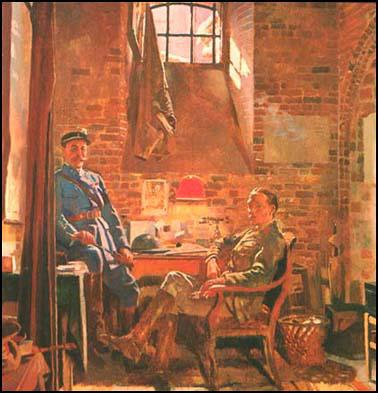
As The 100th Anniversary Of The First Year Of World War I (Remember The War To End All Wars) Continues ... Some Remembrances-Artists’ Corner- William Orphren

Sir William Orpen, British Staff Officer (1918)

In say 1912, 1913, hell, even the beginning of 1914, the first few months anyway, before the war clouds got a full head of steam in the summer they all profusely professed their unmitigated horror at the thought of war, thought of the old way of doing business in the world. Yes the artists of every school the Cubist/Fauvists/Futurists/Constructivists, Surrealists or those who would come to speak for those movements (hell even the Academy spoke the pious words when there was sunny weather), those who saw the disjointedness of modern industrial society and put the pieces to paint, sculptors who put twisted pieces of metal juxtaposed to each other saw that building a mighty machine from which you had to run created many problems; writers of serious history books proving that, according to their Whiggish theory of progress,  humankind had moved beyond war as an instrument of policy and the diplomats and high and mighty would put the brakes on in time, not realizing that they were all squabbling cousins; writers of serious and not so serious novels drenched in platitudes and hidden gazebo love affairs put paid to that notion in their sweet nothing words that man and woman had too much to do, too much sex to harness to denigrate themselves by crying the warrior’s cry and by having half-virgin, neat trick, maidens strewing flowers on the bloodlust streets; musicians whose muse spoke of delicate tempos and sweet muted violin concertos, not the stress and strife of the tattoos of war marches with their tinny conceits; and poets, ah, those constricted poets who bleed the moon of its amber swearing, swearing on a stack of seven sealed bibles, that they would go to the hells before touching the hair of another man, putting another man to ground or lying their own heads down for some imperial mission. They all professed loudly (and those few who did not profess, could not profess because they were happily getting their blood rising, kept their own consul until the summer), that come the war drums they would resist the siren call, would stick to their Whiggish, Futurist, Constructionist, Cubist worlds and blast the war-makers to hell in quotes, words, chords, clanged metal, and pretty pastels. They would stay the course. 

And then the war drums intensified, the people, their clients, patrons and buyers, cried out their lusts and they, they made of ordinary human clay as it turned out, poets, beautiful poets like Wilfred Owens who would sicken of war before he passed leaving a beautiful damnation on war, its psychoses, and broken bones and dreams, and the idiots who brought humankind to such a fate, like e. e. cummings who drove through sheer hell in those rickety ambulances floors sprayed with blood, man blood, angers, anguishes and more sets of broken bones, and broken dreams, like Rupert Brooke all manly and old school give and go, as they marched in formation leaving the ports and then mowed down like freshly mown grass in their thousands as the charge call came and they rested, a lot of them, in those freshly mown grasses, like Robert Graves all grave all sputtering in his words confused about what had happened, suppressing, always suppressing that instinct to cry out against the hatred night, like old school, old Thomas Hardy writing beautiful old English pastoral sentiments before the war and then full-blown into imperium’s service, no questions asked old England right or wrong, like old stuffed shirt himself T.S. Eliot speaking of hollow loves, hollow men, wastelands, and such in the high club rooms on the home front, and like old brother Yeats speaking of terrible beauties born in the colonies and maybe at the home front too as long as Eliot does not miss his high tea. Jesus what a blasted night that Great War time was.  

And do not forget when the war drums intensified, and the people, their clients, patrons and buyers, cried out their lusts and they, they, other creative souls made of ordinary human clay as it turned out

And then the war drums intensified, the people, their clients, patrons and buyers, cried out their lusts and they, they made of ordinary human clay as it turned out, artists, beautiful artists like Fernand Leger who could no longer push the envelope of representative art because it had been twisted by the rubble of war, by the crashing big guns, by the hubris of commanders and commanded and he turned to new form, tubes, cubes, prisms, anything but battered humankind in its every rusts and lusts, all bright and intersecting once he got the mustard gas out of his system, once he had done his patria duty, like speaking of mustard gas old worn out John Singer Sargent of the three name WASPs forgetting Boston Brahmin society ladies in decollage, forgetting ancient world religious murals hanging atop Boston museum and spewing trench warfare and the blind leading the blind out of no man’s land, out of the devil’s claws, like Umberto Boccioni, all swirls, curves, dashes, and dangling guns as the endless charges endlessly charge, like Gustav Klimt and his endlessly detailed gold dust opulent Asiatic dreams filled with lovely matrons and high symbolism and blessed Eve women to fill the night, Adam’s night after they fled the garden, like Joan Miro and his infernal boxes, circles, spats, eyes, dibs, dabs, vaginas, and blots forever suspended in deep space for a candid world to fret through, fret through a long career, and like poor maddened rising like a phoenix in the Spartacist uprising George Grosz puncturing the nasty bourgeoisie, the big bourgeoisie the ones with the real dough and their overfed dreams stuffed with sausage, and from the bloated military and their fat-assed generals stuff with howitzers and rocket shells, like Picasso, yeah, Picasso taking the shape out of recognized human existence and reconfiguring the forms, the mesh of form to fit the new hard order, like, Braque, if only because if you put the yolk on Picasso you have to tie him to the tether too.          

And do not forget when the war drums intensified, and the people, their clients, patrons and buyers, cried out their lusts and they, they, other creative souls made of ordinary human clay as it turned out sculptors, writers, serious and not, musicians went to the trenches to die deathless deaths in their thousands for, well, for humankind, of course, their always fate ….           
Smokestack Lightning, Indeed- With Bluesman Howlin’ Wolf In Mind


Sometimes a picture really can be worth a thousand words, a thousand words and more as in the case Howlin’ Wolf doing his Midnight creep in the photograph above taken from an album of his work but nowadays with the advances in computer technology and someone’s desire to share also to be seen on sites such as YouTube where you can get a real flavor of what that mad man was about when he got his blues wanting habits on. In fact I am a little hesitate to use a bunch of words describing Howlin’ Wolf in high gear since maybe I would leave out that drop of perspiration dripping from his overworked forehead and that salted drop might be the very thing that drove him that night or describing his oneness with his harmonica because that might cause some karmic funk. So, no, I am not really going to go on and on about his midnight creep but when the big man got into high gear, when he went to a place where he sweating profusely, a little ragged in voice and eyes all shot to hell he roared for his version of the high white note. Funny, a lot of people, myself for a while included, used to think that the high white note business was strictly a jazz thing, maybe somebody like the “Prez” Lester Young or Duke’s Johnny Hodges after hours, after the paying customers had had their fill, or what they thought was all those men had in them, shutting the doors tight, putting up the tables leaving the chairs for whoever came by around dawn, grabbing a few guys from around the town as they finished their gigs and make the search, make a serious bid to blow the world to kingdom come.

Some nights they were on fire as they blew that big note out in to some heavy air and who knows where it landed, most nights though it was just “nice try.” One night I was out in Frisco when “Saps” McCoy blew a big sexy sax right out the door of Chez Benny’s over in North Beach when North Beach was just turning away from be-bop “beat” and that high white note, I swear, blew out into the bay and who knows maybe all the way to the Japan seas. Well see we were all a little high so I don’t know about that Japan seas stuff but I sure know that brother blew that high white one somewhere out the door.  But see if I had, or anybody had, thought about it for a minute jazz and the blues are cousins, cousins no question so of course Howlin’ Wolf blew out that high white note more than once, plenty including a couple of shows I caught him at later when he was not in his prime.         

The photograph (and now video) that I was thinking of is one where he is practically eating the harmonica as he performs How Many More Years (and now like I say thanks to some thoughtful archivist you can go on to YouTube and see him doing his devouring act in real time and in motion, wow, and also berating “father” preacher/sinner man Son House for showing up drunk). Yes, the Wolf could blast out the blues and on this one you get a real appreciation for how serious he was as a performer and as blues representative of the highest order.

Howlin’ Wolf like his near contemporary and rival Muddy Waters, like a whole generation of black bluesmen who learned their trade at the feet of old-time country blues masters like Charley Patton, the aforementioned Son House who had had his own personal fight with the devil, Robert Johnson who allegedly sold his soul to the devil out on Highway 61 so he could get his own version of that high white note, and the like down in Mississippi or other southern places in the first half of the twentieth century. They as part and parcel of that great black migration (even as exceptional musicians they would do stints in the sweated Northern factories before hitting Maxwell Street) took the road north, or rather the river north, an amazing number from the Delta and an even more amazing number from around Clarksville in Mississippi right by that Highway 61 and headed first maybe to Memphis and then on to sweet home Chicago.  

They went where the jobs were, went where the ugliness of Mister James Crow telling them sit here not there, walk here but not there, drink the water here not there, don’t look at our women under any conditions and on and on did not haunt their every move (although they would find not racial Garden of Eden in the North, last hired, first fired, squeezed in cold water flats too many to a room, harassed, but they at least has some breathing space, some room to create a little something they could call their own and not Mister’s), went where the big black migration was heading after World War I. Went also to explore a new way of presenting the blues to an urban audience in need of a faster beat, in need of getting away from the Saturday juke joint acoustic country sound with some old timey guys ripping up three chord ditties to go with that jug of Jack Flash’s homemade corn liquor (or so he, Jack Flash called it).


So they, guys like Howlin’ Wolf, Muddy Waters, Magic Slim, Johnny Shines, and James Cotton prospered by doing what Elvis did for rock and rock and Bob Dylan did for folk and pulled the hammer down on the old electric guitar and made big, big sounds that reached all the way back of the room in the Red Hat and Tip Top clubs lining the black streets of blustered America and made the max daddies and max mamas jump, make some moves. And here is where all kinds of thing got intersected, as part of all the trends in post-World War II music up to the 1960s anyway from R&B, rock and roll, electric blues and folk the edges of the music hit all the way to then small white audiences too and they howled for the blues, which spoke to some sense of their own alienation. Hell, the Beatles and more particularly the Stones lived to hear Muddy and the Wolf. The Stones even went to Mecca, to Chess Records to be at one with Muddy. And they also took lessons from Howlin’ Wolf himself on the right way to play Little Red Rooster which they had covered and made famous in the early 1960s (or infamous depending on your point of view since many radio stations including some Boston stations had banned it from the air originally).Yes, Howlin’ Wolf and that big bad harmonica and that big bad voice that howled in the night did that for a new generation, did pretty good, right.  


From The Massachusetts Citizens Against The Death Penalty Website


Click below to link to the Massachusetts Citizens Against The Death Penalty website.

http://www.mcadp.org/
************

Markin comment:
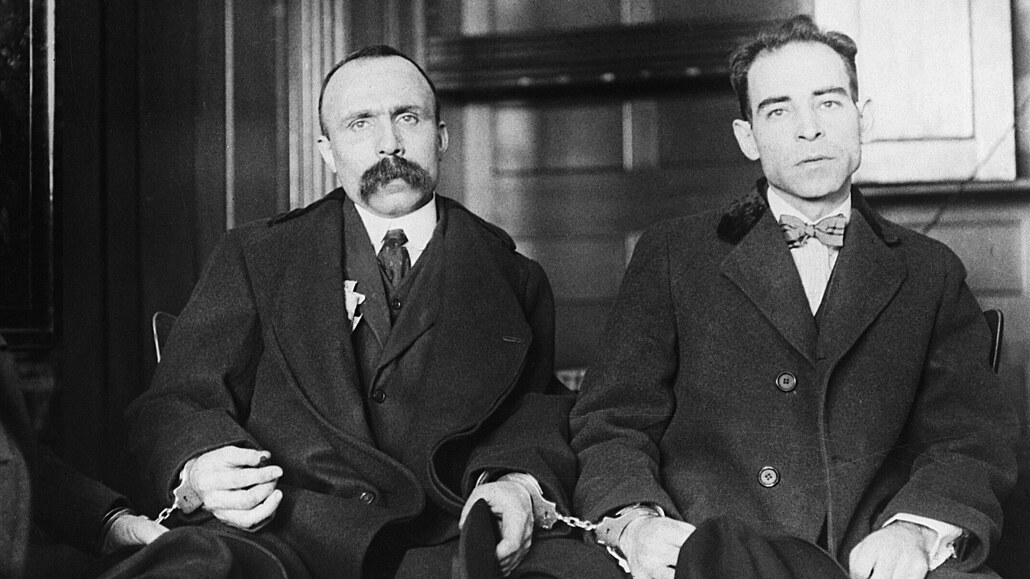
I have been an opponent of the death penalty for as long as I have been a political person, a long time. While I do not generally agree with the thrust of the Massachusetts Citizens Against The Death Penalty Committee’s strategy for eliminating the death penalty nation-wide almost solely through legislative and judicial means (think about the 2011 Troy Davis case down in Georgia for a practical example of the limits of that strategy) I am always willing to work with them when specific situations come up. In any case they have a long pedigree extending, one way or the other, back to Sacco and Vanzetti and that is always important to remember whatever our political differences.

Here is another way to deal with both the question of the death penalty and of political prisoners from an old time socialist perspective taken from a book review of  James P. Cannon's Notebooks Of An Agitator:

I note here that among socialists, particularly the non-Stalinist socialists of those days, there was controversy on what to do and, more importantly, what forces socialists should support. If you want to find a more profound response initiated by revolutionary socialists to the social and labor problems of those days than is evident in today’s leftist responses to such issues Cannon’s writings here will assist you. I draw your attention to the early part of the book when Cannon led the Communist-initiated International Labor Defense (ILD), most famously around the fight to save the anarchists Sacco and Vanzetti here in Massachusetts. That campaign put the Communist Party on the map for many workers and others unfamiliar with the party’s work. For my perspective the early class-war prisoner defense work was exemplary.

The issue of class-war prisoners is one that is close to my heart. I support the work of the Partisan Defense Committee, Box 99 Canal Street Station, New York, N.Y 10013, an organization which traces its roots and policy to Cannon’s ILD. That policy is based on an old labor slogan- ‘An injury to one is an injury to all’ therefore I would like to write a few words here on Cannon’s conception of the nature of the work. As noted above, Cannon (along with Max Shachtman and Martin Abern and Cannon’s long time companion Rose Karsner who would later be expelled from American Communist Party for Trotskyism with him and who helped him form what would eventually become the Socialist Workers Party) was assigned by the party in 1925 to set up the American section of the International Red Aid known here as the International Labor Defense.

It is important to note here that Cannon’s selection as leader of the ILD was insisted on by the Industrial Workers of the World (IWW) because of his pre-war association with that organization and with the prodding of “Big Bill’ Haywood, the famous labor organizer exiled in Moscow. Since many of the militants still languishing in prison were anarchists or syndicalists the selection of Cannon was important. The ILD’s most famous early case was that of the heroic anarchist workers, Sacco and Vanzetti. The lessons learned in that campaign show the way forward in class-war prisoner defense.

I believe that it was Trotsky who noted that, except in the immediate pre-revolutionary and revolutionary periods, the tasks of militants revolve around the struggle to win democratic and other partial demands. The case of class-war legal defense falls in that category with the added impetus of getting the prisoners back into the class struggle as quickly as possible. The task then is to get them out of prison by mass action for their release. Without going into the details of the Sacco and Vanzetti case the two workers had been awaiting execution for a number of years and had been languishing in jail. As is the nature of death penalty cases various appeals on various grounds were tried and failed and they were then in imminent danger of execution.

Other forces outside the labor movement were also interested in the Sacco and Vanzetti case based on obtaining clemency, reduction of their sentences to life imprisonment or a new trial. The ILD’s position was to try to win their release by mass action- demonstrations, strikes and other forms of mass mobilization. This strategy obviously also included, in a subordinate position, any legal strategies that might be helpful to win their freedom. In this effort the stated goal of the organization was to organize non-sectarian class defense but also not to rely on the legal system alone portraying it as a simple miscarriage of justice. The organization publicized the case worldwide, held conferences, demonstrations and strikes on behalf of Sacco and Vanzetti. Although the campaign was not successful and the pair were executed in 1927 it stands as a model for class war prisoner defense. Needless to say, the names Sacco and Vanzetti continue to be honored to this day wherever militants fight against this system.

***************


Oh, but you who philosophize disgrace and criticize all fears
Bury the rag deep in your face
For now's the time for your tears."

last lines from The Lonseome Death Of Hattie Carroll, another case of an injustice against black people. - Bob Dylan
, 1963

Markin comment (posted September 22, 2011):

Look, after almost half a century of fighting every kind of progressive political struggle I have no Pollyanna-ish notion that in our fight for a “newer world” most of the time we are “tilting at windmills.” Even a cursory look at the history of our struggles brings that hard fact home. However some defeats in the class struggle, particularly the struggle to abolish the barbaric, racist death penalty in the United States, hit home harder than others. For some time now the fight to stop the execution of Troy Davis has galvanized this abolition movement into action. His callous execution by the State of Georgia, despite an international mobilization to stop the execution and grant him freedom, is such a defeat.

On the question of the death penalty, moreover, we do not grant the state the right to judicially murder the innocent or the guilty. But clearly Brother Davis was innocent. We will also not forget that hard fact. And we will not forget Brother Davis’ dignity and demeanor as he faced what he knew was a deck stacked against him. And, most importantly, we will not forgot to honor Brother Davis the best way we can by redoubling our efforts to abolition the racist, barbaric death penalty everywhere, for all time. Forward.

Additional Markin comment posted September 23, 2011:

No question the execution on September 21, 2011 by the State of Georgia of Troy Anthony Davis hit me, and not me alone, hard. For just a brief moment that night, when he was granted a temporary stay pending a last minute appeal before the United States Supreme Court just minutes before his 7:00PM execution, I thought that we might have achieved a thimbleful of justice in this wicked old world. But it was not to be and so we battle on. Troy Davis shall now be honored in our pantheon along with the Haymarket Martyrs, Sacco and Vanzetti, Julius and Ethel Rosenberg and others. While Brother Davis may have not been a hard politico like the others just mentioned his fight to abolish the death penalty for himself and for future Troys places him in that company. Honor Troy Davis- Fight To The Finish Against The Barbaric Racist Death Penalty!

Mumia's condition grave: Take Action

Facebook
 
Twitter
 
Prison Radio Website
Dateline: Friday April 24th, 8:45pm

Dear friend,


Mumia Abu-Jamal was seen today by his wife and his condition has worsened. He, is gravely ill.  We are asking everyone to call the prison. Right now. It may be late, but call whenever you get this. 

Mumia needs 24 hour care and supervision. He can not be in this condition in general population. In this state he may not be able ask for help, he may lose consciousness. He is too weak. (He was released from the infirmary two days ago).

His condtiion: He is extremely swollen in his neck, chest, legs, and his skin is worse than ever, with open sores. He was not in a wheelchair, but can only take baby steps. He is very weak. He was nodding off during the visit. He was not able to eat- he was fed with a spoon. These are symptoms that could be associated with hyper glucose levels, diabetic shock, diabetic coma, and with kidney stress and failure. 

Please call these numbers, and any other numbers you have for the Prison and the Governor.

Demand that Mumia Abu-Jamal see a doctor ASAP. Right Now!
Demand that the prison officials call his wife Wadiya Jamal and his lawyer Bret Grote immediately.
Demand that he be seen immediately, and the not be left to go into a diabetic coma.


  1. John Kerestes, Superintendent SCI Mahanoy: 570-773-2158 x8102 | 570-783-2008 Fax | 301 Morea Road, Frackville PA 17932
  2. Tom Wolf, PA Gvrnr: 717-787-2500 | governor@PA.gov | 508 Main Capitol Building, Harrisburg PA 17120
  3. John Wetzel, PA DOC: 717-728-4109 | 717-728-4178 Fax | ra-contactdoc@poc.gov | 1920 Technology Pkwy, Mechanicsburg PA 17050
  4. Susan McNaughton, DOC Press secretary 717-728-4025.  PA Doc smcnaughton@pa.gov


We need your help right now.  Please forward this far and wide.
We need more phone numbers to call inside SCI Mahanoy. If you have one send them to us info@prisonradio.org.


Every call matters.  Every action matters.  We need to be in the streets. Call your friends, your neighbors. Take action.

freemumia.com   prisonradio.org   bringmumiahome.com


Noelle Hanrahan
Prison Radio


Support Prison Radio
 

$35 to become a member. 
$50 to become a member and receive a beautiful tote bag. Or call us to special order a yoga mat bag.
$100 to become a member and receive the DVD "Mumia: Long Distance Revolutionary."
$300 to become a member and bring one essay to the airwaves.
$1,000 (or $88 per month) will make you a member of our Prison Radio Freedom Circle. Thank you!


To give by check: 
PO Box 411074
San Francisco, CA
94141

Stock or legacy gifts:
Noelle Hanrahan
(415) 706 - 5222


unsubscribe from this list    update subscription preferences 


On The 40th Anniversary Of The Fall Of Saigon (Ho Chi Minh City)-Vietnam At The End- Once Again-No Black-Bordered Obituary For War Criminal Kennedy/Johnson Secretary Of War Robert S. McNamara


From The Pen Of Frank Jackman

Sometimes a picture is in fact better than one thousand words. In this case the famous, or infamous depending on one’s view, photograph of the last American “refugees” being evacuated by helicopter from the American Embassy rooftop in Saigon (now, mercifully, Ho Chi Minh City) tells more about that episode of American imperial hubris that most books. That clinging mass of blurry figures dragging, fighting, pushing to get that last out before the NVA swooped down in a flash and closed down the old shop. Books that spent thousands of words talking about “domino theories, red menaces, communist hegemony, and sticking it to the Soviets by a little proxy war in far off rice fields.

Recently I reviewed Frank Snepp’s book about Vietnam at the end of the war, Indecent Interval , where I noted “as is the case with this little gem of a book, ex- CIA man Frank Snepp’s insider account of that fall from the American side, it is nice to have some serious analytical companionship to that photo [helicopter rescues off the Embassy rooftop].  Moreover, a book that gives numerous details about what happened to who in those last days in a little over five hundred pages. Naming names about who the good guys and bad guys really were (from the American imperial perspective). Especially now, as two or three later generations only see Vietnam through the hoary eyes of old veterans, both military and radical anti-war, from that period like me (a veteran in both senses) to tell the tale.”

And such histories, memoirs and remembrances help to get a fix on that Vietnam episode in the lives of many of the young in that time. Sometimes though the story of war, about what happened before the whole edifice came crashing down, can be told another way, in a more personal way. Who knows in one hundred years the book below may present the more important story.

*******

No Black-Bordered Obituary For War Criminal Kennedy/Johnson Secretary Of War Robert S. McNamara

Commentary (July 6, 2009)

The recent death, at 93, of Kennedy/Johnson Vietnam War-era War Secretary Robert McNamara has been met with a number of tributes in the bourgeois media about his role as architect of various Cold War military policies in defense of the American Imperial state. That is to be expected for those sources. There is, apparently, an unwritten rule that one does not speak ill of the dead in those circles. Including legitimate war criminals. And in the normal course of events that might be an appropriate response. But one Robert Strange McNamara is of a different stripe.

After a life time of public service to the bourgeois state Mr. McNamara, seemingly, late in life started to worry about his eternal soul and the harm that he had done to it by trying, as an example, to wipe the country of Vietnam, North and South at the time, off the face of the earth with his incessant strategic bombing policy. After exhibiting some qualms late in the Johnson presidency (and around the time of TET 1968) he was booted upstairs to become President of the American-dominated World Bank. Nice soft landing for a war criminal, right?

And who called him a war criminal? Well, of course, this writer did (and does). And so did many of the anti-war activists of the 1960’s. Those calls are to be expected (and might be considered to constitute a minimum response to his egregious policies). But, surprise, surprise late in life, after serious reflection, McNamara implied, haltingly to be sure, in his memoirs (a review of which is re-posted below) that that might have been the case. However, unlike some of his compadres at the Nuremberg War Crimes tribunals and other such venues, Mr. McNamara died quietly in his bed.

Not so fortunate were the millions of Vietnamese peasants and workers who bore the onslaught of the maximum fire-power the American military could lay down. No, there will be no final justice in this sorry old world until a future American Workers Republic pays real justice (and serious cash) to the people of Vietnam. As for Robert Strange McNamara, if the worst that happened to him was a “bad conscience” he got off easy.

******

Reposted below is a review of Robert Strange McNamara’s memoirs and of a documentary “Fog Of War” used by him in order to help “the second draft” of history of his legacy.

Reposted From April 30, 2009 Entry

The Fog Of War, Part II- War Secretary Robert McNamara’s View Of His Handiwork in Vietnam

Book Review

In Retrospect: The Tragedy And Lessons Of Vietnam, Robert Strange McNamara with Brain VanDeMark, Random House, 1995

Anyone who had caught the Friday March 27, 2009 headlines is aware that the Democratic Party-run Obama government has called for some 4,000 additional troops for Afghanistan and what they, euphemistically, call civilian support teams in order to bolster the sagging regime of “Mayor of Kabul” Karzai. Those numbers are in addition to the 17,000 extras already committed by the Obama regime in February. Does the word escalation seem appropriate here?

One of the problems of having gone through the Vietnam experience in my youth (including periods of lukewarm support for American policy under John F. Kennedy, a hands-off attitude in the early Lyndon B. Johnson years and then full-bore opposition under the late Johnson, Richard M. Nixon and Gerald Ford regimes) is a tendency to view today’s American imperial policy in the same by-the-numbers approach as I took as a result of observing the Vietnam War as it unfolded. There are differences, some of them hugely so, between Vietnam and Afghanistan. Just as, I have previously noted in this space, there are differences between Vietnam and the recently “completed” Iraq War. (Hey, I’m just going by what the media tells me is going on. They wouldn’t lead us astray, would they?)

But, I keep getting this eerie feeling in the back of my neck every time I hear, or see, anything concerning Afghanistan coming out of this new Obama administration. They appear clueless, yet are determined to forge ahead with this policy that can only lead to the same kind of quagmire than Vietnam and Iraq turned into. That is where the analogies to Vietnam do connect up. In this regard, I have recently been re-reading Kennedy/Johnson War Secretary Robert Strange (that’s his middle name, folk, I didn’t make it up and didn’t need to) McNamara’s memoirs, written in 1995, of his central role in the development of Vietnam policy, “In Retrospect: The Tragedy and Lessons of Vietnam”.

Obviously McNamara has put his own ‘spin’ on his personal role then in order to absolve himself (a little) before history. That is to be expected. What comes through crystal clear, however, because in the final analysis McNamara still doesn’t get it, is that when you’re the number one imperial power all the decisions you make are suppose to fall into place for your benefit because you represent the “good guys”. Regardless of what you do, or do not, know about the internal workings of the situation at hand. The Kennedy/Johnson administrations were almost totally ignorant of the internal working of Vietnamese society. That is why I have that eerie, very eerie, feeling about this Obama war policy.

In the normal course of events former high level bureaucrats in American presidential administrations usually save their attempts at self-justification for high ticket published memoirs or congenial `softball' speaking tours and conferences. In short, they prefer to preach to the choir at retail prices. Apparently, Cold Warrior extraordinaire Secretary of War Robert Strange McNamara felt that such efforts were very necessary in his case and hence he had to go to the prints in order to whitewash his role in the history of his times. Despite an apparent agreement with his “ghost writer” not to cover certain subjects and be allowed to present his story his way it is always good to catch a view of how the other side operates. It ain't pretty.

After a lifetime of relative public silence, at the age of 8o something, McNamara decided to give his take on events in which he was a central figure like dealing with the fact of American imperial military superiority in the post- World War II period, dealing with the Russians and the fight for American nuclear superiority during the Cold War, the ill-conceived Bay of Pigs invasion of Cuba, the later Cuban Missile crisis and above all his role in the escalation of the wars in Southeast Asia, primarily Vietnam.

Very little here focuses on his time at the World Bank, a not unimportant omission that would highlight my point that he might have changed his clothing in the course of his career but not his mindset. While those of us interested in learning the lessons of history have long understood that to know the political enemy is the beginning of wisdom one will not find much here that was not infinitely better covered by the late journalist David Halberstam in his classic “The Best and The Brightest”.

McNamara has chosen to present his story in the form of parables, or rather, little vignettes about the “lessons” to be drawn from experiences (eleven in all by the way). Thus, we are asked to sit, embarrassingly, through McNamara's freshman course in revisionist history as he attempts to take himself from the cold-hearted Cold Warrior and legitimate “war criminal” to the teddy-bearish old man who has learned something in his life- after a lifetime of treachery. Yet, like that freshman course there are things to be learned despite the professor and more to learn, if only by reading between the lines, than he or she wanted to express.

McNamara presents his take by dividing the Vietnam War buildup, at least at the executive level, into periods; the early almost passive Kennedy days; the post Kennedy assassination period when Lyndon Johnson was trying to be all things to all men; the decisive post-1964 election period; and, various periods of fruitless and clueless escalation. It is this process that is, almost unwittingly, the most important to take from this world. Although McNamara, at the time of writing was an older and wiser man, when he had power he went along with ever step of the “hawks”, civilian and military. He led no internal opposition, and certainly not public one. This is the classic “good old boys” network where one falls on one’s sword when the policy turns wrong. And he is still scratching his head over why masses of anti-war protesters chanted “war criminal” when they confronted him with his deeds. And then listen to the latest screeds by current War Secretary Gates concerning Afghanistan. It will sound very familiar.

In the end, if one took his story at face value, one could only conclude that he was just trying to serve his bosses the best way he could and if things went wrong it was their fault. Nothing new there, though. Henry Kissinger has turned that little devise into an art form. Teary-eyed at the end McNamara might be as he acknowledges his role in the mass killings of his time, but beware of a wolf in sheep's clothing. Yet, you need to read this book if you want to understand how these guys (and gals) defended their state then, and now.

DVD REVIEW

The Fog of War, starring former Secretary of War Robert Strange McNamara, 2003

In the normal course of events former high level bureaucrats in American presidential administrations usually save their attempts at self-justification for high ticket published memoirs or congenial `softball' speaking tours and conferences. In short, they prefer to preach to the choir at retail prices. Apparently, former Kennedy and Johnson Administration Cold Warrior extraordinaire Secretary of War Robert Strange McNamara felt that such efforts were not enough and hence he had to go before the cameras in order to whitewash his role in the history of his times. Despite an apparent agreement with his interviewer not to cover certain subjects and be allowed to present his story his way it is always good to catch a view of how the other side operates. It ain't pretty.

After a lifetime of relative public silence, at the age of 85, McNamara decided to give his take on events in which he was a central figure like dealing with the fact of American imperial military superiority in the post- World War II period, dealing with the Russians and the fight for American nuclear superiority during the Cold War, the ill-conceived Bay of Pigs invasion of Cuba, the later Cuban Missile crisis and above all his role in the escalation of the wars in Southeast Asia, primarily Vietnam.

Very little here focuses on his time at the World Bank, a not unimportant omission that would highlight my point that he might have changed his clothing in the course of his career but not his mindset. While those of us interested in learning the lessons of history have long understood that to know the political enemy is the beginning of wisdom one will not find much here that was not infinitely better covered by the late journalist David Halberstam in his classic The Best and The Brightest.

McNamara has chosen to present his story in the form of parables, or rather, little vignettes about the `lessons' to be drawn from experiences. Thus, we are asked to sit, embarrassingly, through McNamara's Freshman course in revisionist history as he attempts to take himself from the cold-hearted Cold Warrior and legitimate `war criminal' to the teddy-bearish old man who has learned something in his life- after a lifetime of treachery.

In the end, if one took his story at face value, one could only conclude that he was just trying to serve his bosses the best way he could and if things went wrong it was their fault. Nothing new there, though. Henry Kissinger has turned that little devise into an art form. Teary-eyed at the end McNamara might be as he acknowledges his role in the mass killings of his time, but beware of a wolf in sheep's clothing. Yet, you need to watch this film if you want to understand how these guys (and gals) defend their state.