Friday, October 09, 2015

A Voice From The Left-The Latest From The Steve Lendman Blog

A Voice From The Left-The Latest From The Steve Lendman Blog


 A link below to link to the Steve Lendman Blog

http://sjlendman.blogspot.com/


Sam Lowell was feeling his years these days, not so much the physical aches and pains that seem to reside for months when in the days of his youth, the days when he would cavort around the country doing his best Jack Kerouac on the road imitation and later after Jake Jacobs was killed in some Vietnam outpost in the Central Highlands his best high hat radical fight against the American monster role, and think nothing of it but politically weary.  As he told his old time friend and comrade Ralph Morris over the cellphone one night when he was feeling down after a day of trying to get his Congressman, Danny Shea, to listen to him and the others in his delegation to vote against the war appropriations for the Middle East nightmare and for the umpteenth time was told that by Shea that he had to support  the supply of American “boots on the ground” no matter what,  he was weary unto death of such thankless delegations, small anti-war rallies where passers-by show utter indifference and of people refusing to talk any serious politics except the fruitless “horse race” stuff for President and the like. (That comrade expression by the way not signifying some allegiance to Moscow or Peking [sic] like it very well might have done in the old days but in the old fashion 19th century way to connote a politically solid friendship for which either party would scale the barricades for, and gladly.

Of course Ralph felt a little badly for Sam (although he knew better than to mention the fact to Sam for Sam was not the kind of guy who took feeling badly for, especially in politics, with good grace) since he had been instrumental in getting Sam back into the left-wing liberal political battles back in 2002 in the lead-up to the Bush junior Iraq War after years of badgering him about his withdrawal from active progressive politics when the great wave of the 1960s ebbed and it looked like an Ice Age had set in for the kind of world that they both were seeking in their callow youths. Ralph had stayed far more active in progressive circles over the years but even he had to admit that he had drifted far from the in-your-face street confrontations like the one down in Washington in 1971 where he and Sam had met in RFK Stadium after they had been arrested and placed there after an indiscriminate police round-up of anybody who even looked young and was not wearing a three-piece suit that day. He had spent his off-hours when not running his father’s electrical shop doing the exact same things that Sam had bitched to him about over the phone. With the advent of the Internet and the rise of social networking he had originally thought that the old idea of a world “tribal youth nation” had traction again. He had even gone full force when the rising star of Barack Obama seemed like it would push the rock up the hill. And although that particular star had turned into a cipher he was still fighting the good fight trying to make this foolish messy democratic system work since those old street confrontation days didn’t produce anything but forty plus years of cold cultural civils wars, and they were not on the winning side.

Ralph thought he would try to buck Sam up after that last call by referring him to some blogs that he “followed” (followed here meaning merely clinking onto the blogger’s homepage and nothing more sinister like some cultish madness that he had nearly got caught up in after the ‘60s wave turned tepid and he was looking for some “new age” personal solutions) to show he had kindred out there in the progressive political universe. Sam did pay attention to a couple, one in particular the Steve Lendman blog which gave good analyses but after a while he had this abiding feeling that he was again spinning his wheels in this progressive mish-mash. He decided to write something about his dilemma although he is not a writer but rather had just recently retired from the printing business which was taken over by his son. Here is what he had to say, and here is where the problem lies:    

Over the last couple of years that I have been presenting political material in this space I have had occasion to re-post items from some sites which I find interesting, interesting for a host of political reasons, although I am not necessarily in agreement with what has been published. Two such sites have stood out, The Rag Blog, which I like to re-post items from because it has articles by many of my fellow Generation of ’68 residual radicals and ex-radicals who still care to put pen to paper and the blog cited here, the Steve Lendman Blog.  The reason for re-postings from this latter site is slightly different since the site represents a modern day left- liberal political slant. That is the element, the pool if you will, that we radicals have to draw from, have to move left, if we are to grow. So it is important to have the pulse of what issues motivate that milieu and I believe that this blog is a lightning rod for those political tendencies. 

I would also add that the blog is a fountain of rational, reasonable and unrepentant anti-Zionism which became apparent once again in the summer of 2014 when defense of the Palestinian people in Gaza was the pressing political issue and we were being stonewalled and lied to by the bourgeois media in service of American and Israeli interests. This blog was like a breath of fresh air.

I place some material in this space which I believe may be of interest to the radical public that I do not necessarily agree with or support. One of the worst aspects of the old New Left back in the 1970s as many turned to Marxism after about fifty other theories did not work out (mainly centered on some student-based movements that were somehow to bring down the beast without a struggle for state power) was replicating the worst of the old Old Left and freezing out political debate with other opponents on the Left to try to clarify the pressing issues of the day. That freezing out , more times than I care to mention including my own behavior a few times, included physical exclusion and intimidation. I have since come to believe that the fight around programs and politics is what makes us different, and more interesting. The mix of ideas, personalities and programs, will sort themselves out in the furnace of the revolution as they have done in the past. 

Off-hand, as I have mentioned before, I think it would be easier, infinitely easier, to fight for the socialist revolution straight up than some of the “remedies” provided by the commentators in these various blogs and other networking media. But part of that struggle for the socialist revolution is to sort out the “real” stuff from the fluff as we struggle for that more just world that animates our efforts. So read on. 

The left-liberal/radical arena in American politics has been on a steep decline since I was a whole-hearted denizen of that milieu in my youth somewhere slightly to the left of Robert Kennedy back in 1968 say but still immersed in trying put band-aids on the capitalist system. That is the place where Steve Lendman with his helpful well informed blog finds himself. As do my old anti-war comrade Ralph Morris and myself as well. It is not an enviable place to be for anyone to have a solid critique of bourgeois politics, hard American imperial politics in the 21st century and have no ready source in that milieu to take on the issues and make a difference (and as an important adjunct to that American critique a solid critique of the American government acting as front-man for every nefarious move the Israeli government makes toward increasing the oppression of the Palestinians in Gaza and the West Bank). 

Of course I had the luxury, if one could call it that, which a look at Mr. Lendman's bio information indicates that he did not have, was the pivotal experience in the late 1960s of being inducted, kicking and screaming but inducted, into the American army in its losing fight against the heroic Vietnamese resistance. That signal event disabused me, although it took a while to get "religion," on the question of the idea of depending on bourgeois society to reform itself. On specific issues like the fight against the death penalty, the fight for the $15 minimum wage, immigration reform and the like I have worked with that left-liberal/ radical milieu, and gladly, but as for continuing to believe against all evidence that the damn thing can be reformed that is where we part company. Still Brother Lendman keep up the good work and I hope you find a political home worthy of your important work. Hell, I hope I can find such a home too because this endless beseeching of bourgeois politicians to do the right thing is getting threadbare and getting me    old time street action crazy.                 

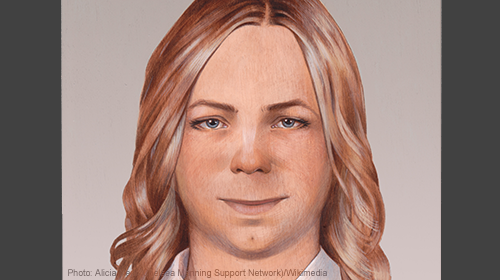
President Obama Pardon Chelsea Manning Now!-The Struggle Continues

President Obama Pardon Chelsea Manning Now!-The Struggle Continues ….We Will Not Leave Our Sister Behind-A Personal Letter From The Pen Of Chelsea Manning From Fort Leavenworth 


Updated-September 2015  


A while back, maybe a year or so ago, I was asked by a fellow member of Veterans For Peace at a monthly meeting in Cambridge about the status of the case of Chelsea Manning since he knew that I had been seriously involved with publicizing her case and he had not heard much about the case since she had been convicted in August 2013 (on some twenty counts including several Espionage Act counts, the Act itself, as it relates to Chelsea and its constitutionality will be the basis for one of her issues on appeal) and sentenced by Judge Lind to thirty-five years imprisonment to be served at Fort Leavenworth in Kansas. (She had already been held for three years before trial, the subject of another appeals issue and as of May 2015 had served five years altogether thus far and will be formally eligible for parole in the not too distant future although usually the first parole decision is negative).


That had also been the time immediately after the sentencing when Private Manning announced to the world her sexual identity and turned from Bradley to Chelsea. The question of her sexual identity was a situation than some of us already had known about while respecting Private Manning’s, Chelsea’s, and those of her ardent supporters at Courage to Resist and elsewhere the subject of her sexual identity was kept in the background so the reasons she was being tried would not be muddled and for which she was savagely fighting in her defense would not be warped by the mainstream media into some kind of identity politics circus.


I had responded to my fellow member that, as usual in such super-charged cases involving political prisoners, and there is no question that Private Manning is one despite the fact that every United States Attorney-General including the one in charge during her trial claims that there are no such prisoners in American jails only law-breakers, once the media glare of the trial and sentencing is over the case usually falls by the wayside into the media vacuum while the appellate process proceed on over the next several years.


At that point I informed him of the details that I did know. Chelsea immediately after sentencing had been put in the normal isolation before being put in with the general population at Fort Leavenworth. She seemed to be adjusting according to her trial defense lawyer to the pall of prison life as best she could. Later she had gone to a Kansas civil court to have her name changed from Bradley to Chelsea Elizabeth which the judge granted although the Army for a period insisted that mail be sent to her under her former male Bradley name. Her request for hormone therapies to help reflect her sexual identity had either been denied or the process stonewalled despite the Army’s own medical and psychiatric personnel stating in court that she was entitled to such measures.


At the beginning of 2014 the Commanding General of the Military District of Washington, General Buchanan, who had the authority to grant clemency on the sentence part of the case, despite the unusual severity of the sentence, had denied Chelsea any relief from the onerous sentence imposed by Judge Lind.


Locally on Veterans Day 2013, the first such event after her sentencing we had honored Chelsea at the annual VFP Armistice Day program and in December 2013 held a stand-out celebrating Chelsea’s birthday (as we did in December 2014 and will do again this December of 2015).  Most important of the information I gave my fellow VFPer was that Chelsea’s case going forward to the Army appellate process was being handled by nationally renowned lawyer Nancy Hollander and her associate Vincent Ward. Thus the case was in the long drawn out legal phase that does not generally get much coverage except by those interested in the case like well-known Vietnam era Pentagon Papers whistle-blower Daniel Ellsberg, various progressive groups which either nominated or rewarded her with their prizes, and the organization that has steadfastly continued to handle her case’s publicity and raising financial aid for her appeal, Courage to Resist (an organization dedicated to publicizing the cases of other military resisters as well).   


At our February 2015 monthly meeting that same VFPer asked me if it was true that as he had heard the Army, or the Department of Defense, had ordered Chelsea’s hormone therapy treatments to begin. I informed him after a long battle, including an ACLU suit ordering such relief, that information was true and she had started her treatments a month previously. I also informed him that the Army had thus far refused her request to have an appropriate length woman’s hair-do. On the legal front the case was still being reviewed for issues to be presented which could overturn the lower court decision in the Army Court Of Criminal Appeals by the lawyers and the actual writing of the appeal was upcoming. A seemingly small but very important victory on that front was that after the seemingly inevitable stonewalling on every issue the Army had agreed to use feminine or neutral pronoun in any documentation concerning Private Manning’s case. The lawyers had in June 2014 also been successful in avoiding the attempt by the Department of Defense to place Chelsea in a civil facility as they tried to foist their “problem” elsewhere.


On the political front Chelsea continued to receive awards, and after a fierce battle in 2013 was finally in 2014 made an honorary grand marshal of the very important GLBTQ Pride Parade in San Francisco (and had a contingent supporting her freedom again in the 2015 parade). Recently she has been given status as a contributor to the Guardian newspaper, a newspaper that was central to the fight by fellow whistle-blower Edward Snowden, where her first contribution was a very appropriate piece on what the fate of the notorious CIA torturers should be, having herself faced such torture down in Quantico adding to the poignancy of that suggestion. More recently she has written articles about the dire situation in the Middle East and the American government’s inability to learn any lessons from history and a call on the military to stop the practice of denying transgender people the right to serve. (Not everybody agrees with her positon in the transgender community or the VFP but she is out there in front with it.) 


[Maybe most important of all in this social networking, social media, texting world of the young (mostly) Chelsea has a twitter account- @xychelsea


Locally over the past two year we have marched for Chelsea in the Boston Pride Parade, commemorated her fourth year in prison last May [2014] and the fifth this year with a vigil, honored her again on Armistice Day 2014, celebrated her 27th birthday in December with a rally (and will again this year on her 28th birthday).


More recently big campaigns by Courage To Resist and the Press Freedom Foundation have almost raised the $200, 000 needed (maybe more by now) to give her legal team adequate resources during her appeals process (first step, after looking over the one hundred plus volumes of her pre-trial and trial hearings, the Army Court Of Criminal Appeal)


Recently although in this case more ominously and more threateningly Chelsea has been charged and convicted of several prison infractions (among them having a copy of the now famous Vanity Fair with Caitlyn, formerly Bruce, Jenner’s photograph on the cover) which could affect her parole status and other considerations going forward.     


We have continued to urge one and all to sign the on-line Amnesty International petition asking President Obama to grant an immediate pardon as well as asking that those with the means sent financial contributions to Courage To Resist to help with her legal expenses.


After I got home that night of the meeting I began thinking that a lot has happened over the past couple of years in the Chelsea Manning case and that I should made what I know more generally available to more than my local VFPers. I do so here, and gladly. Just one more example of our fervent belief that as we have said all along in Veterans for Peace and elsewhere- we will not leave our sister behind… More later.              

Out Of The Hills And Hollows- With The Bluegrass Band The Lally Brothers In Mind

Out Of The Hills And Hollows- With The Bluegrass Band The Lally Brothers In Mind  


From The Pen Of Frank Jackman 

 
You know sometimes what goes around comes around as the old-time expression had it. Take for example Sam Lowell’s youthful interest in folk music back in the early 1960s when it crashed out of exotic haunts like Harvard Square, Ann Arbor, Old Town Chi Town and North Beach/Berkeley out in Frisco Bay Area Town and ran into a lot of kids, a lot of kids like Sam, who were looking for something different, something that they were not sure of but that smelled, tasted, felt, looked like difference from a kind of one-size-fits-all vanilla existence. Oh sure, every generation in their youth since the days when you could draw a distinction between youth and adulthood and have it count has tried to march to its own symbolic beat but this was different, this involved a big mix of things all jumbled together, political, social, economic, cultural, the whole bag of societal distinctions which would not be settled until the end of the decade, maybe the first part of the next. But what Sam was interested then down there in Carver about thirty miles south of Boston was the music, his interest in the other trends did not come until later, much later long after the whole thing had ebbed. 

The way Sam told it one night at his bi-weekly book club where the topic selected for that meeting had been the musical influences, if any, that defined one’s tastes and he had volunteered to speak since he had just read a book, The Mountain View, about the central place of mountain music, for lack of a better term, in the American songbook was that he had been looking for roots as a kid. Musical roots which were a very big concern for a part of his generation, a generation that was looking for roots, for rootedness not just in music but in literature, art, and even in the family tree. Their parents’ generation no matter how long it had been since the first family immigration wave was in the red scare Cold War post-World War II period very consciously ignoring every trace of roots in order to be fully vanilla Americanized. So his generation had to pick up the pieces not only of that very shaky family tree but everything else that had been downplayed during that period.

Since Sam had tired of the lazy hazy rock and roll that was being produced and which the local rock radio stations were force- feeding him and others like him looking to break out through their beloved transistor radios he started looking elsewhere on the tiny dial for something different. That transistor radio for those not in the know was “heaven sent” for a whole generation of kids in the 1950s who could care less, who hated the music that was being piped into the family living room big ass floor model radio which their parents grew up with since it was small, portable and could be held to the ear and the world could go by without bothering you while you were in thrall to the music. That was the start. But like a lot of young people, as he would find out later when he would meet kindred in Harvard Square, the Village, Ann Arbor, Berkeley he had been looking for that something different at just that moment when something called folk music, roots music, actually was being played on select stations for short periods of time each week.

Sam’s lucky station had been a small station, an AM station, from Providence in Rhode Island which he would find out later had put the program on Monday nights from eight to eleven at the request of Brown and URI students who had picked up the folk music bug on trips to the Village (Monday a dead music night in advertising circles then, maybe now too, thus fine for talk shows, community service programs and odd-ball stuff like roots music.) That is where he first heard the likes of Bob Dylan, Joan Baez, Tom Paxton, Dave Von Ronk, a guy named Tom Rush from Harvard whom he would hear in person many times over the years, and another guy, Eric Von Schmidt whom he would meet later in one of the Harvard Square coffeehouses that were proliferating to feed the demand to hear folk music, well, cheaply alone or on a date. Basically as he related to his listeners for a couple of bucks at most admission, the price of a cup of coffee to keep in front of you and thus your place, maybe a pastry if alone and just double that up for a date except share the pasty you had your date deal all set for the evening hearing performers perfecting their acts before hitting the A-list clubs).

He listened to it all, liked some of it, other stuff, the more protest stuff he could take or leave depending on the performer but what drew his attention, strangely then was when somebody on radio or on stage performed mountain music, you know, the music of the hills and hollows that came out of Appalachia mainly down among the dust and weeds. Things like Bury Me Under The Weeping Willow, Gold Watch and Chain, Fair and Tender Ladies, Pretty Saro, and lots of instrumentals by guys like Buell Kazee, Hobart Smith, The Muddy River Boys, and some bluegrass bands as well that had now escaped his memory.

This is where it all got jumbled up for him Sam said since he was strictly a city boy, made private fun of the farm boys, the cranberry boggers, who then made up a significant part of his high school and had no interest in stuff like the Grand Ole Opry and that kind of thing, none. Still he always wondered about the source, about why he felt some kinship with the music of the Saturday night red barn, probably broken down, certainly in need of paint, and thus available for the dance complete with the full complement of guitars, fiddles, bass, mandolin and full complement of Jimmy Joe’s just made white lightening, playing plainsong for the folk down in the wind-swept hills and hollows.                                 
As Sam warmed up to his subject he told his audience two things that might help explain his interest when he started to delve into the reasons why fifty years later the sound of that finely-tuned fiddle still beckons him home. The first was that when he had begun his freshman year at Boston University he befriended a guy, Everett Lally, the first day of orientation since he seemed to be a little uncomfortable with what was going on. See Everett was from a small town outside of Wheeling, West Virginia and this Boston trip was only the second time, the first time being when he came up for an interview, he had been to a city larger than Wheeling. So they became friends, not close, not roommate type friends, but they had some shared classes and lived in the same dorm on Bay State Road.

One night they had been studying together for an Western History exam and Everett asked Sam whether he knew anything about bluegrass music, about mountain music (Sam’s term for it Everett was Bill Monroe-like committed to calling it bluegrass). Sam said sure, and ran off the litany of his experiences at Harvard Square, the Village, listening on the radio. Everett, still a little shy, asked if Sam had ever heard of the Lally Brothers and of course Sam said yes, that he had heard them on the radio playing the Orange Blossom Express, Rocky Mountain Shakedown as well as their classic instrumentation version of The Hills of Home.  Everett perked up and admitted that he was one of the Lally Brothers, the mandolin player.

Sam was flabbergasted. After he got over his shock Everett told him that his brothers were coming up to play at the New England Bluegrass Festival to be held at Brandeis on the first weekend of October. Everett invited Sam as his guest. He accepted and when the event occurred he was not disappointed as the Lally Brothers brought the house down. For the rest of that school year Sam and Everett on occasion hung out together in Harvard Square and other haunts where folk music was played since Everett was interested in hearing other kinds of songs in the genre. After freshman year Everett did not return to BU, said his brothers needed him on the road while people were paying to hear their stuff and that he could finish school later when things died down and they lost touch, but Sam always considered that experience especially having access to Everett’s huge mountain music record collection as the lynchpin to his interest.             

Of course once the word got out that Everett Lally was in a bluegrass group, played great mando, could play a fair fiddle and the guitar the Freshman girls at BU drew a bee-line for him, some of them anyway. BU, which later in the decade would be one of the hotbeds of the anti-war movement locally and nationally but then was home to all kinds of different trends just like at campuses around the country, was filled with girls (guys too but for my purposes her the girls are what counts) from New York City, from Manhattan, from Long Island who knew a few things about folk music from forays into the Village. Once they heard Everett was a “mountain man,” or had been at Brandeis and had seen him with his brothers, they were very interested in adding this exotic plant to their collections. Everett, who really was pretty shy although he was as interested in girls as the rest of the guys at school were, told Sam that he was uncomfortable around these New York women because they really did treat him like he was from another world, and he felt that he wasn’t. Felt he was just a guy. But for a while whenever they hung out together girls would be around. Needless to say as a friend of Everett’s when there were two interested girls Sam got the overflow. Not bad, not bad at all.        

But there is something deeper at play in the Sam mountain music story as he also told the gathering that night. It was in his genes, his DNA he said. This was something that he had only found out a few years before. On his father’s side, his grandfather, Homer, whom he had never met since after his wife, Sam’s grandmother, Sara died he had left his family, all grown in any case, without leaving a forwarding address, had actually been born and lived his childhood down in Prestonsburg, Kentucky, down near the fabled Hazard of song and labor legend before moving to the North after World War I. Here is the funny part though when his father and mother Laura were young after World War II and at wits end about where his grandfather might be they travelled down to Prestonsburg in search of him. While they stayed there for a few months looking Sam had been conceived although they left after getting no results on their search, money was getting low, and there were no father jobs around so he had been born in the South Shore Hospital in Massachusetts. So yes, that mountain music just did not happen one fine night but was etched in his body, the whirlwind sounds on Saturday night down amount the hills and hollows with that sad fiddle playing one last waltz to end the evening.                  


From The Archives (2010)-In Honor Of Jack Kerouac-Writer's Corner- Jack Kerouac's "Visions Of Cody" -On The Road-Redux

Book Review

Visions Of Cody, Jack Kerouac, Viking Press, New York, 1973


The first three paragraphs are taken from a previous review about Jack Kerouac and his leading role in establishing the literary ethos of the "beat" generation. Those comments aptly apply in reviewing "Visions Of Cody" as well:

"As I have explained in another entry in this space in reviewing the DVD of “The Life And Times Of Allen Ginsberg”, recently I have been in a “beat” generation literary frame of mind. I mentioned there, as well, and I think it helps to set the mood for commenting on Jack Kerouac’s seminal ‘travelogue’, “On The Road”, that it all started last summer when I happened to be in Lowell, Massachusetts on some personal business. Although I have more than a few old time connections with that now worn out mill town I had not been there for some time. While walking in the downtown area I found myself crossing a small park adjacent to the site of a well-known mill museum and restored textile factory space.

Needless to say, at least for any reader with a sense of literary history, at that park I found some very interesting memorial stones inscribed with excerpts from a number of his better known works dedicated to Lowell’s “bad boy”, the “king of the 1950s beat writers, Jack Kerouac. And, just as naturally, when one thinks of Kerouac then Allen Ginsberg, William Burroughs, Gregory Corso, Neal Cassady and a whole ragtag assortment of poets, hangers-on, groupies and genuine madmen and madwomen come to mind. They all show up, one way or another (under fictional names of course), in this book. So that is why we today are under the sign of “On The Road”.

To appreciate Kerouac and understand his mad drive for adventure and to write about it, speedily but precisely, you have to start with “On The Road”. There have been a fair number of ‘searches' for the meaning of the American experience starting, I believe, with Whitman. However, each generation that takes on that task needs a spokesperson and Jack Kerouac, in the literary realm at least, filled that bill not only for his own generation that came of age in the immediate post World War II era, but mine as well that came of age in the 1960s (and, perhaps, later generations but I can only speculate on that idea here)."

That said, “Visions Of Cody” is an extension of that “On The Road” story line that made Kerouac famous, although "Visions" is more diffuse and much more concerned with literary imager than with the storyline developed in the earlier Kerouac/Paradise narrative. Here Jack as Dulouz and Neal Cassady as Cody Pomeray do more running around on the road, partying, reflecting on the nature of the universe, partying, speculating on the nature of the American experience, partying and… well, you get the drift. In some places the descriptive language is stronger than “On The Road”, reflecting Kerouac’s greater ease with his spontaneous writing style in the early 1950s when this was written (although not widely published until after his death.).

Additionally, included here is a long series of taped interviews between Jack and Neal over several days and, presumably, while both were on a running drug “high”. These tapes reflect very nicely the very existential nature of 1950s “beat”, or at least one interpretation of that term. They produce all the madness, genius, gaffs, gaps, whimsy and pure foolishness that come from an extended drug experience. Despite all reports to the contrary not everything observed until the “influence” comes out pure literary gold, and that is true here as well. But there is a lot of good stuff nevertheless, although here it could have been cut in half and we still would have gotten that “beat” beat.

Maine Peace Walk Pot Luck Supper & Program Schedule -October 9 to 24

Maine Peace Walk Pot Luck Supper & Program Schedule -October 9 to 24 

peacewalk banner
                                                                                                                                 Art work by Russell Wray
 
  • Day 1 (Ellsworth) Friday, October 9 -   Ellsworth Unitarian Church (121 Bucksport Rd) Evening potluck and kick-off program at 6:00 pm. Homestays needed.    Host: Starr Gilmartin 667-2421
  • Day 2 (Orland) Saturday, October 10 - Potluck supper 6:00 pm and program at H.O.M.E (90 School House Rd.) Sleep at H.O.M.E.  Host: Starr Gilmartin 667-2421 or Lawrence 415-565-9867
  • Day 3 (Belfast) Sunday, October 11 - First Church UCC (104 Church St) Pot luck supper (unadvertised) 6:00 pm, public program 7:00 pm.    Home stays needed & sleep at church: Cathy Mink 323-5160 & Bev Roxby 669-2903.      Host: Joel 338-2282 or 323-0940 at the UCC Church
  • Day 4 (Camden) Monday, October 12 - Our Lady of Good Hope Catholic Church (7 Union St) Pot luck supper and program at 6:00 pm. Home stays needed. Host: Maureen Kehoe-Ostensen 763-4062
  • Day 5 (Rockland) Tuesday, October 13 - Potluck supper and program at Unitarian church (345 Broadway) at 6:00 pm. Homestays needed.  Host: Midcoast Citizens for P & J (Steve Burke 691-0322)
  • Day 6 (Damariscotta) Wednesday, October 14 - Friends Meeting House (77 Belvedere Rd) Potluck Supper and program at 6:00 pm. Sleep at Meeting House.  Host: Friends Meeting (Sue Rockwood 570-854-4458)
  • Day 7 (Bath) Thursday, October 15 - UCC Neighborhood Church (corner of Washington & Centre) Potluck supper and program at 6:00 pm. Homestays needed.  Host: Bruce Gagnon 904-501-4494 & Karen Wainberg 371-8190
  • Day 8 (Day off) in Bath Friday, October 16 - Stay at same homestays again this night. Potluck supper at Addams-Melman House (212 Centre St) at 6:00 pm. Host: Bruce Gagnon 904-501-4494 & Karen Wainberg 371-8190
  • Day 9 (Brunswick) Saturday, October 17 - Pot luck supper at Sternlieb home (21 McKeen St) at 6:00 pm. Walker music program. Home stays needed in Brunswick. Host: Selma Sternlieb 725-7675
  • Day 10 (Freeport) Sunday, October 18 - Pot luck supper at First Parish Congregation Church (on US 1) at 6:00 pm and program. Sleep at church. Host: Paula O’Brien 865-6022 & Sukie Rice 318-8531 & Cheryl Avery 865-0916
  • Day 11 ( Portland) Monday, October 19 - State Street Church-UCC (159 State St.) Pot luck supper & program at 6:00 pm.  Homestays needed. Host: Grace Braley 774-1995
  • Day 12 (Saco) Tuesday, October 20 - First Parish Congregation Church on corner of Beech & Maine. Pot luck supper and program at 6:00 pm. Home stays needed.  Host: Tom Kircher 282-7530
  • Day 13 (Kennebunk) Wednesday, Oct 21 - New School (38 York Street). Pot luck supper and program at 6:00 pm. Sleep at school.  Host: Olive Hight 207-590-9505
  • Day 14  (York Beach) Thursday, October 22 - York Beach (52 Freeman St) Supper, music program & sleeping spot at 6:00 pm. Host: Pat Scanlon 978-474-9195 & Smedley Butler Brigade of Boston-area VFP
  • Day 15 (Portsmouth) Friday, October 23 - Supper and program at St. John’s Episcopal Church (100 Chapel St) at 6:00 pm.  Home stays needed, Host: Doug Bogen 603-617-6243
  • Day 16 (Finale in Portsmouth) Saturday, October 24 - Meet at Market Square 10:00 am. Walk thru downtown and back over bridge to Kittery. Rally & speakers at shipyard gate (deliver letter). Walk back to Market Square for final closing circle around noon. Host: Doug Bogen 603-617-6243
 
~ The walk is being sponsored by Maine Veterans for Peace; PeaceWorks; CodePink Maine; Citizens Opposing Active Sonar Threats (COAST); Peace Action Maine; Veterans for Peace Smedley Butler Brigade (Greater Boston); Seacoast Peace Response (Portsmouth); Maine Green Independent Party; and Global Network Against Weapons & Nuclear Power in Space.
 
For full walk route schedule details see http://vfpmaine.org/walk%20for%20peace%202015.html 

Obama Abandons Scheme to Train Nonexistent Syrian Moderates

Obama Abandons Scheme to Train Nonexistent Syrian Moderates

by Stephen Lendman

On Friday, Defense Department publication Stars and Stripes (S&P) headlined “Pentagon plans new approach to train Syrian rebels.” More on this below.

Fact: None exist. Anti-Assad forces are virtually all imported death squads from scores of other countries - US armed, funded, trained and directed, including ISIS, Al Qaeda, and Jabhat Al Nursa elements among others, used as proxy foot soldiers to terrorize Syrians, part of Washington’s scheme to replace Assad with a pro-Western puppet.

S&P lied claiming the Pentagon plans “a new approach to equip Syrian rebels…relying more on…Kurdish forces in” northern Syria.

“The work we’ve done with the Kurds in northern Syria is an example of an effective approach. We have a group that is capable and motivated on the ground,” Defense Secretary Carter claimed.

“So that is exactly the kind of example we’d like to pursue with other groups in other parts of Syria going forward.”

Carter and Pentagon commanders have no effective strategy to counter Russia’s intervention against ISIS and other terrorist groups. Effective blitzkrieg continues destroying their weapons, munitions, and facilities, as well as decimating their ranks.

Thousands fled cross-border for safety or took refuge in residential communities. They’re no match against powerful Russian weapons, sophisticated technology and Putin’s determination to crush them, a righteous undertaking the entire free world applauds.

BBC News reported Saudi Arabia intends sending more weapons to beleaguered “rebel” groups - aka ISIS and other terrorist ones despite Riyadh claiming otherwise. 

After one week of operations, Russia’s Defense Ministry said it launched 120 combat sorties, hitting 110 targets, destroying:

  • 71 armored vehicles

  • 30 other vehicles

  • 19 command facilities

  • 2 communications centers

  • 23 fuel and ammunition depots

  • 6 facilities for making IEDs, including car bombs

  • several artillery pieces, and

  • several training camps

Escalated activities in the last 24 hours included 67 sorties, targeting 60 terrorist facilities with devastating force - killing two senior ISIS commanders and hundreds of fighters, Russia’s Defense Ministry reported.

Riyadh can supply weapons but not the will to fight. Most terrorists will stay the course to win, not die from Russia’s devastating onslaught, including powerful bunker-buster bombs able to destroy underground facilities, no longer safe havens.

On Friday, Russian General Staff Deputy Chief Lt. Gen. Igor Makushev said “(m)ilitants are sustaining substantial losses under the strikes of Russian aircraft and have to change their tactics, to scatter their forces, to carefully disguise and hide in settlements.”

“In these circumstances the Russian Aerospace Forces continue systematic air strikes and increase their intensity to effectively destroy the targets.”

Claims of civilian casualties are fabricated, part of Washington-led anti-Russian propaganda. Moscow has photographic evidence of each target struck, no civilian ones or near them.

Washington’s so-called rebel-training program was a complete hoax, $500 million wasted, maybe $1 billion or more.  Pentagon officials notoriously conceal waste, fraud and abuse - trillions of dollars unaccounted for post-9/11 alone. 

Expect continued US support for ISIS and other terrorist groups to continue. Recruiting may not be as easy with Russia involved.

Stephen Lendman lives in Chicago. He can be reached at lendmanstephen@sbcglobal.net. 

His new book as editor and contributor is titled "Flashpoint in Ukraine: US Drive for Hegemony Risks WW III."

http://www.claritypress.com/LendmanIII.html

Visit his blog site at sjlendman.blogspot.com. 

Listen to cutting-edge discussions with distinguished guests on the Progressive Radio News Hour on the Progressive Radio Network.


It airs three times weekly: live on Sundays at 1PM Central time plus two prerecorded archived programs. 

Down And Out In America-With Stephen Foster’s Hard Times Come Again No More In Mind.


Down And Out In America-With Stephen Foster’s Hard Times Come Again No More In Mind.  


“We used to eat white bread with a little cheapjack Karo syrup on it to ease the hungers,” said Grandpa Eaton to his youngest grandson Sam, “and that stuff was supposed to be used in baking stuff with not as a topping spread for a sandwich. But by Jesus it did cut the hungers for a few hours. I don’t think I have had any since unless it was hidden in some ingredient your grandmother used to make her lovely desserts. Ah, I can still taste those cherry tarts and banana crème pies, bless her soul.” All this faux culinary talk by Grandpa was in response to a question Sam had about what it was like back in the Great Depression of the 1930s to try to get along with very little in most households.


That was certainly the case with the Eaton family whose livelihood for a few generations including Grandpa, his father and Sam’s own father< Prescott, was conditioned by life in the bogs, the cranberry bogs for which the town of Carver was then famous. But in a depression, or hell in any serious economic downturn nobody but Mayfair swells, and there were never enough of them, bothers with the luxury of cranberry sauce, not when the Thanksgiving dinner was going to be something like a few slices of fatty bacon and maybe a poached egg (poached to get the most yolk protein out of the damn egg). So Grandpa and his family, including Sam’s father when the time came did what Grandpa called “the best they could.” Grandpa continued, “We used to send your father and your uncle Jason out after the coal trucks when they were out making their deliveries around town early in the morning and you know those old trucks would rattle around on the old streets before they were fully paved with asphalt in the early 1950s and they would drop a few pieces of coal which the kids would scoop up and bring home to keep us warm for a minute. Here is where your father was a knucklehead though. He decided that such labor should be recognized and so in school he bragged about how he and Jason got the coal. The next morning there were about fifty young kids out trying to outdo each other, including punches, to get a few rotten pieces of coal. Yeah, times were bad.”


Sam had to laugh as he saw the image of his father fighting off some big hooligan for the measly coal but he also had a twinge of conscious about how he had been ashamed to mention to anyone his father’s profession as a bogger, at the low end of the town social structure just above the poor people who lived on the county farm. He resolved to think better of his father who after all had to leave school and go into the bogs before he graduated in order to help out the family and he never went back because World War II came around and he enlisted right after Pearl Harbor. So his father never got any real benefit out of the GI Bill that lots of fathers did although he did try to go to some electronics school in Boston but he was either too tired to pursue his studies with five growing kids, Sam and four daughters, or just not smart enough to pick up what the instructors were trying to teach him. Yeah, he would think better of the man from here on in.                                


Grandpa Eaton said he was getting tired but he did have one more story to tell. Tell about those terrible times. Not about the hard times since his story about the Karo syrup and the fight for coal told even a running nose kid like Sam that times were tough but about the time that he got some of the boggers together and had a big dinner and dance out at Fred Brown’s old run down red barn over by Route 3. He started, “It was around Thanksgiving time in 1939, maybe around the 15th, before Congress proclaimed the specific day on the fourth Thursday of November in 1941 and I was talking to some other boggers who like me were only working part time since demand was down and rather than each family having something like tuna fish sandwiches if they were lucky or peanut butter if times were really tough we decided to all pool whatever we had, which wasn’t much and have a shindig at Fred’s old barn. And we did, although even with the resources of some twenty families we wound up having ham instead of the prized turkey the swells were having. I don’t think I had turkey at all in the 1930s and probably not until the war started but that was neither here nor there since it wasn’t the meal that made the day special.


Different guys around town had instruments, you know, fiddles, guitars, a bass, no drums that I recall and so after dinner as the sun went down and we men had had a couple of shots of cheapjack Johnny Walker whiskey the assembled make-shift band started playing. Your father was one of them on a kazoo or something, don’t laugh. Then he got up in front of the crowd and started singing, at first Brother, Can You Spare a Dime, always a hit despite the hard times it portrays, a couple of Irving Berlin tunes I forget which ones, Bing Crosby stuff which was real popular too but the one I remember because Grandma welled up and maybe I did too was a new song, If I Didn’t Care which kind of capped the evening. I was proud of Prescott that night. The next day we were back to Karo syrup or some such thing but that was life back then that was our lives.” Sam thought, thought hard for a sixteen year old kid, that yes indeed those where hard times, and hard times come again no more.