This space is dedicated to the proposition that we need to know the history of the struggles on the left and of earlier progressive movements here and world-wide. If we can learn from the mistakes made in the past (as well as what went right) we can move forward in the future to create a more just and equitable society. We will be reviewing books, CDs, and movies we believe everyone needs to read, hear and look at as well as making commentary from time to time. Greg Green, site manager
A Mother’s Sorrows- Catherine Deneuve’s
In The Name Of My Daughter
DVD Review
By Sam Lowell
In The Name Of My Daughter, in French
English subtitles, Catherine Deneuve, Guillaume Canet, Adèle Haenel, 2015
Sometimes stories from real life,
like the French film under review In The
Name Of My Daughter, about the disappearance and apparent murder of a
casino heiress in the 1970s are more baffling than some screenwriter’s
fantastic noir-ish detective ideas. What starts out as a rather crude
power-play for Madame Le Roux’s casino in the casino wars of the 1970s on the
French Rivera by Mafia-connected figures leads to the death of her daughter,
probably murdered by a feckless lover, or had been done by parties unknown on
his orders. There is in the end just enough doubt about whether the lover was
involved with the disappearance to keep this reviewer still scratching his head
over the matter. The director of the film has been quoted as saying that he
stayed rather close to the real story line as it unfolded over a thirty years
period to only add to that feeling about the story line.
Here is how it played out. French
Rivera casino-owner Renee Le Roux (played by Catherine Deneuve whose name was
last seen by this reviewer on a river cruise boat on the Seine in Paris and
while I admired her films when she was young I did not realize then that she
was still alive) was being squeezed out by Mafia-connected men who want to
consolidate their hold on the lucrative high-end gambling business there.
Madame Le Roux was able to hold out for a while with votes of her adult
daughter Agnes and her lawyer/advisor Maurice. Then thing start to go awry.
Agnes, unhappy over a failed marriage, seeking some independent from
overbearing Mom and seeking her inheritance due her from her late father’s
estate, and Maurice, squeezed out by Madame from running the casino become hot,
passionate lovers, and with that as a factor decided to side with the
Mafia-types in their takeover. The prize for Agnes-the equivalent of her
expected inheritance-for Maurice-access to serious dough from a joint account
set up by Agnes with him which he never had as a struggling lawyer. Needless to
say this betrayal by daughter and advisor put a serious strain on that
mother-daughter relationship.
But that is where the “in the name of
my daughter” of the title (English title) comes in. All was not well in the
Agnes-Maurice relationship for he was a philanderer and she rather than being
the independent athletic young woman of the earlier part of the film turned out
to be extremely needy. Maurice balked, as was to be expected when she started
to make plans for their future, and this indifference led Agnes into doing many
rash acts-including a suicide attempt. Maurice still balked. Then one day Agnes
was gone from her apartment never to be seen again. A few months later Maurice
under the financial arrangements they had worked out in sunnier times, has all
of Agnes’ assets transferred to his account and he left for Panama.
Something was certainly wrong with
turn of events and Madame Le Roux started what would be a determined, a very
focused attempt using all her dwindling resources to have Maurice tried for
murder. A lot of things didn’t add up in the French justice system, a system
different from the English common law traditions we are more familiar with as
allowable circumstantial evidence since no body was found, statements made,
guilt and such but Renee did get her day in court. Maurice too, although at the
end of the film he was found not guilty. As the credits began to roll we find
that he was later found guilty (what about double jeopardy) and is now serving
a twenty year sentence for the murder of Agnes. Like I said real life has plenty
of twists in it, plenty.
We Are Coming Father Abraham 300,000 Strong- In Honor Of Old
Abe Lincoln On His Birthday
…he, Father Abraham he, pug-ugly he that no monument
chiseled stone could render beautiful (damn, that age of photography, that
Mathew Brady and his merry band, that damn warts and all pre-digital
photography, when a painterly touch, say Winslow Homer’s, might have made him,
well, just plain). Yes, warts and all, sitting arched in stone in judgment,
eternity self-judgment (did he do this or that right to further furrow his brow
first of all, overall, preliminary assessment right on union and
abolition).He, furrowed and pug-ugly,
thus no catch for gentile Kentucky bourbon belle daughters, or so it seemed,
all Kentuck born and Illini-bred (where the best they could do was say nigra
when talking about the slave problem. And later, much later the sons and
grandsons of poor as dirt Kentuck hills and hollows mountain boys, Harlan
County roughs, picked that up nigra expression too, and went to their graves
with that on their lips, jesus.). He all keep the races split, let them, the
blacks, (nigras, remember) go back to Canaan land, go back to Africa, go to
some not union place but keep them out ofChi town (sounds familiar) had a conversion, maybe not a conversion so
muchas a lining up of his beliefs with
his walk the walk talk.
So he ran for president, President of the United States, not
as a son of William Lloyd Garrison, all Newburyport prissy and hell- bent on
damning the Constitution, his Abe well-thumbed, well-read constitution , or
some reformedwild boy Liberty man
barely contained in the Fremont Republican dust but a busted out Whig when
whiggery went to ground, (hell, no, on that tack, otherwise he would still be
stuck in Springfield or maybe practicing law in bell-weather podunk Peoria,
although he would note what that burg had to say and move slowly). Nor was he
some righteous son, Thoreau or Emerson-etched son, of fiery-maned Calvinist sword-in-hand
black avenging angel Captain John Brown, late of Kansas blood wars and Harpers
Ferry liberation fight (he had no desire to share the Captain’s blood-soaked
fate, mocked his bloody efforts in fact, as if only immense bloods would render
the national hurts harmless when later the hills, hollows and blue-green
valleys reeked of blood and other stenches).
His goal, simple goal (in the abstract), was to hold the
union together, and to curb that damn land hunger slavery, that national abyss.
And since they ran politics differently in those days (no women, latinos,
nigras to fuss over) and were able to touch up a picture or two (and stretch
his biographic facts a bit when the “wide awakes” awoke) he won, barely won but
won. And then all hell broke loose, and from day one, from some stormy March
day one, he had to bend that big long boney pug-ugly body to the winds, his
winds.
And he did, not unequivocally, not John Brown prophet proud,
fearlessly facing his gallows and his maker, to erase the dripping blood and
canker sore from his homeland, but in a revolutionary way nevertheless, broke
down slavery’s house divided, broke it down, no quarter given when the deal
went down. So more like some latter day Oliver Cromwell (another warts and all man)
pushing providence forward with a little kick. More like old Robespierre
flaming the masses with the new dispensation, the new word slave freedom. Kept
freeing slaves as he went along, kept pushing that freedom envelope, kept
pushing his generals south and west and east and tightening , anaconda
tightening, the noose on the old ways until Johnny Reb cried uncle, cried his
fill when righteous Sherman and his cutthroat bummers got to work too. Yes, old
Father Abraham, the last of the revolutionary democrats, the last of the
serious ones, who couldn’t say black better that nigra, and never could, but
knew the old enlightenment freedom word, knew it good.
…and now he belongs to the ages, and rightfully so, warts
and all.
***Poet’s
Corner- Langston Hughes –On Lincoln’s
Birthday Lincoln Memorial: Washington
From The Pen
Of Frank Jackman
February is
Black History Month
Lincoln Memorial:
Washington
Let's go see Old
Abe
Sitting in the marble and the moonlight,
Sitting lonely in the marble and the moonlight,
Quiet for ten thousand centuries, old Abe.
Quiet for a million, million years.
Quiet-
And yet a voice forever
Against the
Timeless walls
Of time-
Old Abe.
…he, Father Abraham he, pug-ugly
he that no midnight moonless night or early morning darkest hour before the
dawn monument chiseled stone could render beautiful (damn, that age of tin-type
sepia photography, that Mathew Brady and his merry band hunched inside those
clothed lightless, airless boxes, that damn warts and all pre-digital
photography, when a painterly touch, say rough-hewn campsite wise and bloody
wounded battle weary Winslow Homer’s, might have made him, well, just plain).
Yes, warts and all, sitting arched in lighted stone in judgment, eternity
self-judgment (did he do this or that action right to further that furrowed
brow first of all, overall, preliminary assessment right on union and slow on
the inevitable abolition call that old Frederick Douglass and the ever-hovering
ghost of Captain John Brown late of Kansas and Harper’s Ferry fight had urged
upon a blood-stained land).
He, furrowed in youth and
pug-ugly, in youth, thus no catch for gentile Kentucky bourbon belle daughters
sitting astride Stephen Foster’s old black Joe, the old darkies are gay, or so
it seemed, waiting for Mister Brett Butler to come a-calling, all Kentuck born
and Illini-bred (where the best they could do was say nigra when talking about
the slave problem. And later, much later the sons and grandsons of poor as dirt
Kentuck hills and hollows mountain boys, Harlan County roughs, picked that up
nigra expression too, and went to their graves with that on their lips, Jesus.).
He meant to keep all the races split, let them, the blacks, (nigras, remember)
go back to Canaan land, go back to Africa, go to some not American union place
but keep them out of Chi town (sounds familiar) had a conversion, maybe not a
conversion so much as a lining up of his beliefs with his “walk the walk” talk.
Get this reasoning: if he could save the union by NOT freeing slave one he
would do so, if he could save the union by freeing some rebel-held slaves he
would do so, if he could save the union by freeing every goddam slave in every
stinking corner of every stinking cotton plantation he would do. By 1862 the
vagaries of war, the skimpy logic of his position, would lead him kicking and
screaming to the latter. But despite being a man of his time on the “colored”
question he did what he had to and hence that righteous small marble tribute at
the river end of the National Mall.
He ran for president, President
of the United States, not as a son of William Lloyd Garrison, all Newburyport
prissy and hell- bent on damning the Constitution for that third-fifth of a man
error and for Taney’s Dred Scott decision, his Abe well-thumbed, well-read
constitution, or some reformed wild boy Liberty man barely contained in the
Fremont Republican dust but a busted out Whig when whiggery went to ground,
(hell, no, he would not go down with the ship on that tack, otherwise he would
still be stuck in Springfield or maybe practicing law in bell-weather Podunk
Peoria, although he would note what that burg had to say and move slowly). Nor
was he some righteous son, Thoreau or Emerson-etched son, of fiery-maned
Calvinist sword-in-hand black avenging angel Captain John Brown, late of Kansas
blood wars and Harper’s Ferry liberation fight (he had no desire to share the
Captain’s blood-soaked fate, mocked his bloody efforts in fact, as if only
immense bloods would render the national hurts harmless when later the hills,
hollows and blue-green valleys reeked of blood and other stenches).
His goal, simple goal (in the
abstract), was to hold the union together, and to curb that damn land hunger
slavery, that national abyss. And since they ran politics differently in those
days (no women, latinos, nigras to fuss over) and were able to touch up a
picture or two even if inexpertly by digital standards (and stretch his
biographic facts a bit when the “wide awakes” awoke) he won, barely won but won,
was a minority president no question, his writ ran only so far and no further. And then all hell broke loose, and from day
one, from some stormy March day one, he had to bend that big long boney
pug-ugly body to the winds, his winds.
And he did, not unequivocally,
not John Brown prophet proud, fearlessly facing his gallows and his maker, to
erase the dripping blood and canker sore from his homeland, but in a revolutionary
way nevertheless, broke down slavery’s house divided, broke it down, no quarter
given when the deal went down, when he found Grant to steel his troops and no
quarter (and let hell and brimstone Billy Sherman and his “bummers” light up
the Southern sky). So more like some latter day Oliver Cromwell (another warts
and all man) pushing providence forward with a little kick. More like old
Robespierre flaming the masses with the new dispensation, the new words slave
freedom. Kept freeing slaves as he went along, kept pushing that freedom
envelope, kept pushing his generals south and west and east and tightening ,
anaconda tightening, the noose on the old ways until Johnny Reb cried “uncle,”
cried his fill when righteous Sherman and his cutthroat bummers got to work
too. Yes, old Father Abraham, the last of the revolutionary democrats, the last
of the serious ones, who couldn’t say black better that nigra, and never could,
but knew the old enlightenment freedom word, knew it good.
…and now he belongs to the ages,
and rightfully so, warts and all.
*****When The Tin Can Bended…. In The Time Of The Late Folk-Singer Dave Van Ronk’s Time
From The Pen Of Bart Webber
Sometimes Sam Lowell and his “friend” (really “sweetie,” long time sweetie, paramour, significant other, consort or whatever passes for the socially acceptable or Census Bureau bureaucratic “speak” way to name somebody who is one’s soul-mate, his preferred term) Laura Perkins whose relationship to Sam was just described in parenthesis, and righteously so, liked to go to Crane’s Beach in Ipswich to either cool off in the late summer heat or in the fall before the New England weather lowers its hammer and the place gets a bit inaccessible. That later summer heat escape valve is a result of the hard fact that July, when they really would like to go there to catch a few fresh sea breezes, is not a time to show up at the bleach white sands beach due to nasty blood-sucking green flies swarming and dive-bombing like some berserk renegade Air Force squadron lost on a spree who breed in the nearby swaying mephitic marshes. The only “safe haven” then is to drive up the hill to the nearby robber-baron days etched Crane Castle to get away from the buggers, although on a stagnant wind day you might have a few vagrant followers, as the well-to-do have been doing since there were well-to-do and had the where-with-all to escape the summer heat and bugs at higher altitudes. By the way I assume that “castle” is capitalized when it part of a huge estate, the big ass estate of Crane, now a trust monument to the first Gilded Age, not today’s neo-Gilded Age, architectural proclivities of the rich, the guy whose company did, does all the plumbing fixture stuff on half the bathrooms in America including the various incantations of the mansion.
Along the way, along the hour way to get to Ipswich from Cambridge Sam and Laura had developed a habit of making the time more easy passing by listening to various CDs, inevitably not listened to for a long time folk CDs, not listened to for so long that the plastic containers needed to be dusted off before being brought along, on the car CD player. And is their wont while listening to some CD to comment on this or that thing that some song brought to mind, or the significance of some song in their youth. One of the things that had brought them together early on several years back was their mutual interest in the old 1960s folk minute which Sam, a little older and having grown up within thirty miles of Harvard Square, one the big folk centers of that period along with the Village and North Beach out in Frisco town, had imbibed deeply. Laura, growing up “in the sticks,” in farm country in upstate New York had gotten the breeze at second-hand through records, records bought at Cheapo Records and the eternal Sandy's on Massachusetts Avenue in Cambridge and a little the fading Cambridge folk scene when she had moved to Boston in the early 1970s to go to graduate school.
One hot late August day they got into one such discussion about how they first developed an interest in folk music when Sam had said “sure everybody, everybody over the age of say fifty to be on the safe side, knows about Bob Dylan, maybe some a little younger too if some hip kids have browsed through their parents’ old vinyl record collections now safely ensconced in the attic although there are stirrings of retro-vinyl revival of late according a report he had heard on NPR. Some of that over 50 crowd and their young acolytes would also know about how Dylan, after serving something like an apprenticeship under the influence of Woody Guthrie in the late 1950s singing Woody’s songs imitating Woody's style something fellow Woody acolytes like Ramblin’ Jack Elliot never quite got over moved on, got all hung up on high symbolism and obscure references. Funny guys like Jack actually made a nice workman-like career out of Woody covers, so their complaints seen rather hollow now. That over 50s crowd would also know Dylan became if not the voice of the Generation of ’68, their generation, which he probably did not seriously aspire in the final analysis, then the master troubadour of the age.
Sam continued along that line after Laura had said she was not sure about the connection and he said he meant, “troubadour in the medieval sense of bringing news to the people and entertaining them by song and poetry as well if not decked in some officially approved garb like back in those olden days where they worked under a king’s license if lucky, by their wit otherwise but the 'new wave' post-beatnik flannel shirt, work boots, and dungarees which connected you with the roots, the American folk roots down in the Piedmont, down in Appalachia, down in Mister James Crow’s Delta. So, yes, that story has been pretty well covered.”
Laura said she knew all of that about the desperate search for roots although not that Ramblin’ Jack had been an acolyte of Woody’s but she wondered about others, some other folk performers who she listened to on WUMB on Saturday morning when some weeping willow DJ put forth about fifty old time rock and folk things a lot of which she had never heard of back in Mechanicsville outside of Albany where she grew up. Sam then started in again, “Of course that is hardly the end of the story since Dylan did not create that now hallowed folk minute of the early 1960s. He had been washed by it when he came to the East from Hibbing, Minnesota for God’s sake (via Dink’s at the University), came into the Village where there was a cauldron of talent trying to make folk the next big thing, the next big cultural thing for the young and restless of the post-World War II generations. For us. But also those in little oases like the Village where the disaffected could put up on stuff they couldn’t get in places like Mechanicsville or Carver where I grew up. People who I guess, since even I was too young to know about that red scare stuff except to you had to follow your teacher’s orders to put your head under your desk and hand over your head if the nuclear holocaust was coming, were frankly fed up with the cultural straightjacket of the red scare Cold War times and began seriously looking as hard at roots in all its manifestations as our parents, definitely mine, yours were just weird about stuff like that, right, were burying those same roots under a vanilla existential Americanization. How do you like that for pop sociology 101.”
“One of the talents who was already there when hick Dylan came a calling, lived there, came from around there was the late Dave Van Ronk who as you know we had heard several times in person, although unfortunately when his health and well-being were declining not when he was a young politico and hell-raising folk aspirant. You know he also, deservedly, fancied himself a folk historian as well as musician.”
“Here’s the funny thing, Laura, that former role is important because we all know that behind the “king” is the “fixer man,” the guy who knows what is what, the guy who tells one and all what the roots of the matter were like some mighty mystic (although in those days when he fancied himself a socialist that mystic part was played down). Dave Van Ronk was serious about that part, serious about imparting that knowledge about the little influences that had accumulated during the middle to late 1950s especially around New York which set up that folk minute. New York like I said, Frisco, maybe in small enclaves in L.A. and in precious few other places during those frozen times a haven for the misfits, the outlaws, the outcast, the politically “unreliable,” and the just curious. People like the mistreated Weavers, you know, Pete Seeger and that crowd found refuge there when the hammer came down around their heads from the red-baiters and others like advertisers who ran for cover to “protect” their precious soap, toothpaste, beer, deodorant or whatever they were mass producing to sell to a hungry pent-ip market. Boston and Cambridge by comparison until late in the 1950s when the Club 47 and other little places started up and the guys and gals who could sing, could write songs, could recite poetry even had a place to show their stuff instead of to the winos, rummies, grifters and conmen who hung out at the Hayes-Bickford or out on the streets could have been any of the thousands of towns who bought into the freeze.”
“Sweetie, I remember one time but I don’t remember where, maybe the Café Nana when that was still around after it had been part of the Club 47 folk circuit for new talent to play and before Harry Reid, who ran the place, died and it closed down, I know it was before we met, so it had to be before the late 1980s Von Ronk told a funny story, actually two funny stories, about the folk scene and his part in that scene as it developed a head of steam in the mid-1950s which will give you an idea about his place in the pantheon. During the late 1950s after the publication of Jack Kerouac’s ground-breaking road wanderlust adventure novel that got young blood stirring, not mine until later since I was clueless on all that stuff except rock and roll, On The Road which I didn’t read until high school, the jazz scene, the cool be-bop jazz scene and poetry reading, poems reflecting off of “beat” giant Allen Ginsberg’s Howl the clubs and coffeehouse of the Village were ablaze with readings and cool jazz, people waiting in line to get in to hear the next big poetic wisdom guy if you can believe that these days when poetry is generally some esoteric endeavor by small clots of devotees just like folk music. The crush of the lines meant that there were several shows per evening. But how to get rid of one audience to bring in another in those small quarters was a challenge. Presto, if you wanted to clear the house just bring in some desperate “from hunger” snarly nasally folk singer for a couple, maybe three songs, and if that did not clear the high art be-bop poetry house then that folk singer was a goner. A goner until the folk minute of the 1960s who probably in that very same club then played for the 'basket.' You know the 'passed hat' which even on a cheap date, and a folk music coffeehouse date was a cheap one in those days like I told you before and you laughed at cheapie me and the 'Dutch treat' thing, you felt obliged to throw a few bucks into to show solidarity or something. And so the roots of New York City folk according to the 'father.'
Laura interrupted to ask if that “basket” was like the buskers put in front them these days and Sam said yes. And asked Sam about a few of the dates he took to the coffeehouses in those days, just out of curiosity she said, meaning if she had been around would he have taken her there then. He answered that question but since it is an eternally complicated and internal one I have skipped it to let him go on with the other Von Ronk story. He continued with the other funny story like this-“The second story involved his [Von Ronk's] authoritative role as a folk historian who after the folk minute had passed became the subject matter for, well, for doctoral dissertations of course just like today maybe people are getting doctorates in hip-hop or some such subject. Eager young students, having basked in the folk moment in the abstract and with an academic bent, breaking new ground in folk history who would come to him for the 'skinny.' Now Van Ronk had a peculiar if not savage sense of humor and a wicked snarly cynic’s laugh but also could not abide academia and its’ barren insider language so when those eager young students came a calling he would give them some gibberish which they would duly note and footnote. Here is the funny part. That gibberish once published in the dissertation would then be cited by some other younger and even more eager students complete with the appropriate footnotes. Nice touch, nice touch indeed on that one, right.”
Laura did not answer but laughed, laughed harder as she thought about it having come from that unformed academic background and having read plenty of sterile themes turned inside out.
As Laura laugh settled Sam continued “As for Van Ronk’s music, his musicianship which he cultivated throughout his life, I think the best way to describe that for me is that one Sunday night in the early 1960s I was listening to the local folk program on WBZ hosted by Dick Summer, who was influential in boosting local folk musician Tom Rush’s career and who was featured on that Tom Rush documentary No Regrets we got for being members of WUMB, when this gravelly-voice guy, sounding like some old mountain pioneer, sang the Kentucky hills classic Fair and Tender Ladies. It turned out to be Von Ronk's version which you know I still play up in the third floor attic.After that I was hooked on that voice and that depth of feeling that he brought to every song even those of his own creation which tended to be spoofs on some issue of the day.”
Laura laughed at Sam and the intensity with which his expressed his mentioning of the fact that he liked gravelly-voiced guys for some reason. Here is her answer, “You should became when you go up to the third floor to do your “third floor folk- singer” thing and you sing Fair and Tender Ladies I hear this gravelly-voiced guy, sounding like some old mountain pioneer, some Old Testament Jehovah prophet come to pass judgment come that end day time.”
They both laughed.
Laura then mentioned the various times that they had seen Dave Von Ronk before he passed away, not having seen him in his prime, when that voice did sound like some old time prophet, a title he would have probably secretly enjoyed for publicly he was an adamant atheist. Sam went on, “ I saw him perform many times over the years, sometimes in high form and sometimes when drinking too much high-shelf whiskey, Chavis Regal, or something like that not so good. Remember we had expected to see him perform as part of Rosalie Sorrels’ farewell concert at Saunders Theater at Harvard in 2002 I think. He had died a few weeks before. Remember though before that when we had seen him for what turned out to be our last time and I told you he did not look well and had been, as always, drinking heavily and we agreed his performance was subpar. But that was at the end. For a long time he sang well, sang us well with his own troubadour style, and gave us plenty of real information about the history of American folk music. Yeah like he always used to say-'when the tin can bended …..and the story ended.'
As they came to the admission booth at the entrance to Crane’s Beach Sam with Carolyn Hester’s song version of Walt Whitman’s On Captain, My Captain on the CD player said “I was on my soap box long enough on the way out here. You’re turn with Carolyn Hester on the way back who you know a lot about and I know zero, okay.” Laura retorted, “Yeah you were definitely on your soap-box but yes we can talk Carolyn Hester because I am going to cover one of her songs at my next “open mic.” And so it goes.
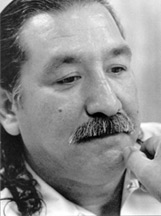
Leonard Peltier is one of the most prominent political prisoners in America. Peltier’s imprisonment for his activism in the American Indian Movement (AIM) symbolizes this country’s racist repression of indigenous people, the survivors of centuries of genocide. February 6 marks 40 years since Peltier was arrested on frame-up charges of killing two FBI agents. This began his long ordeal of incarceration. Peltier’s innocence has always demanded his freedom, but a new health crisis makes it more urgent than ever that he be released now to get quality medical attention for a life-threatening abdominal aortic aneurysm.
In the early 1970s, the government turned its sights on AIM, which was combating the grinding poverty of Native Americans and the continued theft of their lands. The Feds and the energy companies were intent on grabbing the rich uranium deposits under land of the Oglala Lakota people in western South Dakota. The Pine Ridge Reservation became a war zone as the hated Bureau of Indian Affairs (BIA) and the FBI trained and armed thugs to terrorize and brutalize AIM activists. Between 1973 and 1976, these killers carried out more than 300 attacks, murdering at least 69 people.
When 250 FBI and BIA agents, SWAT cops and vigilantes launched an assault against Pine Ridge in June 1975 and the FBI came up two agents short, Peltier and three others were charged with their deaths. Peltier sought refuge in Canada, but was caught and held in solitary confinement for ten months. Charges were dropped against one of the others, while AIM supporters Dino Butler and Bob Robideau were acquitted. Jurors at the trial in Cedar Rapids, Iowa, stated that they did not believe the government witnesses and that it seemed “pretty much a clear-cut case of self-defense.”
The government went into overdrive to make sure Peltier would be convicted. Perjured affidavits secured his extradition to the U.S. The trial was moved to Fargo, North Dakota, a town where racism against Native Americans was prevalent, and held before an all-white jury. To preclude another acquittal on grounds of self-defense, the judge excluded evidence of government terror against Pine Ridge activists. Defense witnesses were barred from testifying, and the prosecution concealed ballistics tests showing that Peltier’s gun could not have been used in the shooting. In 1977, Peltier was found guilty and sentenced to two consecutive life sentences.
The intent of the racist capitalist rulers to see this innocent man die in prison has been clear from the start. Peltier’s legal rights have consistently been trampled: calls for a new trial; requests for documents under the Freedom of Information Act; applications for parole; demands for medical treatment—all denied time and again. In a 1985 appeal hearing, the lead government attorney admitted: “We can’t prove who shot those agents.” A 2003 ruling from the Tenth Circuit Court of Appeals stated: “Much of the government’s behavior at the Pine Ridge Reservation and in its prosecution of Mr. Peltier is to be condemned.” But the appeals were denied anyway. There is no justice in the bourgeoisie’s courts for fighters against racist and capitalist injustice like Leonard Peltier.
The Feds’ vendetta against Peltier and other AIM leaders was part of the FBI’s notorious Counter-Intelligence Program (COINTELPRO) of surveillance, disruption, frame-up and murder. Launched in the 1950s, COINTELPRO initially targeted the Communist Party and the then-Trotskyist Socialist Workers Party. It was later deployed against other left organizations, antiwar activists and especially against radical black activists in the 1960s. The Black Panther Party bore the brunt of the Feds’ attacks: members were framed up and imprisoned by the hundreds while 38 were killed in cold blood.
AIM was formed in 1968 to fight police harassment in Minneapolis and quickly caught the FBI’s eye. AIM forged ties with Chicago Black Panther leader Fred Hampton who, along with Mark Clark, was gunned down in his apartment by the Chicago cops on 4 December 1969. That same year, AIM started its 19-month occupation of Alcatraz Island to demand the return of stolen Native land.
Like Peltier, many former Panthers still languish in prison, among them Mumia Abu-Jamal and Albert Woodfox. The Partisan Defense Committee publicizes their cases and provides support to them and eleven others through our Class-War Prisoner stipend program. Funds for this program are raised during the PDC’s annual Holiday Appeal. While supporting all possible legal proceedings on behalf of the class-war prisoners, we place no faith whatever in the courts, which are part of the apparatus used by the capitalist class to maintain its rule. We look to the social power of the multiracial labor movement to lead the poor and oppressed in struggle against the capitalist exploiters and their system of private property.
The vindictiveness of the Feds toward this unbowed fighter for Native Americans, who is also a gifted writer and artist, knows no bounds. In his four decades behind bars, Peltier has been subjected to supermax hell, punitive prison moves, long stretches in solitary and brutal beatings. Denied transfer to North Dakota to be near his people, he is incarcerated nearly 2,000 miles away in Florida. Peltier has diabetes and high blood pressure, has suffered a stroke and a heart attack, and he is partially blind in one eye. Twenty years ago he underwent surgery in prison to fix a defect in his jaw that had prevented him from eating solid food. The operation was so botched that he almost died and needed six blood transfusions. To avert public awareness of Peltier and the injustice inflicted on him, an association of former FBI agents forced the removal of four of his paintings from a Native art installation in Washington State last November.
In a November 26 statement to his supporters, Peltier spoke of the pain and neglect he was suffering even before his latest diagnosis:
“I wish I could lie to you and tell you I’m doing O.K., but that would not be fair to you.... I cannot walk but very slowly and while hanging on to someone for support. But after a few steps I’m O.K. So I move right along with the crowd. But those first few steps are awfully painful. I asked for a cushion, but was told they don’t have any here—and to make one myself from a blanket. Well, news flash. I did this and every time I did they took it away. Yep, for some reason this is illegal. Then I have to deal with the other medical problems. So, yeah, this is my Sundance.”
The PDC has written to President Obama to demand Peltier’s urgent release. Peltier’s defense committee urges supporters to mention Leonard’s current health crisis when calling the White House to voice support for clemency now, and to also demand that he receive the best possible care by contacting: Federal Bureau of Prisons, 320 First St., NW, Washington, D.C. 20534, (202) 307-3198, info@bop.gov. We urge our readers to do likewise.
You can also write to Leonard Peltier, #89637-132, USP Coleman I, P.O. Box 1033, Coleman, FL 33521.
Down With Obama’s Deportations!-Central American Refugees: Let Them Stay!
Once again, the nativist, anti-immigrant rants spewed by the leading Republican presidential hopefuls all but assure a massive Latino vote in November for the Democrats, the “lesser evil” party of racist U.S. imperialism. Barack Obama first waltzed into the White House with the heavy backing of Latino voters in 2008, having promised a “path” to citizenship for millions of undocumented immigrants. But that path was marked with a giant exit sign.
With a record-breaking 2.5 million deportations already during Obama’s presidency, the administration rang in its last year in office by ordering a series of Immigration and Customs Enforcement (I.C.E.) raids over New Year’s weekend in Georgia, North Carolina and Texas. Those targeted had mainly fled extreme violence and poverty in El Salvador, Guatemala and Honduras. Scores were deported, dozens were dragged into federal detention centers, and thousands more were left terrified that they would be next.
Obama has, in effect, issued a death warrant for many of the refugees, mainly women and children, being expelled. Since their story first grabbed headlines in 2014, when an estimated 100,000 Central American refugees crossed the border, at least 83 people have been killed after being sent back. The same conditions of desperate poverty and violence—a hell created and reinforced by over a century of U.S. imperialist subjugation—led to a new spike in border crossings by Central Americans in late 2015. The homicide rate in El Salvador swelled by 70 percent last year, surpassing that of Honduras as the world’s highest for a country not in the midst of war. Women are particularly compelled to flee, subject to terror, rape and extortion by gangs and military thugs.
The “choice” for the millions of undocumented immigrants who risk their lives to set foot in this country is either to hide in the shadows or to languish in shoddy, overcrowded I.C.E. dungeons. The immigration detention facilities strewn across the country, including for-profit prisons, are mandated by Congress to fill a daily “bed quota” of 34,000. They are notorious for violence and mistreatment, including insufficient food and water. In late October, dozens of Central American women went on hunger strike in a Texas facility to protest the brutal conditions and to demand their immediate release.
Last summer, a federal judge ordered the swift release of children and their parents from family detention centers, noting their “deplorable conditions.” The government has appealed that order while continuing to spend hundreds of millions of dollars to detain families. With no access to government-provided legal counsel, non-citizens caught in this prison web rely on volunteer attorneys and immigrant advocacy groups for information on appeals and asylum claims. After exposing procedural violations, abuse or inadequate medical care inside detention centers, some lawyers and activists report being prohibited from meeting with their clients.
The current roundups and deportations are the latest anti-immigrant attacks by the capitalist rulers, which have helped feed a general assault on the wages and living conditions of all working people. The bosses fan the flames of anti-immigrant chauvinism and racial hostility to pit workers against each other, the better to divide and weaken the labor movement. It is of vital interest for labor and all fighters against exploitation and oppression to demand: No deportations! Free all the detainees!For full citizenship rights for all immigrants! Everyone who makes it into this country should have all the rights of those born here.
Fleeing U.S.-Made Hellholes
The recent raids struck fear into Latino families from coast to coast. Many of Obama’s fellow Democrats, like Illinois Congressman Luis Gutierrez, expressed anger about the raids, which the White House defended as a way to deter further waves of refugees. Gutierrez & Co. complained that they were not consulted ahead of time, clearly concerned that the Democrats’ “friend of immigrants” image may be fading. Just hours before Obama’s State of the Union speech, some 140 Congressional Democrats issued a statement criticizing the roundups as “ineffective” and suggesting a more “humane” policy in line with “time-honored American values.”
Those “values” are defined by the capitalist rulers’ drive to further amass profit through their system of exploitation and oppression, turning the screws on workers and the oppressed at home and carrying out imperialist plunder abroad. U.S. subjugation of its Latin American “backyard” is part of a world imperialist order in which a handful of advanced capitalist countries dominate and exploit the more backward ones, in turn spurring mass emigration. In Central America, the miserable poverty of the masses—the backdrop to the murderous gang wars—is the product of imperialist depredation. The corrupt local bourgeoisies preside over this brutal system, viciously suppressing the working class and peasantry. As we spelled out in a fuller article on Central American refugees (WV No. 1050, 8 August 2014), the social fabric of these countries was ripped apart by the dirty wars of the 1980s against leftist insurgents and by the increased militarization that accompanied the “war on drugs.” Added to that toll is the economic ruin brought about by the U.S.-imposed Central American Free Trade Agreement.
Secretary of State John Kerry recently announced a “resettlement” program for Central American asylum seekers that would set up processing centers run by the United Nations in nearby Latin American countries—a way for the U.S. to keep the refugees out. Equally cynical was a December 2014 White House initiative that encouraged Central American children to apply in their home countries for refugee status. Out of the more than 6,000 minors who applied, exactly five arrived in the U.S. last year. The U.S. has bolstered the Mexican government in its own crackdown on Central Americans trying to reach El Norte by giving it tens of millions of dollars. Of the estimated 400,000 Central Americans crossing into Mexico annually, the Mexican state arrested almost 93,000 between October 2014 and April 2015.
Many have set their hopes on Obama’s November 2014 executive order that professes to give over four million undocumented immigrants temporary reprieve from deportation and a chance at work permits. While the prospect of some of the undocumented not being deported would be welcome, the measure would apply only to those in the country at least five years and to parents of U.S. citizens. It would require immigrants to register with the government, pass background checks and pay exorbitant fees for a shot at three years of legal status. Even if they get this, they would have no job protections or government benefits. Nevertheless, the proposal was too much for GOP governors, who got a federal judge to block the plan. The issue will now be decided by the Supreme Court.
Major sections of the bourgeoisie have long demanded that Washington put some order into what they see as a dysfunctional immigration system. Obama’s “reforms” and serial waves of deportations both serve that aim. At the same time, policy differences in the bourgeois parties at bottom reflect the needs of different sectors of the ruling class, some of whom are more dependent on exploiting immigrant labor than others. Nonetheless, both Democratic and Republican administrations have instituted greater border controls and enforced restrictions on immigrants’ rights.
The rulers’ policies are mainly but not solely designed to maintain a pool of low-wage labor, with immigrants kept in constant fear that any challenge to their exploitation will bring I.C.E. agents to their doors. More broadly, anti-immigrant campaigns strengthen the repressive powers of the capitalist state, which are especially used against black people and other minorities as well as to suppress working-class struggle. Repression against immigrants (especially Muslims) in the name of the “war on terror” has served as the leading edge in an assault against the democratic rights of the mass of the population, helping also to inflame national chauvinism and ethnic hatred.
The Lesser-Evil Con
The Democratic Party has for years banked on the fears among black people, women and others of what a victory for the nakedly racist, reactionary Republicans might unleash. Against the likes of the egomaniacal demagogue Donald Trump, even Marco Rubio, a darling of anti-Communist gusanos, has been under fire from his Republican competitors for his “soft” immigration posture because he once supported a “path to citizenship” for some undocumented immigrants. In addition to Trump’s smearing of Mexicans as rapists and murderers and his calling for all Muslims to be barred from entering the U.S., both he and Ted Cruz are pandering to the yahoos by saying they would deport all eleven million undocumented immigrants.
As for the Democrats, Hillary Clinton, who established her credentials as a future Commander-in-Chief in her years as Secretary of State, backed Obama’s earlier expulsion of refugees but now claims she won’t be the next “deporter in chief” if elected president. Bernie Sanders, who has a long record of support to U.S. imperialist wars and occupations, clucked his tongue over Obama’s “inhumane” approach to the Central American refugee crisis. Say what they will on the campaign trail, “deporter in chief” will be in the job description of whoever makes it to the White House. Regulating the flow of immigrant labor is one of the tasks of the CEO of U.S. capitalism.
Toward the end of the widely reviled Bush administration, massive demonstrations in 2006 for immigrant rights gained nationwide attention. The bourgeois politicians, church officials and labor officials who led the protests consciously directed them into Democratic Party electoralism, with the common chant, “Today we march, tomorrow we vote.”
In a January 6 statement, AFL-CIO chief Richard Trumka criticizes the I.C.E. roundups and offers that union halls might become temporary sanctuaries for refugees, at least until “full and fair legal proceedings” take place. Pious words from a union officialdom that has barely lifted a finger to defend immigrants. The labor movement should be opposing all deportations and launching organizing drives to bring immigrant workers, with or without papers, into the unions. Such a struggle, which is necessary to revitalize the unions in this country, is undermined by the labor tops’ loyalty to the capitalist Democratic Party and their embrace of the “national interests” of U.S. imperialism. Unlocking the social power of the working class—with white, black, Latino and other workers fighting together against their common capitalist enemy—requires a struggle for a new leadership of labor, one based on the political independence of the workers from all capitalist parties and state agencies.
As Marxists, our task is not to advise the bourgeoisie on alternative immigration policy, which would necessarily mean accepting the parameters of a system predicated on exploitation and oppression. Our call for full citizenship rights for all immigrants is part of the struggle to advance the class consciousness and solidarity of the multiracial working class. The workers need their own party, one that will link the defense of immigrants to the cause of black freedom and the fight for labor’s emancipation from wage slavery. Such a party is necessary to prepare the working class for the revolutionary battle to end capitalist-imperialist rule and build a planned economy under a workers government.
Socialist revolution is the necessary precondition to the economic reorganization of human society through freeing the productive forces from the fetter of private ownership. Immigrant workers are slated to play a crucial role in this fight. As we wrote in the 2000 Programmatic Statement of the Spartacist League/U.S.:
“The vast numbers of immigrant workers now toiling in U.S. factories can be a powerful leaven to the class struggle here, as many of them come from countries with stronger traditions of labor militancy and anti-capitalist struggle. Likewise, these workers are a natural pool for recruitment to the revolutionary party and such recruits can constitute a nucleus for organizing Trotskyist parties in their native lands. For socialist revolution from the Yukon to the Yucatán and throughout the Americas!”
One night when Sam Eaton and Ralph Morris were sitting in Johnny D’s over in Somerville [this night was several years before the recent 2015 announcement that that central spot for the blues tradition and up and coming newer musical genre was closing after a forty year run], over near the Davis Square monster Redline MBTA stop sipping a couple of Anchor Steam beers, a taste acquired by Sam out in Frisco town in the old days on hot nights like that one waiting for the show to begin and picked up by Ralph along the way when drinking his life-time scotch whiskey became verboten after a bad medical check-up about ten years before Ralph mentioned that some music you acquired kind of naturally. A lot of their conversations of late, the last few years as they slid into retirement Ralph giving the day to day operations of his specialty electrical shop over to his youngest son and Sam giving the day to day management of his high volume printing business to his longtime employee, Jimmy Jones, who held the place together at the beginning while Sam headed West with a gang of other Carver corner boys in search of the great blue-pink American West night that animated much of the late 1960s had centered on their lifetime of common musical interests (except folk music which Sam came of age with, caught the drift as it came through Harvard Square where he would hang out to get out of the house when tensions boiledo to some extent but which mostly even with Bob Dylan anti-war protest songs made him grind his teeth.
By naturally Ralph meant, you know like kids’ songs learned in school. Songs like The Farmer in the Dell, which forced you a city kid like Ralph born and raised in Troy, New York a strictly working class town then, and now,although you might not have designated yourself as such at that age to learn a little about the dying profession of family farmer and about farm machinery; Old MacDonald, ditto on the family farmer stuff and as a bonus all the animals of the farm kingdom and their distinctive noises that still rattled Ralph’s head on hard drinking night if he got melancholy for his tortured childhood; Humpty Dumpty, a silly grossly overweight holy goof of the rankest order, an egghead to boot and that didn’t mean intellectual, far from it, who couldn’t maintain his balance come hell or high water although you might not have thought of that expression, that hell or high water expression, or used it in the high Roman Catholic Saturday-go-to-confession-to confess those damns, hells, and fucks that had entered you vocabulary through osmosis and Sunday-go-to-communion-to-absolve-all-sins Morris household out in Troy where Ralph still lives; and, Jack and Jill and their ill-fated hill adventure looking for water like they couldn’t have gone to the family kitchen sink tap for their needs but thinking about it later what were they really doing up there. All this total recall, or mostly total recall showing indeed whether you designated yourself as a city kid or not you were one of the brethren, etc. you have embraced that music as a child in case you have forgotten. Music embedded in the back of your mind, coming forth sometimes out of the blue even fifty years later (and maybe relating to other memory difficulties among the AARP-worthy but we shall skip over that since this sketch is about the blues, the musical blues and not the day to day getting old blues).
Sam nodded his head in agreement then chimed in with his opinion the music of junior high school as he thought, looking behind the bartender’s head to the selection of hard liquors displayed with the twinkle of an eye, about switching over to a high-shelf scotch whiskey, Haig &Haig, his natural drink of late, despite the hot night and hot room beginning to fill up with blues aficionados who have come to listen to the “second coming,” the blues of James Montgomery and his back-up blues band. (Sam unlike Ralph suffering no medical warning about the dire consequences to his system about throwing down a few shots since his health was in better shape than Ralph, Ralph having taken a beating in that department with whatever hellious chemical his government, or rather the American government for which he refused to take any credit or blame, was throwing on the ground of Vietnam from the nightmare skies during that long, bloody lost war).
That “second coming” referring to guys, now greying guys, who picked up the blues, especially the citified electric blues after discovering the likes of Muddy Waters, Howlin’ Wolf, Magic Slim and James Cotton back in their 1960s youth, made a decent living out of it and were still playing small clubs and other venues to keep the tradition alive and to pass it on to the kids who were not even born when the first wave guys came out of the hell-hole Delta South of Mister James Crow sometime around or after World War II and plugged their guitars into the next gin mill electric outlet in places off of Maxwell Street in Chicago, nursing their acts, honing their skills.
Yeah, getting back to junior high, Sam thinking about that hormonal bust out junior high weekly music class with Mr. Dasher which made Sam chuckle a bit, maybe that third bottle of beer sipping had gotten him tipsy a little, as he thought about the old refrain, “Don’t be a masher, Mister Dasher” which all the kids hung on the poor, benighted man that time when the rhyming simon craze was going through the nation’s schools. Thinking just then that today if some teacher or school administrator was astute enough to bother to listen to what teenage kids said amongst themselves, an admittedly hard task for an adult in any era, in an excess of caution old Mister Dasher might be in a peck of trouble if anyone wanted to be nasty about the implication of that innocent rhyme. Yeah, Mr. Dasher, the mad monk music teacher (who on the side in those days, not unlike these days, when teachers couldn’t live on their teaching incomes led an old-time, old time to Sam and his classmates Benny Goodman-style swing and sway big band at special occasions and as a regular at the Surf Ballroom over in Plymouth on Friday nights), who wanted his charges to have a well-versed knowledge of the American and world songbooks. Thus you were forced to remember such songs as The Mexican Hat Dance, God Bless America, and Home On The Range under penalty of being sent up to the front of the room songbook in hand and sing the damn things. Yes, you will remember such songs unto death.
Sam and his corner boys at Doc’s Drugstore found out later that the Dasher was motivated by a desperate rear-guard action to wean his charges away from rock and roll, away from the devil’s music although he would not have called it that because he was too cool to say stuff like that, a struggle in which he was both woefully overmatched by Elvis, Jerry Lee, Chuck, Bo, and the crowd and wasting his breathe as they all lived for rock and roll at Doc’s Drugstore after school where he had a jukebox at his soda fountain. And they were not putting their three selections for a quarter to hear hokey Home on the Range.
Ralph agreed running through his own junior high school litany with Miss Hunt (although a few years older than Sam he had not run through the rhyming simon craze so had no moniker for the old witch although now he wished he had as he chuckled to himself and turned a little confession red although he not been into that stifling confession box on his gamy knees in many years, and it would not be nice either). Ralph added that some of the remembered music reflected the time period when you were growing up but were too young to call the music your own like the music that ran around in the background of your growing up house on the mother housewife radio or evening record player which in Ralph’s case was the music that got his parents through his father’s soldierly slogging on unpronounceable Pacific islands kicking ass against the Nips (his father’s term for the dirty bastard Japanese) and mother anxiously waiting at home for the other shoe to fall or the dreaded military officer coming up to her door telling her the bad news World War II.
You know, guys like Frank (Sinatra, the chairman of the board, that all the bobbysoxer girls, the future mothers of Sam’s and Ralph’s generation swooned over), The Andrew Sisters and their rums and coca colas, Peggy Lee fronting for Benny Goodman and looking, looking hard for some Johnny to do right, finally do right by her, etc. Other music, the music of their own generation, classic rock and rock came more naturally since that is what they wanted to hear when they had their transistor radios to their ear up in their bedrooms or could hardly wait to hear when the jukebox guy came into Doc’s to put the latest selections in (and to have his hand greased by Doc for “allowing” those desperately desired songs onto his jukebox to fill his pockets with many quarters, see he was “connected” and so along with the jukebox hand over fist money-maker cam the hand).
That mention of transistor radios got Ralph and Sam yakking about that old instrument which got them through many a hard teenage angst and alienation night. That yakking reflecting their both getting mellow on the sweet beer and thinking that they had best switch to Tennessee sipping whisky when the wait person came by again since they had moved from the bar to a table near the stage to get a better view of the band if they were to make it through both sets that night (and Ralph thinking, just this once, just for this bluesy night he would “cheat” a little on that scotch whiskey ban). This transistor thing by the way for the young who might wonder what these old geezers were talking about since it was clearly not iPods was small enough to put in your pocket and put up to your ear like an iPod or MP3 except you couldn’t download or anything like that.
Primitive technology okay but life-saving nevertheless. Just flip the dial although the only station that mattered was WJDA, the local rock station (which had previously strictly only played the music that got all of our parents through their war before the rock break-out made somebody at the station realize that you could made more advertising revenue selling ads for stuff like records, drive-in movies, drive-in restaurants, and cool clothes and accessories than refrigerators and stoves to adults).
Oh yeah, and the beauty of the transistor you could take it up to your bedroom and shut out that aforementioned parents’ music without hassles. Nice, right. So yeah, they could hear Elvis sounding all sexy, her word whether she knew the exact meaning or not, meaning all hot and bothered, according to one girl Sam knew even over the radio and who drove all the girls crazy once they got a look at him on television. Chuck Berry telling our parents’ world that Mr. Beethoven and his crowd, Frank’s too, all had to move over because there was a new sheriff in town. Bo Diddley asking a very candid question about who put the rock in rock and roll and offering himself up as a candidate. Buddy Holly crooning against all hope for his Peggy Sue (or was it Betty Lou), Jerry Lee inflaming all with his raucous High School Confidential from the back of a flatbed truck, etc. again.
The blues though, the rarified country and electric urban blues of the likes of Son House, Robert Johnson, Muddy Waters, James Cotton, and Howlin’ Wolf was an acquired taste. Acquired by Sam through listening to folk music programs on that very same transistor radio in the early 1960s after flipping the dial one Sunday night once he got tired of what they claimed was rock music on WJDA and caught a Boston station, WBZ and later WCAS. The main focus was on other types of roots music but when the show would take a break from down home mountain music, western swing ballads, and urban protest music the DJ would play some cuts of country or electric blues. See all the big folkies, Dylan, Tom Rush, Dave Van Ronk, people like that were wild to cover the blues in the search for serious roots music from the American songbook. So somebody, Sam didn’t know who, figured if everybody who was anybody was covering the blues in that folk minute then it made sense to play the real stuff. (Sam later carried Ralph along on the genre after they had met down in Washington, D.C. in 1971, had been arrested and held in detention at RFK Stadium for trying to shut down the government if it did not shut the Vietnam War, had become life-long friends and Ralph began to dig the blues when he came to Cambridge to visit Sam although he would shutter his ears if Sam played some folk stuff).
The real stuff having been around for a while, having been produced by the likes of Muddy and Howlin’ Wolf going back to the 1940s big time black migration to the industrial plants of the Midwest during World War II when there were plenty of jobs just waiting (and plenty taken away when the soldiers and sailors, white soldiers and sailors came home on the overcrowded troop transports looking to start life over again and raise those families they dreamed about in the muds of Europe and the salty brine of the atoll Pacific). But also having been pushed to the background, way to the background with the rise of rock and roll (although parts of rock make no sense, don’t work at all without kudos to blues chords, think about Ike Turner’s Rocket 88 and Big Joe Turner’s Shake, Rattle and Roll, check it out). So it took that combination of folk minute and that well-hidden from view electric blues some time to filter through Sam’s brain.
What did not take a long time to do once Sam got “religion” was going crazy over Howlin’ Wolf when he saw him perform down in Newport when everybody who was anybody that high school and college kids wanted to hear in that folk minute showed up there. Once Sam had seen him practically eat that harmonica when he was playing that instrument on How Many More Years. There the Wolf was all sweating, running to high form and serious professionalism (just ask the Stones about that polished professionalism when he showed them how to really play Little Red Rooster which they had covered early on in their career as they had covered many other Chess Records blues numbers, as had in an ironic twist a whole generation English rockers in the 1960s while American rockers were basically clueless until the Brits told them about their own roots music) and moving that big body to and fro to beat the band. Playing like god’s own avenging angel, if those angels played the harmonica, and if they could play as well as he did.
They both hoped that greying James Montgomery, master harmonica player in his own right, blew the roof off of the house as they spied the wait person coming their way and James moving onto the stage getting ready to burn up the microphone. And he and his band did just that. Yes, that blues calling from somewhere deep in the muds is an acquired taste and a lasting one.