Wednesday, September 14, 2016

*In The Time Of The Mountain Music Revival- The Film "Songcatcher"

Click On Title To Link To YouTube's Film Clip Of Iris Dement Doing "Pretty Saro" in the film "Songcatcher".

CD/DVD Reviews

This review is being used to comment on both the soundtrack CD and movie DVD.

CD- Songcatcher, various artists, Vanguard Records, 2001

DVD-Songcatcher,2001


In a recent CD review of the music from the now mountain music movie classic, George Clooney’s “Oh Brother, Where Art Thou?”, (See archives, July 7, 2009) I mentioned in passing that the movie from which the CD under review is taken was also a contributing factor to the revival of interest in the mountain music genre. I also noted there that the CD and film were worthy of a separate review of their own. I make amends here and I think that this settles all debts.

That said, the following excerpt from that above-mentioned review can be used here to set the tone for a look at this “Songcatcher” (and a couple of words on the movie, as postscript) here:

“Sometimes a revival of a musical form, like the "talking blues", that highlighted the urban folk revival of the early 1960's is driven by a social need. In that case it was to provide a format for the "glad tidings" that a new political and social movement was a-bornin'. In the case of the revival several years ago of what is called "mountain music" it was the films "The Song Catcher" and, more importantly, the very popular movie starring George Clooney, “O Brother, Where Art Thou?”. The CD under review is a compilation of music from that movie, a not unnatural tie-in in the modern entertainment business. The movie deserves a separate review, however, this CD can stand on its own as a very nice cross section of "mountain music", some familiar most not so.

Without straining credulity "mountain music" is the music of the simple folk of Appalachia, those who worked hard in the coal mines, on the hard scrabble farms and in the isolated mills of the region. This was their Saturday night entertainment and with the advent of radio was a unifying cultural experience. The songs "speak" of hard and lonely lives, the beauty of the then pristine countryside, the usual vagaries of love and lost and the mysterious ways of a very personal, if arbitrary, god. Throw in a few upbeat tunes reflecting the love of "corn" liquor, women and the sometimes funny side of coping with life's trials and tribulations and you have the mountain version of the folk experience. Sound familiar? Sure it does, except, it is done with simple guitar, a blazing fiddle and, hopefully, a full-bodied mandolin.”

With that in mind there only remains the need to highlight some of the better efforts here. For starters, apparently, I knew the work of Iris Dement long before I consciously knew her work. I have mentioned in reviews of her work that I had become enamored of her music through her rendition of “Jimmy Rodgers Going Home” on a Greg Brown (now her husband) tribute CD. From the copyright date here (and on Ralph Stanley’s “Clinch Mountain Sweethearts” where she also does a couple of tracks) that is now incorrect. What is not wrong is that her lyrics and vocal range have led me to dub her my “Internet Sweetheart” (Sorry, Greg). And she does not fail here on the traditional “Pretty Saro”. Needless to say no country music/folk music/ folk rock music presentation of any kind is complete these days without a contribution form Emmylou Harris. Here she does a split version of the traditional Child Ballad “Barbara Allen”. Of course, when one talks of mountain music in its 20th century incarnation then the name The Carter Family is front and center. Thus, naturally, one of the representatives from that extended clan, Roseanne Cash, is a welcome addition here doing the old traditional “Fair And Tender Ladies” (a version of which that I first heard way back in the early 1960’s done by Dave Van Ronk). Finally, of necessity again, no “hard” mountain music themed production can be complete without a piece from Hazel Dickens who, as a woman of those mountains, has probably done more to popularize this art form than anyone else. So listen up to a genuine piece of Americana.

Note: Although I am mainly interested in the ‘Songcatcher” film for its soundtrack the movie itself is worth seeing. The plot line revolves around an English woman’s search for authentic American music from the mountains (naturally enough as much of the music crossed over from the British Isles). Sound familiar? Along the way she learns, perhaps more than she wants to know, about this milieu as she collects her music. Naturally, in such a commercial effort there s a little love interest thrown in with a real live mountain man musician wary of “city ways” from his own earlier experiences. Other themes touched upon, although in some cases obliquely, are the isolation of rural life, that just- mentioned conflict between rural and city values, religious fundamentalism and the, seemingly obligatory, nod to same sex issues (here, in a dramatically compelling way, lesbianism and the local reaction to it) that feature in many modern movies. Put the music and those themes together and you have a passable couple of hours. If you have to choose though, get the CD.

"Pretty Saro"

When I first come to this country in Eighteen and Forty-nine
I saw many fair lovers but I never saw mine
I viewed it all around me, saw I was quite alone
and me a poor stranger and a long way from home

Well, my true love she won't have me and it's this I understand
For she wants some free holder and I have no land
I couldn't maintain her on silver and gold
but all of the other fine things that my love's house could hold

Fair the well to ol' mother, fair the well to my father too
I'm going for to ramble this wide world all through
And when I get weary, I'll sit down and cry
and think of my Saro, pretty Saro, my bride

Well, I wished I was a turtle dove
Had wings and could fly
Far away to my lover's lodgings
Tonight I'd drawn the line
And there in her lilywhite arms I'd lay there all night
and watch through them little wind'ers
for the dawning of day

The Ballad of Barbara Allen

Was in the merry month of May
When green buds all were swelling,
Sweet William on his death bed lay
For love of Barbara Allen.

All in the merry month of May
When green buds all were swelling,
Sweet William on his death bed lay
For love of Barbara Allen.
He sent his servant to the town
To the place where she was dwelling,
Said you must come, to my master dear
If your name be Barbara Allen.

He sent his servant to the town
A place where she did dwell in,
Said master dear, has sent me here
If your name be Barbara Allen.
So slowly, slowly she got up
And slowly she drew nigh him,
And the only words to him did say
Young man I think you're dying.

Then slowly, slowly she got up
And slowly she went to him,
And all she said, when there she came
Young man I think you're dying.
He turned his face unto the wall
When we were in the tavern,
Good-bye, good-bye, to my friends all
Be good to Barbara Allen.

Don't you remember the other night
And death was in him welling,
You drank a toast to the ladies there
And slighted Barbara Allen.
When he was dead and laid in grave
She heard the death bells melling
And every stroke to her did say
Hard hearted Barbara Allen.

He turned his face unto the wall
He turned his back upon her,
Adieu, adieu, to all my friends
And be kind, be kind, to Barbara Allen.
Oh mother, oh mother go dig my grave
Make it both long and narrow,
Sweet William died of love for me
And I will die of sorrow.

As she was wandering by the fields
She heard the death bells melling
And every note did seem to say
Hard hearted Barbara Allen.
And father, oh father, go dig my grave
Make it both long and narrow,
Sweet William died on yesterday
And I will die tomorrow.

The more it tolled the more she grieved
She bursted out a crying,
Oh pick me up and carry me home
I feel that I am dying.
Barbara Allen was buried in the old churchyard
Sweet William was buried beside her,
Out of sweet William's heart, there grew a rose
From Barbara's a green briar.

They buried Willy in the old churchyard
And Barbara in the new one,
And from Willy's grave, there grew a rose
Out of Barbara Allen's a briar.
They grew and grew in the old churchyard
Till they could grow no higher
At the end they formed, a true lover's knot
And the rose grew round the briar.

Fair and Tender Ladies

Come all ye fair and tender ladies
Take warning how you court young men
They're like a star on a summer morning
They first appear and then they're gone

They'll tell to you some lovin' story
And make you think they love you well
Then away they'll go and court some other
And leave you there in grief to dwell

If I had known before I courted
That love had been so hard to win
I'd locked my heart with the keys of golden
And pinned it down with a silver pin

I wish I was a little sparrow
And I had wings to fly so high
I'd fly away to my false true lover
And when he'd ask I would deny

But I am not a little sparrow, I have no wings, neither can I fly
So I'll sit down to weep in sorrow, And try to pass my troubles on by

Love is handsome, love is charming
And love is pretty while it's new
But love grows cold as love grows older
And fades away like morning dew

The Many Wars of Syria with Phyllis Bennis​

The Many Wars of Syria with Phyllis Bennis​
Start: September 14, 2016 9:00 PM Eastern Time (US & Canada) (GMT-05:00)
Host Contact Info: info.ufpj@gmail.com
Image

The Many Wars of Syria

A Briefing Call with Phyllis Bennis

Wednesday, Sept. 14th

9:00pm Eastern, 8:00pm Central, 7:00pm Mountain, 6:00pm Pacific
605-562-3140 PIN: 952870#

Let's start out the fall with a new commitment to follow more closely the carnage in Syria. Is it a civil war? Is it a proxy war between the nuclear powers ? Is it also a proxy war between Middle Eastern governments? Can ISIS be reined in? Should Assad go? Or stay? What is the USA doing as an actor in the situation? We as anti-war activists should be constantly questioning that. What about congressional moves to demand a new AUMF? Is that wise?

What would diplomacy look like in such a complex set of wars? What are solutions that the US Peace Movement could be pushing? For one, we should be extending the good efforts against arms sales to Saudi Arabia -- always promoting the goal of a Weapons-of-Mass-Destruction Free Zone in the Middle East (and why stop there?).
We in the Peace Movement have a deep belief that the American invasion of Iraq started this whole change of events. Syrian Immigrants (as well as those from North Africa) are changing the population map of both the Middle East and Europe. Why is the US taking in so few of those who are fleeing? What is our responsibility as advocates for peace to those who flee from war and violence?
What do the American people know of all this? Once again our mass media has let us all down. What kind of educational campaign can we launch to quicken the sensibilities of the good folk of the United States?
What about the belief in America as a moral force in the world? So many opportunities for America to shine get lost as our treasure goes to "solving" problems with military might. Instead of the greed and corruption fomented by corporations -- particularly in the military-industrial area -- American ingenuity and trillion dollar investment could dig in with creative answers to climate change. We could lead the world in public education that serves every child in our very diverse democracy. The biggest challenge of all is to address the burgeoning gaps between rich and poor both in this country and across the globe because until that changes, perpetual wars continue. Let's keep dreaming of a peaceful world and acting to make it so.
Sponsors: UFPJ, PDA, Code Pink
Moderator: Jackie Cabasso, UFPJ
Phyllis Bennis is a Fellow of the Institute for Policy Studies, where she directs the New Internationalism project working to change US policy in the broader Middle East. She was a co-founder of both the US Campaign to End the Israeli Occupation and United for Peace and Justice coalitions, and continues work with both the US and global anti-war movements. Her most recent books include Understanding the Palestinian-Israeli Conflict, and Understanding ISIS & the New Global War on Terror: A Primer.

From The Guys And Gals Who Know The Face Of War-The Smedleys-Veterans For Peace

From The Guys And Gals Who Know The Face Of War-The Smedleys-Veterans For Peace    


Chelsea featured in new Amnesty International book-Free Chelsea Manning Now!

Chelsea featured in new Amnesty International book

August 2, 2016 by the Chelsea Manning Support Network
An interview with Chelsea Manning is featured in Amnesty International’s upcoming book Here I Stand, a collection of short stories and poems for young adults. Although the book is set to come out in a few days (August 4, 2016), Chelsea’s chapter was originally written in 2015. Since then, Chelsea made an attempt on her life. She is currently under investigation by Army officials for charges relating to this attempt, and if charged she could face indefinite solitary confinement.
Please join us in pressuring the Secretary of the Army to drop these inhumane charges – Click here to sign the petition.
Here I Stand
Chelsea Manning excerpt
here_i_stand_548x331_0
You are one person, and the military and the government are so powerful. Through all this, have you ever felt afraid?
CM: I am always afraid. I am still afraid of the power of government. A government can arrest you. It can imprison you. It can put out information about you that won’t get questioned by the public – everyone will just assume that what they are saying is true. Sometimes, a government can even kill you – with or without the benefit of a trial. Governments have so much power, and a single person often does not. It is very terrifying to face the government alone.Governments can easily become centered on themselves and their interests, at the expense of their people
Can you describe a moment when you have particularly felt this way?
CM: It’s a very difficult feeling to describe. Not long after I was first detained by the military, I was taken to a prison camp in Kuwait, where I essentially lived in a cage inside of a tent. I didn’t have any access to the outside world. I couldn’t make phone calls. I didn’t get any mail. I had very limited access to my lawyers. There was no television or radio or newspapers. I lost the sense of where in the world I was. The military had total control over every aspect of my life. They controlled what information I had access to. They controlled when I ate and slept. They even controlled when I went to the bathroom. After several weeks, I didn’t know how long I had been there or how much longer I was going to be staying. It’s an overwhelmingly terrifying feeling. I became very, very sad. At one point, I even gave up on trying to live any more.
Do you hope good will still come from your actions? What might this look like?
CM: This is a very difficult question to answer. I don’t know. I don’t even want to try and work it out. I am hopeful that people can gain more of an understanding of how the world operates. Across the world, governments can easily become centered on themselves and their interests, at the expense of their people.
I am also hopeful that, perhaps, the next time a democratic government thinks about committing military forces to the occupation of a country which is likely to lead to an insurgency, we can try and look back, and learn from the last time. War is a terrible thing, and this type of warfare is one of the worst. I hope that we can avoid getting excited about this kind of thing in the future.
You had some bad times in detention, particularly before your case went to trial. What is it like for you in prison now?
CM: I try to stay as active and productive as possible. I don’t have access to the internet, but I read books and newspapers a lot. I work hard at the job that I have in prison – work with wood. I am also always trying to learn more, working on my education. I also exercise a lot. I run all the time! I do cardio exercises to stay in shape. I write a lot, too.
What helps you to stay positive in prison?
CM: I love reading the mail that I get from all over the world. I love talking on the phone with people I care about. I always feel so much better when people send me their warm love and strong words of support. I love staying active and engaged with the world. It is an amazing feeling!

Leave a Reply

Your email address will not be published. Required fields are marked *

Chelsea still faces charges for suicide attempt: Daniel Ellsberg, Michael Stipe release videos of support-Drop The Charges

Chelsea still faces charges for suicide attempt: Daniel Ellsberg, Michael Stipe release videos of support

September 13, 2016 by the Chelsea Manning Support Network
After years of inhumane treatment from the Army, and still facing 30 years in her prison sentence, Chelsea Manning attempted suicide on July 5th, 2016. Although happy to be alive, Chelsea is now facing charges related to her own attempt on her life.
If convicted of these absurd “administrative offenses”, Chelsea could face indefinite solitary confinement for the rest of her prison term.
Pentagon Papers whistleblower Daniel Ellsberg and musician Michael Stipe released videos today in support of Chelsea.

Daniel Ellsberg: “I stand with Chelsea Manning. I hope you will too.”
Michael Stipe: “I support human rights for all people. As an American patriot it is my duty to stand with Chelsea Manning… Instead of giving her the treatment she needs, the government is now threatening her with indefinite solitary confinement. This is unjustifiable. It is unfair, and it needs to be stopped. You can help me stop it now- sign the petition at freechelsea.com.”
Chelsea is being charged for:
  • Resisting the force cell move team (Chelsea was unconscious when this team arrived, which makes this charge particularly absurd.)
  • Prohibited property (For a book she had mislabeled in her cell)
  • Conduct which threatens (For somehow putting the prison at risk while attempting to take her own life, quietly, in her own cell.)
Chelsea will face a disciplinary board later this month, and could very likely be charged for her own suicide attempt. Join Daniel Ellsberg and Michael Stipe in demanding the government drop these unnecessarily cruel charges against Chelsea. Sign the petition, submit your own video of support to team@fightforthefuture.org, or tweet with #StandWithChelsea.

Sign the Petition!
>>
Demand the Army drop the absurd charges against Chelsea<<


Leave a Reply

Your email address will not be published. Required fields are marked *

Chelsea ends hunger strike after Army cooperates

Chelsea ends hunger strike after Army cooperates

For Immediate Release: September 13, 2016
Contact: Christina DiPasquale, press@balestramedia.com
Evan Greer, Fight for the Future, 978-852-6457, press@fightforthefuture.org
BREAKING: Chelsea Manning ends hunger strike after Army agrees to provide her with gender reassignment surgery – Still faces indefinite solitary confinement for suicide attempt
Supporters, including REM’s Michael Stipe and Daniel Ellsberg, launch new campaign at FreeChelsea.com demanding U.S. government drop charges stemming from suicide attempt
LEAVENWORTH, KS––Chelsea Manning has ended a hunger strike that she began five days ago, after the U.S. military has agreed to move forward with the recommended treatment for her gender dysphoria. However, the Army is continuing to threaten Chelsea with solitary confinement for charges directly related to her attempt to take her own life, even though it was the government’s own mistreatment of Chelsea that drove her to it.
Supporters have launched a new effort at FreeChelsea.com calling for the charges to be dropped. The site features a petition to the Secretary of the Army Eric Fanning as well as videos uploaded by supporters including Michael Stipe of R.E.M. and Pentagon Papers whistleblower Daniel Ellsberg.
Chelsea alerted attorneys and supporters that she was ending the hunger strike after government officials showed her a memo stating that she will receive gender-reassignment surgery, under the DOD’s new policy affecting transgender service members. If this occurs, Manning will be the first transgender prisoner in the U.S. to receive this medically recommended treatment, setting a precedent that could benefit thousands of transgender prisoner.
“I am unendingly relieved that the military is finally doing the right thing. I applaud them for that. This is all that I wanted – for them to let me be me,” said Chelsea Manning in a statement to her attorneys. “But it is hard not to wonder why it has taken so long.  Also, why were such drastic measures needed? The surgery was recommended back in April 2016. The recommendations for my hair length were back in 2014. In any case, I hope this sets a precedent for the thousands of trans people behind me hoping they will be given the treatment they need.”
“It is a relief to hear that the government has finally agreed to move forward with providing Chelsea with the health care that she is legally entitled to and is medically needed. We hope that they will act to provide this care without delay in order to ensure that her suffering does not continue,” said Chase Strangio, Chelsea’s attorney at the ACLU, “This medical care is absolutely vital for Chelsea. It was the government’s refusal to provide her with the necessary care that led her to attempt suicide earlier this year, and it was all the more troubling when she became subject to an investigation and possible punishment in connection with the suicide attempt. We hope that the government recognizes that charging Chelsea with the crime of being denied essential health care is outrageous and drops those charges.”
“Hundreds of thousands of people spoke out in support of Chelsea, and now the government is finally agreeing to provide her with the healthcare treatment that she needs,” said Evan Greer, campaign director of Fight for the Future, the digital rights group behind FreeChelsea.com that has supported Chelsea over the last year, “but now that the Army is acknowledging Chelsea deserves this treatment, it’s even more outrageous that they’re still threatening her with solitary confinement for charges related to her own suicide attempt. It was the government’s refusal to grant Chelsea access to needed health care that led to her suicide attempt in the first place.”
Chelsea’s supporters plan to release more videos to raise awareness about the petition at FreeChelsea.com in the coming days.

Chelsea Manning Ends Hunger Strike; Army Agrees To Gender-Affirming Surgery


Chelsea Manning Ends Hunger Strike; Army Agrees To Gender-Affirming Surgery

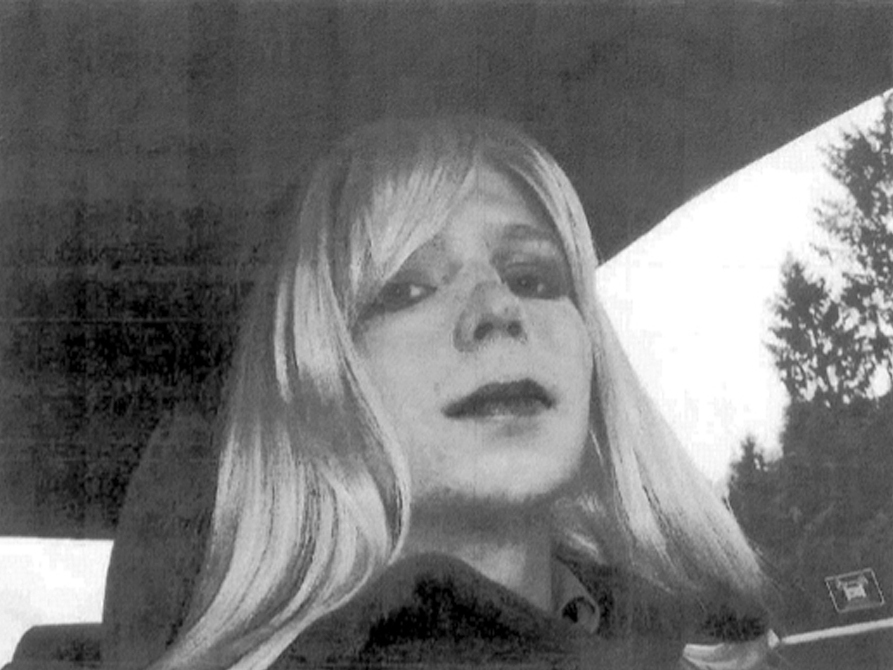
Pfc. Chelsea Manning poses for a photo in 2010. AP hide caption
toggle caption AP
Pfc. Chelsea Manning poses for a photo in 2010.
AP
Chelsea Manning, a transgender soldier imprisoned for leaking classified information to WikiLeaks, says she is ending a hunger strike after the U.S. Army agreed to allow her to get medical treatment for her gender dysphoria.
She began the hunger strike last week to protest her treatment at the U.S. Disciplinary Barracks at Fort Leavenworth, Kan., vowing to persist until she was treated better.
The medical treatment will begin with the surgery that was recommended by her psychologist in April, the American Civil Liberties Union said in a statement.
To date, the ACLU says no transgender individual has received gender-affirming surgical treatment in prison despite medical recommendations for such care in prisons across the country.
Army officials have not commented.
Manning said in a statement released by the ACLU:
"I am unendingly relieved that the military is finally doing the right thing. I applaud them for that. This is all that I wanted — for them to let me be me. But it is hard not to wonder why it has taken so long. Also, why were such drastic measures needed?"
In 2014, the ACLU filed a lawsuit against the Department of Defense over its refusal to treat Manning's gender dysphoria.
"This is a monumental day for Chelsea, who can now enjoy some peace knowing that critically needed medical care is forthcoming," ACLU attorney Chase Strangio said in a statement.
The length of Manning's hair continues to be an issue. In 2014, recommendations were made to allow her to have longer hair.
Strangio's statement continues:
"It is nonetheless troubling that the government continues to insist that they will enforce the male hair length standards against her and subject her to a disciplinary board over administrative charges related to her suicide attempt in July, which was precipitated by the government's refusal to adequately treat her for gender dysphoria. Given the recognition of Chelsea's health care needs, we hope that she is immediately permitted to grow her hair consistent with the standard for female military prisoners and that all charges related to her suicide attempt and the investigation that followed are
dropped."
Supporters have launched a petition drive calling for the charges to be dropped.
In 2013, a military court convicted Manning, who was arrested as Bradley Manning, of leaking more than 700,000 classified military and Department of State documents to Wikileaks.
Manning is serving a 35-year sentence.

Read All About It: Breaking News From NPR

When major news happens, stay on top of the latest developments, delivered to your inbox.
By subscribing, you agree

*****In The Time Of The Second Mountain Music Revival- "Come All Ye Fair And Tender Ladies"-Maybelle Carter-Style

*****In The Time Of The Second Mountain Music Revival- "Come All Ye Fair And Tender Ladies"-Maybelle Carter-Style

From The Pen Of Josh Breslin 


Listen above to a YouTube film clip of a classic Song-Catcher-type song from deep in the mountains, Come All You Fair And Tender Ladies. A song-catcher is an old devise, a mythological devise for taking the sound of nature, the wind coming down the mountains, the rustle of the tree, the crack a twig bent in the river, the river follow itself and making an elixir for the ears, simple stuff if you are brave enough to try your luck.  According to my sources Cecil Sharpe, a British musicologist looking for roots in the manner of Francis Child with his ballads in the 1850s, Charles Seeger, and maybe his son Peter too, in the 1920s and 1930s, and the Lomaxes, father and son, in the 1930s and 1940s)"discovered" the song in 1916 in the deep back hills and hollows of rural Kentucky. (I refuse to buy into that “hollas” business that folk-singers back in the early 1960s, guys and gals some of who went to Harvard and other elite schools and who would be hard-pressed to pin-point say legendary Harlan County down in Appalachia, down in the raw coal mining country of Eastern Kentucky far away from Derby dreams, mint juleps and ladies' broad-brimmed hats, of story and song insisted on pronouncing and writing the word hollows to show their one-ness with the roots, the root music of the desperately poor and uneducated. So hollows.)     

Of course my first connection to the song had nothing to do with the mountains, or mountain origins, certainly with not the wistful or sorrowful end of the love spectrum about false true lovers taking in the poor lass who now seeks revenge if only through the lament implied in the lyrics, although  even then I had been through that experience, more than once I am sorry to say. Or so I though at the time. I had heard the song the first time long ago in my ill-spent 1960s youth listening on my transistor radio up in my room in Olde Saco where I grew up to a late Sunday night folk radio show on WBZ from down in Boston that I could pick up at that hour hosted by Dick Summer (who is now featured on the Tom Rush documentary No Regrets about Tom’s life in the early 1960s Boston folk scene while at Harvard hustling around like mad trying to get a record produced to ride the folk minute wave just forming and who, by the way, was not a guy who said or wrote "hollas," okay ). That night I heard the gravelly-voiced late folksinger Dave Van Ronk singing his version of the old song like some latter-day Jehovah or Old Testament prophet something that I have mentioned elsewhere he probably secretly would have been proud to acknowledge. (Secretly since then he was some kind of high octane Marxist/Trotskyist/Socialist firebrand in his off-stage hours and hence a practicing atheist.) His version of the song quite a bit different from the Maybelle Carter effort here. I'll say.

All this as prelude to a question that had haunted me for a long time, the question of why I, a child of rock and roll, you know Bill Haley, La Verne Baker, Wanda Jackson, Elvis, Carl Perkins, Bo Diddley, Chuck Berry, Jerry Lee Lewis and the like had been drawn to, and am still drawn to the music of the mountains, the music of the hills and hollows, mostly, of Appalachia. You know it took a long time for me to figure out why I was drawn, seemingly out of nowhere, to the mountain music most famously brought to public, Northern public, attention by the likes of the Carter Family, Jimmy Rodgers, The Seegers and the Lomaxes back a couple of generations ago.

The Carter Family hard out of Clinch Mountain down in Virginia someplace famously arrived on the mountain stage via a record contract in Bristol, Tennessee in the days when fledgling radio and record companies were looking for music, authentic American music, to fill the air and their catalogs. Fill in what amounted to niche music since the radio’s range back then was mostly local and if you wanted to sell soap, perfume, laundry detergent, coffee, flour on the air then you had to play what the audience would listen to and then go out and buy the advertiser’s products once they, the great unwashed mass audience, were filled into how wonderful they smelled, tasted, or felt after consuming the sponsors' products. The Seegers and Lomaxes and a host of others, mainly agents of the record companies looking to bring in new talent, went out into the sweated dusty fields sweaty handkerchiefs in hand to talk to some guy who they had heard played the Saturday night juke joints, went out to the Saturday night red barn dance with that lonesome fiddle player bringing on the mist before dawn sweeping down from the hills, went out to the Sunday morning praise Jehovah gathered church brethren to seek out that brother who jammed so well at that juke joint or red barn dance now repentant if not sober, went out to the juke joint themselves if they could stand Willie Jack’s freshly brewed liquor, un-bonded of course since about 1789, went down to the mountain general store to check with Mister Miller and grab whatever, or whoever was available who could rub two bones together or make the rosin fly, maybe sitting right there in front of the store. Some of it pretty remarkable filled with fiddles, banjos and mandolins.

But back to the answer to my haunting question. The thing was simplicity itself. See my father, Prescott, hailed (nice word, right) from Kentucky, Hazard, Kentucky, tucked down in the mountains near the Ohio River, long noted in song and legend as hard coal country. When World War II came along he left to join the Marines to get the hell out of there, get out of a short, nasty, brutish life as a coalminer, already having worked the coal from age thirteen, as had a few of his older brothers and his father and grandfather. During his tour of duty after having fought and bled a little in his share of the Pacific War against the Japanese before he was demobilized he had been stationed for a short while at the Portsmouth Naval Base. During that stay he attended like a lot of lonely soldiers, sailors and Marines who had been overseas a USO dance held in Portland where he met my mother who had grown up in deep French-Canadian Olde Saco. Needless to say he stayed in the North, for better or worse, working the mills in Olde Saco until they closed or headed south for cheaper labor in the late 1950s and then worked at whatever jobs he could find. (Ironically those moves south for cheaper labor were not that far from his growing up home although when asked by the bosses if he wanted move down there he gave them an emphatic “no,” and despite some very hard times later when there wasn't much work and hence much to eat he never regretted his decision at least in public to this wife and kids)

All during my childhood though along with that popular music, you know the big band sounds and the romantic and forlorn ballads that got many mothers and fathers through the war mountain music, although I would not have called it that then filtered in the background on the family living room record player and the mother’s helper kitchen radio.

But here is the real “discovery,” a discovery that could only be disclosed by my parents. Early on in their marriage they had tried to go back to Hazard to see if they could make a go of it there. This was after my older brother Prescott, Junior was born and while my mother was carrying me. Apparently they stayed for several months before they left to go back to Olde Saco before I was born since I was born in Portland General Hospital. So see that damn mountain music and those sainted hills and hollows were in my DNA, was just harking to me when I got the bug. Funny, isn’t it.            

[Sometimes life floors you though, comes at you not straight like the book, the good book everybody keeps touting and fairness dictates but through a third party, through some messenger for good or ill, and you might not even be aware of how you got that sings-song in your head. Wondering how you got that sings-song in your head and why a certain song or set of songs “speaks” to you despite every fiber of your being clamoring for you to go the other way. Some things, some cloud puff things maybe going back to before you think you could remember like your awestruck father in way over his head with three small close together boys, no serious job prospects, little education, maybe, maybe not getting some advantage from the G.I. Bill that was supposed lift all veteran boats, all veterans of the bloody atolls and islands, hell, one time savagely fighting over a coral reef against the Japanese occupiers if you can believe that, who dutifully and honorably served the flag singing some misbegotten melody. A melody learned in his childhood down among the hills and hollows, down where the threads of the old country, old country being British Isles and places like that. The stuff collected in Child ballads back then in the 1850s that got bastardized by ten thousand local players who added their own touches and who no longer used the song for its original purpose red barn dance singers when guys like Buell or Hobart added their take on what they thought the words meant and passed that on to kindred and the gens. The norm of the oral tradition of the folk so don’t get nervous unless there had been some infringement of the copyright laws, not likely.  

Passed on too that sorrowful sense of life of people who stayed sedentary too long, too long on Clinch Mountain or Black Mountain or Missionary Mountain long after the land ran out and he, that benighted father of us all, in his turn sang it as a lullaby to his boys. And the boys’ ears perked up to that song, that song of mountain sadness about lost blue-eyed boys, about forsaken loves when the next best thing came along, about spurned brides resting fretfully under the great oak, about love that had no place to go because the parties were too proud to step back for a moment, about the hills of home, lost innocence, you name it, and although he/they could not name it that sadness stuck.

Stuck there not to bear fruit for decades and then one night somebody told one of the boys a story, told it true as far as he knew about that father’s song, about how his father had worked the Ohio River singing and cavorting with the women, how he bore the title of “the Sheik” in remembrance of those black locks and those fierce charcoal black eyes that pierced a woman’s heart. So, yes, Buell and Hobart, and the great god Jehovah come Sunday morning preaching time did their work, did it just fine and the sons finally knew that that long ago song had a deeper meaning than they could ever have imagined.]         


COME ALL YE FAIR AND TENDER LADIES
(A.P. Carter)

The Carter Family - 1932

Come all ye fair and tender ladies

Take warning how you court young men

They're like a bright star on a cloudy morning

They will first appear and then they're gone

They'll tell to you some loving story

To make you think that they love you true

Straightway they'll go and court some other

Oh that's the love that they have for you

Do you remember our days of courting

When your head lay upon my breast

You could make me believe with the falling of your arm

That the sun rose in the West

I wish I were some little sparrow

And I had wings and I could fly

I would fly away to my false true lover

And while he'll talk I would sit and cry

But I am not some little sparrow

I have no wings nor can I fly

So I'll sit down here in grief and sorrow

And try to pass my troubles by

I wish I had known before I courted

That love had been so hard to gain

I'd of locked my heart in a box of golden

And fastened it down with a silver chain

Young men never cast your eye on beauty

For beauty is a thing that will decay

For the prettiest flowers that grow in the garden

How soon they'll wither, will wither and fade away

******

ALTERNATE VERSION:

Come all ye fair and tender ladies

Take warning how you court young men

They're like a star on summer morning

They first appear and then they're gone

They'll tell to you some loving story

And make you think they love you so well

Then away they'll go and court some other

And leave you there in grief to dwell

I wish I was on some tall mountain

Where the ivy rocks are black as ink

I'd write a letter to my lost true lover

Whose cheeks are like the morning pink

For love is handsome, love is charming

And love is pretty while it's new

But love grows cold as love grows old

And fades away like the mornin' dew

And fades away like the mornin' dew

Tuesday, September 13, 2016

*An Encore-Mary McCaslin's "Prairie In The Sky"

Click On Title To Link To YouTube's Film Clip Of Mary McCaslin Doing "Prairie In The Sky".
CD Review

Prairie In The Sky, Mary McCaslin, Rounder Records, 1995

This review has also been used for McCaslin's "Broken Promises" CD.


Okay, okay I have had enough. Recently I received a spate of e-mails from aging 1960's folkies asking why, other than one review of Carolyn Hester's work late in 2008, I have not done more reviews of the female folkies of the 1960's. To balance things out I begin to make amends here. To set the framework for my future reviews I repost the germane part of the Carolyn Hester review:

"Earlier this year I posed a question concerning the fates of a group of talented male folk singers like Tom Rush, Tom Paxton and Jesse Colin Young, who, although some of them are still performing or otherwise still on the musical scene have generally fallen off the radar in today's mainstream musical consciousness, except, of course, the acknowledged "king of the hill", Bob Dylan. I want to pose that same question in this entry concerning the talented female folk performers of the 1960's, except, of course, the "queen of the hill" Joan Baez. I will start out by merely rephrasing the first paragraph from the reviews of those male performers.

"If I were to ask someone, in the year 2008, to name a female folk singer from the 1960's I would assume that if I were to get an answer to that question that the name would be Joan Baez (or, maybe, Judy Collins but you get my point). And that would be a good and appropriate choice. One can endlessly dispute whether or not Baez was (or wanted to be) the female voice of the Generation of '68 but in terms of longevity and productivity she fits the bill as a known quality. However, there were a slew of other female folk singers who tried to find their niche in the folk milieu and who, like Baez, may today still quietly continue to produce work and to perform. The artist under review, Carolyn Hester, certainly had the talent to challenge Baez to be "queen of the hill."

Well, as the CD under review will testify to, the singer /songwriter Mary McCaslin also was in contention, back in the days. I am not familiar with the current status of Ms. McCaslin as a performer although I know several years ago I attended a benefit concert to raise funds for her medical needs. Nevertheless I can remember the first time I heard her in a coffeehouse in Cambridge doing Woody Guthrie's "Oklahoma Hills Back Home". And that was appropriate as Ms. McCaslin is certainly in her singing style and her songwriting interests attached to the Western United States. That tradition got an additional acknowledgement in that Cambridge performance when she brought down the house with her version of the country classic "Pass Me By If You're Only Passing Through".

That western theme and, in addition, several more inward searching tracks, make this a very representative McCaslin effort. Needless to say "Pass Me By" sticks out on the first theme and "Prairie In The Sky" on the second. She also does a very fine version of the old Ames Brothers (I think) "Ghost Riders In The Sky". So, all in all, whatever her later personal journey back in the days she could have been a contender for "queen of the hill". Listen up.