Thursday, September 15, 2016

*****America, Where Are You Now...."- Steppenwolf’s The Monster-Take Four

*****America, Where Are You Now...."- Steppenwolf’s The Monster-Take Four


A YouTube Film Clip Of Steppenwolf Performing Monster- Ah, Those Were The Days


 From The Pen Of Bart Webber

America where are you now?

Don't you care about your sons and daughters?

Don't you know we need you now

We can't fight alone against the monster

Chorus Line From The Monster

Back in 2011 Frank Jackman’s friend from back in the old growing up hometown days in the late 1960s in Carver about thirty miles south of Boston toward the ocean, Sam Lowell, had written, under the influence of a rage he was feeling about the never-ending war in Afghanistan (still never-ending as of this 2015 writing as the announcement that five thousand American troops will hunker down in that benighted country until at least 2017), a review of an album of heavy-duty rock band they both loved to listen to back in the day, Steppenwolf. Sam’s impetus for writing that review had been a recent listening to the group’s song Monster on YouTube where he heard the words quoted above, the words that sent him reeling back to another never-ending war time in Vietnam during the 1960s and 1970s. But here is the rub, back then Sam was probably the least political of the guys who hung out around Jimmy Jack’s Diner holding up the wall, checking the passing girls out, and occasionally putting a few quarters in the jukebox inside at the counter or in one the red vinyl-covered seats at a booth if they had eating money as well to hear what was what just then.

Those Steppenwolf lyrics about parents “abandoning” their kids leaving them alone and untutored in the ways of the harsh world to fight the monster machine that would devour them in a fit of consumer-culture death if not fought had hit home not because of the raging war but because of his own difficulties with his parents, his own having to go it alone to find his own path, a path that took many wrong turns.  Frank a little more attuned to the swirl of the political maelstrom around him “got” the less personal aspect of fighting against the imperial government machine at all costs in the song and tried unsuccessfully to convey that understanding to Sam even though he too had had his own running battles mainly with his mother over what the hell he was to do in the world, about why he did not want to do the things his parents craved for him to do.        

Frank got “religion” earlier than Sam in another way since shortly after the unsuccessful attempts to “hip” Sam to the need to fight the monsters who were devouring their humanity he got a letter in late 1968, a very official letter, from his friends and neighbors (that is how they put the greeting in any case) at the Carver draft board telling him his number was up, that assuming that he was physically fit enough, he was subject to being called up (when he later went up to Boston to take his physical at the Army Base down near the harbor he found that if a guy was still basically breathing and did not fall over to the touch he was fit despite the slew of medical excuses other guys had tried to fake the doctors out with so he was found fit ). He freaked that letter-opening day, freaked the day he took his physical knowing he had passed and knowing too that the way Charley (although he would not know the significance of that name until later) was chewing up the American Army despite the beating he took during his Tet offensive that he would be called, no question, and he freaked the day the very early one morning he headed to the Boston Army Base to be inducted. That despite Frank’s immense hesitations about going, although stuck down in Carver he was unaware as he would later become aware of that there were ways to fight his induction. But see every other thing in his blessed life went the other way, there was nothing to guide him in his hesitations. Certainly not the super-patriotism of his parents, Christ, they would wind supporting the war effort until the very end and even wrote a letter to their Congressman telling him to tell President Ford to send troops to Vietnam in 1975 as all hell was breaking around Saigon and the North Vietnamese were rolling to cut off that town. Of course by that time he was in one of his frequent periods of not talking to them for years at a time.

Nor did it help unlike in some places where middle class families fearful for their sons were at least listening to the options, that all the guys, all the guys he knew in old time working-class Carver, who had not jumped at the chance of enlisting but waited until they were given notice went, maybe kicking and screaming like Frank but went, and that while he had certain defined views about politics they were as he would figure out later pretty simple and not reason enough to go to jail or flee to Canada over, the choices that he had heard about but kind of dismissed out of hand. 


So Frank went to Boston and took the oath, went in and while not being the best of soldiers he was not the worse and guys in his unit would wind up saying of him that when he arrived in Vietnam and he settled in he got them out a few messes that did not look like they would get out of alive or in one piece when Charley came a-calling. Later, say late 1971 after he was discharged, early 1972 talking to a Quaker girl he was interested in over in Cambridge where he found himself hanging out after the few days that he spent in Carver convinced him that he had to flee that town, about what had happened to him in Vietnam he realized just how much he hated the monster government for doing what it did to him, about the slaughter of the innocence and about how he had to wash himself clean to get back his humanity. And so he joined Vietnam Veterans Against the War (VVAW) and after that died down after a few years he joined that Quaker girl in her forthright efforts to bring a little peace in the world.       

Sam, and here is the funny way paths divert, had had a serious injury when he was a kid, a serious injury to his left arm which despite many severe and long-drawn-out procedures was about ninety percent useless and so was declared early on 4-F, not fit for military service, by those same friends and neighbors who had left Frank to hang out and dry. Thus while Sam tepidly held some of the same opinions that his fellow students who were causing holy hell on the campus at Boston University where it seemed every other day they were protesting or striking against something, sometimes to do with the war, other times about some grievance local or societal, he was rather outside of all of that.

Even when Frank had fruitlessly argued with him about what their parents were leaving them to fight against he had fluffed it off. Later after Frank got back for Vietnam he was a bit more thoughtful for a while, tried to listen when Frank talked about stuff, about the bloody madness going on in his name but Sam was too busy trying to survive law school and start a practice in Carver to listen much. So of course they drifted apart something that if either of them had been asked let’s say as they graduated from high school in 1967 they would have scoffed at. Frank headed west, went to California after that thing with the Quaker girl had run out, after he had let his “wanting habits” addictions get the best of him and that thread of the story is still murky (mostly drug-related and some small felonies from what Sam had heard from somebody who had run into Frank in San Francisco at a peace event in the late 1980s). Sam went on to thrive in his small town law practice, eventually taking on a partner, having a family including two sons, and generally having a good life.                 

But then Sam got “religion,” got it not through anything he did, or did not do, but through the times, through another act of governmental hubris. After 9/11 (and like Pearl Harbor and a few other events in American history just saying the words stand by themselves, no explanation necessary) the bulk of the population in America was beside itself with unfocused rage, was out for some kind of vengeance, any target would do, convenient, distant, the bigger the better, but some kind of Moslem/ Arab payback was best. Like in a lot of time of emergency situations, military emergencies, some of the young get caught up in the crush of the action. Wanted to play the patriot game for keeps. The long and short of it was that Bradley Lowell, Sam’s older son, enlisted in Army, went to Officer Candidate School and came out a second lieutenant, came out just as all hell was breaking loose in Washington about Iraqi Saddem weapons of mass destruction and that the only way to make things right was to invade that benighted country, destroy it out of hand. Puff. Sam, beside himself when he heard that Bradley would be deployed, would be in the thick of it as an officer in an infantry unit, tried like hell to talk him out of going, talked to him about refusing to go, about going to jail, tried to talk to him about what had happened during war to guys like his old friend Frank Jackman. No soap, Brad Lowell was gung-ho. And as the fates would have it one Bradley Lowell was felled by an IED and laid his head down in Iraq on his second tour of duty in 2005.         

For a while Sam was inconsolable, as was his wife, Laura, and it took a lot of thinking to figure out what he was to do to keep Brad’s memory alive. As the situation in Iraq got more unstable and as the American casualties kept piling up Sam decided to go to an anti-war rally in Boston at the Commons one spring afternoon in 2006. (Laura taking the loss of Bradley hard in that way refused to go in public to such an event.) The crowd of a few hundred was not big like in the times of his youth during Vietnam when one day the whole Commons had been filled (he had not attended that rally since he was studying for an exam but he had heard about it from his roommate who had attended and believed that the war would be over shortly-in the event it lasted almost five years more) but he was fine with the idea of just protesting as best he could. As fate would have it Frank Jackman, back a few months before from the West Coast to attend to his wife’s mother’s care for a while up in Lynnfield, also was in attendance that day. That day he was wearing his dark blue embossed with the white dove of peace Veterans for Peace tee-shirt, an organization that Frank had joined just before the Iraq invasion in 2002 after many years of ad hoc work with a myriad of peace and social justice groups, and Sam thinking back to Frank’s VVAW days sort of recognized his old school boy friend, as he approached him (both men both thicker than in their slender youths, showing lots less hair, now grey-white, and lots more wrinkles and Frank sporting a longish beard and thus not unlike about half the male section of their generation so neither man could be blamed if they did not immediately recognize each other). Once the light of recognition hit they gathered to each other like in old times. Sam told Frank about his son Bradley and they both shed a tear for Brad, for their lost youth, and for the endless wars that have plagued their world.

They agreed to meet at the Sunnyvale Grille in downtown Boston a few days later and go over how they were going to continue the anti-war struggle in the face of a great deal of indifference (not of the soldiers deaths, like Brad’s, but of the unchecked damn war policies of two consecutive governments) from the general public who opposed the war before it started but had gone along with it once the deal went down. That meeting was the first time that they both discussed the commonly remembered Steppenwolf song Monster which a few years later prompted Sam to write that album review, trying to sum up the hard fact that the now oldsters Frank Jackman and Sam Lowell had to lend the kids a helping hand, or pass the torch on to them. Here is what Sam had to say:                

The heavy rock band Steppenwolf (maybe acid rock is better signifying that the band started in the American dream gone awry 1960s night when the likes of the Jefferson Airplane, The Doors, The Byrds and groups like the transformed from muppet Beatles and Stones held forth, rather than in the ebb-tide 1970s when the harder sounds of groups like Aerosmith and Black Sabbath were  needed to drown out the fact that  we were in decisive retreat), one of many that was thrown up by the musical counter-culture of the mid to late 1960's was a cut above and apart from some of the others due to their scorching lyrics provided mainly, but not solely, by gravelly-voiced lead singer John Kay. That musical counter-culture not only put a premium on band-written materials, as against the old Tin Pan Alley somebody wrote the lyrics, somebody else sang the song division before Bob Dylan and the Beatles made singer-songwriters fashionable but also was a serious reaction to the vanilla-ization of rock and popular music in the earlier part of the decade that drove many of us from the AM radio dials and into “exotic” stuff like electric blues (country too, come to think of it) and the various strands of folk music.    

Some bands played, consciously played, to the “drop out” notion popular at the times. “Drop out” of rat-race bourgeois society and its money imperative, its “white picket fence with little white house attached” visions. (Those my own visions which I pursued as it turned out.) That is the place where many of the young, the post-World War II baby-boomer young, now sadly older, had grown up and were in the process of repudiating for a grander vision of the world, the “world turned upside down” as an old time British folk tune had it. Drop out and create a niche somewhere (a commune maybe out away from the rat-race places some of which did spring up in the likes of Taos, Oregon, Big Sur and the hills of old Vermont which if you care to see what hellish thing happened to that old vision once the seers got older you can go to and witness first hand these days), so some physical somewhere perhaps but certainly some other mental somewhere and the music reflected that disenchantment.

That mental somewhere involved liberal use of drugs to induce, well, who knows what it induced but it felt like a new state of consciousness so make of that what you will. The drugs used, in retrospect, to make you less “uptight” not a bad thing then, or today. The whole underlying premise though whether well thought out or not was that music, the music of the shamans of the youth tribe, was the revolution. (An idea, as a man who abhorred politics then and am only a little more enamored of now but have a greater purpose to be out in the streets than then when it was a pose if I showed up at all, I held to lightly for a while) An idea that for a short while before all hell broke loose with the criminal antics of Lyndon Johnson and one Richard M. Nixon, all hell broke loose with Tet, with May 1968, with Chicago 1968, with the “days of rage,” with Altamont and with a hundred other lesser downers I subscribed to. Those events, a draft notice, some hard time in Vietnam, made my old time school boy friend Frank Jackman get “religion” on the need for “in-their-face” political struggle. Me, though it took longer, took a generation longer to lose my innocence about American war policy.         

Musically much of that stuff was ephemeral, merely background music, and has not survived (except in lonely YouTube cyberspace). Yeah, Neal Young, the Airplane, the Doors, the Byrds still sound good but a lot of it is wha-wha music now you know Ten Years After, a lot of Rod Stewart, even the acid-etched albums by the Beatles and Stones, (it is no wonder that the latter do not have any tunes from Their Satanic Majesties on their playlists out on the concert tours these days). Others, flash pan “music is the revolution,” period exclamation point, end of conversation bands assumed a few pithy lyrics would carry the day and dirty old bourgeois society would run and hide in horror leaving the field open, open for, uh, us. That music too, except for gems like The Ballad Of Easy Rider, is safely ensconced in vast cyberspace.

Steppenwolf was different, was political from the get-go taking on the deadliness of bourgeois culture, worse the chewing up of their young in unwinnable wars with no apologies or second thoughts, the pusher man, the draft resister and lots of other subjects (and a few traditional songs too about the love that got away, things like that).  Not all the lyrics worked, then or now. (See below for some that do). Not all the words are now some forty plus years later memorable. After all every song is written with some current audience in mind, and notions of immortality as the fate of most songs are displaced. Certainly some of the less political lyrics seem entirely forgettable. As does some of the heavy decibel rock sound that seems to wander at times like, as was the case more often than not, and more often that we, deep in some a then hermetic drug thrall, would have acknowledged, or worried about.

But know this- when you think today about trying to escape from the rat-race of daily living then you have an enduring anthem Born To Be Wild that still stirs the young (and not so young). If Bob Dylan's Like A Rolling Stone was one musical pillar of the youth revolt of the 1960's then Born To Be Wild was the other.


And if you needed (or need) a quick history lesson about the nature of American society in the 1960's, what it was doing to its young, where it had been and where it was heading (and seemingly still is as we attempt to finish up the Afghan wars and the war signals for deep intervention into the Syria civil war or another war in Iraq get louder, or both are beating the war drums fiercely) then the trilogy under the title "The Monster" said it all.

Then there were songs like The Pusher Man a song that could be usefully used as an argument in favor of decriminalization of drugs today and get our people the hell out of jail and moving on with their lives and others then more topical songs like Draft Resister to fill out their playlist. The group did not have the staying power of others like The Rolling Stones but if you want to know, approximately, what it was like for rock groups to seriously put rock and roll and a hard political edge together give a listen to the group sometime. And listen to how right my old friend Frank Jackman had been about their political messages

Words and music by John Kay, Jerry Edmonton, Nick St. Nicholas and Larry Byrom

(Monster)

Once the religious, the hunted and weary

Chasing the promise of freedom and hope

Came to this country to build a new vision

Far from the reaches of kingdom and pope

Like good Christians, some would burn the witches

Later some got slaves to gather riches

But still from near and far to seek America

They came by thousands to court the wild

And she just patiently smiled and bore a child

To be their spirit and guiding light

And once the ties with the crown had been broken

Westward in saddle and wagon it went

And 'til the railroad linked ocean to ocean

Many the lives which had come to an end

While we bullied, stole and bought our a homeland

We began the slaughter of the red man

But still from near and far to seek America

They came by thousands to court the wild

And she just patiently smiled and bore a child

To be their spirit and guiding light

The blue and grey they stomped it

They kicked it just like a dog

And when the war over

They stuffed it just like a hog

And though the past has it's share of injustice

Kind was the spirit in many a way

But it's protectors and friends have been sleeping

Now it's a monster and will not obey

(Suicide)

The spirit was freedom and justice

And it's keepers seem generous and kind

It's leaders were supposed to serve the country

But now they won't pay it no mind

'Cause the people grew fat and got lazy

And now their vote is a meaningless joke

They babble about law and order

But it's all just an echo of what they've been told

Yeah, there's a monster on the loose

It's got our heads into a noose

And it just sits there watchin'

Our cities have turned into jungles

And corruption is stranglin' the land

The police force is watching the people

And the people just can't understand

We don't know how to mind our own business

'Cause the whole worlds got to be just like us

Now we are fighting a war over there

No matter who's the winner

We can't pay the cost

'Cause there's a monster on the loose

It's got our heads into a noose

And it just sits there watching

(America)

America where are you now?

Don't you care about your sons and daughters?

Don't you know we need you nowWe can't fight alone against the monster

© Copyright MCA Music (BMI)
All rights for the USA controlled and administered by
MCA Corporation of America, INC
--Used with permission--

Born To Be Wild
Words and music by Mars Bonfire

Get your motor runnin'

Head out on the highway

Lookin' for adventure

And whatever comes our way

Yeah Darlin' go make it happen

Take the world in a love embrace

Fire all of your guns at once

And explode into space

I like smoke and lightning

Heavy metal thunder

Racin' with the wind

And the feelin' that I'm under

Yeah Darlin' go make it happen

Take the world in a love embrace

Fire all of your guns at once

And explode into space

Like a true nature's child

We were born, born to be wild

We can climb so high

I never wanna die

Born to be wild

Born to be wild

© MCA Music (BMI)
All rights for the USA controlled and administered by
MCA Corporation of America, INC

--Used with permission--

THE PUSHER

From the 1968 release "Steppenwolf"

Words and music by Hoyt Axton

You know I've smoked a lot of grass

O' Lord, I've popped a lot of pills

But I never touched nothin'

That my spirit could kill

You know, I've seen a lot of people walkin' 'round

With tombstones in their eyes

But the pusher don't care

Ah, if you live or if you die

God damn, The Pusher

God damn, I say The Pusher

I said God damn, God damn The Pusher man

You know the dealer, the dealer is a man

With the love grass in his hand

Oh but the pusher is a monster

Good God, he's not a natural man

The dealer for a nickel

Lord, will sell you lots of sweet dreams

Ah, but the pusher ruin your body

Lord, he'll leave your, he'll leave your mind to scream

God damn, The Pusher

God damn, God damn the Pusher

I said God damn, God, God damn The Pusher man

Well, now if I were the president of this land

You know, I'd declare total war on The Pusher man

I'd cut him if he stands, and I'd shoot him if he'd run

Yes I'd kill him with my Bible and my razor and my gun

God damn The Pusher

Gad damn The Pusher

I said God damn, God damn The Pusher man\

© Irving Music Inc. (BMI)

--Used with permission--


Out In The Be-Bop Night-The Bard Of 1964?- Muse Jack Kerouac Where Are You?

Out In The Be-Bop Night-The Bard Of 1964?- Muse Jack Kerouac Where Are You?


Josh Breslin, Class Of 1964, comment:


Recently someone from our class, who shall remain nameless, wrote an e-mail, a friendly e-mail I assume, asking me if I, with this never-ending (my word) stream of messages, was trying to be the bard (her word, oops) of the Class of 1964. I rapidly replied with this short answer- “What, are you kidding?” Later though, after I thought about it for a while, I realized that I did mean to be ONE of the latter-day sainted voices of the class.


Why? I have, with all due modesty, the perfect resume for the job.


Here it is:


I belonged to no clubs, not even after school ones. I played no major sport that drove a lot of the social networking of the time (I am being polite here: this is a family-friendly site after all). The sports that did drive me throughout my high school career, track and cross-country, were then very marginal sports for “nerds” and other assorted odd-balls cluttering up the highways and by-ways of the town blocking traffic and getting catcalls from the citizenry and that was just the guys, the girls were merciless, "fag" baiting us to perdition. I was, moreover, overwhelmingly underwhelming at them, to boot. I did not hang around with the class intellectuals, although I was as obsessed and driven by books, ideas and theories as anyone else at the time, maybe more so. I was, to be polite again, painfully shy around girls and therefore somewhat socially backward, although I was furtively enthralled by more than one of them. Girls, that is And to top it all off, to use a term that I think truly describes me then, I was something of a ragamuffin from the town's wrong side of the tracks.


Oh, did I mentioned that I was also so alienated from the old high school environment that I either threw, or threatened to throw, my yearbook in the nearest river right after graduation; in any case I no longer have it.


Perfect, right? No. Not complete enough? Well how about this. My family, on my mother’s side, had been in the old town since about the time of the “famine ships” from Ireland. I have not gotten that far back in the genealogy but way back someone in the family was a servant of some sort, to one of the branches of the presidential Adams family. Most of my relatives distance and far, went through the old high school. The streets of the old town were filled with the remnants of the clan. My friends, deny it or nor, the diaspora "old sod" of North Quincy was in the blood. How else explain, after a forty year hiatus, this overweening desire to write about the “Dust Bowl” that served as a training track during my running days. Or the oddness of separate boys and girls bowling teams, as if social contact in that endeavor would lead to .....whatever.


Or that mysterious “Tri-Hi-Y” (a harmless social organization for women students that I have skewered for its virginal aspirations). Or the million other things that pop into my head there days. Oh ya, I can write, a little. Not unimportant for a bard, right? The soul of a poet, if not the language. Time and technology has given us an exceptional opportunity to tell our story and seek immortality and I want in on that. Old Walt Whitman can sing of America, I will sing of the old town, gladly.


Well, do I get a job? Hey, you can always “fire” me. Just “click” and move on.

*****A Voice From The Left-The Latest From The Steve Lendman Blog

*****A Voice From The Left-The Latest From The Steve Lendman Blog


                                  Henry Wallace 1948

 A link below to link to the Steve Lendman Blog

http://sjlendman.blogspot.com/

From The Pen Of Frank Jackman

Over the years that I have been presenting political material in this space I have had occasion to re-post items from some sites which I find interesting, interesting for a host of political reasons, although I am not necessarily in agreement with what has been published. Two such sites have stood out, The Rag Blog, which I like to re-post items from because it has articles by many of my fellow Generation of ’68 residual radicals and ex-radicals who still care to put pen to paper and the blog cited here, the Steve Lendman Blog.  The reason for re-postings from this latter site is slightly different since the site represents a modern day left- liberal political slant. That is the element, the pool if you will, that we radicals have to draw from, have to move left, if we are to grow. So it is important to have the pulse of what issues motivate that milieu and I believe that this blog is a lightning rod for those political tendencies. 

I would also add that the blog is a fountain of rational, reasonable and unrepentant anti-Zionism which became apparent once again in the summer of 2014 when defense of the Palestinian people in Gaza was the pressing political issue and we were being stonewalled and lied to by the bourgeois media in service of American and Israeli interests. This blog was like a breath of fresh air then. Still is.

An additional Jackman comment (Fall 2014):

The left-liberal/radical arena in American politics has been on a steep decline since I was a whole-hearted denizen of that milieu in my youth somewhere slightly to the left of Robert Kennedy back in 1968 say but still immersed in trying put band-aids on the capitalist system. That is the place where Steve Lendman with his helpful well informed blog finds himself. It is not an enviable place to be for anyone to have a solid critique of bourgeois politics, hard American imperial politics in the 21st century and have no ready source in that milieu to take on the issues and make a difference (and as an important adjunct to that American critique a solid critique of the American government acting as front-man for every nefarious move the Israeli government makes toward increasing the oppression of the Palestinians in Gaza and the West Bank). 

Of course I had the luxury, if one could call it that, which a look at Mr. Lendman's bio information indicates that he did not have, was the pivotal experience in the late 1960s of being inducted, kicking and screaming but inducted, into the American army in its losing fight against the heroic Vietnamese resistance. That signal event disabused me, although it took a while to get "religion," on the question of the idea of not depending on bourgeois society to reform itself coming out of Democratic Party left-liberal politics, especially falling in love with Robert Kennedy’s idea of “seeking a newer world.” On specific issues like the fight against the death penalty, the fight for the $15 minimum wage, immigration reform and the like I have worked with that left-liberal/ radical milieu, and gladly, but as for continuing to believe against all evidence that the damn thing can be reformed that is where we part company. Still Brother Lendman keep up the good work and I hope you find a political home worthy of your important work.                  

A Jackman disclaimer:

I place some material in this space which I believe may be of interest to the radical public that I do not necessarily agree with or support. One of the worst aspects of the old New Left back in the 1970s as many turned to Marxism after about fifty other theories did not work out was the freezing out political debate with other opponents on the Left to try to clarify the pressing issues of the day. Those jackboot theories, mainly centered on some student-based movements that were somehow to bring down the beast without a struggle for state power, were theories that I earnestly adhered to sometimes more than one at the same time. Nevertheless by our exclusionism we were replicating the worst habits of the old Old Left (those who came of political age and fought the great class battles of the 1930s when kept their generation above water for a long time but which now despite the importance of studying have run out of steam). That freezing out , more times than I care to mention including my own behavior a few times, included physical exclusion and intimidation. I have since come to believe that the fight around programs and politics is what makes us different, and more interesting. The mix of ideas, personalities and programs, will sort themselves out in the furnace of the revolution as they have done in the past. 

Off-hand, as I have mentioned before, I think it would be easier, infinitely easier, to fight for the socialist revolution straight up than some of the “remedies” provided by the commentators in these various blogs and other networking media. But part of that struggle for the socialist revolution is to sort out the “real” stuff from the fluff as we struggle for that more just world that animates our efforts. So read on. 


A View From The Left-Forum-NYC-September 24th-Elections 2016:Racist Bigots And Imperialist War Hawks

A View From The Left-Forum-NYC-September 24th-Elections 2016:Racist Bigots And Imperialist War Hawks


Support Freedom For Class War Prisoners-Join And Support The Partisan Defense Committee

Support Freedom For Class War Prisoners-Join And Support The Partisan Defense Committee   


Take Your Baby To The Carnival On A Saturday Night-Adventureland (2009)-A Film Review

Take Your Baby To The Carnival On A Saturday Night-Adventureland (2009)-A Film Review 


DVD Review

By Sam Lowell

Adventureland, starring Kristie Stewart, Jesse Eisenberg, 2009

Not every film by this reviewer has to have a serious social message (although it helps) or be so gripping that he had to see the thing over and over again as it becomes one of filmdom’s classic pieces like Sunset Boulevard. Sometimes, and the film under review Adventureland exactly fits this category, he just needs film to ward of the willies. Usually a comedy of some sort will fill the bill and in this case it is a romantic comedy that has calmed his nerves.     

No question it never hurts that the locale of this comedy was located in Adventureland, in an amusement park, run down though it might be, since he has been enthralled by the “magic” of the neon lights and its swarm of grifters, drifters, goofs and midnight sifters at amusement parks and carnivals since early childhood. Still does consider himself an above average hand at Skee and its coupon-laden kewpie doll prizes. Actually, and he has written about the fact elsewhere, had run away with the carnival for a couple of days in his youth before being reined in by fearful and angry parents. So he has a pedigree of sorts in what the lure of the bright lights, tumultuous array of sounds, and smells from hot dogs to cotton candy brings to the even the normally sedate.   

Of course the amusement park motif is just so much backdrop for the real boy-meets-girl angle behind this and more than half the films ever created. Here’s the play. James, played by Jesse Eisenberg, is an aspiring graduate student, Columbia School of Journalism no less, with downwardly mobile parents who cannot afford to spring for a promised  grand tour of Europe and hence the summer job at Adventureland, the fate of many liberal arts graduates of late. As he gets the hang of the job after about two minutes, basically as long as it takes a co-worker to fill him of the grift, the scams that make the suckers pay for cheapjack stuff and like it, he becomes friendly with plenty of the co-workers. The usual cross-section of guys and gals who work the carny/theme park scene down at the edges of society.       

One of those co-workers, Emily, played by fetching Kristie Stewart last seen in this space working her magic on the guys who played Neal Cassady and Jack Kerouac in the film adaptation of the latter’s On The Road, catches his eye and we are off to the races. Naturally it would be a very short film if the obvious attraction they had for each other had them immediately go off into the blissful sunset. Problem number one was that James was by choice, by discriminating choice, if you can believe this in this day in age, a virgin and was not sure whether he wanted to commit to Emily and wind up “doing the do” with her, a sexually experienced woman. Problem number two alienated from her parents Emily was in a hush-hush sexual relationship with the park’s married handyman. Don’t worry because in the end after some serious talking and smoking some serious weed they do wind up going hand and hand into the sunset, wind up “doing the do.”         

By the way it never hurts either in a film on youthful confusion about life to have a soundtrack that features the late Lou Reed’s Pale Blue Eyes and other songs done with the Velvet Underground.    

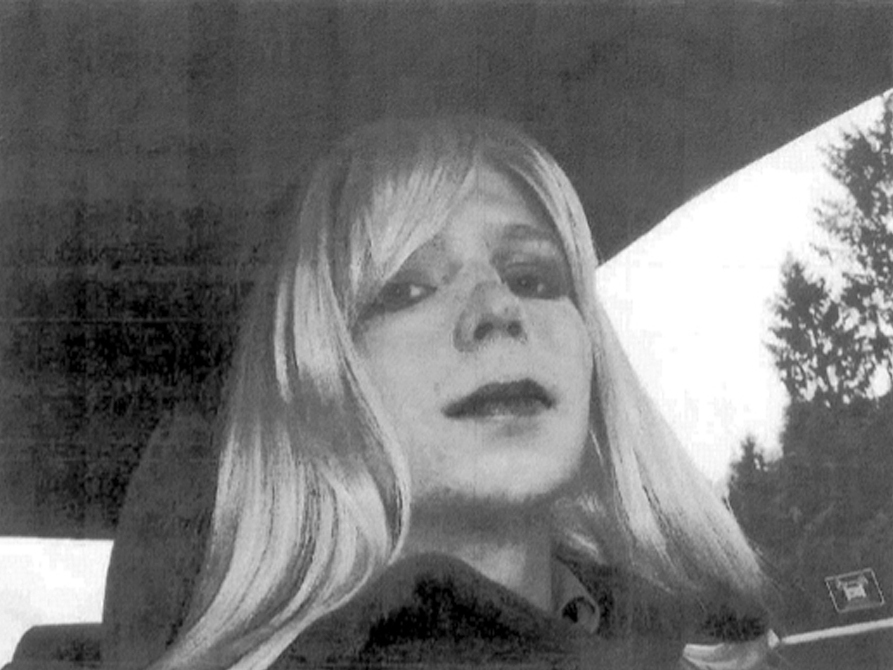
Chelsea Manning Ends Hunger Strike; Army Agrees To Gender-Affirming Surgery(Yeah, But President Obama Pardon Chelsea Now!)

Chelsea Manning Ends Hunger Strike; Army Agrees To Gender-Affirming Surgery


Pfc. Chelsea Manning poses for a photo in 2010. AP hide caption
toggle caption AP
Pfc. Chelsea Manning poses for a photo in 2010.
AP
Chelsea Manning, a transgender soldier imprisoned for leaking classified information to WikiLeaks, says she is ending a hunger strike after the U.S. Army agreed to allow her to get medical treatment for her gender dysphoria.
She began the hunger strike last week to protest her treatment at the U.S. Disciplinary Barracks at Fort Leavenworth, Kan., vowing to persist until she was treated better.
The medical treatment will begin with the surgery that was recommended by her psychologist in April, the American Civil Liberties Union said in a statement.
To date, the ACLU says no transgender individual has received gender-affirming surgical treatment in prison despite medical recommendations for such care in prisons across the country.
Army officials have not commented.
Manning said in a statement released by the ACLU:
"I am unendingly relieved that the military is finally doing the right thing. I applaud them for that. This is all that I wanted — for them to let me be me. But it is hard not to wonder why it has taken so long. Also, why were such drastic measures needed?"
In 2014, the ACLU filed a lawsuit against the Department of Defense over its refusal to treat Manning's gender dysphoria.
"This is a monumental day for Chelsea, who can now enjoy some peace knowing that critically needed medical care is forthcoming," ACLU attorney Chase Strangio said in a statement.
The length of Manning's hair continues to be an issue. In 2014, recommendations were made to allow her to have longer hair.
Strangio's statement continues:
"It is nonetheless troubling that the government continues to insist that they will enforce the male hair length standards against her and subject her to a disciplinary board over administrative charges related to her suicide attempt in July, which was precipitated by the government's refusal to adequately treat her for gender dysphoria. Given the recognition of Chelsea's health care needs, we hope that she is immediately permitted to grow her hair consistent with the standard for female military prisoners and that all charges related to her suicide attempt and the investigation that followed are
dropped."
Supporters have launched a petition drive calling for the charges to be dropped.
In 2013, a military court convicted Manning, who was arrested as Bradley Manning, of leaking more than 700,000 classified military and Department of State documents to Wikileaks.
Manning is serving a 35-year sentence.


Read All About It: Breaking News From NPR

When major news happens, stay on top of the latest developments, delivered to your inbox.
By subscribing, you agree

*****Down At Duke’s Place-With Duke Ellington In Mind


Once Again -Down At Duke’s Place-With Duke Ellington In Mind


From The Pen Of Bart Webber  


One night Sam Eaton was talking on his cellphone to his old friend from high school (Carver High, Class of 1967), Jack Callahan about how his grandson, Brandon, the oldest grandson of his daughter Janice from his first marriage (first of three all ending in divorce but that is merely a figure for the Census Bureau and not germane to what follows so enough) had beguiled him recently with his arcane knowledge of classical jazz (the jazz from the age of King Oliver say until the death of the big bad swings bands which died in the late 1940s for the most part giving way to cool ass be-bop and what followed).


Jack braced himself for the deluge, got very quiet and did not say word one, since lately the minute Sam mentioned, maybe even thought about mentioning the slightest thing connected with jazz he knew he was in for it, in for a harangue of unknown duration on the subject. Sam, recently more conscious that Jack, who hated jazz, hated it worse when as a child of rock and roll as Sam was, his father would endlessly play Count this, King that, Duke the other thing and not allow the family record player centered in the family living room to be sullied (his father’s word) by heathen stuff like Roll Over Beethoven or One Night With You, would go silent at the word “jazz” said not to worry he would only say a few words from his conversation with Brandon:        

No, Jack, my man, this will not be a screed about how back in the day, back in the 1950s the time of our complete absorption into rock and roll, when be-bop jazz was the cat’s meow, when cool was listening to the Monk trip up a note, consciously trip up a note to see if anybody caught it and then took that note to heaven and back, and worked it out from there or Dizzy burping then hitting the high white note all those guys were struggling against the limits of the instruments to get, high as hell on tea, you know what we called ganja, herb, stuff like that.


Frankly I was too young, you too but I knew how you felt since I couldn’t listen to rock in my house either as the 1940s Andrews Sisters/Perry Como/Frank Sinatra/Peggy Lee cabal were front and center in our living room and I was reduced to listening on my transistor radio, way too young to appreciate such work then and I only got the tail end, you know when Hollywood or the popular prints messed the whole be-bop jazz “beat” thing up and we got spoon-fed Maynard G. Krebs faux black and white television beatnik selling hair cream oil or something like that, and ten thousand guys hanging around the Village on Saturday night in full beret and whatever they could put together for a beard from the outreaches of Tenafly, New Jersey (sorry but Fort Lee was out) and another ten thousand gals, all in black from head to toe, maybe black underwear too so something to imagine at least from Norwalk, Connecticut milling around as well. Square, square cubed.


No, this will not be some screed going back further in the hard times of the Great Depression and the slogging through World War II when “it did not mean a thing, if you ain’t got that swing” when our parents, the parents of the kids who caught the end of be-bop “swang,” did dips and twirls to counts, dukes, earls, princes, marquises even leading big band splashes to wash that generation clean. Come on now that was our parents and I wasn’t even born so no way I can “screed” about that. And, no, no, big time no, this will not be about some solitary figure in some dank, dusty, smoke-filled café, the booze flowing, the dope in the back alleys inflaming the night while some guy, probably a sexy sax player, blows some eternal high white note out against some bay, maybe Frisco Bay, and I was hooked, hooked for life on the be-bop jazz scene.

No, it never even came close to starting out like that, never even dreamed such scenes. Unlike rock and roll, the classic kind that was produced in our 1950s growing up time and which we have had a life-long devotion to or folk music which I came of age, political and social age to, later in the early 1960s, jazz was a late, a very late acquisition to my understanding of the American songbook. Oh sure I would hear a phrase, a few bing, bang, bong notes blowing out the window, out the door, sitting in some bar over drinks with some hot date, maybe hear it as backdrop in some Harvard Square bookstore when I went looking for books (and, once somebody hipped me to the scene, looking for bright young women who also were in the bookstore looking for books, and bright young men were looking for them but that scene is best left for another time), or at some party when the host tired of playing old-time folk music had decided to kick out the jams and let the jazz boys wreak their havoc. But jazz was, and to a great extent still is, a side bar of my musical tastes.          

About a decade ago, a little more, I got seriously into jazz for a while. The reason: the centennial of the birth of Duke Ellington being celebrated when I was listening to some radio show which was commemorating that fact and I heard a few faint bars which required me to both turn up the volume and to listen to the rest of the one hour tribute. The show played a lot of Duke’s stuff from the early 1940s when he had Ben Webster, Harry Carney, and Johnny Hodges on board. The stuff blew me away and as is my wont when I get my enthusiasms up, when something blows me away, I grabbed everything by the Duke and his various groupings and marveled at how very good his work was, how his tonal poems reached deep, deep down and caught something in me that responded in kind. Especially when those sexy saxs, when Johnny or Cootie blew me away if they let it all hang out.

Funny though I thought at the time that I hadn’t picked up on this sound before, this reaching for the soul, for the essence of the matter, since there are very definitely elements of the blues in Brother Duke’s work. And I have been nothing but a stone blown blues freak since the early 1960s when I first heard Howlin’ Wolf hold forth practically eating that harmonica of his on Little Red Rooster and Smokestack Lightnin’. Moreover I had always been a Billie Holiday fan although I never drew the connection to the jazz in the background since it usually was muted to let her rip with that throaty sultry voice, the voice that chased the blues, my blues, away.

So, yes, count me among the guys who are searching for the guys who are searching for the great big cloud puff high white note, guys who have been searching for a long time as the notes waft out into the deep blue sea night. Check this out. Blowing that high white note out into the surly choppy Japan deep blue seas foaming and slashing out into the bay the one time I was sitting in fog-bound Frisco town, sitting around a North Beach bar, the High Hat maybe, back when Jimmy La Croix ran the place and a guy with a story, or a guy he knew could run a tab, for a while, and then settle up or let the hammer fall and you would wind up cadging swigs from flea-bitten raggedy- assed winos and sterno bums.

On Monday nights, a slow night in every venue you can name except maybe whorehouses and even then the business would  fall off only a little since guys had to see their wives or girlfriends or both sometime, Jimmy would hold what is now called an “open mic” but then, I forget, maybe talent search something like that but the same thing. The “Hat” as everybody called it was known far and wide by ex hep-cats, aging beats, and faded flower child ex-hippies who had not yet got back to the “real” world once those trends petered out but were still looking, as I was, looking for something and got a little solace from the bottle and a dark place to nurse the damn thing where you could be social or just hang out was the place around North Beach where young talent took to the boards. Played, played for the “basket” just like the folkies used to do back in the 1960s when that genre had its heyday, and probably get a few dollars from the mostly regular heavy drinker crowd that populate any gin mill on Monday, whether they have seen their loved ones or not.


Jimmy would have Max Jenny on drums and Milt Bogan on that big old bass that took up half the stage, if you remember those guys when West Coast jazz was big, to back-up the talent so this was serious stuff, at least Jimmy played it that way.
 
Most of the stuff early on that night was so-so some riffs stolen from more famous guys like Miles Davis, Dizzie, Coltrane, the cool ass jazz from the fifties that young bud talent imitates starting out, maybe gets stuck on those covers and wind up, addled by some sister habit, down by the trolley trains on Market Street hustling dollars from weary tourists waiting to get up the damn hill. So nothing that would keep a steady drinker, me, from steady drinking in those days when I lifted low-shelf whiskeys with abandon. Maybe half a dozen other guys spread out around bar to prove they were there strictly for the drinking and chain-smoking unfiltered cigarettes to fill up Jimmy’s ashtrays and give Red the bartender something to do between pouring shots (otherwise the guys hungry for women company would be bunched near the dance floor but they must have had it bad since Monday night the serious honeys were not at the “Hat” but home getting rested up for the long week ahead of fending guys off).
 
Then I turned around toward the stage, turned around for no particular reason, certainly not to pay attention to the talent, when this young guy, young black guy, barely out of his teens, maybe sixteen for all I know and snuck out of the house to play, Jimmy wasn’t taking ID cards in those days and if the kid wasn’t drinking then what did it matter, to get play to reach the stars if that is what he wanted, slim a reed, dressed kind of haphazardly with a shiny suit that he probably wore to church with grandmother, string tie, clean shirt, couldn’t see his feet so can’t comment on that, maybe a little from hunger, or had the hunger eating him up. Kind of an unusual sight for ‘90s Frisco outside of the missions. But figure this, figure his eyes, eyes that I know about from my own bouts with sister, with the just forming sad sack yellow eyes of high king hell dope-dom and it all fit.

The kid was ready though to blow a big sexy tenor sax, a sax as big as he was, certainly fatter, blew the hell out of one note after another once he got his bearings, then paused, paused to suck up the universe of the smoke filled air in the place (a whiff of ganja from the back somewhere from some guy Jimmy must have known since usually dope in the place was a no-no), and went over to the river Jordan for a minute, rested, came back with a big blow that would get at least to Hawaii, rested again, maybe just a little uncertain where to go like kids always are, copy some somebody and let it go at that for the Monday crowd or blast away, but even I sensed that he had something going, so blew up a big cloud puff riff alternating with pauses hard to do, went at it again this time to the corner of paradise.


Stopped then, I thought he was done, he looked to hell like he was done, done in eyes almost closed, and then onward, a big beautiful dah, dee, dah, dee, dah, dee, blow, a “max daddy” blow then even an old chattering wino in a booth stopped to wonder at, and that big high white note went ripping down Bay Street, I swear I could see it, on into the fog-bound bay and on its way, not stopping until Edo, hell maybe back to Mother Africa where it all started.  He had it, that it means only “it” and if he never blew again he had that “it” moment. He left out the back door and I never saw him at the “Hat” again so maybe he was down on Mission or maybe he went somewhere, got some steady work. All I know was that I was there when a guy blew that high white note, yeah, that high white note. So yeah count me too among Duke’s boys, down at Duke’s place where he eternally searched for that elusive high white note.

See I didn’t take too long, right.             


Wednesday, September 14, 2016

*Clinch Mountain Sweethearts, Indeed!- Ralph Stanley And Friends

In Honor Of The Late Ralph Stanley- Clinch Mountain Sweethearts, Indeed!- Ralph Stanley And Friends


A YouTube's Film Clip Of Ralph Stanley Doing "Oh Death".


CD Review

Clinch Mountain Sweethearts, Ralph Stanley and Friends, Rebel Records, 2001


In a recent DVD review of the now mountain music movie classic, George Clooney's "Oh Brother, Where Art Thou?", I mentioned in passing the name of the artist under review here, Ralph Stanley. I also noted that this grand master of mountain music as it derived from The Carter Family strain was eminently worthy of a separate review on his own merits. I make amends here. I think that this settles all debts by all parties.


That said, the following excerpt from that above-mentioned review can be used here to set the tone for a look at Ralph Stanley's work here:


"Sometimes a revival of a musical form, like the "talking blues", that highlighted the urban folk revival of the early 1960's is driven by a social need. In that case it was to provide a format for the "glad tidings" that a new political and social movement was a-bornin'. In the case of the revival several years ago of what is called "mountain music" it was the films "The Song Catcher" and, more importantly, the very popular movie starring George Clooney " O Brother, Where Art Thou?" The CD under review is a compilation of music from that movie, a not unnatural tie-in in the modern entertainment business. The movie deserves a separate review, however, this CD can stand on its own as a very nice cross section of "mountain music", some familiar most not so.


Without straining credulity "mountain music" is the music of the simple folk of Appalachia, those who worked hard in the coal mines, on the hard scrabble farms and in the isolated mills of the region. This was their Saturday night entertainment and with the advent of radio was a unifying cultural experience. The songs "speak" of hard and lonely lives, the beauty of the then pristine countryside, the usual vagaries of love and lost and the mysterious ways of a very personal, if arbitrary, god. Throw in a few upbeat tunes reflecting the love of "corn" liquor, women and the sometimes funny side of coping with life's trials and tribulations and you have the mountain version of the folk experience. Sound familiar? Sure it does, except, it is done with simple guitar, a blazing fiddle and, hopefully, a full-bodied mandolin."


After that introduction it would seem hardly necessary to do more than list the outstanding tracks on this CD. Except one thing. Ralph has gathered around his "good old boy" self a virtual who's who of female country singers, female folk singers, female folk rock singers, female rock folk singers and ..., well you get the drift. Most of the names here have popped up in other reviews, or will do so in the future. Start with my "Internet Sweetheart", Iris Dement on "Ridin' The Midnight Train" and "Trust Each Other". Folk legend Joan Baez on "Weeping Willow". Maria Muldaur, early on from the Jim Kweskin Jug Band and now a "blues mama" extraordinaire in her own right, on "This Memory Of Yours". Melba Montgomery on the classic country song " You Win Again". Lucinda Williams on "Farther Along". And last but not least Gillian Welch on the Stanley national anthem "Oh Death". Did I kid you? This as an All-Star A-list (excepting only Emmylou Harris and Bonnie Raitt). How did the old coot do it? Enjoy.


Ralph Stanley — Daddy's Wildwood Flower lyrics


INSTRUMENTAL INTRO


Mama was his Wildwood Flower, my Daddy used to say,
And to prove to her he loved her, he'd play it every day.
Mom would look at him and smile, she'd say, "God bless my man,
I don't regret one single time that I gave him my hand."

REFRAIN
The Wildwood Flower
(The Wildwood Flower)
Was his favorite song,
And when he played for Mama,
Her house became a home.

INSTRUMENTAL BREAK

Mom took sick and passed away, this was his darkest hour.
He came home that very day and he played the Wildwood Flower.
Time went by and he grew old, he'd sit and play for hours,
Mem'ries of Mom on his old guitar, he'd play the Wildwood Flower.

REFRAIN

INSTRUMENTAL BREAK

One night, as I walked by his house, I though I heard his song.
I heard Mama talkin', but Mom had long been gone.
I looked through the window and saw God's mighty power,
There sat Mom with Daddy, he was playin' the Wildwood Flower.

REFRAIN

INSTRUMENTAL BREAK

As he grew old, he could play no more, and his mind began to fail.
We'd often find him in the field, he seemed so old and frail.
One day, we couldn't find him, and after many days,
Found him lyin' with the wildwood flowers, up on Mama's grave.

REFRAIN


INSTRUMENTAL OUTRO

From The Gals And Guys Who Know The Face Of War Up Close And Personal-The Iraq And Afghan War Veterans


From The Gals And Guys Who Know The Face Of War Up Close And Personal-The Iraq And Afghan War Veterans

Frank Jackman comment:

In America there is an overweening respect for the military, for military officers mainly, the guys and gals who lead the bloody endless wars of this century. They look good on camera, all austere and all business as they lead the general population by the nose into the next ambush. But starting back in Vietnam, starting back in the war of my generation, soldiers, sailors, air personnel, regular rank and file guys (almost all guys then) started balking at their fate. Started to talk back, to say stop the madness. And if they could not do it when they were service-bound they certainly did after they got out. Formed an organization Vietnam Veterans Against the War (VVAW) that did a hell of a lot to bring the anti-war message home. See they had “street cred,”’ they had been in the hellholes and beyond, had come back to the “real world” a lot wiser than the kids who went in with dreams of glory and fistfuls of medals. The guys and gals who fought, and continue to fight don’t forget, the damn Iraq and Afghan wars have that same “street cred.” Listen up, please.