Tuesday, June 05, 2018

Free All Class-War Prisoners -“Progressive” D.A. Shafts Appeal Mumia Abu-Jamal Is Innocent—Free Him Now!

Workers Vanguard No. 1134
18 May 2018
 
“Progressive” D.A. Shafts Appeal
Mumia Abu-Jamal Is Innocent—Free Him Now!
On April 30, lawyers for Mumia Abu-Jamal were once again in a Philadelphia courtroom fighting to overturn his 1982 frame-up conviction on charges of killing Police Officer Daniel Faulkner. Once again they found their path blocked by the same machinations of the cops, prosecutors and judges who condemned this innocent man to death row for 30 years and subsequently to the “living death” of life without parole. This time around the vendetta is being led by Larry Krasner, a “progressive” Democrat, whose election as district attorney last November was hailed by a coterie of liberals and reformist socialists. Krasner wasted little time before stepping into the wingtips of his predecessors in working to squelch any possibility of Mumia’s freedom.
Mumia has been in the crosshairs of the capitalist state since he was a teenage Black Panther Party spokesman in the 1960s. The Philly cops’ venom toward Mumia only grew in the 1970s when, as an award-winning journalist known as the “voice of the voiceless,” he exposed the racist police vendetta against MOVE, the largely black back-to-nature group he came to support. His trial and conviction were a classic frame-up involving close collaboration of cops, lying prosecutors and hanging judges: racist jury-rigging; terrorizing of witnesses; concealment of evidence; phony ballistics and other manufactured prosecution “evidence”; a “confession” concocted by cops and prosecutors. Presiding over the trial was Albert Sabo, who was overheard by a court reporter vowing to help the prosecution “fry the n----r.” At his 1982 trial, Mumia was sentenced to death explicitly for his political views.
Federal and state courts have repeatedly refused to consider evidence of Mumia’s innocence, especially the sworn confession of Arnold Beverly that he, not Mumia, shot Faulkner. After a federal court decision rescinded the death penalty and ordered a new sentencing hearing, state authorities in December 2011 dropped their efforts to carry out Mumia’s legal lynching, recognizing the unlikelihood of again procuring a death sentence.
The frenzied campaign to bury Mumia exemplifies the racist rulers’ determination to silence through state terror those fighting against black oppression, which is the bedrock of American capitalism. In this country, the first line of repression is directed at black people, with the aim of keeping workers divided along racial and ethnic lines to hamper joint class struggle against the capitalist exploiters. When Mumia faced execution in 1995, trade unions throughout the world, representing millions of working people, took up his cause. It is crucial that the labor movement defend this eloquent voice of defiant opposition. The fight to free Mumia from the clutches of the capitalist state is in the interest of the multiracial proletariat.
Currently in court is the Post Conviction Relief Act petition Mumia filed in 2016 challenging the judicial bias of the Pennsylvania Supreme Court, which has repeatedly denied his appeals. Mumia’s challenge is based on a 2016 decision, Williams v. Pennsylvania, in which the U.S. Supreme Court acknowledged that Pennsylvania’s judicial system was infected with potential bias because of the elevation of Ronald Castille, Philadelphia’s D.A. of the late 1980s, to the state’s Supreme Court in the 1990s. From that perch, Castille ruled on the legality of the very convictions and sentences he and his office secured. One of the cases in which Castille acted as both prosecutor and judge was Mumia’s. Castille served as a senior Assistant D.A. in 1982 during Mumia’s trial, and as the D.A. during Mumia’s direct appeal. Then as a state Supreme Court judge, Castille went on to rubber-stamp the gross violations of Mumia’s rights that he perpetrated as prosecutor.
To prevail, Mumia must show that while in the D.A.’s office, Castille had significant personal involvement in Mumia’s case, as he did in Williams’s case. Castille claims that he “didn’t have anything to do” with Mumia’s prosecution and that Mumia’s attorneys never “asked me to recuse myself on appeal when I was a justice. To me it was just another case” (Legal Intelligencer, 30 April). In fact, in 1998 Supreme Court Justice Castille wrote a lengthy decision denying a motion for his recusal from Mumia’s appeal.
It is preposterous for Castille to claim that he was just a bystander to Mumia’s case. Capital prosecutions and appeals are not “just another case,” but priorities for prosecutors, subject to strict oversight by D.A.s. In Philadelphia, there was no higher priority than Mumia’s case—for three decades the D.A.’s office worked hand in hand with the Fraternal Order of Police to secure Mumia’s death sentence.
Yet the Common Pleas judge now hearing Mumia’s petition, Leon Tucker, has placed the onus of establishing Castille’s involvement on Mumia’s attorneys. And they are to do this based on documentary evidence, which is in the possession of the D.A.’s office. Predictably, Krasner’s office claims that no such evidence exists.
Tucker has reviewed some of the files in chambers and discovered a March 1990 report to Castille from a Deputy D.A., Gayle McLaughlin, on the status of pending capital cases, including a discussion of Mumia’s appeal. Shortly after receiving McLaughlin’s report, Castille wrote to then Governor Robert Casey, urging him to jump-start Pennsylvania’s death row in order to “send a clear and dramatic message to all police killers that the death penalty actually means something.” McLaughlin’s report was written in response to a memo by Castille. The judge, Tucker, had ordered the D.A.’s office to produce the Castille memo to which McLaughlin was responding. But Krasner’s office claims that Castille’s memo has disappeared!
At the April 30 hearing, a phalanx of cops filled a row in the courtroom in solidarity with Krasner’s prosecutors and to counter protesters, including supporters of the Spartacist League and Partisan Defense Committee, who came out to defend Mumia. Tucker continued the case to August 30 to allow Mumia’s attorneys to take McLaughlin’s deposition testimony.
Grotesquely, the ascendance of Krasner to top prosecutor was hailed by the reformists in the International Socialist Organization (ISO), Socialist Alternative (SAlt) and Workers World (WWP) as a victory for the oppressed. The ISO cheered the electoral win of Krasner, and other “progressive” Democrats, last November, writing that it reflected “a desire for a political alternative to the status quo.” They even offered a pre-emptive alibi for him: “Everyone around him in his new position will fight tooth and nail against the least measures for reform he tries to introduce” (SocialistWorker.org, 14 November 2017).
After Krasner won the Democratic Party primary last May, SAlt’s Philadelphia branch headlined, “Krasner Wins! Keep Building The Resistance!” WWP declared that “Krasner’s election victory was significant,” while also noting that “huge questions remain about Krasner’s ability to fulfill his supporters’ demands” (Workers World, 15 November 2017). They went into overdrive fueling illusions in this “new and more progressive DA,” urging activists to “keep up the pressure” so Krasner’s prosecutors would “do the right thing.”
On May 4, ISO supporter Keeanga-Yamahtta Taylor joined Krasner and Bernie Sanders for a roundtable that appeared on The Dig podcast, which is produced by the Democratic Socialists of America-sponsored Jacobinmagazine. The purpose of this gathering was to convince Democratic Party “socialist” Sanders, a capitalist politician, to deal with race as he again seeks the Democrats’ presidential nomination in 2020. While Krasner recounted the well-known “past practices” of racist cop brutality and prosecutorial cover-ups, neither Taylor nor the Jacobin host could muster even a whimper in protest against Krasner taking up the baton in the imprisonment of Mumia.
For the capitalist class whose interest he was elected to serve, D.A. Krasner did the “right thing” in pursuing Mumia’s continued incarceration. No less than the cops, courts and prisons, the D.A.s and U.S. federal attorneys are at the core of the capitalist state, an apparatus of violence whose purpose is to defend the class rule and property of the capitalist rulers against the working class and oppressed.
The Partisan Defense Committee, a class-struggle, non-sectarian legal and social defense organization associated with the Spartacist League, has long fought for Mumia’s freedom. Ever since taking up Mumia’s cause in 1987, we have fought for his struggle to be taken up by broader social forces, centrally the multiracial proletariat, while aiming to dispel any illusions in the “justice” of the capitalist courts. We urge our readers to donate to Mumia’s legal defense. Checks payable to the National Lawyers Guild should be sent to the Committee to Save Mumia Abu-Jamal, Johanna Fernandez, 158-18 Riverside Drive W., Apt. 6C-50, New York, NY 10032, earmarked “For Mumia Abu-Jamal’s Legal Defense.”

A View From The American Left- Trump Scraps Nuclear Deal, Threatens “Regime Change” U.S. Hands Off Iran! Down With Sanctions!

Workers Vanguard No. 1134
18 May 2018
 
Trump Scraps Nuclear Deal, Threatens “Regime Change”
U.S. Hands Off Iran!
Down With Sanctions!
MAY 14—President Donald Trump’s withdrawal from the Iran nuclear deal and the imposition of draconian sanctions mark a dramatic escalation of U.S. imperialist aggression toward Iran. This move is completely in line with the position of anti-Iran hawks like new national security adviser John Bolton and new secretary of state Mike Pompeo, whose aim is nothing less than “regime change” in that country.
While the decision to withdraw from the deal has increased tensions between the U.S. and European imperialist powers, which have investments in Iran that are now threatened with U.S. sanctions, it has been wholly welcomed by Washington’s key Near East allies, Saudi Arabia and Israel. Within a few hours of Trump’s announcement on May 8, Israeli forces launched a barrage of missiles against alleged Iranian sites outside the Syrian capital of Damascus. Fifteen people were killed, including eight Iranians.
Adopted in October 2015, the Joint Comprehensive Plan of Action (JCPOA) is widely considered the Obama administration’s signature diplomatic accomplishment. It was fiercely opposed by most Republicans, including adversaries like Trump and the now much-exalted, terminally ill John McCain, who in 2007 literally crooned “bomb Iran” to the tune of a Beach Boys song. In exchange for relaxing U.S. sanctions, which prevented European and other companies from doing business with Iran, the Iranian regime agreed to dramatically curtail its nuclear program and submit to international inspectors. In addition to the U.S. and Iran, Germany, France, Britain, the European Union, Russia and China signed on to the deal.
Barack Obama called Trump’s decision “misguided,” while House Democratic leader Nancy Pelosi complained, “This rash decision isolates America, not Iran.” For the Democrats, the whole point of the nuclear deal was to ensure the disarmament of Iran in the face of unrelenting hostility and threats from both the U.S. imperialists and their Israeli junior partners. In response to the outright lies of Trump and Israeli prime minister Benjamin Netanyahu that Iran was subverting the agreement, Democratic spokesmen crowed that the deal “worked as intended” by preventing “Iran from obtaining a nuclear weapon,” as liberal darling Elizabeth Warren recently tweeted.
It takes some chutzpah for the U.S. rulers to rail against Iran possibly acquiring nuclear weapons. The U.S. capitalists possess enough nuclear firepower to destroy humanity many times over. The 1945 atomic bombing of Japan, which was ultimately meant as a threat to the Soviet Union, epitomized the role of U.S. imperialism as the greatest menace to working people and the oppressed throughout the world.
In Iran itself, many doubtless recall the numerous crimes of the U.S., from the 1953 coup against nationalist leader Mohammad Mossadeq, which was orchestrated by the U.S. and British imperialists and brought back the hated Shah to power, to the shooting down of Iran Air flight 655 by the USS Vincennes 30 years ago this July (see “Massacre in the Persian Gulf,” WV No. 457, 15 July 1988). Nearly 300 people were killed in that atrocity. The Vincennes’s commanding officer was later decorated for his “outstanding service.”
The Iranian regime has always denied that it is developing nuclear weapons. However, Iran needs nukes to deter an imperialist attack. While the possession of nuclear weapons is no guarantee of security from an assault by the U.S., it does provide a real measure of sovereignty against the marauding imperialists.
It is the duty of the U.S. proletariat to demand an end to all sanctions against Iran and to stand for the defense of Iran against any military attack by the U.S. Our military defense of Iran against imperialism does not imply the least political support to the bourgeois Islamic regime, which enforces the fierce oppression of women, gays and national minorities and brutally represses labor struggle. But what must be understood is that U.S. imperialism is the greatest danger to the working people and downtrodden of the planet. Nothing short of the overthrow of the capitalist-imperialist system through workers revolution will rid the world of this menace and open the road to a socialist future.
Democrats: Murder by Sanctions
For all their bluster against Trump’s withdrawal from the Iran nuclear deal, it is, in fact, the Democrats who have so far taken the lead in imposing crippling sanctions on the Iranian people. In 1995, the Clinton administration issued an executive order barring U.S. companies from investing in Iranian oil and gas and from trading with Iran, followed a year later by a law imposing penalties on foreign firms with substantial investments in that sector. Sanctions were massively expanded under the Obama White House, which imposed dozens of them. These included his signing into law the 2010 Comprehensive Iran Sanctions, Accountability, and Divestment Act and the tightening of sanctions as part of the 2012 National Defense Authorization Act.
These Obama-era sanctions had a disastrous effect on Iran’s populace. The 2010 sanctions crippled Iranian industry by depriving it of replacement parts. According to a January 4 report on the BBC, the average consumption of basic food staples such as bread, milk and meat has decreased by 30 to 50 percent in the last ten years. In 2013, as sanctions further reduced Iran’s oil revenue, the currency was devalued by more than 450 percent. Meanwhile, unemployment skyrocketed.
Some of the most dramatic impacts of the sanctions were on drugs and medical supplies. In 2012, the inflation rate in the health sector was as high as 45 percent, which resulted in many people not seeking treatment for illnesses because they could not afford it. Between 2012 and 2013, medical drugs were financially inaccessible to much of the population, as their cost had increased by 50 to 75 percent. While medicines were not directly subject to the embargo, Iran was cut off from international banking and often had to pay cash in advance for medicine, which was virtually impossible with the depreciated currency.
The JCPOA eased sanctions imposed by the U.S., United Nations and European Union, while also giving Iran access to $30 billion of its frozen assets abroad. Under the deal, Iran was able to substantially increase its oil exports, which allowed some growth in the economy—for example, working with the European company Total, Iran developed a major gasfield. Nonetheless, even with the deal, the effects of the embargoes continued to be felt, including by leaving a chilling effect that dissuaded many Western companies, especially in the banking sector, from investing. With Trump’s latest move reimposing U.S. sanctions, the peoples of Iran will be facing even more privation.
It should be recalled that the imposition of U.S.-led United Nations sanctions on Iraq following the 1991 Gulf War led to the deaths of 1.5 million human beings and the hollowing out of the country in the lead-up to the 2003 U.S. invasion and subsequent occupation. In 1996, Bill Clinton’s secretary of state Madeleine Albright, when told that half a million Iraqi children had died as a result of sanctions, coldly stated: “The price is worth it.” While Iran is more populous and powerful than Iraq, the embargoes placed upon it underline that it is a dependent country subject to imperialist depredation.
Notwithstanding their bickering and conflicting policies, the Republicans and Democrats share a common class interest: maintaining U.S. supremacy in the oil-rich Near East. Indeed, one of the key complaints of Democratic spokesmen critical of Trump’s decision was captured by Susan Rice, who served as Obama’s national security adviser during his second term. In an op-ed piece in the New York Times (8 May), Rice noted, “In light of America’s abrogation of its commitments, Russia and China’s position in the region will be bolstered at our expense.” Both Russia, a regional capitalist power, and China, a bureaucratically deformed workers state, have invested billions in the Iranian economy, including by Russia in Iran’s oil fields and by China advancing Iranian banks lines of credit in euros or the Chinese yuan, rather than dollars, in order to bypass U.S. sanctions.
And with a summit scheduled between Trump and North Korean leader Kim Jong Un, it has not been lost on political commentators that “the United States cannot be trusted,” as Susan Rice put it in her Times op-ed. She continued: “Why would Kim Jong-un give up his nuclear and missile capability when the United States has just demonstrated that, once he does so, it might well renege on the bargain?” Indeed. Eight years after Libyan leader Muammar el-Qaddafi ended his nuclear weapons program, he was overthrown and murdered in 2011 by forces backed by a U.S. and European bombing campaign.
From the 1950-53 Korean War to the vicious sanctions the U.S. and other imperialists continue to impose on that country, the imperialists have always been committed to capitalist counterrevolution in North Korea, a country in which capitalist rule was overthrown and a bureaucratically deformed workers state established in the years after World War II. As fighters for international proletarian revolution, we stand for the unconditional military defense of North Korea, China and the other remaining deformed workers states (Cuba, Vietnam and Laos) against imperialist attack and internal counterrevolution, while maintaining our political opposition to their Stalinist regimes. We demand an end to all sanctions and welcome North Korea’s recent development of nuclear-weapons capability, which has helped stay the hand of U.S. imperialism.
Interimperialist Rivalries
Trump’s decision to pull out of the Iran deal has certainly angered the European imperialists, who have increased their investments in Iran after the nuclear deal. Last month, French president Emmanuel Macron made a widely publicized visit to the U.S., where he tried to butter up Trump in the hopes of saving the JCPOA. This was followed by a more muted visit by German chancellor Angela Merkel (no hugs or hand-holding) and then British foreign secretary Boris Johnson, who made a point of appearing on Trump’s favorite show, Fox and Friends, to try to convince him to stay in the deal.
In March, in an attempt to mollify Trump, European leaders also proposed that the European Union impose additional sanctions on Iran for its support to the Bashar al-Assad regime in the Syrian civil war and for its ballistic missile program, which is not covered by the JCPOA. It was all to no avail. In a haughty display of American imperial arrogance, Trump’s recently installed ambassador to Germany, Richard Grenell, tweeted: “German companies doing business in Iran should wind down operations immediately.” After Trump pulled out of the deal, Macron, Merkel and British prime minister Theresa May issued a joint statement of “concern and regret” and pledged to work with Iranian officials to try to preserve the deal.
We do not know what will happen with what remains of the Iran deal. As one former State Department official told the New York Times (9 May), what Europe “might lose in Iran is dwarfed by the American market and the reach of the American banking system.” Additionally, European capitalists are facing the prospect of U.S. tariffs on steel and aluminum imports. At the same time, there is growing sentiment to defy the Trump administration. France’s finance minister, Bruno Le Maire, recently stated that Europe should not be a “vassal” to the U.S. while it acts as the world’s “economic policeman.” The rifts between the U.S. and the European imperialists underline the inherent fissures between these powers as they each seek to pursue their spheres of exploitation at the expense of their rivals and the world’s oppressed and working masses.
Down With U.S./Saudi/Israeli Axis of Evil!
Two countries that have welcomed Trump’s decision with open arms are Israel and Saudi Arabia, both of which see Iran as their archenemy. As an unintended consequence of U.S. imperialism’s overthrow of Iraq’s Sunni-dominated Saddam Hussein regime and, more recently, because of the gains made by the Iran-backed Assad regime in the Syrian civil war, the influence of Shia-dominated Iran in the Near East has significantly grown over the past 15 years. This fact has made both Sunni-fundamentalist Saudi Arabia and Zionist Israel apoplectic.
Even before Trump’s announcement, Israel, the only nuclear-armed power in the Near East, had been hitting Iranian targets in Syria, such as an April 29 missile strike that killed 16 people. More recently, after missiles allegedly launched by Iranian forces in Syria hit Israeli military targets in the occupied Golan Heights, Israel announced that its jets had struck “dozens” of military targets in Syria. There is a very real possibility of yet more conflict between Israel and Iranian forces in Syria, as well as in Lebanon, where Iranian-supported Hezbollah made substantial gains in this month’s elections. At the same time, Israel’s bloody rulers, with the full support of the U.S., continue to wage war against the besieged Palestinian masses (see front-page article).
Meanwhile, the reactionary Saudi monarchs, claiming, with no evidence, that Iran was funding and arming Houthi rebels in Yemen, launched a savage war in that country beginning in March 2015. More than 13,000 people have been killed, tens of thousands have been wounded and over three million displaced. Nearly one-third of the population, eight million people, is on the brink of starvation. Thanks to Saudi destruction of basic sanitation, including clean water, one of the largest and fastest-spreading cholera outbreaks in world history has raged uncontrollably. One million people have contracted the disease; more than 2,000 have died.
While the Saudis have had the support of the U.S. since the war began, it has now been revealed that U.S. Green Berets are at the Saudi-Yemen border directly working with Saudi Arabia against the Houthis. We stand for the military defense of the Houthi forces and their allies against the U.S.-backed Saudi assault, without giving that movement any political support. A setback for Saudi forces would not only give a black eye to this deeply reactionary, theocratic state; it would also hinder the ambitions of the U.S. imperialists, whose interventions into the Near East have wreaked mass death and destruction. All U.S. and other imperialists out of the Near East now!
Saudi Arabia’s importance to U.S. regional interests increased particularly after Iran’s 1979 “Islamic revolution,” which came amid a social upheaval against the despised, U.S.-backed autocrat Shah Mohammed Reza Pahlavi. At that time, the convulsive opposition to the monarchy included powerful strikes in the oil fields and throughout the country, posing the potential for the independent mobilization of the proletariat in the struggle for socialist revolution. However, the then-sizable Iranian left criminally subordinated the working class to the mullah-dominated opposition. Uniquely, our international tendency raised the call: Down with the Shah! No support to Khomeini! For workers revolution in Iran! 
The establishment of a Shia theocracy resulted in the savage repression of Kurds and other minorities; the execution of strikers, homosexuals, adulterers and others accused of “crimes against God”; the stoning of unveiled women; the slaughter of leftists and the suppression of all opposition parties. Drawing on the lessons of the past, the task for proletarian militants today is to begin the work of building a Marxist party—an Iranian section of a reforged Trotskyist Fourth International. Such a party would seek to mobilize Iran’s multinational working class, standing at the head of all the oppressed, in the struggle to sweep away bourgeois rule. This perspective requires political opposition to all wings of the Iranian bourgeoisie—the mullahs, bourgeois liberals as well as to any monarchists lurking in the shadows—and implacable opposition to the U.S. and other imperialist powers, which will seek to manipulate the grievances of Iran’s masses to serve their own interests.
This perspective also requires the struggle for socialist revolution in the U.S. itself. The multiracial U.S. proletariat has every interest in opposing the depredations of its bourgeoisie. The same ruling class that wages war against the masses of the world brutalizes working people and the oppressed at home. Workers in the U.S. are exploited by American capitalists; black people and Latinos are shot down by American cops; immigrants are deported by American immigration agents; women are denied their right to abortion by American politicians and state governments.
The only class with the objective interest and social power to overthrow the capitalist order is the proletariat. The working class must establish itself as the ruling class, in the U.S. and internationally. To make the proletariat conscious of its historic task requires the construction of internationalist parties modeled on the Bolshevik Party of Lenin and Trotsky. This is the task to which we of the Spartacist League/U.S. and our comrades in the International Communist League commit ourselves.

When Studs Terkel Spoke Truth To Power In A Sullen World -A Tribute From NPR’s- Christopher Lydon’s “Open Source”*World War II Up Close And Personal- Studs Terkel's "The Good War"

When Studs Terkel Spoke Truth To Power In A Sullen World -A Tribute From NPR’s Christopher Lydon’s “Open Source”


Link to Christopher Lydon's Open Source program on the late "people's  journalist" Studs Terkel

http://radioopensource.org/sound-of-studs-terkel/ 

By Si Lannon

It was probably Studs Terkel via a series of book reviews of his interviews trying to get a feel for the soul of the American from Sam Lowell that I first heard the expression “speaking truth to power.” Spoke that message to a sullen world then. Unfortunately since that time the world had not gotten less sullen. Nor has the need to speak truth to power dissipated since Studs passed from this mortal coil of a world that he did so much to give ear and eye to. The problem, the real problem is that we in America no longer produce that pied piper, that guy who will tell the tale the way it has to be told. Something about those gals and guys who waded through the Great Depression, saw firsthand in the closed South Side Chicago factories that something was desperately wrong with the way society operated and slogged through World War II and didn’t go face down in the post-war dead ass could war night spoke of grit and of a feeling that the gritty would not let you down when the deal went down. When Mister (Peabody, James Crow, Robber Baron you name it) called the bluff and you stood there naked and raw.        

Fellow Chicagoan writer Nelson Algren (he of The Man With The Golden Arm and Walk On The Wild Side) put the kind of gals and guys Studs looked around for in gritty urban sinkhole lyrical form but Studs is the guy who found the gritty unwashed masses to sing of. (It is not surprising that when Algren went into decline, wrote less lucid prose Stud grabbed him by the lapels and did a big time boost on one of his endless radio talks to let a candid world know that they missing a guy who know how to give voice to the voiceless, the people with small voices who are still getting the raw end of the deal, getting fucked over if you really want to nitty-gritty truth to power). So check this show out to see what it was like when writers and journalists went down in the mud to get to the spine of society.     


Click On Title To Link To Studs Terkel’s Web Page.

Book Review

“The Good War”: An Oral History Of World War II, Studs Terkel, Pantheon Books, 1984

Strangely, as I found out about the recent death of long time pro-working class journalist and general truth-teller "Studs" Terkel I was just beginning to read his "The Good War", about the lives and experiences of, mainly, ordinary people during World War II in America and elsewhere, for review in this space. A little comment is thus in order here before I do so. The obvious one that comes to mind is that with his passing he joins many of the icons of my youth who have now passed from the scene. Saul Bellows, Arthur Miller, Hunter Thompson, Norman Mailer, Utah Phillips to name a few. Terkel was certainly one of them, not for his rather bland old New Deal political perspective as much as a working class partisan as he might have been, but for his reportage about ordinary working people. These are my kind of people. This where I come from. He heard the particular musical cadence of their lives and wrote with some verve on the subject, especially that melody of his adopted Chicago home (Musically, Robert Johnson's "Sweet Home, Chicago" fits the bill here, right?).

One thing that I noticed immediately after reading this book is that, as is true of the majority of Terkel's interview books, he is not the dominant presence but is a rather light, if intensely interested, interloper in these stories. For better or worse the interviewees get to tell their stories, unchained. In this age of 24/7 media coverage with every half-baked journalist or wannabe interjecting his or her personality into somebody else's story this was, and is, rather refreshing. Of course this journalistic virtue does not mean that Studs did not have control over who got to tell their stories and who didn't to fit his preoccupations and sense of order. I would have been surprised, for example, if the central leadership of the Allied military efforts, like General Eisenhower, got a lot of ink here but I was not surprised that, for example, the late "premature anti-fascist" Milton Wolff, the last commander of the Abraham Lincoln Battalion of the 15th International Brigade in the Spanish Civil War, got a full airing on his interesting World War II exploits.

What were Stud's preoccupations in this book? Obviously from the quotation marks around the title "The Good War" there is some question in his mind and in that of at least some of his interviewees that this now storied period was all that it was cracked up to be. One, however, gets the distinct impression that, notwithstanding that assumption, those who participated in this period, called the "greatest generation" at least in America basically saw it as a necessary war to fight, whatever else happened afterward.

I have my disagreements with the premise that was this was the greatest American generation (the Northern side in the Civil War gets my vote) and what one should have done in response to the Axis threat to the world and the defense of the Soviet Union but I too will defer political judgment and let the participants tell their stories.

And what stories are being told here? Well, certainly this book is filled with interviews of the lives, struggles and fate of the rank and file servicemen (and a few women) that fought that war. Those include the stories of soldiers from the Axis powers and the Soviet Union as well. Of course we have the trials and tribulations of those who were left behind on the home fronts, including those "Rosie The Riveters" women who went to work in the factories of America (and were later kicked out on the return of the men).

Moreover, and this marks this book as different from earlier efforts to tell the war story, we have stories of the plight and successes of blacks, including the now famous Tuskegee Airmen, in this transitional racial period that in many ways is the catalyst for the later black civil rights movement of the 1950's. It is no accident that many of the early rank and file cadres of that movement were veterans of this war. As importantly we also have stories here of the effects the internment of Japanese-Americans during the war as told by those affected.

Of course, no modern account of World War II can be complete without mention of the Holocaust (Shoah), the fates of the survivors and those who didn't as well as the impact that it had on the liberators on entering the death camps. Also necessary are the interviews concerning the grizzly fates of POW on all sides. As is, additionally, the general sense that many participants sincerely thought that this war was to be something like a war to end all wars (sound familiar?), especially in light of Hiroshima.

I was somewhat surprised by the overwhelming distinction that was drawn between the "civilized" nature of the European war and the "savagery" of the Pacific war by the participants. However, I was not surprised by the general support for the dropping of the atomic bomb expressed by the bulk of the interviewees questioned nor was I surprised by the little tidbits of information about events that occurred during the war that presaged the buildup to the anti-Soviet Cold War.

For those of us who are sons and daughters of this generation that fought the war, and who came of political age in the 1960's, this little book provides more personal information in one spot than I ever learned from my taciturn and reticent parents or from the high school history books. That, my friends, makes this any extremely necessary book for your lists if you came from an even later generation and are personally farther removed from this period. Read this book! Kudos and adieu Studs.

Monday, June 04, 2018

*In Honor Of Our Class-War Prisoners- Free All The Class-War Prisoners!- The MOVE Prisoners-Charles Simms Africa, Debbie Sims Africa, Delbert Orr Africa, Edward Goodman Africa, Janet Holloway Africa, Janine Phillips Africa, Michael Davis Africa

*In Honor Of Our Class-War Prisoners- Free All The Class-War Prisoners!- The MOVE Prisoners-Charles Simms Africa, Debbie Sims Africa, Delbert Orr Africa, Edward Goodman Africa, Janet Holloway Africa, Janine Phillips Africa, Michael Davis Africa


http://www.thejerichomovement.com/prisoners.html


A link above to more information about the class-war prisoner honored in this entry.


Make June Class-War Prisoners Freedom Month

Markin comment (reposted from 2010)


In “surfing” the National Jericho Movement website recently in order to find out more, if possible, about class- war prisoner and 1960s radical, Marilyn Buck [now deceased], whom I had read about in a The Rag Blog post I linked to the Jericho list of class war prisoners. I found Marilyn Buck listed there but also others, some of whose cases, like that of the “voice of the voiceless” Pennsylvania [former] death row prisoner, Mumia Abu-Jamal, are well-known and others who seemingly have languished in obscurity. All of the cases, at least from the information that I could glean from the site, seemed compelling. And all seemed worthy of far more publicity and of a more public fight for their freedom.


That last notion set me to the task at hand. Readers of this space know that I am a long -time supporter of the Partisan Defense Committee, a class struggle, non-sectarian legal and social defense organization which supports class- war prisoners as part of the process of advancing the international working class’ struggle for socialism. In that spirit I am honoring the class war prisoners on the National Jericho Movement list this June as the start of what I hope will be an on-going attempt by all serious leftist militants to do their duty- fighting for freedom for these brothers and sisters. We will fight out our political differences and disagreements as a separate matter. What matters here and now is the old Wobblie (IWW) slogan - An injury to one is an injury to all.


Note: This list, right now, is composed of class-war prisoners held in American detention. If others are likewise incarcerated that are not listed here feel free to leave information on their cases here. Likewise any cases, internationally that may come to your attention. I am sure there are many, many such cases out there. Make this June, and every June, a Class-War Prisoners Freedom Month- Free All Class-War Prisoners Now!


AFRICA, CHARLES SIMS

MOVE POLITICAL PRISONER

  • *In Honor Of Our Class-War Prisoners- Free All The Class-War Prisoners!-Marie Jeanette Mason

    *In Honor Of Our Class-War Prisoners- Free All The Class-War Prisoners!-Marie Jeanette Mason


    http://www.thejerichomovement.com/prisoners.html


    A link above to more information about the class-war prisoner honored in this entry.

    Make June Class-War Prisoners Freedom Month 

    Markin comment (reposted from 2010)


    In “surfing” the National Jericho Movement Website recently in order to find out more, if possible, about class- war prisoner and 1960s radical, Marilyn Buck, whom I had read about in a The Rag Blog post I linked to the Jericho list of class war prisoners. I found Marilyn Buck listed there but also others, some of whose cases, like that of the “voice of the voiceless” Pennsylvania death row prisoner, Mumia Abu-Jamal, are well-known and others who seemingly have languished in obscurity. All of the cases, at least from the information that I could glean from the site, seemed compelling. And all seemed worthy of far more publicity and of a more public fight for their freedom.

    That last notion set me to the task at hand. Readers of this space know that I am a longtime supporter of the Partisan Defense Committee, a class struggle, non-sectarian legal and social defense organization which supports class war prisoners as part of the process of advancing the international working class’ struggle for socialism. In that spirit I am honoring the class war prisoners on the National Jericho Movement list this June as the start of what I hope will be an on-going attempt by all serious leftist militants to do their duty- fighting for freedom for these brothers and sisters. We will fight out our political differences and disagreements as a separate matter. What matters here and now is the old Wobblie (IWW) slogan - An injury to one is an injury to all.

    Note: This list, right now, is composed of class-war prisoners held in American detention. If others are likewise incarcerated that are not listed here feel free to leave information on their cases in the comment section. Likewise any cases, internationally, that come to your attention. I am sure there are many, many such cases out there. Make this June, and every June, a Class-War Prisoners Freedom Month- Free All Class-War Prisoners Now!


  • In Honor Of Our Class-War Prisoners- Free All The Class-War Prisoners!- Zolo Azania

  • In Honor Of Our Class-War Prisoners- Free All The Class-War Prisoners!- Zolo Azania 
     
    http://www.thejerichomovement.com/prisoners.html
     
    A link above to more information about the class-war prisoner honored in this entry.

    Make June Class-War Prisoners Freedom Month 

    Markin comment (reposted from 2010)

    In “surfing” the National Jericho Movement Website recently in order to find out more, if possible, about class- war prisoner and 1960s radical, Marilyn Buck, whom I had read about in a The Rag Blog post I linked to the Jericho list of class war prisoners. I found Marilyn Buck listed there but also others, some of whose cases, like that of the “voice of the voiceless” Pennsylvania death row prisoner, Mumia Abu-Jamal, are well-known and others who seemingly have languished in obscurity. All of the cases, at least from the information that I could glean from the site, seemed compelling. And all seemed worthy of far more publicity and of a more public fight for their freedom.
    That last notion set me to the task at hand. Readers of this space know that I am a longtime supporter of the Partisan Defense Committee, a class struggle, non-sectarian legal and social defense organization which supports class war prisoners as part of the process of advancing the international working class’ struggle for socialism. In that spirit I am honoring the class war prisoners on the National Jericho Movement list this June as the start of what I hope will be an on-going attempt by all serious leftist militants to do their duty- fighting for freedom for these brothers and sisters. We will fight out our political differences and disagreements as a separate matter. What matters here and now is the old Wobblie (IWW) slogan - An injury to one is an injury to all.
    Note: This list, right now, is composed of class-war prisoners held in American detention. If others are likewise incarcerated that are not listed here feel free to leave information on their cases in the comment section. Likewise any cases, internationally, that come to your attention. I am sure there are many, many such cases out there. Make this June, and every June, a Class-War Prisoners Freedom Month- Free All Class-War Prisoners Now! 
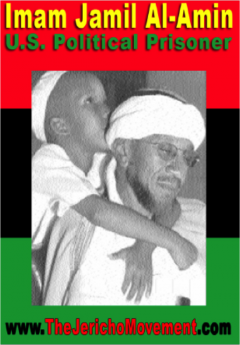
  • *In Honor Of Our Class-War Prisoners- Free All The Class-War Prisoners!- Jamil Abdullah Al-Amin,

    *In Honor Of Our Class-War Prisoners- Free All The Class-War Prisoners!- Jamil Abdullah Al-Amin, 


    http://www.thejerichomovement.com/prisoners.html


    A link above to more information about the class-war prisoner honored in this entry.


    Make June Class-War Prisoners Freedom Month

    Markin comment (reposted from 2010)


    In “surfing” the National Jericho Movement website recently in order to find out more, if possible, about class- war prisoner and 1960s radical, Marilyn Buck [now deceased], whom I had read about in a The Rag Blog post I linked to the Jericho list of class war prisoners. I found Marilyn Buck listed there but also others, some of whose cases, like that of the “voice of the voiceless” Pennsylvania [former] death row prisoner, Mumia Abu-Jamal, are well-known and others who seemingly have languished in obscurity. All of the cases, at least from the information that I could glean from the site, seemed compelling. And all seemed worthy of far more publicity and of a more public fight for their freedom.


    That last notion set me to the task at hand. Readers of this space know that I am a long -time supporter of the Partisan Defense Committee, a class struggle, non-sectarian legal and social defense organization which supports class- war prisoners as part of the process of advancing the international working class’ struggle for socialism. In that spirit I am honoring the class war prisoners on the National Jericho Movement list this June as the start of what I hope will be an on-going attempt by all serious leftist militants to do their duty- fighting for freedom for these brothers and sisters. We will fight out our political differences and disagreements as a separate matter. What matters here and now is the old Wobblie (IWW) slogan - An injury to one is an injury to all.


    Note: This list, right now, is composed of class-war prisoners held in American detention. If others are likewise incarcerated that are not listed here feel free to leave information on their cases here. Likewise any cases, internationally that may come to your attention. I am sure there are many, many such cases out there. 


    Make this June, and every June, a Class-War Prisoners Freedom Month- Free All Class-War Prisoners Now! 
  •   

    On Bobby Kennedy- A Personal View From The Left On The Anniversary Of His Assassination

    On Bobby Kennedy- A Personal  View From The Left On The  Anniversary Of His Assassination


    Commentary

    Every political movement has its ‘high holy days’, its icons and its days of remembrance. We on the international labor left have our labor day-May Day. We pay tribute each January to the work of Vladimir Lenin, Rosa Luxembourg and Karl Liebknecht. Some of us remember the assassination by Stalin of the revolutionary Leon Trotsky in Mexico in 1940. Others celebrate November 7th the anniversary of the Russian revolution in 1917. The Democratic Party in the United States is no exception to those symbols of group solidarity. They have their Jefferson- Jackson dinners, their nomination conventions and their remembrances of their modern political heroes like Franklin Delano Roosevelt and Harry S. Truman and so forth.

    It is somewhat ironic that at just the time that when presumptive Democratic presidential candidate Barack Obama, a recent addition to the Democratic Party pantheon of heroes and heir apparent to the Kennedy legacy, is claiming the nomination of the party that the 40th Anniversary of the assassination of Robert F. Kennedy during the presidential campaign of 1968 is being remembered in some quarters. That event holds much meaning in the political evolution of this writer. The Robert Kennedy campaign of 1968 was the last time that this writer had a serious desire to fight solely on the parliamentary road for political change. So today he too has some remembrances, as well.

    In the course of this year I have read (or rather re-read) and reviewed elsewhere the 1960, 1968 and 1972 presidential campaign writings of Norman Mailer and those of 1972 by Hunter Thompson. I have, additionally, written reminiscences of my own personal political evolution that point to 1968 as a watershed year personally and politically for those of us of the Generation of ’68. Just a quick thumbnail sketch of my own political trajectory that year will give the reader a flavor of the times.

    I committed myself early (sometime in late 1967) to the reelection of Lyndon Johnson, as much as I hated his Vietnam War policy. Why? One Richard M. Nixon. I did not give Eugene McCarthy’s insurgent campaign even a sniff, although I agreed with his anti-war stance. Why? He could not beat one Richard M. Nixon. When Booby jumped into the race and days later Johnson announced that he was not going to run again in I was there the next day. I was a senior in college at the time but I believe I spent hundreds of hours that spring working the campaign either out of Boston, Washington, D.C. and elsewhere. Why? Well, you can guess the obvious by now. He COULD beat one Richard M. Nixon.

    It was more than that though, and I will mention more on that below. I took, as many did, his murder hard. It is rather facile now to say that something of my youth, and that of others who I have talked to recently about this event, got left behind with his murder but there you have it. However, to show you the kind of political year that it was for me about a week after his death I was in the Hubert Humphrey campaign office in Boston. Why? You know why by now. And for those who don’t it had one name- Richard M. Nixon.

    But let us get back to that other, more virtuous, political motive for supporting Bobby Kennedy. It was always, in those days, complicated coming from Massachusetts to separate out the whirlwind effect that the Kennedy family had on us, especially on ‘shanty’ Irish families. On the one hand we wished one of our own well, especially against the WASPs, on the other there was always that innate bitterness (jealousy, if you will) that it was not we who were the ones that were getting ahead. If there is any Irish in your family you know what I am talking about.

    To be sure, as a fourteen year old I walked the neighborhood for John Kennedy in 1960 but as I have mentioned elsewhere that was a pro forma thing. Part of the ritual of entry into presidential politics. The Bobby thing was from the heart. Why? It is hard to explain but there was something about the deeply felt sense of Irish fatalism that he projected, especially after the death of his brother, that attracted me to him. But also the ruthless side where he was willing to cut Mayor Daly and every politician like him down or pat them on the back and more, if necessary, to get a little rough justice in the world. In those days I held those qualities, especially in tandem, in high esteem. Hell, I still do, if on a narrower basis.

    This next comment will I hope put the whole thing in a nutshell. Recently I was listening to a program commemorating the 40th anniversary of the Robert Kennedy’s assassination on National Public Radio where one of the guests was the journalist and close Kennedy friend Pete Hamill. Hamill, who was in the Los Angeles hotel celebrating the decisive California primary victory when the assassination took place, mentioned that a number of people closely associated with Kennedy at that time saw history passing through their hands in a flash. By that they meant, sincerely I am sure, that the last best change to beat Nixon and hold off the "Night of the Long Knives" had passed.

    Well, if nothing else they were right in one sense and here is where one including this writer, as politically distance from Kennedy’s party as I am today, could appreciate the political wisdom of Robert Kennedy. In his incisive way Kennedy cut to the chase and through all the political baloney when he said that Richard Nixon represented the dark side of the American spirit. True words, I would only add these words-the dark spirit that the world has rightly come to fear and loathe. Forty years later and one hundred years politically wiser I can still say though - Bobby Kennedy, oh what might have been.

    A View From The Left-An Appreciation of Chuck Berry

    A View From The Left-An Appreciation of Chuck Berry


    Workers Vanguard No. 1112
    19 May 2017
    An Appreciation of Chuck Berry
    (Letter)
    23 April 2017
    To Workers Vanguard,
    Chuck Berry (1926-2017) was very nearly the last of the black pioneers of rock’n roll from the 1940s and 50s including Little Richard, Ike Turner, Howlin Wolf and more, who lived, performed and innovated from the time of Jim Crow segregation and lynch law until well into the 21st Century. Chuck’s parents and grandparents on both sides knew their slave-born ancestors and passed on to him their names, relationships and stories.
    Like others before him, Chuck bucked his Baptist parents’ opposition to play “the devil’s music”. Consigned to the category of “race music”, he and his fellow rockers were exploited by promoters and recording companies, cheated of the rights to their songs, and later saw their songs covered with far greater commercial success by admiring white American performers and British invaders (Roll Over Beethoven, Sweet Little Sixteen). John Lennon was quoted as saying, “If you tried to give rock and roll another name, you might call it ‘Chuck Berry.’”
    Unable to make a living from their recordings, these musicians toured at an exhausting pace, staying in segregated accommodations and playing to segregated audiences. Where there were no hotels for blacks, they slept in their cars and ducked the police. They were virulently hated by politicians and law enforcement when white kids, especially white girls, began to literally dance across the color line, touching the explosive intersection of sex and race under capitalism. From Billie Holiday to Ray Charles, black musicians were targeted for beatings, confiscation of earnings, arrest and imprisonment, typically for sex, drugs and taxes. Chuck was hounded under the Mann Act, once for travelling with a married 17-year old and once with a teen prostitute. He was imprisoned for tax evasion (i.e., failure to set aside money to pay outrageously regressive self-employment taxes).
    Chuck built on previous musical advances, including those of Johnny Johnson, T-Bone Walker and Bob Wills, melding blues and country swing with his own style. He was a vivid story teller of the poor man’s experience (Nadine, No Money Down, Memphis Tennessee). He combined his slyly provocative lyrics, signature duck walk and a hard-driving rhythm, “the backbeat, you can’t lose it”. He made the crossover to biracial and teenage audiences, shedding his exploitive managers, signing with Chess Records, and getting a grip on the rights to his songs.
    Chuck was prominent among the musicians who boldly broke the color line in performance venues. He was unapologetic, and an icon for the 1960s generation who rebelled against the strictures of family and religion, imperialist war and racial oppression. The Freedom Riders, those who sat in at lunch counters, those who marched against the Vietnam War grew up on his music, knew his songs and his story. The life and hard times of Chuck Berry exemplified the fact that there is no original American music or culture without black music and culture. Beating all odds, Chuck Berry died in bed at his home at the age of 90.
    Ruth Ryan

    A View From The Left-Arkansas Legal Lynching Machine Abolish the Racist U.S. Death Penalty!

    Frank Jackman comment:

    Usually when I post something from some other source, mostly articles and other materials that may be of interest to the radical public that I am trying to address I place the words “ A View From The Left” in the headline and let the subject of the article speak for itself, or let the writer speak for him or herself without further comment whether I agree with the gist of what is said or not. After all I can write my own piece if some pressing issue is at hand. Occasionally, and the sentiments expressed in this article is one of them, I can stand in solidarity with the remarks made. I do so here.      


    Workers Vanguard No. 1112


    19 May 2017
     
    Arkansas Legal Lynching Machine
    Abolish the Racist U.S. Death Penalty!
    In just eight days—from April 20 to 27—the state of Arkansas executed three black men, Ledell Lee, Marcel Williams and Kenneth Williams, and one white man, Jack Jones. Governor Asa Hutchinson had originally ordered eight men to die in the span of eleven days, which would have set a record pace since the Supreme Court reinstated the death penalty in 1976. The four men who received stays of execution remain on death row. The pretext for the executions was to beat the clock on the April 30 expiration of midazolam, a component of the lethal injection cocktail for which no alternative is readily available. The real point, however, was to kick-start the machinery of death in a state that had last held an execution in 2005.
    The assembly line of death in Arkansas has thrown a spotlight on the depravity of capital punishment—and the racist U.S. ruling class that wields it. Witnesses to Kenneth Williams’s execution reported that after injection he lurched forward as many as 20 times; he was observed convulsing, jerking and making sounds that were audible in an adjacent room. The scene recalled the 2014 Oklahoma execution of Clayton Lockett, who writhed in agony for over 40 minutes before succumbing.
    Ledell Lee’s 1993 conviction for the murder of a white woman had all the hallmarks of a racist frame-up. From a crime scene covered in blood, the only physical evidence linking Lee to the murder was the phony “forensic” identification of three hairs that supposedly came from a black man. The trial judge and the assistant prosecutor were sleeping together. Lee’s court-appointed trial attorney presented no alibi, and the attorney at his post-conviction hearing was so drunk, he was taken away for drug testing. From death row Lee told a BBC journalist: “My dying words will always be as it has been ‘I am an innocent man’.” The Innocence Project and the ACLU fought to get DNA testing of the crime scene’s physical evidence. The state refused. Ledell Lee is no more.
    Joining an April 14 protest outside the Arkansas Capitol was Damien Echols of the West Memphis Three, who served his own time on Arkansas’s death row. Targeted in a “satanic abuse” witchhunt, Echols and his friends were falsely convicted for the 1993 murder of three eight-year-old boys. Echols won his release in 2011 following a huge campaign in his defense, including DNA evidence that confirmed his innocence. On the day of Lee’s execution Echols pointed out: “Local politicians maintain they have never made a mistake, that the system is infallible, and that they have never sentenced an innocent man to die. I know this is false, because for 18 years I sat on Arkansas’ death row and waited on the state to murder me for something I didn’t do.”
    As Marxists, we oppose the death penalty on principle—for the guilty as well as the innocent. We do not accord the state the right to determine who lives and who dies. A barbaric legacy of medieval torture, its longevity in the United States is rooted in the origins of American capitalism, which was built on the hideously brutalized labor of black slaves. More than 40 percent of those on death row are black (and another 13 percent Latino). As opposed to the liberals, we do not seek to advise the bourgeoisie on the more “humane” administration of its decrepit rule. Whether it is the death penalty, life in prison without parole or imprisonment in general, we oppose the entire machinery of violence that is the capitalist state.
    Nearly 250,000 signed a petition urging Arkansas governor Hutchinson to stay Kenneth Williams’s execution. Though a majority of the public still favor the death penalty, support has diminished significantly over the past two decades—a product of the growing number of exonerations of innocent men and women, often the result of DNA testing of evidence. Finding jurors more reluctant to impose capital punishment and frustrated at what they view as the slow pace of executions, prosecutors, lawmakers and judges have calculated life without parole to be cheaper than the millions of dollars consumed by capital prosecutions and years of appeals. Today, the Trump administration, as part of a broader enhancement of the repressive powers of the state, is seeking to reverse this trend.
    Donald Trump rode to the presidency on a “law and order” platform targeting black people and immigrants. An ardent proponent of the death penalty, Trump has called for the execution of “pedophiles.” His openly racist attorney general, Jefferson Sessions, has called for lifting formal restraints on the cops, re-igniting the “war on drugs,” which promises to throw more black and Latino youth into America’s dungeons, and ordered federal prosecutors to seek the maximum sentences for those facing trial.
    The first act of Trump’s nominee to the Supreme Court, Neil Gorsuch, was to cast the decisive vote against a stay of execution for the men facing execution in Arkansas. Meanwhile, a Republican state senator in Arkansas is calling for the impeachment of a black judge, Wendell Griffen, who issued a temporary restraining order to block the April executions and then took part in an anti-death-penalty vigil outside the governor’s mansion on Good Friday. Similarly in Florida, Governor Rick Scott promptly removed all death penalty cases from Aramis Ayala, a black female state’s attorney for the Orlando area, who announced on March 16 that she would not seek the death penalty, including for a man accused of killing a policewoman. After announcing her opposition to the death penalty, Ayala received a noose in the mail.
    For its part, the capitalist Democratic Party is no less committed to the death penalty than the brazenly racist Republicans. Under the Obama administration, the number of federal prisoners on death row increased, while the cops wantonly carried out summary executions of black people on the streets.
    In Arkansas itself, there were no executions between 1976, when the Supreme Court reinstated capital punishment, and 1990, when legal lynching was reintroduced to the state by William Jefferson Clinton. Since then, 30 men and one woman have been executed in the state. During his run for president in 1992, Clinton left the campaign trail to personally preside over the execution of Ricky Ray Rector, a black man so brain-damaged from a gunshot to the head that he wanted to save the pecan pie from his last meal for later. Clinton’s “dog whistle” to racist white voters propelled him into the White House, where he ended “welfare as we know it” and presided over the gutting of affirmative action in education and the mass incarceration of black and Latino youth. As president, he accelerated the racist death penalty with his 1996 Antiterrorism and Effective Death Penalty Act, which gutted habeas corpus appeals for death row inmates—a model for state laws across the country intended to streamline the road from courthouse to death house.
    A Legacy of Slavery
    The death penalty stands at the pinnacle of the state’s arsenal of repression—an apparatus consisting of the army, cops, courts and prisons that protects the class rule, property and profits of the capitalist class. While the face of death row is now primarily black and Latino, fighters for labor’s cause have also been targeted for death by the capitalist state: the Haymarket anarchists, labor organizers who fought for the eight-hour day and were put to death in 1877; IWW organizer Joe Hill, executed in 1915; anarchist workers Sacco and Vanzetti, who died in the electric chair in 1927.
    While nearly every other advanced industrialized capitalist country has abolished capital punishment (with the notable exception of Japan), its persistence in the U.S. is a legacy of black chattel slavery and the continued oppression of black people. The 20 executions carried out last year, and the ten thus far this year, took place in just seven states. All of them were in the South and most in the former Confederacy, where slaves could be killed with impunity for “crimes” ranging from insolence toward whites to rebellion against the slave masters.
    It took a bloody Civil War to smash slavery. But the promise of black freedom was betrayed when the Northern capitalists ended the period of Radical Reconstruction by withdrawing federal troops, leaving black people impoverished and largely defenseless. With the Ku Klux Klan and other race-terrorist outfits as the spearhead, the white propertied classes subjected black people to legally enforced racial segregation, stripped them of all democratic rights and held them down through terror, especially lynching. The black population was consolidated anew—and remains to this day—as a specially oppressed race-color caste.
    Capital punishment in America is a direct descendent of and replacement for the lynch rope. In the 1890s, black people were lynched at a rate of one every other day; in the 1930s, executions took place at the rate of one every other day. A 2015 study by the Alabama-based Equal Justice Initiative noted, “By 1915, court-ordered executions outpaced lynchings in the former slave states for the first time.” In the period between 1910 and 1950, black people made up 75 percent of those executed across the country.
    In 1967, amid the mass struggles of the civil rights movement, a de facto moratorium on capital punishment was temporarily imposed. In 1972 the Supreme Court declared the death penalty unconstitutional as practiced and ordered states to rewrite their laws. A mere four years later, the Court gave the green light for the killing machines to resume their grisly work. Eighty-one percent of the 1,452 executions in the last 40 years have been in the South.
    The racist application of the death penalty was sanctified by the U.S. Supreme Court in the 1987 case of Warren McCleskey, a black prisoner executed in Georgia in 1991. McCleskey’s attorneys presented an authoritative study detailing that black people in Georgia convicted of killing whites were sentenced to death 22 times more frequently than those convicted of killing blacks. In rejecting McCleskey’s appeal, the Supreme Court explicitly acknowledged that to accept this premise would throw “into serious question the principles that underlie our entire criminal justice system.” In its callous pronouncement, the Court expressed a basic truth: McCleskey was a victim of the racism that pervades the criminal justice system and the entire American capitalist order.
    For a Multiracial Revolutionary Workers Party!
    Little expresses the cruelty of capital punishment better in the U.S. than the legislative and judicial contortions to give state murder a humane gloss. The adoption of lethal injection, beginning in the early 1980s, was promoted as a supposedly more humane way of killing prisoners than electrocution. In fact, lethal injection was implemented by Nazi Germany as part of its Aktion T4 “euthanasia” program to dispose of lebensunwertes Leben (“life unworthy of life”).
    In 2007, the Supreme Court prohibited the execution of a psychotic person unless the prisoner was lucid enough to have a “rational understanding” of the punishment he was about to receive. This is what the courts refer to as “evolving standards of decency.” When capital punishment was reintroduced in the U.S. amid anti-crime hysteria, we noted in “Abolish the Death Penalty!” (WV No. 117, 9 July 1976): “The Marxist attitude toward crime and punishment is that we are against it.... Socialists do not proceed from the standpoint of punishing the offender. Such a vindictive penal attitude is fundamentally a religious rather than a materialist conception of social relations.” Indeed, a humane and rational society may find a need to isolate certain dangerous individuals. This would be done without stigma or cruelty, and with education, medical care, rehabilitation and the goal of reintegration as a productive member of society. This was the approach of the Bolshevik Party of Lenin and Trotsky that led the October 1917 Russian socialist revolution.
    As Marxists, we fight for the abolition of the death penalty. But we also understand that ending capital punishment will not fundamentally change the violently racist and oppressive nature of capitalist class rule. Our aim is to complete the unfinished tasks of the Civil War by fighting for black liberation through socialist revolution. What is necessary is the forging of a class-struggle workers party with a significant black leadership component. Such a party will be built in opposition to both parties of capital and will be dedicated to mobilizing the social power of labor in defense of the interests of all working people and the oppressed. When those who labor rule, the entire apparatus of capitalist state repression will be smashed as part of sweeping away this barbaric system and opening the door to an egalitarian socialist future.