Tuesday, June 04, 2019

Upon The 50th Anniversary Of The Death Of "King Of The Beats" Jack Kerouac-Tom Wolfe-Fashionista Of His Own Kind-And A Hell Of A Writer When The Deal Went Down Has Cashed His Check -The 50th Anniversary Of The Summer of Love,1967-When “Doctor Gonzo” Was 'King Of The Hill'-The Master Journalism Of Hunter S. Thompson

Tom Wolfe-Fashionista Of His Own Kind-And A Hell Of A Writer When The Deal Went Down Has Cashed His Check


By Bart Webber

I had been, strangely enough, in La Jolla out in California attending yet another writers’ conference which seems to be the makings of my days these days, attending writers’ conferences that is instead of taking pen to paper or rather fingers to word processor keyboard, when I heard Tom Wolfe had cashed his check. “Cashed his check” a term (along with synonymous “cashed his ticket”) grabbed from memory bank as a term used when I was “on the bum” hanging out in hobo jungle camps and the whole trail of flop houses and Salvation Army digs to signify that a kindred had passed to the great beyond. Was now resting in some better place that a stinking stew-bitten, flea –bitten, foul-aired and foul-person place. No more worries about the next flop, the next jug of cheapjack wine, the next run-in with vicious coppers and railroad bulls, and the next guy who was ready to rip whatever you had off to feed his own sullen addiction.

By the way this is not Thomas Wolfe of You Can’t Go Home Again, Look Homeward, Angels, etc. but the writer, maybe journalist is a better way to put the matter of tons of interesting stuff from acid trips in the 1960s hanging with Ken Kesey and his various tribes of merry pranksters, the Hell’s Angels, drifters, grifters and midnight sifters, to marveled space flights in the 1970s to Wall Street in the reckless 1980 and back who had cashed his check. The strange part of the “strangely enough” mentioned above was that on Monday May 14th 2018, the day he died, I was walking along La Jolla Cove and commenting to my companion without knowing his fate that Tom Wolfe had made the La Jolla surfing scene in the early 1960s come alive with his tale of the Pump House Gang and related stories about the restless California tribes, you know those Hell’s Angels, Valley hot-rod freaks and the like who parents had migrated west from dustbowl Okies and Arkies to start a new life out in Eden. These next generation though lost in a thousand angsts and alienation not having to fight for every breath of fresh air (with the exception of the Angels who might as well have stayed in the Okies and McAllister Prison which would have been their fate.   

I don’t know how Tom Wolfe did at the end as a writer, or toward the end, when things seemed to glaze over and became very homogenized, lacked the verve of hard ass 1960s, 1970s, and 1980s times. Although I do note that he did a very although I note he did an interesting take on the cultural life at the Army base at Fort Bragg down in North Carolina in a book of essays around the theme of hooking up. That hooking up angle a sign that social cohesiveness in the age of the Internet was creating some strange rituals. Know this those pound for pound in his prime he along with Hunter Thompson could write the sociology of the land with simple flair and kept this guy, me, flipping the pages in the wee hours of the morning. RIP, Tom Wolfe, RIP.  


*The 50th Anniversary Of The Summer of Love,1967-When “Doctor Gonzo” Was 'King Of The Hill'-The Master Journalism Of Hunter S. Thompson


Book Review

The Great Shark Hunt; Gonzo Papers Volume One, Hunter S. Thompson, 1978


Most of this review of “The Great Shark Hunt” the master journalistic work of the late Hunter S. Thompson, a man much missed in these quarters by this reviewer originally appeared in a review of one of his latter, lesser books, “Songs Of The Doomed”. Most of the points made there apply here as well but I want to add some additional comments concerning specific articles which you NEED to read to know what mad man journalism in search of the truth, some truth anyway, was all about.

“Generally the most the trenchant social criticism, commentary and analysis complete with a prescriptive social program ripe for implementation has been done by thinkers and writers who work outside the realm of bourgeois society, notably socialists, like Karl Marx. Vladimir Lenin, and Leon Trotsky and other less radical progressive thinkers. Bourgeois society rarely allows itself, in self-defense if nothing else, to be skewered by trenchant criticism from within. This is particularly true when it comes from a man of big, high life appetites, a known dope fiend, a ferious wild man gun freak, and all-around edge city lifestyle addict like the late, massively lamented, massively lamented in this quarter in any case, Dr. Hunter S. Thompson. Nevertheless, although he was far, very far, from any thought of a socialist solution to society's current problems and would reject such a designation, I think out of hand, we could travel part of the way with him. We saw him as a kindred spirit. He was not one of us-but he was one of us. All honor to him for pushing the envelope of mad truth-seeking journalism in new directions and for his pinpricks at the hypocrisy of bourgeois society. Such men are dangerous.

I am not sure whether at the end of the day Hunter Thompson saw himself, or wanted to been seen, as a voice, or the voice, of his generation but he would not be an unworthy candidate. In any case, his was not the voice of the generation of 1968, my generation, being just enough older to have been formed by an earlier, less forgiving milieu, coming of adult age in the drab Cold War, red scare, conformist 1950s that not even the wildly popular Mad Men can resurrect as a time which honored fruitful and edgy work, except on the coastal margins of society. His earlier writings show that effect. Nevertheless, only a few, and with time it seems fewer in each generation, allow themselves to search for some kind of truth even if they cannot go the whole distance. This compilation under review is a hodgepodge of articles over the best part of Thompson’s career, the part culminating with the demise of the arch-fiend, arch-poltical fiend, Richard Nixon. As with all journalists, as indeed with all writers especially those who are writing under the pressure of time-lines and for mass circulation media, these pieces show an uneven quality. Hunter's manic work habits, driven by high dope infusions and high-wire physicial stress, only added to the frenzied corners of his work which inevitably was produced under some duress, a duress that drove his hard-boiled inner demons onward. However the total effect is to blast old bourgeois society almost to its foundations. Others, hopefully, will push on further.

One should note that "gonzo" journalism is quite compatible with socialist materialism. That is, the writer is not precluded from interpreting the events described within a story by interposing himself/herself as an actor in that story. The worst swindle in journalism, fostered by the formal journalism schools, as well as in the formal schools of other disciplines like history and political science, is that somehow one must be ‘objective’. Reality is better served if the writer puts his/her analysis correctly and then gets out of the way. In his best work that was Hunter’s way.

As a member of the generation of 1968 I would note that the period covered by this compilation was a period of particular importance in American history, the covering of which won Hunter his spurs as a journalist. Hunter, like many of us, cut his political teeth on wrestling with the phenomena of one Richard Milhous Nixon, at one time President of the United States, all-around political chameleon and off-hand common criminal. His articles beginning in 1968 when Nixon was on the rising curve of his never ending “comeback” trail to his fated (yes, fated) demise in the aftermath of the Watergate are required reading (and funny to boot). Thompson went out of his way, way out of his way, and with pleasure, skewering that man when he was riding high. He was moreover just as happy to kick Nixon when he was down, just for good measure. Nixon, as Robert Kennedy in one of his more lucid comments noted, represented the "dark side" of the American spirit- the side that appears today as the bully boy of the world and as craven brute. If for nothing else Brother Thompson deserves a place in the pantheon of journalistic heroes for this exercise in elementary political hygiene. Anyone who wants to rehabilitate THAT man before history please consult Thompson’s work."

********
Beyond the Nixon-related articles that form the core of the book there are some early pieces that are definitely not Gonzo-like. They are more straightforward journalism to earn a buck, although they show the trademark insightfulness that served Thompson well over the early part of his career. Read his pieces on Ernest Hemingway-searching in Idaho, the non-student left in the 1960’s, especially the earnest early 1960s before the other shoe dropped and we were all confronted with the madness of the beast, unchained , the impact of the ‘beats’ on the later counter cultural movements and about the ‘hippie’ invasion of San Francisco. The seminal piece on the Kentucky Derby in 1970 which is his ‘failed’ (according to him, not others) initial stab at “gonzo” journalism is a must read. And finally, if nothing else read the zany adventures of the articles that give us the title of the book, “The Great Shark Hunt”, and his ‘tribute’ to his friend the “Brown Buffalo” of future legend, Oscar Acosta. Those are high water marks in the great swirl of Hunter S. Thompson’s career. Hunter, I hope you find the Brown Buffalo wherever you are. Read this book. Read all his books.”

How Little We Know- With The Film Adaptation Of Ernest Hemingway’s “To Have And Have Not” In Mind


How Little We Know- With The Film Adaptation Of Ernest Hemingway’s “To Have And Have Not” In Mind


By Henri “Frenchie” Gerard As Told Jasper Jackson

[Henri “Frenchie” Gerard had owned the well-known pre-World War II Gerard’s CafĂ© in Fort-de-France, Martinique, the French colony in the Caribbean first under the Third Republic and then when France felt to the Germans in 1940 to collaborationist Vichy-control. Frenchie ran the place all through the Occupation at some cost to himself as a local Resistance leader and after the war until 1960 when he retired to his native Nantes in France. That same year he had found out through some old Resistance contacts that his old American friend Captain Harry Morgan, a fishing boat owner whom he had given work to, had had more than his fair share of drinks with in the old times, had passed away in New York City after a long bout with cancer. According to his obituary Harry left a wife, Marie, nee Browning and three children, all teenagers.          

I had heard through a different source that Captain Morgan had although an American been active in the French Resistance in Martinique and eventually other places in the Caribbean. I had also heard that Monsieur Gerard was the last link to knowledge about Captain Morgan’s exploits and more importantly about how Harry and Marie Browning known affectionately as “Slim” in those days met and got out of Fort-de-France by the skin of their teeth. I contacted Gerard in Nantes and he agreed to tell me what he knew about the affair, about the skin of their teeth and about anything else he might know around that initial meeting since “Slim” had gone on to be an editor of a high-end fashion magazine after she married Harry. Harry had become an agent-ambassador for Cunard out of New York. Below is in his own words the way Frenchie described the meeting and match-up between Harry and Slim. He did stipulate that I was only to use most of the information after Slim passed on. She did a few months ago and so here for the first time is Frenchie’s long ago take that torrid war-time romance which seemed the stuff of legends. Jasper Jackson]

“I had seen Marie first, had seen her as she came off the plane from I think that day Cuba, don’t quote me on stuff before the match-up between Harry and Slim, with a sort of threadbare tailored suit a little out of fashion that year and a small bag which told me she was on, how you Americans say her “uppers.” By the way that Slim and she called him Steve thing was some intimate bed-time talk thing that I don’t know how it started since I wasn’t there when they messed up the silky sheets that first time. She was sure slim no question so maybe that is where Harry got his pet name from. I was an agent for Air Martinique then so I grabbed her bag and offered to put her up at my hotel. She accepted. My idea was after she settled in and I had bought her few drinks I could coax her into helping me out as an exotic flower bar girl for the American tourists who were flooding Fort-de-France looking for women, kicks, dope, gambling, and some fine deep-sea fishing. I had her all lined up, had my own ideas about jumping under the satin sheets with her although I was married at the time. Yeah, she was that kind of looker, that kind of dame who guys would take great risks for, would go to the mat for if it went like that.       
    
“Then Harry entered the scene and my day dreams were over. He had been out on a fishing expedient with a client named Johnson, one of those Americans looking for women, dope and some deep sea fishing, some kind of deep sea fishing if you get my drift. This Johnson guy had had a shot at grabbing a big swordfish according to Harry but all he did was lose Harry’s fishing tackle in the bargain. So Harry wasn’t in a good mood when I asked to go to his room to inquire about using his boat for some Resistance work that was coming up-bringing in some agents to get the great freedom-fighter Renoir off of Devil’s Island where he was being held by the Vichy bastards. He turned me down cold. Wouldn’t touch the thing then, didn’t give a damn who was fighting who but wanted to keep clear of any controversy, keep his boat, his livelihood for one thing. So whatever he did for us later which was a lot didn’t get a leg up until Marie came in view.

“While we, Harry and I, were talking a rap came on the door and when Harry opened up the door there was Marie all dolled up and showered asking if anybody had a match. Harry flipped her his box of matches. Then she asked if anybody had a cigarette and said it in such a come hither way in Harry’s direction that I knew I was sunk. Harry threw her his pack of Luckies (unfiltered in those days) which I got for him on the black market since they were hard to come by after Vichy took over the black market trade. She left and after Harry asked me who the hell she was I left knowing that I was out of luck making a play for Slim. The only benefit I got was that she did do some very good work for a few days as a bar girl and I got many dollars as my cut of her action. I swear I could have been a millionaire if she had stayed on the island. As a cover I also had her singing at night with Cricket my junkie piano player whose habit was getting him off-track once I found out in passing Cricket and her that afternoon that she could sing and look good doing it. That Cricket was a story in himself since he was on the run from some dope-dealers in the States and laying low in cheap dope Martinique for a while. He wrote that song that was a hit after the war when all the G.I.s headed back to America, How Little We Know.

“But enough of Cricket. Slim went to work after that meeting with Harry. Like I said she was good, grabbed eight hundred bucks off of that stupid fisherman Johnson, and gave me my four hundred without a murmur. Harry saw her in action and was sore from what he told me the next day. Was very sore when that night Marie grabbed some Vichy naval officer for half the liquor on the island. Called her a tramp, a young pretty smart tramp but a tramp nevertheless. Here’s how you can never figure dames though see she was, having seen him for about two minutes asking for that match and cigarette foreplay, trying to make him jealous. And he was trying to pretend to be sore. That interchange was if you can understand this psychology solidified their relationship. That night without so much as a by your leave they snuck under Harry’s sheets (or was it Slim’s, no, it must have been Slim’s because I had left a set of silk sheets for her bed when I had my own ideas about what I would do with her.)               
     
“Of course that affair business played directly into Harry coming over to work with us. That Vichy naval officer bitched to Renard, a bastard who was an official in the Third Republic colonial administration on the island and the day Vichy took over without missing a beat went to work for them as their hatchet man, and he had me, Harry and Slim down at police headquarters for a few hours. Took my money, my four hundred from the Johnson con, Slim’s cut and for good measure Harry’s who had nothing to do with it. That pissed Harry off. Also helped me rope in Harry to the deal for his boat since he had no other dough.     

“That job should have been a piece of cake. Meet the agents who were going to get Renoir off of Devil’s Island in a quiet spot about twenty miles from Fort-de-France, bring them to town and then transfer them to other agents who would work out the details of the tough Devil’s Island caper. Of course in those days you took whoever was not a secret Vichy agent, anybody who had the guts to stick their necks out for the glory of France but it turned out the guys, or rather guy and his fucking wife, this Dubois, what was he thinking, that they recruited for the job had feet of clay, had too much trouble worrying about his fretful wife. So Harry had run into a Vichy patrol out in the harbor. That patrol shot up Harry’s boat, shot up this Dubois guy and made things tough for all of us. Harry, no doctor, had to patch up the guy while holding off his wife from jumping on his bones. And holding Slim back from scratching Madame’s eyes out.  

“Made Harry something like persona non grata with Vichy, with Renard too once he figured the previously don’t give a damn had part in the caper. Renard , the bastard, figured out a way to prove that Harry was involved in the Dubois caper. Harry had this old rummy, Eddie, whom must have been his father or something the way he protected him. Renard had picked Eddie up and was holding him in the drunk tank until he crumbled and told what Harry’s role in the caper had been. Harry flipped out at this once Renard told him about where the missing Eddie was. With Slim’s aid he took on Renard and a couple of his henchmen, shot one dead as a doornail and made Renard after pistol-whipping him order Eddie back to my hotel. That is when Harry handed over Renard to me and decided that since Martinique was too hot for him and Slim, and Eddie that he would take Dubois and his wife to Devils’ Island to get Renoir out. I’ll never forget, have never forgotten how Slim shimmied her way out the door with Harry and Eddie carrying their bags behind them after Slim said good-bye to Cricket (and got little stash of opium for the road).     

“You know that Harry did get Dubois to Devil’s Island and that he eventually got Renoir to Europe to work with Victor Lazlo coordinating the Resistance when it counted. Did lots of other jobs too with the resourceful Slim in tow before heading to New York after the war. 

“Here’s something Harry told me before he and Slim left town. That first night they hit the sheets Slim, with a few drinks in her, was being very sexually provocative, had mentioned that all Harry had to do to keep her in line was whistle. Then she said in a unmistakably salacious way that “he knew how to whistle, didn’t he. Just put lips together and blow.” Harry assumed that she was using a sexual double entendre. He found out that night just what he meant as she took him around the world. Damn, Harry.      

Monday, June 03, 2019

In Search Of… Part Two-With Lost Loves In Mind

In Search Of… Part Two-With Lost Loves In Mind


By Bart Webber


“You know, Dad, the only good thing that came out of the break-up with Moira was that I finally cooled the fire in my head a little, finally gained a little peace. Funny it came through taking up meditation which I used to laugh at when Moira would urge me to think about doing it to relax my fevered head a bit. Used to call it just another one of those New Age things that she was always touting as the next best cure for what ailed humankind,” Dan Hawkins said to his uncomprehending father, Jethro, a man he until a few years before he had been estranged from once the old man divorced his late mother to run off with some floosy who left him flat and broken, hearted and financially. They had only reconciled after his mother’s funeral when it seemed that such mending needed doing. That incomprehension of old Jethro about what Dan had just told him was nothing but the truth as the old man was “old school,” had grown up in utter poverty in Riverdale, had done his time in “Nam and had been and was proud of his service and exhibited all the traits of those young men, white men,  who had come of age in the late 1950s and were unaffected, or claimed to be unaffected, by all the bullshit, Jethro’s term, that passed for wisdom during the counter-cultural 1960s. So his running off with some floosy, his heavy drinking (and at one point drug use), his sense of Vietnam, my country right or wrong, patriotism were all of a piece. All of piece that would make something like meditation, something he had seen the Buddhists do in Vietnam while good  American like him were taking care of the shit train that they had let their country fall into by ignoring the “commies” until it was too late. If his wife, if his girlfriends of which he had had many after that floosy slipped away with his dough and his balls, had suggested that he take up meditation for what ailed him he would have shown, had shown for lesser offenses than that, the back of his hand. (And Dan could through a miserable childhood of merciless criticism, and back hands, testify to the truth of that statement. A truth that contributed mightily to those many years of estrangement between the two men.         

“What the fuck are you talking about, Dan? How the hell was whatever that meditation bullshit that ball-buster Moira trying to lay on you going to help keep you to together when she wanted to run the show, ’’ old Jethro answered back with that unknowing grin on his face that what Dan should have done was given her his back hand, and maybe a couple of good fucks and that would have stopped that noise.
“Dad, you can’t do that with women anymore and you probably couldn’t even in your day and if you had tried to lay a hand on Ma she would have left you high and dry way before you got tangled up that floosy Susie that broke you. I don’t want to talk about that, okay. Just hear me out with a word and maybe you can learn something for once,” Dan responded plaintively. His father almost began to say something nasty but the look in Dan’s eye told him to back off.  

This is the way Dan’s old high school friend, Rich Bruce, remembered what Dan had said to his father one night when they were having dinner at Elmer’s Diner in old town Riverdale where Rich still lived and Dan needed to confide in somebody about what he was trying to do to be less distraught about Moira’s quick disappearance from his life.    

Although at first Dan and Moira were crazy in love like many twenty-somethings who were going through their first serious love affairs right from the start there had been tensions, tensions caused by Dan always being in overdrive as he was starting his career in law at a major law firm, Dale, Dale, and Rutgers where the pressure was great to perform or hit the bricks. Dan had met Moira one night at Jeff’s Grille, a local hang-out for law students at Suffolk once they got over the grind of 1L after he had taken his bar examination and needed to unwind. She was a last year student at the Museum School of Art who was there with a girlfriend and he had asked them if they wanted a drink to celebrate his “victory” since he believed he had passed the damn thing on the basis of the written questions. One thing led to another and they started dating and making plans, in the meantime moved in together.      

That’s when the heartache began, that’s when that fire in Dan’s head led to many word fights and Moira’s first threats that things were not working out and that she was leaving. In lieu of that, at least for a while once Dan explained what pressures he was under from the high-pressure law firm he was tied up with, Moira decided to start doing meditation with Don Henderson, the locally famous Buddhist convert who ran classes each week at the Boston Center for Adult Education. Moira admitted for a while that doing her “meds” she called it helped to relieve the tensions between them. 

Just for a while though as she became more distraught at Dan’s behavior, including a fear that he might strike he in a keyed-up moment. She suggested to him that he might benefit from meditation. He blew off that suggestion, laughed at her and said that if anybody he knew every found out that he was doing such a New Age thing he would be laughed out of town.    
Probably Dan’s response set something off in Moira, he wasn’t sure if that was the moment when he had time to reflect on what had happened after she packed her bags and left but it didn’t help. She got moodier the more he got in that same condition, they made love less often and not as tenderly as before, a sure sign that things were going downhill fast. She would speak wistfully of having to find herself, having to see what she was all about in this wicked old world (Dan’s term, not hers) and the kicker, that she thought Dan’s frenzies were affecting her already delicate health. That last part, the affecting her health part got Dan’s attention and that was when he suggested the trip to Paris. She agreed.        

The trip to Paris had been great, they saw the museums, ate well, made love better than they had in a while and came back refreshed. Or so Dan thought. A week later, perhaps seeing how great things could be away the pressure-cooker of their lives together Moira lowered the boomthe first time. Said she wanted out. Dan begged her not to go and the only way he could placate her then was to succumb to her request that they go into couples counselling. Dan had hated even the idea of that kind of thing (and when he told his father about what she had asked him to do the old man gave a look like wasn’t he just pussy-whipped). So they went to a counsellor in Cambridge that Moira had heard of through New Age network and while Dan had held his nose at first once he got into the sessions he told Moira that he was in all the way, one hundred percent.      

Those weekly sessions went on for the better part of a year until he and Moira decided to take a week’s vacation to Maine. That week was another great time for fun at the beach, eating out and doing a few goofy things like playing miniature golf, going bowling, and going to an old-fashioned outdoor drive-in theater. A week later Moira lowered the final boom, packed her bags and left (that threatening to leave and leaving after a great vacation had Dan thinking about Moira’s own psychological problems but not much). Her argument was that like before she had to find herself, see what she was about and still thought Dan was aggravating her medical problems. She also told him in uncertain terms that he had better take stock of himself, seek some help, maybe see Don about doing meditation or he would become a human wreak.           


Well Dan moped around for a while, several weeks, thinking about where he had let the thing fall apart. Knew that he had been responsible for a lot of what had gone wrong, had been an ass about stuff. Then one day on the bulletin board at the law firm he saw a notice that several institutions in Boston, including Massachusetts General Hospital (MGH) were putting on a Hubweek, a week of social, physical, and medical therapy workshops and lectures to let people calm down essentially. He noticed that one workshop was being held at MGH with a Doctor Herbert Benson, a name he knew from a book he had read that Moira had left around the apartment one thing when she was looking for yet another New Age idea. This Doctor Benson had proof, had done research, that practicing meditation would help your health or as Dan put it put out the fire in his head, let him be at peace a little. So he went to the workshop and the rest is history. He started doing that previously scorned meditation. And he felt better, calmer.  Old man Jethro Hawkins’ reaction:WTF. Some things never change.           

The 50th Anniversary Of The Summer Of Love (1967)-From The Archives-FEAR AND LOATHING ON CAMPAIGN TRAIL 2008

The 50th Anniversary Of The Summer Of Love (1967)-From The Archives-FEAR AND LOATHING ON CAMPAIGN TRAIL 2008


Zack James’ comment (June 2017):

You know it is in a way too bad that “Doctor Gonzo”-Hunter S Thompson, the late legendary journalist is not with us in these times both this 50th anniversary commemoration of the Summer of Love, 1967 which he worked the edges of while he was doing research (live and in your face research by the way) on the notorious Hell’s Angels. His “hook” through Ken Kesey and the Merry Pranksters down in Kesey’s place in La Honda where many an “acid test” took place and where for a time the Angels, Hunter in tow, were welcomed. He had been there and later as well when he saw the ebb tide of the 1960s coming a year or so later. He would have “dug” the exhibition at the de Young Museum at the Golden Gate Park highlighting the events of the period.    


Better yet he would have had this Trump thug wrapped up and bleeding from all pores just like he regaled us with the tales from the White House bunker back in the days when Trump’s kindred one Richard Milhous Nixon, President of the United States and common criminal was running the same low rent trip before he was run out of town by his own like some rabid rat. Hunter Thompson wherever you are –help. Selah. Enough said-for now  


COMMENTARY


In my old age I am getting a little weak-kneed about having to wade through the basically vacuous blather coming out of the Democratic and Republican presidential nominating processes. While we are in a little period of ‘doldrums’ before the deluge I keep falling back to the work of Hunter Thompson on earlier presidential campaigns to try to keep a little sanity. Here’s a little tribune to the fallen journalist. Damn, Hunter we sure as hell could use you now. Call me collect from wherever you are. I’ll gladly accept the charges. Selah.

This commentary was originally used as part of a review of Hunter Thompson's Songs of the Doomed. Since most of the points I made in my review of that book apply here I will let that review stand in here for the essential thrust of his whole body of political work. Obviously each book written by Thompson on the various presidential campaigns is formatted differently but whether Thompson was skewering the Nixon era, the Reagan era, the Clinton era or the Bush eras the song is the same. And it was not (and is not) pretty.

Generally thinkers and writers who work outside the realm of bourgeois society, notably socialists and other progressive thinkers, have done the most the trenchant social criticism, commentary and analysis complete with a prescriptive social program ripe for implementation. Bourgeois society rarely allows itself, in self-defense, to be skewered by trenchant criticism from within. This was particularly true when it came from a known dope fiend, gun freak and all-around lifestyle addict like the late, lamented Dr. Hunter S. Thompson. Although he was far from any thought of a socialist solution and would reject such a designation we could travel part of the way with him. We saw him as a kindred spirit. He was not one of us- but he was one of us. All honor to him for pushing the envelope of journalism in new directions and for his pinpricks at the hypocrisy of bourgeois society. Such men are dangerous.

I am not sure whether at the end of the day Hunter Thompson saw himself or wanted to been seen as a voice, or the voice, of his generation but he would not be an unworthy candidate. In any case, his was not the voice of the generation of 1968 being just enough older to have been formed by the earlier, less forgiving milieu of the 1950's. His earlier writings show his struggle to break out of formalistic journalism. Nevertheless, only a few, and with time it seems fewer in each generation, allow themselves to search for some kind of truth even if they cannot go the whole distance. This compilation under review is a hodgepodge of articles over the best part of Thompson's career. As with all journalists, as indeed with all writers especially those who are writing under the gun of a deadline for mass circulation media these works show an uneven quality. However the total effect is to blast old bourgeois society almost to its foundations. Others will have to push on further.

One should note that `gonzo' journalism is quite compatible with socialist materialism. That is, the writer is not precluded from interpreting the events described within himself/herself as an actor in the story. The worst swindle in journalism, fostered by the formal journalism schools, as well as in other disciplines like history and political science is that somehow one must be `objective'. Reality is better served if the writer puts his/her analysis correctly and then gets out of the way. In his best work that was Hunter's way.

As a member of the generation of 1968 I would note that this was a period of particular importance which won Hunter his spurs as a journalist. Hunter, like many of us, cut his political teeth on one Richard Milhous Nixon, at one time President of the United States and all- around political chameleon. Thompson went way out of his way, and with pleasure, skewering that man when he was riding high. He was moreover just as happy to kick him when he was down, just for good measure. Nixon represented the `dark side' of the American spirit- the side that appears today as the bullyboy of the world and as craven brute. Sound familiar? If for nothing else Brother Thompson deserves a place in the pantheon of journalistic heroes for this exercise in elementary political hygiene. Anyone who wants to rehabilitate THAT man before history please consult Thompson's work. Hunter, I hope you find the Brown Buffalo wherever you are. Read this book. Read all his books.

The 50th Anniversary Of The Summer Of Love (1967)-In The 1960s Time Of Fear And Loathing- The Movie-Hunter S. Thompson’s “Fear And Loathing In Las Vegas”

The 50th Anniversary Of The Summer Of Love (1967)-In The 1960s Time Of Fear And Loathing- The Movie-Hunter S. Thompson’s “Fear And Loathing In Las Vegas” 


Zack James’ comment:
You know it is in a way too bad that “Doctor Gonzo”-Hunter S Thompson, the late legendary journalist is not with us in these times both this 50th anniversary commemoration of the Summer of Love, 1967 which he worked the edges of while he was doing research (live and in your face research by the way) on the notorious Hell’s Angels. His “hook” through Ken Kesey and the Merry Pranksters down in Kesey’s place in La Honda where many an “acid test” took place and where for a time the Angels, Hunter in tow, were welcomed. He had been there and later as well when he saw the ebb tide of the 1960s coming a year or so later. He would have “dug” the exhibition at the de Young Museum at the Golden Gate Park highlighting the events of the period.    

Better yet he would have had this Trump thug wrapped up and bleeding from all pores just like he regaled us with the tales from the White House bunker back in the days when Trump’s kindred one Richard Milhous Nixon, President of the United States and common criminal was running the same low rent trip before he was run out of town by his own like some rabid rat. Hunter Thompson wherever you are –help. Selah. Enough said-for now   


Fear And Loathing In Las Vegas, starring Johnny Depp, based on the gonzo journalism of Doctor Hunter S. Thompson.

Make no mistake I have read everything of Hunter Thompson’s that I could get my hands on. I love Johnny Depp as an actor. However, this film does a true disservice to both of their talents. Johnny makes no sense as Hunter, although he was legitimate wild man Hunter’s friend. More importantly, Fear and Loathing, driven by stuff internally spinning in Thompson’s head, does not translate on the screen as anything but a diffused and nonsensical homage to late counter-cultural self-indulgence, drug division. Of the worse sort.

Thompson always claimed that his literary attempt to use the tenets of ‘gonzo’ journalism in the book was a failure. I disagree with that evaluation for the book but certainly not for the film. Let us face it this is classic case of the film being very, very inferior to the book, although the episodes and language hew fairly close to it. Please, please read the book. And please, please read many times that little gem snippet of his about his take on the high (and low) side of the 1960s experience, what it meant to those who got caught up in the excitement and danger, and when he could see the whole thing literally ebbing. Classic. You will also laugh and be entertained by his drug-induced attempt to find the meaning of the American experience in the post-World War II world. As for the film it will give you nothing but fear and loathing.


The 50th Anniversary Of The Summer Of Love (1967)-A Random Word … On The Late Hunter S. Thompson-Doctor Gonzo

The 50th Anniversary Of The Summer Of Love-A  Random Word … On The Late Hunter S. Thompson-Doctor Gonzo   

Zack James’ comment:

You know it is in a way too bad that “Doctor Gonzo”-Hunter S Thompson, the late legendary journalist is not with us in these times both this 50th anniversary commemoration of the Summer of Love, 1967 which he worked the edges of while he was doing research (live and in your face research by the way) on the notorious Hell’s Angels. His “hook” through Ken Kesey and the Merry Pranksters down in Kesey’s place in La Honda where many an “acid test” took place and where for a time the Angels, Hunter in tow, were welcomed. He had been there and later as well when he saw the ebb tide of the 1960s coming a year or so later. He would have “dug” the exhibition at the de Young Museum at the Golden Gate Park highlighting the events of the period.    

Better yet he would have had this Trump thug wrapped up and bleeding from all pores just like he regaled us with the tales from the White House bunker back in the days when Trump’s kindred one Richard Milhous Nixon, President of the United States and common criminal was running the same low rent trip before he was run out of town by his own like some rabid rat. Hunter Thompson wherever you are –help. Selah. Enough said-for now  


Make no mistake the late, lamented Hunter Thompson was always something of a muse for me going way back to the early 1970’s when I first read his seminal work on the outlaw bikers, Hell’s Angels. Since then I have devoured, and re-devoured virtually everything that he has written. I have reviewed many of those efforts elsewhere in this space. As I noted recently in reviewing his 2004 work Hey, Rube not all his efforts have been equally compelling. That was the case in panning Hey, Rube but here we are on much more solid tradition ‘gonzo’ style from the old days. Maybe it is because this work is in the form of a memoir and thus intentionally places the good Doc’s actions in the center of the writing that makes this more in the mold of his better compilations like the Great Shark Hunt and Songs of the Doomed.


Thompson uses a stream of consciousness trope going from the present (early 2000’s) and his then current doings and splices them together, in some segments randomly, to events as far back as his childhood in Louisville, Kentucky. Along the way we find out him at age nine in trouble with the FBI. Down and dirty in Rio with the crazies. Incessantly testing his beloved guns and various hot motorcycles at various and sundry appropriate and inappropriate times. Taking trips to places like Vietnam just before the fall, Cuba, Grenada after the invasion and elsewhere where the journalistic action might be and a story, in the Thompson style, might develop. Needless to say there is plenty of ink about sex, drug and rock and rock including his deeply affecting and traumatic tangle with the law in the early 1990’s. That, my friends, was a close call. And throughout, as usual, there are pithy political comments about the various idiots-in-chiefs and their henchman that he spent his life hammering. Maybe not your way, definitely not my way but his way. His fateful run for Sheriff of Aspen on the Freak Power ticket in 1970 probably set the tone of his politics accurately. For those who have read other works by Thompson some of the signature language may be old hat as he meanders along in this volume. For others it is a chance to learn the lingo. Enough said.               

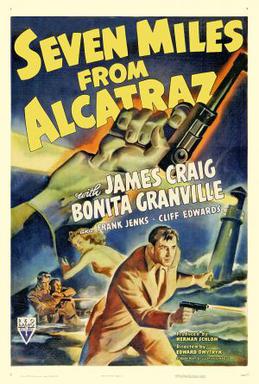
In The Time Of The Soviet-American World War II Friendship-With Edward Myrtryk’s Seven Miles From Alcatraz In Mind

In The Time Of The Soviet-American World War II Friendship-With Edward Myrtryk’s Seven Miles From Alcatraz In Mind  


By Film Critic Emeritus Sam Lowell


Okay, okay regular readers of this space (and of the on-line version of the American Film Gazette) know that I have, how did Pete Markin put it, oh yeah, put myself out to pasture. In other words retired from the day to day grind of film reviews what with the inevitable deadlines sneaking up and giving me heartburn when I haven’t figured out a “hook” to tie the review up with and Pete is e-mailing every other minute I had had enough. I had conned my old friend, colleague and competitor Sandy Salmon (from that same American Film Gazette where he was a regular film critic with a by-line long before I began to occasionally write for the publication) into doing the yeoman’s work until he in his turn will retire and let younger hands get their chance. I also mentioned in that notice of retirement that I would occasionally comment on whatever I felt like commenting on as long as I didn’t have to meet some damn deadline.     

I have of late been impressed by some of Sandy’s reviews which are pretty good and which I have no quarrel with. What I have noticed when he reviews older films which is what this space is more and more dedicated to is that some remark he makes or some insight of his gets me to the computer to make a comment. That is what I am up to today in regard to a recent review he did of a 1940s World War II film, part propaganda, part action thriller entitled Seven Miles From Alcatraz. The “hook” for me was not the fact that it was directed by Edward Myrtryk who would after the war be red-baited and scapegoated as one of the Hollywood Ten, guys who wouldn’t snitch on their fellows who might have in the past been reds, you know, communists . Honorably done at the time although unlike Howard Fast and Dalton Trumbo he eventually spilled his guts to whoever would listen to save his career. That direction might have been part of what I was looking at which I will explain in a minute since the thrust of the film fit in very well with what the American Communist Party on orders from Moscow were doing to help the war effort once the Soviets became allies in 1941.        

No, what got me about this film was that even hardened criminals could under the story-line presented aid the war effort, could in this case be anti-Nazi fighters. My first reaction was WTF, yeah, that is exactly what I thought. Here is the gist of the story. A couple of hard cases tired of Alcatraz, the “Rock”, the supposedly inescapable Rock out in the dangerous Frisco Bay escaped to a lighthouse out in the harbor, out by the Japan currents from what I could gather. At that lighthouse there was the lighthouse keeper (an important job in the treacherous waters in the Bay), his daughter and a couple of other guys, one a goof but the other who just so happened to turn out to be a Nazi spy. A Nazi spy who is connected in with a group of fellow conspirators who have plans to blow up half of Frisco town once they grab a submarine off that lighthouse and get back to the Fatherland. Naturally they get nowhere once these cons get their patriotic fervor up after they “realize” that if Frisco town goes the Rock goes too if they get captured and are returned there before that event takes place. The conspiracy and the sub once the military gets a fix on them from the lighthouse keeper after the cons struggle with the Nazi agents trying to get back home goes to the briny deep. Fair enough nobody liked the idea, least of all me, of half of Frisco town being blown up.

What is really galling though is the idea that these hardened hoods were to be considered cinematically part of the great united front to wipe the Nazis and their allies off the face of the earth. Such guys from Steubenville, Ohio and Hazard, Kentucky who were itching to volunteer once the Japanese did their dastardly deeds at Pearl Harbor I understand as part of the front. Guys building ships, welding like crazy on three shifts to produce a ship a day I get it. Rosy the riveter picking up the slack when the menfolk went off to war great. Granny planting her Victory Garden, nice work. Kids running around getting string and aluminum foil for the war effort good young citizens. But cons who would as soon as put a slug in you, hey, in that light-keeper if it came to it before they “got religion” on what was what with the damn Nazis no I cannot buy that. What was Dmytryk thinking anyway when he took on this film.                


Out In The 1940s Crime Noir Night –Humphrey Bogart and Lauren Bacall’s “Key Largo”

Out In The 1940s Crime Noir Night –Humphrey Bogart and Lauren Bacall’s “Key Largo”


DVD Review

Key Largo, starring Humphrey Bogart, Lauren Bacall, Edward G. Robinson, Lionel Barrymore, and Claire Trevor, Warner Brothers, 1948


“One Johnny Rocco, more or less, in the world is no business of mine.” So says one world-wise, world weary, been-through- the-mill ex-World War II military man, Frank McCloud (played, understatedly, by one cinematic 1940s tough guy, Humphrey Bogart) in the film under review, Key Largo. And he was right, dead right that a single guy , a single guy singed by life’s pitfalls could, would, or should take on one more hoodlum in this wicked old world.

But, of course dead right or not, this would be an exceedingly short film if Frank threw in the towel when he faced one real live Johnny Rocco hoodlum (played to a sleazy tee by serious 1940s gangster-type Edward G. Robinson). Moreover I set up the last paragraph to see if those who follow crime noir in all its glory were paying attention. Crime noir, for the one hundredth time, no, the one thousandth time, is based, for good or evil, on one premise, crime at the end of the day does not pay. And criminals must pay, either forfeiting their lives or doing one to ninety-nine in stir, the can, prison, okay.

And so world-weary, world wary, seen it all Frank McCloud must once more call on the better angel of his nature to eradicate one very live Johnny Rocco. Let’s give a few plot details to flush on this story and see why Frank had to bust up some two-bit racketeer. One Johnny Rocco and his courtly entourage of petty thugs decided to hit Key Largo, specifically the Key Largo Hotel, off-season, maybe to save a little dough on the room rates. No, no, no to make a score off of some counterfeit dough hot off the presses that his old crony Ziggy will pass off as real kale. But see Johnny has a problem because although a few years back he was king of the hill up in the Midwest he has been deported as, if you can believe this, an undesirable alien and has been cooling his heels in anything goes Batista-era Cuba waiting for his big comeback. So this deal, real dough for fake (at a serious discount of course) brings him back to old Estatos Unidos, well, Key Largo which is only a stone’s throw from Cuba.

And everything would have been fine except just then one ex-serviceman, our friend Frank McCloud, who happened to have been the hotel owner’s (played by Lionel Barrymore) killed in action son’s commanding officer in the European Theater, decided to stop by and commiserate on his way to Key West. And everything would have been very fine if a big blow, a hurricane, did not also gum up the works forcing everybody (everybody except the Native Americans left to fend for themselves during the storm) into the claustrophobic hotel lobby area where the frayed nerves of all were exposed.

Naturally since old Johnny had all the guns, all the gunsels, and a very nasty disposition when he was crossed he was hands down the winner, right. No, no you were not paying attention. See a dame, well, actually two dames, come in to muck things up. No femme fatales here though, just Nora (played, very understatedly by Lauren Bacall), who was married to the owner’s deceased son and is pretty easy on the eyes. While the sparks between Bogart and Bacall do not light up the screen like they did in To Have And Have Not they go for each other. So Frank’s hands off the world approach is doomed, doomed big time, if he wants to get anywhere with Ms. Nora. And then there is Johnny’s lush girlfriend, Gaye, who old Johnny does not treat right, no way. Add a slap or two to Nora by Johnny and Johnny is doomed, doomed big time. RIP. Thus there is, whether it makes any different in the great mandela in fact one less Johnny Rocco in the world. Got it.

Out In The 1940s Crime Noir Night –Humphrey Bogart and Lauren Bacall’s “Key Largo”

Out In The 1940s Crime Noir Night –Humphrey Bogart and Lauren Bacall’s “Key Largo”


DVD Review

Key Largo, starring Humphrey Bogart, Lauren Bacall, Edward G. Robinson, Lionel Barrymore, and Claire Trevor, Warner Brothers, 1948


“One Johnny Rocco, more or less, in the world is no business of mine.” So says one world-wise, world weary, been-through- the-mill ex-World War II military man, Frank McCloud (played, understatedly, by one cinematic 1940s tough guy, Humphrey Bogart) in the film under review, Key Largo. And he was right, dead right that a single guy , a single guy singed by life’s pitfalls could, would, or should take on one more hoodlum in this wicked old world.

But, of course dead right or not, this would be an exceedingly short film if Frank threw in the towel when he faced one real live Johnny Rocco hoodlum (played to a sleazy tee by serious 1940s gangster-type Edward G. Robinson). Moreover I set up the last paragraph to see if those who follow crime noir in all its glory were paying attention. Crime noir, for the one hundredth time, no, the one thousandth time, is based, for good or evil, on one premise, crime at the end of the day does not pay. And criminals must pay, either forfeiting their lives or doing one to ninety-nine in stir, the can, prison, okay.

And so world-weary, world wary, seen it all Frank McCloud must once more call on the better angel of his nature to eradicate one very live Johnny Rocco. Let’s give a few plot details to flush on this story and see why Frank had to bust up some two-bit racketeer. One Johnny Rocco and his courtly entourage of petty thugs decided to hit Key Largo, specifically the Key Largo Hotel, off-season, maybe to save a little dough on the room rates. No, no, no to make a score off of some counterfeit dough hot off the presses that his old crony Ziggy will pass off as real kale. But see Johnny has a problem because although a few years back he was king of the hill up in the Midwest he has been deported as, if you can believe this, an undesirable alien and has been cooling his heels in anything goes Batista-era Cuba waiting for his big comeback. So this deal, real dough for fake (at a serious discount of course) brings him back to old Estatos Unidos, well, Key Largo which is only a stone’s throw from Cuba.

And everything would have been fine except just then one ex-serviceman, our friend Frank McCloud, who happened to have been the hotel owner’s (played by Lionel Barrymore) killed in action son’s commanding officer in the European Theater, decided to stop by and commiserate on his way to Key West. And everything would have been very fine if a big blow, a hurricane, did not also gum up the works forcing everybody (everybody except the Native Americans left to fend for themselves during the storm) into the claustrophobic hotel lobby area where the frayed nerves of all were exposed.

Naturally since old Johnny had all the guns, all the gunsels, and a very nasty disposition when he was crossed he was hands down the winner, right. No, no you were not paying attention. See a dame, well, actually two dames, come in to muck things up. No femme fatales here though, just Nora (played, very understatedly by Lauren Bacall), who was married to the owner’s deceased son and is pretty easy on the eyes. While the sparks between Bogart and Bacall do not light up the screen like they did in To Have And Have Not they go for each other. So Frank’s hands off the world approach is doomed, doomed big time, if he wants to get anywhere with Ms. Nora. And then there is Johnny’s lush girlfriend, Gaye, who old Johnny does not treat right, no way. Add a slap or two to Nora by Johnny and Johnny is doomed, doomed big time. RIP. Thus there is, whether it makes any different in the great mandela in fact one less Johnny Rocco in the world. Got it.

An Encore -Looking For The Heart Of Saturday Night, Christ The Heart Of Any Night-Elegy For Tom Waits

An Encore -Looking For The Heart Of Saturday Night, Christ The Heart Of Any Night-Elegy For Tom Waits


From the pen of the late Peter Paul Markin who fell by the wayside, fell to his notoriously monstrous “wanting habits” accumulated since childhood looking too hard, looking to hard in the wrong places down among the weeds in Mexico, looking for train smoke and dreams if you really thought about the matter, looking for his own heart of Saturday night-RIP, Brother,RIP.     

****** 


If you, as I do, every once in a while, every once in a while when the norms of today’s bourgeois-driven push, bourgeois a better term than capitalist or imperialist if you are in America since it gives a better view of the unhindered social norms, the ethos rather than the sheer grab for filthy lucre; you know grab goods, grab the dough, grab every cheap-jack convenience like it was God’s own gold, grab some shelter from the storm, the storm that these days comes down like a hard rain falling, to get ahead in this wicked old world have to step back and take stock, maybe listen to some words of wisdom, or words that help explain how you got into that mess then you have come to the right address, the address of Mister Tom Waits if you missed the headline or missed who is writing this thing. (Or better "wrote" since this piece is being edited posthumously by Zack James who found this and three companion pieces in the attic of Josh Breslin's Olde Saco family house in Olde Saco, Maine when they were looking to dispose of whatever could be disposed of in preparation for selling the place so Josh and Lana could move into smaller quarters and Josh told him the long and at the end the sad story about Josh's and Markin's meeting out in San Francisco in the summer of love 1960s times and about Markin's awful fate down in Mexico. That story drove Zack to the editing job in order that a genuine mad monk writer could some forty years after his death receive a small recognition of his ambitious talent.) 


Okay, okay on that bourgeois-driven today thing once I describe what was involved maybe it didn’t just start of late. Maybe the whole ill-starred rising went back to the time when this continent was, just like F. Scott Fitzgerald said way back in the 1920s when he made up the Jazz Age and reeled back in dismay once he saw how those coupon-clippers devoured all good sense and sober ethos, just a fresh green breast of land eyed by some hungry sailors, some hungry Dutch sailors who took what they wanted back the homeland and made a grave attempt to fatten their own chests. Just check out any Dutch master painting to see what I mean.


Going back to Calvinist Puritan avenging angels times with John Winthrop and the Mayflower boys and their city on the hill but you best ask Max Weber about that since he tried to hook these world-wise and world weary boys were no longer worrying about novenas and indulgences against some netherworld to the wheel of the capitalist profit. Profit (grab the dough, grab the goods, grab stuff cheap) for "you at the expense of me" system with the new dispensation coming out like hellfire from Geneva and points east and west. The eternal story of the short end of the stick if you aren’t ready for sociological treatises and rely on guys like Tom Waits to wordsmith the lyrics to set you right about what is wrong. But you get the point.


If all that to-ing and fro-ing (nice touch, right) leaves you wondering where you fell off the edge, that edge city (edge city where you danced around with all the conventions of the days, danced around the get ahead world, grab the dough, grab the goods, grab stuff cheap,  with blinkers on before you got stuck in the human sink that you have still not been able to get out of) where big cloud outrageous youthful dreams were dreamt and you took risks, damn did you take risks, thought nothing of that fact either, landed on your ass more than a few times but just picked yourself up and dusted your knees off and done stick around and listen up. Yeah, so if you are wondering,  have been pushed off your saintly wheels, yeah, pushed off your sainted wheels, and gotten yourself  into some angst-ridden despair about where you went off that angel-driven dream of your youth, now faded, tattered, and half- forgotten(but only half, only half-forgotten, the wisp of the dream, the eternal peace dream, the figuring out how to contain that fire, that wanting habits fire in your belly dream sisters and brothers), and need some solace (need some way to stop the fret counting the coffee cups complete with spoons to measure that coffee out as the very modernist poet once said making his modern statement about the world created since the turn of the 19th century that while away your life). Need to reach back to roots, reach back to roots that the 1950s golden age of America, the vanilla red scare Cold War night that kicked the ass out of all the old to make us crave sameness, head down, run for cover, in order to forget about those old immigrant customs, made us forget those simple country blues, old country flames, Appalachia mountain breeze coming through the hills and hollows songs, lonely midnight by the fire cowboy ballads, Tex-Mex big ass brass sympatico squeezes Spanish is the loving tongue, Irish desperate struggles against John Bull  sorrows and cautionary tale Child ballads, plucked out early by a professor over on Brattle Street back when the Brahmins very publicly ruled the roost, or Cajun Saturday night stewed drunks that made the people feel good times, reach back to the primeval forest maybe, put the headphones on some Tom Waits platter [oops, CD, YouTube selection, etc.- “platter” refers to a, ah, record, vinyl, put on a record player, hell, look it up in Wikipedia, okay-Zack James] and remember what it was like when men and women sang just to sing the truth of what they saw and heard.


If the norms of don’t rock the boat (not in these uncertain times like any times in human existence were certain, damn, there was always something scary coming up from the first man-eating beast to the human race-eating nuclear bombs, brother even I Iearned early that it was a dangerous world, yeah, learned very early in the Adamsville projects where you got a very real taste of danger before you got too much older than five or six), the norms of keep your head down (that’s right brother, that’s right sister keep looking down, no left or rights for your placid world), keeping your head down being an art form now with appropriate ritual (that ritual looking more and more like the firing squad that took old Juan Romero’s life when he did bad those days out in Utah country), and excuses, because, well, because you don’t want to wind up like them (and fill in the blank of the “them,” usually dark, very dark-skinned like some deathless, starless night disturbing your sleep, begging, I swear, begging you to put that gun in full view on the table, speaking some unknown language, maybe A-rab or I-talian, maybe gibberish for all you know, moving furtively and stealthily against your good night) drive you crazy and you need, desperately need, to listen to those ancient drum beats, those primeval forest leave droppings maybe, that old time embedded DNA coda long lost to, oh yes, civilization, to some civilizing mission (think of that Mayflower gang and that fresh green breast of land  and that city on a hill that drove them cross-eyed and inflamed or ask Max Weber, he footnoted the whole thing, put paid to any idea of otherworldly virtue), that spoke of the better angels of your nature when those angel dreams, half-forgotten but only half-forgotten remember, ruled your days. Turn up the volume up another notch or two on that Tom Waits selection, maybe Jersey Girl or Brother, Can You Spare A Dime (can you?), Hold On, or Gunn Street Girl.


If you need to hear things, just to sort things out, just to recapture that angel-edge, recapture the time when you did no fear, you and everybody else’s sisters and brothers, that thing you build and from which you now should run, recapture that child-like wonder that made you come alive, made you think about from whence you came and how a turn, a slight turn this way or that, could have landed you on the wrong side of the fence. And I have the list of brothers and sisters who took that wrong road, like that time Jack from Carver wound up face down in some dusty back road arroyo down Sonora way when the deal went bust or when she, maybe a little kinky for all I know, decided that she would try a needle and a spoon, I swear, or she swore just for kicks and she wound up in Madame LaRue’s whorehouse working that sagging bed to perdition and worse losing that thing she had for sex once she started selling it by the hour. Hey, sweet dreams baby I tried to tell you when you play with fire watch out.


So if you need to sort things out about boozers (and about titanic booze-crazed struggles in barrooms, on beaches, in the back seats of cars, lost in the mist of time down some crazed midnight, hell, four in the morning, penniless, cab fare-less night), losers (those who have lost their way, those who had gotten it taken away from them like some maiden virginity, those who just didn’t get it frankly in this fast old world taken in by some grifter’s bluster), those who never had anything but lost next to their names, those who never had a way to be lost, dopesters inhaling sweet dream snow in solitary hotel rooms among junkie brethren, gathering a needle and spoon in some subterranean dank cellar, down in dark alleys jack-rolling some poor drunk stiff out of his room rent for kicks (how uncool to drink low-shelf whiskeys or rotgut wines hell the guy deserved to be rolled, should feel lucky he got away with just a flipped wallet), out in nighttime canyons flame blaring off the walls, the seven seas of chemical dust, mainly blotter, maybe peyote (the sweet dreams of ten million years of ghost warriors working the layered canyon walls flickering against the campfire flames and the sight of two modern warriors shirtless, sweaty, in a trance, high as kites, dancing by themselves like whirling dervishes   ready to do justice for the white man's greed until the flames flickered out and they fell in a heap exhausted) if that earth angel connection comes through (Aunt Sally, always, some Aunt Sally coming up the stairs to ease the pain, to make one feel, no, not feel better than any AMA doctor without a prescription pad), creating visions of long lost tribes trying, trying like hell, to get “connected,” connected in the campfire shadow night, hipsters all dressed in black, mary mack dressed in black, speeding, speaking be-bop this and be-bop that to stay in fashion, hustling, always hustle, maybe pimping some street urchin, maybe cracking some guy’s head to create a “new world order” of the malignant, always moving, fallen sisters (sisters of mercy, sisters who need mercy, sisters who were mercifully made fallen in some mad dash night, merciful sister feed me, feed me good), midnight sifters (lifting in no particular order hubcaps, tires, wrenches, jacks, an occasional gem, some cheap jewelry in wrong neighborhoods, some paintings or whatever is not saleable left in some sneak back alley, it is the sifting that counts), grifters (hey, buddy watch this, now you see it, now you don’t, now you don’t see your long gone John dough, and Mister three card Monte long gone too ), drifters (here today gone tomorrow with or without dough, to Winnemucca, Ogden, Fresno, Frisco town, name your town, name your poison and the great big blue seas washing you clean out into the Japan seas), the drift-less (cramped into one room hovels, shelters, seedy rooming houses, hell, call them flop houses, afraid to stay in-doors or to go outside, afraid of the “them” too, afraid to be washed clean, angel clean), and small-time grafters (the ten-percent guys, failed insurance men, repo artists, bounty hunters, press agents, personal trainers, need I go on). You know where to look, right.


If you need to be refreshed on the subject of hoboes, bums, tramps (and remind me sometime to draw the distinction, the very real and acknowledged distinction between those three afore–mentioned classes of brethren once told to me by a forlorn grand master hobo, a guy down on his luck moving downward to bum), out in the railroad jungles in some Los Angeles ravine, some Gallup, New Mexico Southern Pacific  trestle (the old SP the only way to travel out west if you want to get west), some Hoboken broken down pier (ha, shades of the last page of Jack Kerouac’s classic), the fallen (fallen outside the gates of Eden, or, hell, inside too), those who want to fall (and let god figure out who made who fall, okay), Spanish Johnnies (slicked back black hair, tee shirt, shiv, cigarette butt hanging from a parted lip, belt buckle ready for action, leering, leering at that girl over there, some gringa for a change of pace, maybe your girl but watch out for that shiv, the bastard), stale cigarette butts (from Spanish Johnnie and all the johnnies, Camels, Luckies, no filters, no way), whiskey-soaked barroom floors (and whiskey-soaked drunks to mop the damn place up, for drinks and donuts, maybe just for the drinks), loners (jesus, books, big academic books with great pedigrees could be written on that subject so let’s just let that one pass by), the lonely (ditto loners), sad sacks (kindred, one hundred times kindred to the loners and the lonely but not worthy of study, big book academic study anyway), the sad (encompassing all of the above) and others at the margins of society, the whole fellahin world (the big mass of world sweated field braceros, sharecroppers, landless peasants and now cold-water flat urban dwellers fresh from the played out land, or taken land) then Tom Waits is your stop.


Tom Waits is, frankly, an acquired taste, one listen will not do, one song will not do, but listen to a whole record [CD or download okay-Zack] and you won’t want to turn the thing off, high praise in anyone’s book, so a taste well worth acquiring as he storms heaven in words, in thought-out words, in cribbed, cramped, crumbled words, to express the pain, angst and anguish of modern living, yes, modern living.


See he ain’t looking for all haloed saints out there, some Saint Jerome spreading the word out to the desert tribes, out on the American mean streets he has pawed around the edges, maybe doesn’t believe in saints for all I know, but is out looking for busted black-hearted angels all dressed in some slinky silk thing to make a man, a high-shelf whiskey man having hustled some dough better left unexplained that night going off his moorings feeding her drinks and she a liquor sponge (who left him short one night in some unnamed, maybe nameless, gin mill when she split, after she split her take with the bartender who watered her drinks, hell, the thing was sweet all she needed to do when he leaned into her was grab his sorry ass and get the damn wallet). Looking too, a child of the pin-up playboy 1950s, for girls with Monroe hips (hips swaying wickedly in the dead air night, and enflaming desire, hell lust, getting kicked out of proper small town hells by descendants of those aforementioned Mayflower boys for promising the world for one forbidden night), got real, and got left for dead with cigar wrapping rings. Yeah, looking for the desperate out there who went off the righteous path and wound up too young face down in some forsaken woods who said she needed to hold on to something, and for all the misbegotten. 


Tom Waits once you get the habit gives voice in song, a big task, to the kind of characters that peopled Nelson Algren’s novels (The Last Carousel, Neon Wilderness, Walk on the Wild Side, and The Man with the Golden Arm). The, frankly, white trash Okie/Arkie Dove Linkhorns and Frankie Machines of the world who had to keep moving just for the sake of moving something in the DNA driving that whirlwind, genetically broken before they begin, broken before they hit these shores (their forbears thrown out of Europe for venal crimes and lusts, pig-stealing, deer-pouching, working the commons without a license, highwaymen, ancient jack-rollers, the flotsam and jetsam of the old world, damn them, the master-less men and women, ask old Max about them too), having been chased out, cast out of Europe, or some such place. In short, the people who do not make revolutions, those revolutions we keep hearing and reading about, far from it, the wretched of the earth and their kin, the ones who the old blessed Paris communards were thinking of when they hanged a sign saying “Death to Thieves” from the Hotel de Ville balcony, but those who surely, and desperately could use one. If you want to hear about those desperate brethren then here is your stop as well.


If, additionally, you need a primordial grizzled gravelly voice to attune your ear to the scratchy earth and some occasional dissonant instrumentation to round out the picture go no further. Hey, let’s leave it at this- if you need someone who “feels your pain” for his characters you are home. Keep looking for the heart of Saturday night, Brother, keep looking.