Tuesday, September 04, 2018

When The Tin Can Bended…. In The Time Of The Late Folk-Singer Dave Van Ronk’s Time

When The Tin Can Bended…. In The Time Of The Late Folk-Singer Dave Van Ronk’s Time


From The Pen Of Bart Webber

Sometimes Sam Lowell and his “friend” Laura Perkins (really “sweetie,” long time sweetie, paramour, significant other, consort or whatever passes for the socially acceptable or Census Bureau bureaucratic “speak” way to name somebody who is one’s soul-mate, his preferred term) whose relationship to Sam was just described in parenthesis, and righteously so, liked to go to Crane’s Beach in Ipswich to either cool off in the late summer heat or in the fall before the New England weather lowers its hammer and the place gets a bit inaccessible. That later summer heat escape valve is a result of the hard fact that July, when they really would like to go there to catch a few fresh sea breezes, is not a time to show up at the bleach white sands beach due to nasty blood-sucking green flies swarming and dive-bombing like some berserk renegade Air Force squadron lost on a spree who breed in the nearby swaying mephitic marshes.

The only “safe haven” then is to drive up the hill to the nearby robber-baron days etched Crane Castle to get away from the buggers, although on a stagnant wind day you might have a few vagrant followers, as the well-to-do have been doing since there were well-to-do and had the where-with-all to escape the summer heat and bugs at higher altitudes. By the way I assume that “castle” is capitalized when it part of a huge estate, the big ass estate of Crane, now a trust monument to the first Gilded Age, not today’s neo-Gilded Age, architectural proclivities of the rich, the guy whose company did, does all the plumbing fixture stuff on half the bathrooms in America including the various incantations of the mansion. 

Along the way, along the hour way to get to Ipswich from Cambridge Sam and Laura had developed a habit of making the time more easy passing by listening to various CDs, inevitably not listened to for a long time folk CDs, not listened to for so long that the plastic containers needed to be dusted off before being brought along, on the car CD player. And is their wont while listening to some CD to comment on this or that thing that some song brought to mind, or the significance of some song in their youth.  One of the things that had brought them together early on several years back was their mutual interest in the old 1960s folk minute which Sam, a little older and having grown up within thirty miles of Harvard Square, one the big folk centers of that period along with the Village and North Beach out in Frisco town, had imbibed deeply. Laura, growing up “in the sticks,” in farm country in upstate New York had gotten the breeze at second-hand through records, records bought at Cheapo Records and the eternal Sandy's on Massachusetts Avenue in Cambridge and a little the fading Cambridge folk scene when she had moved to Boston in the early 1970s to go to graduate school.     

One hot late August day they got into one such discussion about how they first developed an interest in folk music when Sam had said “sure everybody, everybody over the age of say fifty to be on the safe side, knows about Bob Dylan, maybe some a little younger too if some hip kids have browsed through their parents’ old vinyl record collections now safely ensconced in the attic although there are stirrings of retro-vinyl revival of late according a report he had heard on NPR. Some of that over 50 crowd and their young acolytes would also know about how Dylan, after serving something like an apprenticeship under the influence of Woody Guthrie in the late 1950s singing Woody’s songs imitating Woody's style something fellow Woody acolytes like Ramblin’ Jack Elliot never quite got over moved on, got all hung up on high symbolism and obscure references. Funny guys like Jack actually made a nice workman-like career out of Woody covers, so their complaints seen rather hollow now. That over 50s crowd would also know Dylan became if not the voice of the Generation of ’68, their generation, which he probably did not seriously aspire in the final analysis, then the master troubadour of the age.

Sam continued along that line after Laura had said she was not sure about the connection and he said he meant, “troubadour in the medieval sense of bringing news to the people and entertaining them by song and poetry as well if not decked in some officially approved garb like back in those olden days where they worked under a king’s license if lucky, by their wit otherwise but the 'new wave' post-beatnik flannel shirt, work boots, and dungarees which connected you with the roots, the American folk roots down in the Piedmont, down in Appalachia, down in Mister James Crow’s Delta. So, yes, that story has been pretty well covered.”  

Laura said she knew all of that about the desperate search for roots although not that Ramblin’ Jack had been an acolyte of Woody’s but she wondered about others, some other folk performers who she listened to on WUMB on Saturday morning when some weeping willow DJ put forth about fifty old time rock and folk things a lot of which she had never heard of back in Mechanicsville outside of Albany where she grew up. Sam then started in again, “Of course that is hardly the end of the story since Dylan did not create that now hallowed folk minute of the early 1960s. He had been washed by it when he came to the East from Hibbing, Minnesota for God’s sake (via Dink’s at the University), came into the Village where there was a cauldron of talent trying to make folk the next big thing, the next big cultural thing for the young and restless of the post-World War II generations. For us. But also those in little oases like the Village where the disaffected could put up on stuff they couldn’t get in places like Mechanicsville or Carver where I grew up. People who I guess, since even I was too young to know about that red scare stuff except you had to follow your teacher’s orders to put your head under your desk and hand over your head if the nuclear holocaust was coming, were frankly fed up with the cultural straightjacket of the red scare Cold War times and began seriously looking as hard at roots in all its manifestations as our parents, definitely mine, yours were just weird about stuff like that, right, were burying those same roots under a vanilla existential Americanization. How do you like that for pop sociology 101.”

“One of the talents who was already there when hick Dylan came a calling, lived there, came from around there was the late Dave Van Ronk who as you know we had heard several times in person, although unfortunately when his health and well-being were declining not when he was a young politico and hell-raising folk aspirant. You know he also, deservedly, fancied himself a folk historian as well as musician.”    

“Here’s the funny thing, Laura, that former role is important because we all know that behind the “king” is the “fixer man,” the guy who knows what is what, the guy who tells one and all what the roots of the matter were like some mighty mystic (although in those days when he fancied himself a socialist that mystic part was played down). Dave Van Ronk was serious about that part, serious about imparting that knowledge about the little influences that had accumulated during the middle to late 1950s especially around New York which set up that folk minute. New York like I said, Frisco, maybe in small enclaves in L.A. and in precious few other places during those frozen times a haven for the misfits, the outlaws, the outcast, the politically “unreliable,” and the just curious. People like the mistreated Weavers, you know, Pete Seeger and that crowd found refuge there when the hammer came down around their heads from the red-baiters and others like advertisers who ran for cover to “protect” their precious soap, toothpaste, beer, deodorant or whatever they were mass producing to sell to a hungry pent-ip market.  

Boston and Cambridge by comparison until late in the 1950s when the Club 47 and other little places started up and the guys and gals who could sing, could write songs, could recite poetry even had a place to show their stuff instead of to the winos, rummies, grifters and conmen who hung out at the Hayes-Bickford or out on the streets could have been any of the thousands of towns who bought into the freeze.”     

“Sweetie, I remember one time but I don’t remember where, maybe the CafĂ© Nana when that was still around after it had been part of the Club 47 folk circuit for new talent to play and before Harry Reid, who ran the place, died and it closed down, I know it was before we met, so it had to be before the late 1980s Von Ronk told a funny story, actually two funny stories, about the folk scene and his part in that scene as it developed a head of steam in the mid-1950s which will give you an idea about his place in the pantheon. During the late 1950s after the publication of Jack Kerouac’s ground-breaking road wanderlust adventure novel that got young blood stirring, not mine until later since I was clueless on all that stuff except rock and roll, On The Road which I didn’t read until high school, the jazz scene, the cool be-bop jazz scene and poetry reading, poems reflecting off of “beat” giant Allen Ginsberg’s Howl the clubs and coffeehouse of the Village were ablaze with readings and cool jazz, people waiting in line to get in to hear the next big poetic wisdom guy if you can believe that these days when poetry is generally some esoteric endeavor by small clots of devotees just like folk music. The crush of the lines meant that there were several shows per evening. But how to get rid of one audience to bring in another in those small quarters was a challenge.

Presto, if you wanted to clear the house just bring in some desperate “from hunger” snarly nasally folk singer for a couple, maybe three songs, and if that did not clear the high art be-bop poetry house then that folk singer was a goner. A goner until the folk minute of the 1960s who probably in that very same club then played for the 'basket.' You know the 'passed hat' which even on a cheap date, and a folk music coffeehouse date was a cheap one in those days like I told you before and you laughed at cheapie me and the 'Dutch treat' thing, you felt obliged to throw a few bucks into to show solidarity or something.  And so the roots of New York City folk according to the 'father.'

Laura interrupted to ask if that “basket” was like the buskers put in front them these days and Sam said yes. And asked Sam about a few of the dates he took to the coffeehouses in those days, just out of curiosity she said, meaning if she had been around would he have taken her there then. He answered that question but since it is an eternally complicated and internal one I have skipped it to let him go on with the other Von Ronk story. He continued with the other funny story like this-“The second story involved his [Von Ronk's] authoritative role as a folk historian who after the folk minute had passed became the subject matter for, well, for doctoral dissertations of course just like today maybe people are getting doctorates in hip-hop or some such subject. Eager young students, having basked in the folk moment in the abstract and with an academic bent, breaking new ground in folk history who would come to him for the 'skinny.' Now Van Ronk had a peculiar if not savage sense of humor and a wicked snarly cynic’s laugh but also could not abide academia and its’ barren insider language so when those eager young students came a calling he would give them some gibberish which they would duly note and footnote. Here is the funny part. That gibberish once published in the dissertation would then be cited by some other younger and even more eager students complete with the appropriate footnotes. Nice touch, nice touch indeed on that one, right.”
Laura did not answer but laughed, laughed harder as she thought about it having come from that unformed academic background and having read plenty of sterile themes turned inside out.       

As Laura laugh settled Sam continued “As for Van Ronk’s music, his musicianship which he cultivated throughout his life, I think the best way to describe that for me is that one Sunday night in the early 1960s I was listening to the local folk program on WBZ hosted by Dick Summer, who was influential in boosting local folk musician Tom Rush’s career and who was featured on that  Tom Rush documentary No Regrets we got for being members of WUMB, when this gravelly-voice guy, sounding like some old mountain pioneer, sang the Kentucky hills classic Fair and Tender Ladies. It turned out to be Von Ronk's version which you know I still play up in the third floor attic. After that I was hooked on that voice and that depth of feeling that he brought to every song even those of his own creation which tended to be spoofs on some issue of the day.”
Laura laughed at Sam and the intensity with which his expressed his mentioning of the fact that he liked gravelly-voiced guys for some reason. Here is her answer, “You should became when you go up to the third floor to do your “third floor folk- singer” thing and you sing Fair and Tender Ladies I hear this gravelly-voiced guy, sounding like some old mountain pioneer, some Old Testament Jehovah prophet come to pass judgment come that end day time.”

They both laughed. 

Laura then mentioned the various times that they had seen Dave Von Ronk before he passed away, not having seen him in his prime, when that voice did sound like some old time prophet, a title he would have probably secretly enjoyed for publicly he was an adamant atheist. Sam went on, “ I saw him perform many times over the years, sometimes in high form and sometimes when drinking too much high-shelf whiskey, Chavis Regal, or something like that not so good. Remember we had expected to see him perform as part of Rosalie Sorrels’ farewell concert at Saunders Theater at Harvard in 2002 I think. He had died a few weeks before.  Remember though before that when we had seen him for what turned out to be our last time and I told you he did not look well and had been, as always, drinking heavily and we agreed his performance was subpar. But that was at the end. For a long time he sang well, sang us well with his own troubadour style, and gave us plenty of real information about the history of American folk music. Yeah like he always used to say-'when the tin can bended …..and the story ended.'


As they came to the admission booth at the entrance to Crane’s Beach Sam with Carolyn Hester’s song version of Walt Whitman’s On Captain, My Captain on the CD player said “I was on my soap box long enough on the way out here. You’re turn with Carolyn Hester on the way back who you know a lot about and I know zero, okay.” Laura retorted, “Yeah you were definitely on your soap-box but yes we can talk Carolyn Hester because I am going to cover one of her songs at my next “open mic.” And so it goes.               

In Search Of Heroes Of The Great American Hispanic Night-Mi Hombre Senor Zorro-The ‘Z’ Man Of My Youthful Dreams-Antonio Banderas’s “The Mask Of Zorro” (1998)-A Film Review


In Search Of Heroes Of The Great American Hispanic Night-Mi Hombre Senor Zorro-The ‘Z’ Man Of My Youthful Dreams-Antonio Banderas’s “The Mask Of Zorro” (1998)-A Film Review


DVD Review

By Si Lannon

The Mask Of Zorro, starring Antonio Banderas, Catherine Zeta-Jones, Anthony Hopkins and assorted sleaze-ball Spanish dons and their senoras and senoritas, 1998

I have made no secret here or in private conversations that in my youth, my childhood really, I was crazy to watch the Zorro half hour on 1950s black and white television. For a reason that only a few people knew then, mostly family, and excluding my corner boys, some of who work for this publication, and whom I grew up with in the heavily working- class Irish and some Italian neighborhood of the Acre in North Adamsville a suburb south of Boston. I suppose every family has its family secrets, its skeletons in the closet like some looney grand aunty up on the batty attic, a brother, a hermano in home speak, who has spent more time in jail for various armed felonies than on the outside, that some cousin was in the vernacular of the day in our family at least was “different” meaning then a “fairy, fag” you know what I mean and today proudly LGBTQ, a young female relative who also in the code words of the day had to travel to “Aunt Emmy” for a while, meaning that she was pregnant out of wedlock and had to leave town to avoid family disgrace and dagger neighborhood dowager grandmother eyes probably never to come back.

In my family the deep dark secret which also reveals in passing why I loved Zorro as my youthful hero was that my mother was a Latina, Hispanic, you know from Mexico whose last name was Juarez, Bonita Juarez. No big deal right, now anyway although in the age of the long knives, in the age of Trump and all the animosities he has helped stir up, bring to the ugly surface of American life, that may no longer be true. But back then, back in 1950s growing up Irish-Italian Acre that was a no-no. The way around it devised by my parents was that sweet Bonita was “passed off” as Italian. An entirely respectable ethic designation in a town that drew Italians back around the turn off the 20th century to work the granite quarries that dominated the topography of the landscape (that work died out with the exhaustion of the quarries to be replaced by a booming shipbuilding industries which by the 1950s has in their turn faded this time by off-shore outsourcing and eventual departure which explained a lot about the wanting habits of we corner boys in the 1950s while other working class towns were observing something of a golden age-also mainly gone now with globalization). While there were names, derogatory names, for Italians in some Irish working-class homes in the neighborhood there was enough intermixing to level things off.

Almost universally though since there were absolutely no Hispanic families in the whole town the normal terms of abuse applies-spics, wetbacks, braceros, and the like. My father could not stand for that and even his relatives in the neighborhood believed my mother was from Italy. She had come up to California from Mexico during World War II with her family to work the grape and melon fields and my father stationed at Fort Ord at the time met her at a USO dance and wooed her after that. Since Bonita’s English was halting she was forbidden to speak Spanish when others were around. The only way any corner boys knew that she was Spanish was in high school when in ninth grade my best friend Jack Callahan had been taking Spanish and had come to the house unannounced and heard her speaking that language and not Italian. Naturally asking what gives and I told him and from there to the rest of the guys who hung around Tonio’s Pizza Parlor. [In the interest of today’s seemingly compulsory transparency statement Jack Callahan has not only occasionally written in this publication but has been a substantial financial backer-Greg Green]

The corner boys when they found out since we were “brothers” today hermanos were pretty cool about the whole thing since she was my mother and that counted a lot even when we were at civil war with them, con madres. In general though it was not until many years later after Bonita passed away that people became aware of her nationality in a time when such things were more openly okay-even in the Acre.                    

Secrets aside I loved Zorro the same way my corner boys loved say white gringo good guys, avenging angels like Wyatt Earp or the Maverick boys from the television our main source outside of the movies from having characters we could identify with. Swashbuckling Zorro taking on all-comers, bad ass gringos especially but also batos locos paid soldiers and other scumbags and of course the oppressor hombres-the mainly Spanish dons who had the huge land grants from the Spanish kings when California was part of the fading Spanish Empire and later after formal independence and creation of a Mexican state who gouged the peasantry into the ground to maintain their freaking luxurious lifestyles. I would have to keep my devotion something of a secret although in general Zorro was a positive figure among the television-watching corner boys.

I was therefore very interested in doing this review of The Mask of Zorro when site manager Greg Green decided that enough was enough as Mexican Nationals, immigrants, citizens, hard-working peoples were being bashed for no good purpose by the Trump unleashed dark alt-right-Nazi-fascist-white nationalist cabal and had to be defended on all fronts including popular culture-including films. And in a very definitive way-beyond the obvious romance between Zorro, played by a youthful Antonio Banderas and his lovely senorita and soon to be marida and madre of his child, Elena, played by drop-dead beautiful Catherine Zeta-Jones-this film shows a heroic and honorable side of the Mexican saga-of cultural super-heroes among the oppressed peoples of the world. 

Here is the way the thing worked on this one although one can take the production to task for not have more Hispanics, Latinos, etc. in key roles like Elena, who could have worthily been played by Penelope Lopez, and certainly Zorro, the elder, played by venerable and ubiquitous high-toned Brit actor Anthony Hopkins could have had a better casting. The elder Zorro has a running battle in the Mexican independence struggle with the soon to be departed Spanish viceroy, a real bastard whose name is legend so no need to give him some human surname over the way the peasantry and others were treated by him. More importantly over the elder Zorro’s wife and daughter since that msl hombre viceroy was smitten by her. Eventually the bastard was the cause of the mother’s death and the elder Zorro’s imprisonment leaving the field clear for him to raise that daughter, Elena, when going back to Spain in comfort and culture.    

Then fast forward twenty year later and the bastard returned with Elena and with the idea of turning via those well-off land grant Dons California into an independent republic by stealth and cold hard cash to the Mexican leader Santa Ana, known as a villain in U.S. history via the Alamo and Jimmy Polk’s Mexican War adventure. The one guys like young Abe Lincoln and Henry avid Thoreau couldn’t stomach. Enter a rejuvenated elder Zorro who nevertheless is too old to go mano a mano with the bastard and his hired thugs. Through serious trial and error he trains a new generation Zorro, played by Banderas, to lead the struggle against the returned kingpin oppressor and let the peasantry live off the their lands in some peace. Once our new Zorro finishes his basic training he is off and running to woo the lovely Elena, tweak the bastard, fight a million sword fights, woo the lovely Elena, fight a few million more sword fights, and well you know the “and” part by now. A most satisfying film which only rekindled my love of the sacred youthful character-thanks young and old Zorro.         

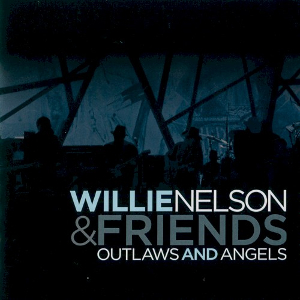
Far From The Outlaw Minute-Willie Nelson’s Outlaws And Angels (2004 )-A Musical Film Review

Far From The Outlaw Minute-Willie Nelson’s Outlaws And Angels (2004 )-A Musical Film Review   


DVD Review

By Film Editor Sandy Salmon

Willie Nelson: Outlaws and Angels, starring Willie Nelson and a cast of outlaws like Merle Haggard and angels like Lucinda Williams and everything in between including a retired outlaw like Jerry Lee Lewis, 2004     


I freely admit that as a tough mean city streets New Jersey-bred guy I did not have anything like an “outlaw country music minute” back in early 1980s when traditional country music, Nashville-driven music by the likes of George Jones and say Loretta Lynn ran out of steam. Or out of ideas beyond whiskey nights, faded love, fast cars, fast women and good old boy foolishness. The time when guys like the central figure in this music video Willie Nelson, Waylon Jennings, Guy Clark, Jerry Jeff Walker and Townes Van Zandt and gals like Emmylou Harris and Rachel Farling stepped off that reservation and gave a new definition to the parameters of country music. Brought an updated beat, an update ethos and some quirky twists to the genre. In some cases as well living the real outlaw life, by approximating the free spirit life.        

My admission has a purpose since under normal circumstances I would not review a country music video having neither expertise nor interest in the genre. The only reason I have done so is as a favor to my old friend and fellow film critic from the American Film Gazette Sam Lowell who is my immediate predecessor at this site who actually did have a “outlaw country music minute.” Since he is in retirement and only wishes to review material periodically when something like say the celebration of the 50th anniversary of the Summer of Love, 1967 sparks his interest. At least that was the story line he spun when he practically begged me to do this review. (I really think that he just wanted to see the expression “outlaw country music minute” used in a review here like he used to hammer endlessly on the “folk minute” of the early 1969s in a lot of his reviews).

That short flirtation was driven by the musical stalemate of those early 1980s when classic rock and roll had had one of its periodic fallow periods like it had in the late 1950s and Sam was looking for something interesting musically to listen to and maybe drive to wider critical notice. According to Sam he was snagged into the moment not by Willie Nelson but by Townes Van Zandt one night at Jackie Speed’s in of all places Harvard Square in Cambridge. Hardly a known Mecca for country music although well know back in the “folk minute” days of Sam’s blessed memory. He had appreciated Willie as outside the Nashville club (although Nelson had started in traditional 1950s Nashville fashion with Crazy made a big of by the premier woman traditional country singer of the time Patty Cline, who still has the best version of that classic). But something about the painful Van Zandt lyrics and rough-hewn sense of humor appealed to his strictly urban upbringing like there might be a bridge somehow.           

But on to the music DVD. This is the third in a series of Willie Nelson driven DVDs with various themes and various guest singers and hangers-on. This one took place in Los Angeles under the guise of outlaws and angels. The line-up was certainly filled with guys with outlaw reputations like Bob Dylan (who “mailed in” his duet with Willie on the Hank Williams classic “You Win Again” reportedly via YouTube being drunk on stage in the days when he used to drink), legendary Merle Haggard (who passed away in 2016), Kid Rock and Keith Richards among others. And gals like Lucinda William and Ricki Lee Jones who can make the real angels weep for their inadequacies. Overall though other than showing that Willie has a great command of the American (maybe world) songbook most of the performances were unremarkable. Except, and this is a big exception, when the ancient rock and roller Jerry Lee Lewis whose prime before that fallow time in the late 1950s previously mentioned who “stole” the show with his two songs. Leave it to a rocker to bail things out. You would grab this one for that performance.          


Happy, Happy Birthday Karl Marx, On The 200th Anniversary Of His Birth-Some Thoughts mbered (both from long ago and the recent re-readings) about how he had all his life, all his early life looking for something, some movement to move him, to move us who grew up with him poor as church mice, maybe poorer to a more just world. Had made me laugh, since on some of the stuff I have been right alongside him, when he mentioned the old Student Union for World Goals which a bunch of us had put together in high school. A grouping with a program that was inundated with all the anti-communist, red scare, Cold War platitudes we could find. We basically were a little to the left of Ike, Grandpa Ike, Dwight D. Eisenhower who was President of the United States (POTUS in twitter-speak) in our youth filled with bauble about the virtues of capitalism, although I think we would have been hard pressed to make that word connection and probably said something like prosperity which we had garnered very little of in the now remembered golden age of the 1950s. Then as the thaw came, or as people, young people mostly broke the spell of the red scare Cold War night, after we have sown our oats out in the Summer of Love, 1967 and saw some writing on the wall that we were ‘raw meat” for the draft come college graduation day getting hopped up about Robert Kennedy’s ill-fated, ill-starred bid for the Democratic Party Presidential nomination in 1968. I already mentioned the Army experiences which did both of us in for a while but which frankly drove Frank outside bourgeois politics (he had expected that he would tie his wagon to Robert Kennedy and when that idea fell apart with Kennedy’s assassination offering Hubert H. Humphrey his services against the main villain of the ear Richard M. Nixon in the expectation that he would ride that train out of the draft and/or begin the road to a nice sinecure via Democratic Party politics). I am not sure if he began serious reading on Marx in the Army or not but when he got out in 1971 he certainly was doing the “read until the early morning” routine. I grabbed some of his tidbits, associated with some of the radical circles in Cambridge he started to frequent, went down the line with him in Washington on May Day, 1971 where we both got busted but soon after withdrew a bit from both him and serious leftwing politics. I was crazy, still am, for films, for seeking some kind of career as a film critic and so spent more of my time in the Brattle Theater in Harvard Square than protesting on Boston Common. He can address sometime his own withdrawal from left-wing organizational politics and moving on to journalism, political commentary on his own dime. That is enough of the political justification for Frank’s fighting me on this assignment. Frank, however, took the unusual step, for him anyway, of mentioning his being pissed off about losing the Marx assignment and mentioned it to site manager Greg Green. The guy who gives out the assignment and who has had more than one person, me included, scratching their heads both in the assignments they have gotten of late or like Frank not have gotten. Whatever Frank laid out for Greg he had both of us come in to his office to discuss the issue. You know as much as you need to about Franks’ “cred.” My frame of reference and what amounted to the winning argument was that I had been Peter Paul Markin’s closest friend in high school. Markin, forever known as Scribe for the obvious reason that he always carried a notebook and pen or pencil in his shirt pocket AND always, always had two thousand facts ready to throw at anybody who would listen, mainly girls, which drove more that one of our corner boy crowd to threaten grievous bodily is the real primary source for whatever we knew about Karl Marx before we went crazy later and started to seriously read the stuff. So I knew the details of how Frank, Frankie Riley, Jimmy Jenkins, Si Lannon and maybe a couple of others first heard about the name and ideas of one Karl Marx and who would later act on them a little. This is where I was a little ahead of Frank knowing that Greg, after taking over as site manager when Allan Jackson was purged from that position, was interested much more in “”human interest” stories than the “tiresome” (his words) esoteric left-wing jargon that he knew Frank would meandering into, no, would get in knee deep. (For the record some of the other guys who hung around with Scribe and the rest of us like Ricky Rizzo and Dave Whiting, both who would lay their heads down in hellhole Vietnam and wound up on the town monument and Washington black granite, Red Riley and even Frank Jackman when he was hopped up on that Student Union thing almost lynched him when he started talking favorably about Karl Marx and the idea of red revolution in those dead ass red scare Cold War nights. All they wanted to hear about was whatever intelligence Scribe had on some girl they were interested in of which he somehow almost incongruously had been plenty of information about or what his next plan was for the “midnight creep” which I assume needs no further explanation except he planned the capers but no way would Frankie Riley or the rest of us let him lead the expeditions-hell we would still be in jail.) Others, including Frank Jackman, have now seemingly endlessly gone over the effect Scribe had on them a little later when the turbulent 1960s we all got caught up in, blew a gasket, in the Summer of Love, 1967 as the culmination of what he also had been talking about for years on those lonely forlorn weekend nights when we hung around good guy Tonio’s Pizza Parlor “up the Downs” in the growing up Acre section of North Adamsville. What most of the guys did not know, or did not want to know, was that a little of what Scribe was thinking at the time, was that maybe Karl Marx might be proven to be right, might have been onto something when he spoke about the working classes, us, getting a big jump ahead in the world once things turned upside down. He held those views pretty closely then, especially when he was practically red-baited into silence by those guys who were even more hung up, as was Scribe in many ways, on the new normal American negative propaganda about Russia, Communism, and Karl Marx. Nobody, this from later Scribe once he flamed red, was born a radical, a revolutionary, and certainly not a Marxist but certain conditions, among them being as poor as church mice, gave a clue to where some people might go. The intellectuals, although Scribe did not call them that, would come to their Marxism more through books and rational thought than as prime victims of the usually one-sided class struggle of the rich against the poor. That was about as far as Scribe would go, wanted to go, because in many ways, although maybe a little less fulsomely, he wanted to go the same bourgeois politics path as Frank in politics. Like I say Scribe described to some of us a glimmer, a faux Marxist primer, then in high school, not at all thought out like it would be by him or us later in the late 1960s and early 1970s when we got back respectively from our tours to the “real” world from ‘Nam and knew we had been fucked over by our government. That the “reds” in Vietnam were poor folk, peasants, with whom we had no quarrel. But that was later. Here is a better example of the glimmer Scribe shined on us back in the day. I remember one night, it had to be one high school night given the teacher and class he was descripting, Scribe had told me that he had had to stay after school one day for Mr. Donovan, the World History teacher and football coach which tells you what he was about, when Scribe had given a surly answer about some question Mr. Donovan had asked. That surliness coming from two sources, one Donovan having members of the class endlessly reading aloud the freaking book boring everybody within a mile of the room and that he really believed he already knew more about history than Donovan and so was personally bored as well. The question had not been about Marxism but something else and during that afternoon detention Donovan had asked him if he was a “Bolshevik.” Scribe recoiled in horror he said knowing that to say yes would get him in some trouble (probably more after school time at least) and for the simple fact that he could not say truthfully whatever teen angst and alienation he was feeling was driven by that kind of understanding of the world-then. What this history teacher confrontation did do was get Scribe looking again, and this tells as much about him as any other anecdote, at his dog-eared copy of Karl Marx’s (and his co-thinker and financial “angel” Friedrich Engels) classic statement of his views The Communist Manifesto to confirm whether he was a “Marxist,” “Communist,” whatever and he came away from that re-reading knowing that he was not one of those guys, a red. That was the kind of guy Scribe was when he was confronted with something he didn’t understand. The rest of us would have said “fuck it” and let it go at that or have challenged old Donovan with a spurious “yeah, what about it.” Maybe some silly remark like “better red than dead” or “my mommy is a commie,” expressions making the rounds in that dead air time. So this little sketch really is a “human interest” story and not all that much about Marx in any political sense and that is also why I think that Greg bought my argument over Frank’s. Whatever Marx, Marxism, hell, just general radical non-parliamentary socialism held for the 19th devotees (and bloodthirsty enemies too) extending into the greater part of the 20th century fell down, went to ground, with the demise of the Soviet Union back in 1991-92, and whatever intellectual curiosity Marx and Marxism held fell down too so other than as an exotic utopian scheme today there is no reason to go chapter and verse on the details of what Marx was programmatically projecting. To finish up on this sketch though I should like to mention the way Scribe, which again will tell something about the mad monk when he was in his flower, got his copy of the Manifesto back when he was fourteen or fifteen. He had heard for some source, maybe some “beat” over in Harvard Square when he used to go there after a particularly bad day in the mother wars, it was a cool document or something, who knows with Scribe was kind of strange. He couldn’t find the book in either the school or town libraries for the simple fact that neither had the document nor did when he inquired they want to have it in circulation. Yeah it was that kind of time. A friendly young librarian suggested that he try the Government Printing Office which might have a copy if somebody in Congress (like the red-baiter par excellence Senator Joseph McCarthy) or some governmental agency had ordered it printed for whatever reason as part of an investigation or just to put it in the record for some reason. He got the address in Washington and the GPO sent back a brochure with their publications for sale. And there it was. He ordered a copy and a few weeks alter it came in the mail. Here’s the funnier part, funnier that the government providing copies on the cheap (or maybe free I forget what he said on that point) of such a notorious document the document had been placed on the publication list because it was part of the record for the raucous House Un-American Activities Committee meeting in San Francisco in 1960 when they were practically run out of town by protestors as the Cold War began to thaw in certain places. Of course that was a recollection by Scribe later when we were deep into the Summer of Love out in that very town and he had asked some older people what that protest was all about. Yeah, Scribe was a piece of work and he would eventually drag some of us along with him in his good days like the Summer of Love and later after Vietnam time running around with radical students in Cambridge when checking out Mark and Marxism was all the rage. Like I said old Marx has had his up and downs, has taken his beatings but some things Scribe said he said and which we later read about like the poor getting a better shake because they provided the value provided by their cheap labor were spot on. Worse, in a way when I looked, re-read, for this assignment some of the stuff reads like it could have been written today. How about that. From The Archive Pages Of The Socialist Alternative Press-The Syrian cauldron

Happy, Happy Birthday Karl Marx, On The 200th Anniversary Of His Birth-Some Thoughts 


A link to NPR’s Christopher Lydon’s Open Source  2018 program on the meaning of Karl Marx in the 21st century on the 200th anniversary of his birth:

http://radioopensource.org/marx-at-200/


By Seth Garth

Normally Frank Jackman would be the natural person to do his take on the name, the role, the legacy of one German revolutionary exiled to London after the revolutions of 1848 faded away, Karl Marx, on the 200th anniversary of his birth in 1818. And Frank at first fought me a little, said he had grabbed a bunch of Marx’s books and pamphlets like the Communist Manifesto and the abridged Das Capital abetted by his friend and colleague Engels’ The Peasant Wars In Germany and Scientific Socialism. No question heavy lifting, heavy reading which our respective youths would have been read until early in the morning page turners but now would seemingly act as a sedative, a sleep aid, at least for me since Frank said it had made him more alert although agreeing that the works were not “read until early in the morning page turners.” Frank’s argument to me at least for his grabbing the assignment was that he had of the two of us been more influenced by Marx’s works and programs and had actually been a supporter of the old time Trotskyist organization the Socialist Workers Party for a while back in the early 1970s after he got out of the Vietnam blood bath American army and was ready to “storm heaven” (his words) to right the wrongs of this wicked old world (my words grabbed via Sam Lowell take) and as well had been doing leftwing commentary since Hector was a pup (somebody unknown’s expression).

Frank then went chapter and verse at me with what he remembered (both from long ago and the recent re-readings) about how he had all his life, all his early life looking for something, some movement to move him, to move us who grew up with him poor as church mice, maybe poorer to a more just world. Had made me laugh, since on some of the stuff I have been right alongside him, when he mentioned the old Student Union for World Goals which a bunch of us had put together in high school. A grouping with a program that was inundated with all the anti-communist, red scare, Cold War platitudes we could find. We basically were a little to the left of Ike, Grandpa Ike, Dwight D. Eisenhower who was President of the United States (POTUS in twitter-speak) in our youth filled with bauble about the virtues of capitalism, although I think we would have been hard pressed to make that word connection and probably said something like prosperity which we had garnered very little of in the now remembered golden age of the 1950s.     
Then as the thaw came, or as people, young people mostly broke the spell of the red scare Cold War night, after we have sown our oats out in the Summer of Love, 1967 and saw some writing on the wall that we were ‘raw meat” for the draft come college graduation day getting hopped up about Robert Kennedy’s ill-fated, ill-starred bid for the Democratic Party Presidential nomination in 1968. I already mentioned the Army experiences which did both of us in for a while but which frankly drove Frank outside bourgeois politics (he had expected that he would tie his wagon to Robert Kennedy and when that idea fell apart with Kennedy’s assassination offering Hubert H. Humphrey his services against the main villain of the ear Richard M. Nixon in the expectation that he would ride that train out of the draft and/or begin the road to a nice sinecure via Democratic Party politics). I am not sure if he began serious reading on Marx in the Army or not but when he got out in 1971 he certainly was doing the “read until the early morning” routine. I grabbed some of his tidbits, associated with some of the radical circles in Cambridge he started to frequent, went down the line with him in Washington on May Day, 1971 where we both got busted but soon after withdrew a bit from both him and serious leftwing politics. I was crazy, still am, for films, for seeking some kind of career as a film critic and so spent more of my time in the Brattle Theater in Harvard Square than protesting on Boston Common. He can address sometime his own withdrawal from left-wing organizational politics and moving on to journalism, political commentary on his own dime.

That is enough of the political justification for Frank’s fighting me on this assignment. Frank, however, took the unusual step, for him anyway, of mentioning his being pissed off about losing the Marx assignment and mentioned it to site manager Greg Green. The guy who gives out the assignment and who has had more than one person, me included, scratching their heads both in the assignments they have gotten of late or like Frank not have gotten. Whatever Frank laid out for Greg he had both of us come in to his office to discuss the issue. You know as much as you need to about Franks’ “cred.”

My frame of reference and what amounted to the winning argument was that I had been Peter Paul Markin’s closest friend in high school. Markin, forever known as Scribe for the obvious reason that he always carried a notebook and pen or pencil in his shirt pocket AND always, always had two thousand facts ready to throw at anybody who would listen, mainly girls, which drove more that one of our corner boy crowd to threaten grievous bodily is the real primary source for whatever we knew about Karl Marx before we went crazy later and started to seriously read the stuff. So I knew the details of how Frank, Frankie Riley, Jimmy Jenkins, Si Lannon and maybe a couple of others first heard about the name and ideas of one Karl Marx and who would later act on them a little. This is where I was a little ahead of Frank knowing that Greg, after taking over as site manager when Allan Jackson was purged from that position, was interested much more in “”human interest” stories than the “tiresome” (his words) esoteric left-wing jargon that he knew Frank would meandering into, no, would get in knee deep.     

(For the record some of the other guys who hung around with Scribe and the rest of us like Ricky Rizzo and Dave Whiting, both who would lay their heads down in hellhole Vietnam and wound up on the town monument and Washington black granite, Red Riley and even Frank Jackman when he was hopped up on that Student Union thing almost lynched him when he started talking favorably about Karl Marx and the idea of red revolution in those dead ass red scare Cold War nights. All they wanted to hear about was whatever intelligence Scribe had on some girl they were interested in of which he somehow almost incongruously had been plenty of information about or what his next plan was for the “midnight creep” which I assume needs no further explanation except he planned the capers but no way would Frankie Riley or the rest of us let him lead the expeditions-hell we would still be in jail.)

Others, including Frank Jackman, have now seemingly endlessly gone over the effect Scribe had on them a little later when the turbulent 1960s we all got caught up in, blew a gasket, in the Summer of Love, 1967 as the culmination of what he also had been talking about for years on those lonely forlorn weekend nights when we hung around good guy Tonio’s Pizza Parlor “up the Downs” in the growing up Acre section of North Adamsville. What most of the guys did not know, or did not want to know, was that a little of what Scribe was thinking at the time, was that maybe Karl Marx might be proven to be right, might have been onto something when he spoke about the working classes, us, getting a big jump ahead in the world once things turned upside down. He held those views  pretty closely then, especially when he was practically red-baited into silence by those guys who were even more hung up, as was Scribe in many ways, on the new normal American negative propaganda about Russia, Communism, and Karl Marx. Nobody, this from later Scribe once he flamed red, was born a radical, a revolutionary, and certainly not a Marxist but certain conditions, among them being as poor as church mice, gave a clue to where some people might go. The intellectuals, although Scribe did not call them that, would come to their Marxism more through books and rational thought than as prime victims of the usually one-sided class struggle of the rich against the poor. That was about as far as Scribe would go, wanted to go, because in many ways, although maybe a little less fulsomely, he wanted to go the same bourgeois politics path as Frank in politics.        

Like I say Scribe described to some of us a glimmer, a faux Marxist primer, then in high school, not at all thought out like it would be by him or us later in the late 1960s and early 1970s when we got back respectively from our tours to the “real” world from ‘Nam and knew we had been fucked over by our government. That the “reds” in Vietnam were poor folk, peasants, with whom we had no quarrel. But that was later.

Here is a better example of the glimmer Scribe shined on us back in the day. I remember one night, it had to be one high school night given the teacher and class he was descripting, Scribe had told me that he had had to stay after school one day for Mr. Donovan, the World History teacher and football coach which tells you what he was about, when Scribe had given a surly answer about some question Mr. Donovan had asked. That surliness coming from two sources, one Donovan having members of the class endlessly reading aloud the freaking book boring everybody within a mile of the room and that he really believed he already knew more about history than Donovan and so was personally bored as well. The question had not been about Marxism but something else and during that afternoon detention Donovan had asked him if he was a “Bolshevik.” Scribe recoiled in horror he said knowing that to say yes would get him in some trouble (probably more after school time at least) and for the simple fact that he could not say truthfully whatever teen angst and alienation he was feeling was driven by that kind of understanding of the world-then.         

What this history teacher confrontation did do was get Scribe looking again, and this tells as much about him as any other anecdote, at his dog-eared copy of Karl Marx’s (and his co-thinker and financial “angel” Friedrich Engels) classic statement of his views The Communist Manifesto to confirm whether he was a “Marxist,” “Communist,” whatever and he came away from that re-reading knowing that he was not one of those guys, a red. That was the kind of guy Scribe was when he was confronted with something he didn’t understand. The rest of us would have said “fuck it” and let it go at that or have challenged old Donovan with a spurious “yeah, what about it.” Maybe some silly remark like “better red than dead” or “my mommy is a commie,” expressions making the rounds in that dead air time.

So this little sketch really is a “human interest” story and not all that much about Marx in any political sense and that is also why I think that Greg bought my argument over Frank’s. Whatever Marx, Marxism, hell, just general radical non-parliamentary socialism held for the 19th devotees (and bloodthirsty enemies too) extending into the greater part of the 20th century fell down, went to ground, with the demise of the Soviet Union back in 1991-92, and whatever intellectual curiosity Marx and Marxism held fell down too so other than as an exotic utopian scheme today there is no reason to go chapter and verse on the details of what Marx was programmatically projecting.

To finish up on this sketch though I should like to mention the way Scribe, which again will tell something about the mad monk when he was in his flower, got his copy of the Manifesto back when he was fourteen or fifteen. He had heard for some source, maybe some “beat” over in Harvard Square when he used to go there after a particularly bad day in the mother wars, it was a cool document or something, who knows with Scribe was kind of strange. He couldn’t find the book in either the school or town libraries for the simple fact that neither had the document nor did when he inquired they want to have it in circulation. Yeah it was that kind of time. A friendly young librarian suggested that he try the Government Printing Office which might have a copy if somebody in Congress (like the red-baiter par excellence Senator Joseph McCarthy) or some governmental agency had ordered it printed for whatever reason as part of an investigation or just to put it in the record for some reason. He got the address in Washington and the GPO sent back a brochure with their publications for sale. And there it was. He ordered a copy and a few weeks alter it came in the mail. Here’s the funnier part, funnier that the government providing copies on the cheap (or maybe free I forget what he said on that point) of such a notorious document the document had been placed on the publication list because it was part of the record for the raucous House Un-American Activities Committee meeting in San Francisco in 1960 when they were practically run out of town by protestors as the Cold War began to thaw in certain places. Of course that was a recollection by Scribe later when we were deep into the Summer of Love out in that very town and he had asked some older people what that protest was all about.

Yeah, Scribe was a piece of work and he would eventually drag some of us along with him in his good days like the Summer of Love and later after Vietnam time running around with radical students in Cambridge when checking out Mark and Marxism was all the rage. Like I said old Marx has had his up and downs, has taken his beatings but some things Scribe said he said and which we later read about like the poor getting a better shake because they provided the value provided by their cheap labor were spot on. Worse, in a way when I looked, re-read, for this assignment some of the stuff reads like it could have been written today. How about that.             


Click on the headline to link to the Socialist Alternative (CWI) website.


Markin comment:

I place some material in this space which may be of interest to the radical public that I do not necessarily agree with or support. Off hand, as I have mentioned before, I think it would be easier, infinitely easier, to fight for the socialist revolution straight up than some of the “remedies” provided by the commentators in these entries. But part of that struggle for the socialist revolution is to sort out the “real” stuff from the fluff as we struggle for that more just world that animates our efforts.
**********
The Syrian cauldron

Aug 25, 2012

By Niall Mulholland, CWI, first published in Socialism Today (magazine of the Socialist Party, CWI in England & Wales)

What began 18 months ago as a popular uprising against the dictatorship of Bashar al-Assad is on its way to becoming a full-blown civil war that could spread around the region.

Below, we publish a lengthened and updated version of the article by Niall Mulholland written at the beginning of August and published on socialistworld.net for the monthly magazine of the Socialist Party (CWI in England & Wales).


July was the bloodiest month so far in the Syrian conflict, with an estimated 100 deaths a day. Across Syria there are indiscriminate attacks by the Assad regime forces and their militias, bloody sectarian reprisals by the armed opposition, refugee floods and humanitarian disasters. The second city, Aleppo, is the latest focus of fighting between armed opposition forces and the Syrian army. Since the rebels entered Aleppo on 20 July, many residents have fled for Damascus and Turkey.


The battle for Aleppo is important for both sides. Larger than the capital, Damascus, it is the main economic centre, with an important manufacturing sector. Like the rest of Syria, Aleppo is made up of a patchwork of religious and ethnic groups. The rebel Free Syrian Army (FSA) advanced on the city trying to capitalise on momentum they believed they made during an assault on Damascus and the bombing of a government intelligence meeting, which killed four generals. The Syrian army is stepping up its offensive on Aleppo. Tragically, workers and the poor are the main victims of the conflict in Aleppo and the other battlegrounds raging across the country.


The March 2011 uprising began as a genuine, popular movement against Bashar al-Assad’s police state, the erosion of social welfare, high levels of poverty and unemployment, and the rule of the rich, corrupt elite. Assad’s dictatorship responded to the wave of mass protests against 40 years of dictatorial rule – widely seen as part of the Arab spring – with vicious repression.


Brutal suppression of demonstrators led some activists to take up arms. The Committee for a Workers’ International (CWI, the socialist international organisation to which the Socialist Party is affiliated) advocated democratically run workers’ self-defence committees that could protect communities and cut across sectarian lines. At the same time, the CWI called for this to be linked to a programme demanding the end of the Assad dictatorship and for fundamental democratic, social and economic change.


But, crucially, the mass protests lacked an independent working-class leadership. This is hardly surprising, given that the Syrian working class suffered vicious repression under decades of dictatorship that outlawed genuine workers’ self-organisation. Workers do not yet have strong independent trade unions, let alone a revolutionary party advocating far-reaching democratic, social and economic change. Inspiring and courageous as the mass protests that erupted in March 2011 were, they did not develop the same revolutionary sweep and appeal as the mass movements in Tunisia and Egypt.


Significantly, in both Tunisia and Egypt there was a tradition of workers’ organising themselves in unions and other social organisations prior to the revolutions. A sharp rise in industrial struggles took place in Egypt in the years prior to 2011. Strikes or the threat of general strikes in Tunisia and Egypt left the regimes suspended in mid-air and played a decisive role in overthrowing both Zine El Abidine Ben Ali and Hosni Mubarak.


A united working class cutting across all religious, sectarian and ethnic lines is important in every country in the region. This is especially the case in Syria with its various religious, sectarian and ethnic minorities. Assad has cynically used divide-and-rule policies to stay in power. His army and Shabiha militias carry out heinous massacres to create big divisions between Alawites and Sunnis.


The backbone of the regime is based on the Alawite religious minority but it also draws support from Christians, Druze, and ‘moderate’ Sunni Muslims. Assad has mercilessly exploited the genuine fear of the minorities that victory for the armed, mainly Sunni opposition would see them become persecuted and discriminated against.


Cynically deploying anti-western and anti-imperialist rhetoric, the Assad regime warns that the fate of Iraq – terrible sectarian bloodletting, the destruction of infrastructure and the territorial fracturing of the country – awaits the Syrian people should the armed opposition, with the support of western powers and local reactionary regimes, prevail. Even though the Syrian regime is sorely battered and bruised and probably living on borrowed time, Assad remains in power, unleashing his deadly military arsenal against the armed opposition and innocent civilians of Syria.


Big-power interests


THE LACK OF a united working-class alternative meant that religious, sectarian and pro-capitalist oppositionist figures were able to partially fill the political space. Many youth and workers came under the broad umbrella of the FSA but reactionary elements were also involved from the start. As the mass street protests fell back, the FSA grew and armed struggle became the dominant form of resistance, further sidelining the mass movement. Reactionary Gulf regimes, along with Turkey, and with western imperialist backing, intervened with guns and money for the opposition, political strings attached, of course.


The FSA leaders’ aim is to overthrow Assad’s regime but not to replace it with real democracy and prosperity for all. They intend to establish a more pro-western, pro-capitalist regime, which would rule on the basis of a Sunni sectarian-based appeal. For their part, the US, Britain and France have long regarded Assad’s regime as a troublesome obstacle to their imperialist interests in the region. Crucial to their plans is to fundamentally weaken their main foe in the region, Iran.


Tehran is an ally of the Syrian regime. The fall of Assad could also strengthen pro-US Sunni Gulf regimes, while weakening Shia-based Hezbollah in Lebanon and Russian imperialism’s position in the region.


Syria is increasingly the arena for a regional and international proxy war. On the one side is the brutal Assad regime, with its Iranian and Russian backers. On the other, an array of anti-Assad armed opposition forces many of which are bankrolled and aided militarily by Arab states (led by Qatar and Saudi Arabia) and Turkey, with broad western support.


What began as a popular uprising in Syria descended into a civil war, with increasing religious, ethnic and sectarian characteristics. Working people and the poor are paying the greatest price for the failure of the revolt to develop into a powerful, independent movement based on a united working class. The estimated death toll now stands at 20,000. The United Nations (UN) believes that 150,000 people have fled the country, with many more internally displaced.


But the words of concern for the people of Syria from the mouths of western politicians are just so much hypocritical cant. Only a few years ago, George W Bush’s administration sent ‘terrorist suspects’ to Damascus to be tortured by Assad’s thugs. Now, president Barack Obama claims he wants to see the dictatorship replaced with ‘democracy’.


Yet two of the US’s closest allies in the region, the reactionary autocracies of Qatar and Saudi Arabia, are busily arming and financing the Syrian rebels. They are not interested in bringing democratic rights to Syria any more than the US or Britain. The Saudi regime represses its own Shia minority, while backing reactionary sectarian Salafists in Syria.


The Turkish government, a member of Nato (the US-dominated military alliance), loudly denounces oppression in Syria. At home, it is suppressing the media and the country’s 20 million Kurds, who are pressing their own demands in both Turkey and Syria. Turkey’s ‘mild’ Islamist president, Recep Tayyip Erdogan, has also turned up his verbal attacks against the country’s minority Alevis, an historically persecuted off-shoot of Shia Islam, whose number include the leader of the opposition Republican People’s Party.


Assad and the opposition


THE ROLES PLAYED by western powers and reactionary Gulf regimes are no reasons, however, to support the Assad regime. It is not some sort of ‘bulwark’ against imperialism, as some on the left in the region and beyond portray.


A Ba’athist coup in the 1960s saw the majority of the Syrian economy being nationalised, which for a period allowed the regime to take measures that saw a rise in living standards. Nonetheless, this was nothing at all like genuine democratic socialism, or a move towards it, as the brutal, undemocratic character of Assad’s family-dominated regime testified. After the collapse of the Soviet Union, the Syrian regime opened up the economy to global capitalism. This led to privatisations, welfare and subsidy cuts, mass joblessness and big inequalities, fuelling mass unrest and the March 2011 revolt.


The road to a real alternative to imperialism and Arab despots was displayed during last year’s revolutions in Tunisia and Egypt, as well as the early promise of the 2011 Syrian revolt. They showed that it is the mass united movement of working people and youth that can remove despots and their regimes, resist imperialism and fight for real social and political change.


While it may only be a matter of time before Assad falls, the conflict shows no sign of a quick ending. “With or without Bashar al-Assad as its leader, Syria now has all the makings of a grim and drawn out civil war”, warns Vali Nasr, an academic and former advisor to Obama’s special representative for Afghanistan and Pakistan. (New York Times, 28 July) While Assad has lost control of parts of Syria and the opposition is buoyed up, claiming the regime’s power is seriously eroding, the conflict is likely to become protracted. The high-profile defection of some military and diplomatic figures, including Riad Hijab, the recently appointed prime minister, has given the impression of a regime in slow-motion collapse. Yet Assad shows no sign of standing down.


To date, Assad has shown he has the military power and enough support in Syria, including from many Sunni business people, to keep fighting. But, although it appears unlikely at the moment, the possibility that Assad could be ousted by a palace coup cannot be ruled out. While the opposition has made some ground and is now reportedly using heavy weaponry, it is divided “among some 100 groups without clear political leadership”, according to Vali Nasr.


Moreover, the reactionary character of the largely Sunni-based, pro-big business Syrian National Council, which is linked to the FSA and its Sunni-elite Gulf backers, means that many of Syria’s Alawite, Christian and Kurdish minorities, as well as some Sunnis, fear what would follow Assad’s overthrow. The summary execution of unarmed pro-regime fighters by opposition militias in Aleppo, widely viewed on YouTube, will only deepen the fears of Syria’s minorities.


Jihadist organisations are establishing a foothold in the east of the country, including the al-Qaida group, Jabhat a Nusra (Solidarity Front). Foreign jihadists have entered Syria from Turkey, the Caucasus, Bangladesh and the Gulf Arab states, which is helping to stir up divisions within the opposition leadership.


Many of these fighters are battle-hardened veterans of the conflict in Iraq during US occupation. The jihadists in Iraq are, in turn, emboldened by events in neighbouring Syria. The al-Qaida-linked Islamic State of Iraq killed hundreds in July alone.


Sectarian conflagration


EVEN IF ASSAD decided to leave office or was removed by his own ruling clique, his military machine, dominated by the Alawite minority, and its allied Shabiha militias, could fight on. These forces could hold out in the Alawite heartland, forming a breakaway ‘Alawite state’ along the Syrian coast. If a new Alawite state was declared it could see other minorities “land grabbing”, warns Jordan’s King Abdullah. This could have a catastrophic copy-cat effect in the region. Syria’s oppressed Kurds have already claimed ‘liberated’ towns in the north, near the Turkish and Iraqi borders.


Syria could face the terrible prospect of breaking up into ethnic enclaves, like the former Yugoslavia, bitterly fighting over territory for years. This would resemble a re-run of Lebanon’s civil war (which lasted from the mid-1970s to the early 1990s, costing up to 200,000 lives) but on a greater scale. An added horror would be the current regime’s chemical and biological weapons being deployed.


A sectarian conflagration would most likely embroil other countries in the region. Turkey, Iran, Israel and the Gulf states could be drawn into the maelstrom. The Syrian army has already shelled Lebanese villages. Fighting between Sunni and pro-Assad Alawites in the northern Lebanese city of Tripoli and other areas has left scores dead. While the main political forces in Lebanon want to avoid an escalation of Sunni and Shia clashes, regular shootings and kidnappings in Beirut have raised fears of a slide towards sectarian conflict. The situation is becoming dangerously polarised along sectarian lines. A recent poll showed that 94% of Lebanon’s Sunni’s are hostile to Hezbollah, while 94% of Shias support it.


The Shia-based Hezbollah, an ally of the Assad regime, is the main force in the Lebanese ‘power-sharing’ government. But the largely Sunni opposition, based around the ‘March 14’ coalition, is encouraged by the Sunni-dominated revolt in Syria. They hope that Assad’s fall will deal a serious blow to Hezbollah, changing the balance of power in Lebanon. This could lead to the collapse of the power-sharing government, triggering wider conflict.


The turmoil in Syria is making the situation in Lebanon and across the region so combustible that any number of factors or events could trigger wider conflict: a Turkish military incursion into Syria’s north eastern areas controlled by Kurdish groups, for instance, or even a serious escalation of US and Israeli aggression towards Irans over its alleged nuclear arms programme.


As war rages in Syria and threatens to spread over the region, the so-called ‘international community’ stands completely exposed as impotent. The UN is incapable of acting as an ‘honest broker’ in the crisis. It cannot prevent atrocities against civilians or resolve armed conflicts in the interests of working people. The organisation is beholden to the world’s major powers, particularly the UN Security Council members, which are deeply divided over Syria.


The UN’s impotence was underlined with the resignation of Kofi Annan, the UN and Arab League special envoy, on 2 August. Russia and China have voted against US, British and French-sponsored anti-Assad resolutions. Despite the rhetoric, the US and Russia positions have nothing to do with the plight of the Syrian people. It is all to do with the interests of their respective ruling classes and those of their closest allies.


Russia regards Assad’s regime as a crucial ally in the region. The Kremlin and Beijing are resolutely opposed to any western military intervention, particularly after the bitter experience of last year’s Libyan conflict. While some US, British and French politicians have mooted the idea of western military action against Assad’s regime or enforcing a no-fly zone – as recently posed by US secretary of state, Hillary Clinton – last year’s Nato attacks in Libya cannot be simply repeated in this context.


Syria has a much larger population than Libya and the regime has at its disposal a much more powerful and better trained and equipped military. A Nato bombing campaign would have to overcome Syria’s extensive air defence system, while a land invasion would require large-scale military forces. Western troops would face being intractably bogged down in hostile urban areas.


These steps would risk an internationalisation of the conflict, particularly as such western action would be widely seen in the Arab world as strengthening the regional position of Israel.


Western intervention


WHILE THE US is reportedly concerned about the Syrian opposition – the White House remains ‘haunted’ by memories of the catastrophic fallout from its backing of the Mujahadeen during the 1980s war in Afghanistan – the western powers are concentrating on supporting and aiding the FSA and other armed oppositionists. They do this primarily by enforcing sanctions against Damascus and by giving Gulf states the green light to arm and fund the opposition and for Turkey to provide logistical support.


The White House is also taking direct, covert action to support Assad’s armed opponents. According to press reports, Obama signed a secret order earlier this year authorising US support for the armed opposition, including the deployment of the CIA and other US agencies. Tory foreign secretary William Hague recently confirmed that Britain is also giving covert support to anti-Assad forces.


But as well as the considerable political embarrassment felt by Washington, London and Paris over their association with jihadist and al-Qaida elements among the Syrian opposition, the western powers are also scrambling to keep their influence with the various armed rebels.


The western powers have concluded that attempts to form a unified opposition around the exile-led Syrian National Council, which has little influence on events inside Syria, has failed. Clinton’s recent visit to Turkey was intended to increase US and Turkish co-operation to bring the internal Syrian opposition more under their control. The US and other western powers hope such actions will eventually see the downfall of Assad. However, some pro-western commentators warn that Assad’s fall would be a Pyrrhic victory. It would just be the beginning of even greater conflict in Syria and the region.


They counsel the White House to work towards a ‘transitional plan’, to create a post-Assad power-sharing arrangement that ‘all sides’ can agree on. This would entail a UN ‘peace-keeping’ force. To reach such an agreement would mean involving Russia and Iran, Vali Nasr believes, who may come to see the writing on the wall for Assad.


Even if such a scenario was eventually cobbled together after much more bloodshed and destruction, it would not bring democracy, stability or prosperity for Syria. It would see the imposition of a western military-dominated regime, involving reactionary pro-capitalist and sectarian-based forces. It would be no answer to the needs of the Syrian masses and working class.


Revolutionary processes


THE WORKING PEOPLE and poor in Syria face a desperate situation and the real danger of being engulfed in ethnic and sectarian warfare. Socialists everywhere must do all they can to help the workers of Syria to build class unity to resist and overcome these divisions.


In the current situation, these are herculean tasks. Yet there is no other way to successfully unite the masses to overthrow the brutal Assad regime, to oppose the meddling of local reactionary states and imperialism, and to win real democratic rights and fundamental social and economic change.


Despite their terrible plight, the Syrian masses are not alone. Their fate is inextricably linked to the ongoing revolutionary movements in Tunisia, Egypt and elsewhere throughout North Africa and the Middle East. There have been 18 months of revolution and counter-revolution and the process is far from over.


In Tunisia and Egypt, the conservative Islamist, pro-market parties, Ennahda (Resistance) and the Muslim Brotherhood, were able to come to power, exploiting the lack of revolutionary parties to fulfil the demands and aspirations of the masses. This was despite the fact that neither party played a key role in their countries’ revolutionary movements that overthrew Ben Ali and Mubarak.


But already both the Ennahda regime in Tunisia and Egypt’s Muslim Brotherhood president, Mohammed Mursi, are confronted with growing class opposition. After weeks of strikes, protests and workplace occupations, a general strike was called by Tunisia’s trade union federation, the UGTT, on 14 August. This was in protest against joblessness and poor water and electricity resources and also for democratic rights. Furthermore, it was used to show mass opposition to the Ennahda party’s proposed attacks on the rights of women.


While Egypt’s new president moved quickly to replace top generals and strengthen his powers, Mursi also faces a wave of protests across the country over electricity and water shortages. This follows weeks of strikes and workplace occupations, as workers struggle to improve pay and conditions. Egyptian workers are not waiting for the new government to improve their lives. They are building their own organisations and taking independent action. This is the model to follow!


By practically and politically linking up the class interests of workers in Syria, Egypt, Tunisia and throughout the region, workers’ mass organisations, such as independent trade unions and new mass parties, can be built.


By basing itself on a united workers’ programme with socialist policies for fundamental change – democratic workers’ control and management of the economy to transform living conditions, creating jobs with a living wage, free quality education, health and housing and so on – such a movement would inspire workers and youth across the region to unite to kick out the tyrants and imperialism. This would lead to a struggle for a voluntary and equal socialist confederation of the Middle East, in which the rights of all minorities would be guaranteed.


Socialist Alternative, P.O. Box 45343, Seattle WA 98145
Phone: (206)526-7185
Comments? Suggestions for improving our web page? Please email info@SocialistAlternative.org

Happy 200th Birthday Karl Marx-From The Archives- The Living Thoughts of Karl Marx

Happy 200th Birthday Karl Marx-From The Archives- The Living Thoughts of Karl Marx


Workers Vanguard No. 1134
18 May 2018
TROTSKY
LENIN
The Living Thoughts of Karl Marx
(Quote of the Week)
May 5 marked the 200th anniversary of Karl Marx’s birth. The excerpts below are taken from the beginning and conclusion of the Communist Manifesto, a seminal work that Marx co-wrote with his lifelong comrade, Friedrich Engels.
The history of all hitherto existing society is the history of class struggles.
Freeman and slave, patrician and plebeian, lord and serf, guild-master and journeyman, in a word, oppressor and oppressed, stood in constant opposition to one another, carried on an uninterrupted, now hidden, now open fight, a fight that each time ended, either in a revolutionary re-constitution of society at large, or in the common ruin of the contending classes....
The modern bourgeois society that has sprouted from the ruins of feudal society has not done away with class antagonisms. It has but established new classes, new conditions of oppression, new forms of struggle in place of the old ones.
Our epoch, the epoch of the bourgeoisie, possesses, however, this distinctive feature: it has simplified the class antagonisms. Society as a whole is more and more splitting up into two great hostile camps, into two great classes directly facing each other: Bourgeoisie and Proletariat....
The essential condition for the existence, and for the sway of the bourgeois class, is the formation and augmentation of capital; the condition for capital is wage-labour. Wage-labour rests exclusively on competition between the labourers. The advance of industry, whose involuntary promoter is the bourgeoisie, replaces the isolation of the labourers, due to competition, by their revolutionary combination, due to association. The development of Modern Industry, therefore, cuts from under its feet the very foundation on which the bourgeoisie produces and appropriates products. What the bourgeoisie, therefore, produces, above all, is its own grave-diggers....
The Communists disdain to conceal their views and aims. They openly declare that their ends can be attained only by the forcible overthrow of all existing social conditions. Let the ruling classes tremble at a Communistic revolution. The proletarians have nothing to lose but their chains. They have a world to win.
WORKING MEN OF ALL COUNTRIES, UNITE!
—Karl Marx and Friedrich Engels, Manifesto of the Communist Party (1848)


In Honor Of The 150th Anniversary Of The Publication Of Louisa May Alcott’s “Little Women” (1868)-A Book Review


In Honor Of The 150th Anniversary Of The Publication Of Louisa May Alcott’s “Little Women” (1868)-A Book Review


Book Review

By Alden Riley

Little Women, Louisa May Alcott, Roberts Brothers, 1868


I thought things were supposed to change around here with the changing of the guard, otherwise known at least among the younger writers as the purge and exile of the previous site manager Allan Jackson and his replacement by Greg Green after a bitter internal fight with no holds barred and no prisoners taken in the fall of 2017. The idea was to let the younger writers spread their wings, learn to fly and not do dreary pieces like the 24/7/365 1960s nostalgia hippie revival regime under Jackson.  And for a while there was a breath of fresh air around the place, around the formerly hostile water cooler which drives the social life of many operations and this one is no exception. Then Greg, I think to show he was his own boss, his own operator came up with the silly, silly even to Will Bradley who originally presented idea before thinking better of it, that to appeal to a younger, eventually non-existent audience, that the publication would feature film reviews of Marvel/DC comic book characters gone to screen, serious analysis of rap and pop music, and review graphic novels.  Over the top silly stuff since that phantom audience wouldn’t touch a high-brow publication if they were paid to do so and even then it would be Seth’s six, two and even that would rouse them. They get their ideas, information, style elsewhere.

We younger writers in our turn rebelled at that fantastic imposition and Greg retreated mostly gracefully under the blowback and let us do our own thing. Then Allan Jackson whom we all though had perished, gone to pot, dope pot, was working for Mitt Romney out in Utah Mormon country, running a whorehouse with an old flame in East Bay or living with an old former hometown corner boy turned “out” drag queen in San Francisco depending on which rumor you believed at the moment, showed up to do a series of encore presentations of material he had produced over the years in order to get back that older audience which had sustained the publication through good times and bad. Invited by Greg via old geezer Sam Lowell and the Editorial Board. Something has happened to Greg since Allan’s return, maybe he is under the Svengali influence of the man but now we are all expected to write “outside the box” meaning material that we know damn little about and could care even less about. Hence I have been assigned to do a book review of Louisa May Alcott’s Little Women in honor of the 150th anniversary of its original publication.         

There is where things have gone awry with Greg’s I am sure Allan-inspired approach. The only thing I knew about Louisa May Alcott, and this second-hand through Sandy Salmon when he was Senior Film Editor and I was his associate editor was that her father, Bronson Alcott, was a wild man, had run amok at Brooks Farm, the holy of holies in the pre-Civil War Transcendentalist movement, you know Emerson, Thoreau and other Buddha-like figures who ran around Cambridge, mainly Brattle Street telling naked truths naked. Bronson has run through whatever dough he had from his inheritance and had fathered, some say illegimately, a bunch of children by various female denizens of that isolated farm including Nathaniel Hawthorne’s wife and had had an affair with Herman Melville’s brother. Such things are hard to pin down but all I know for sure is that he claimed Louisa May and three other young women as his children. Lacking DNA testing who knows. So old Bronson was a certified wild man no doubt but that was hardly enough knowledge to help ‘the hook” of this famous book which in its time was a best-seller and a standard for young girls and young women’s bedside reading.

Here is where things get weird though Sandy who knew Allan Jackson when they both were much younger and had worked the free-lance stringer racket we all go through before getting our so-called cushy by-lines at American Film Gazette asked him what sources I should go to for a look at the lingering influence of the book on modern girls and young women. Told Sandy to tell me to ask my sister, Ellen, when she had read the book and what she had thought of it. Here is the honest truth Ellen had never heard of the book, didn’t know who or what I was talking about and when I told her the outline of the story she laughed, smirked and laughed saying “are you kidding” who had time to read such old-time melodramas. Failing there I figured that I would work my way back so I mentioned the book I was reviewing to my mother who told me that my grandmother had read her the book at night before bed but she didn’t remember much except there were four sisters who grew up and got married or something like that and were good wives except one who died young of some strange disease. She said ask my grandmother. Bingo. Grandma quoted me chapter and verse without hesitation until I asked how the book influenced her. She told me those were different times, more restrictive times even against her growing up times in the 1930s so she would have to pass on the influence question. She was only a little shocked that my sister knew nada about the book and my mother only a little more. So I am going to take a stab and say as a 150th anniversary honor-women you have come a long way since those homebody marriage child-rearing times.   

I had to think awhile, had to ask Seth Garth who is good at this kind of question and his old flame Leslie Dumont, both fellow writers here what was it about the novel that would have appealed to young girls and women up at least until my grandmother’s growing up times. And why when I later asked some other female contemporaries they came up as blank as my sister on even having heard of the book. Leslie said it best, or at least better. Those were male dominated times and so even the least amount of spunk, independence  by say Jo, who is the character in the book who pretty much represents Louisa May’s profile was like a breath of fresh air even to young girls and women who knew the score, knew they would be driven back into the cave if they got too brave. Seth, who was more than willing to defer to Leslie’s judgment took a more historical approach saying there was nothing in the plotline that dealt with eternal truths so that such a novel would have a limited life-span except in the groves of academia where a couple of generations of Ph.ds could get worked up about the social meaning of it all.   

That is about it except to briefly trace the story line, or lines since there are actually two main threads, the almost universal family-centered expectations for women and Louisa May’s struggle to get somebody to survive into strong independence co-managership of the family along with a thoughtful husband. Oldest sister Meg is pretty conventional, beautiful and domestic preaching to the younger sisters’ choir about the need to be civilized and good God-fearing wives. Jo, Louisa May’s character is strong-willed and thoughtful and will make the marriage that Alcott thought should be appropriate for her times and class. Beth is something of a cipher, musical but early on sickly who dies young from the after effects of horrible scarlet fever so no real lesson can be drawn from her life. (Funny how these Victorian novelists, male and female, have to have some frail sickly female character hovering in the background.) Amy, the youngest, is the closest to the character that let’s say my daughter could relate to if she ever finished reading the book which she adamantly refused to finish after reading about a third of it and declaring the thing  utterly boring even the Amy character who struggle for artistic self-expression is very similar to her own feelings about what she wants out of life. As Sam Lowell has stated on many occasions-a slice of life circa the 1860s-that is the “hook.”