Monday, May 20, 2019

“To Be Young Was Very Heaven”-With The 50th Anniversary Of The “Summer Of Love, 1967” In Mind-Frankie Riley's Story


Revised Introduction by Zack James

[I was about a decade or so too young to have been washed, washed clean to hear guys like Peter Paul Markin, more on him below, tell the tale, by the huge counter-cultural explosion that burst upon the land (and by extension and a million youth culture ties internationally before the bubble burst) in the mid to late 1960s and maybe extending a few year into the 1970s depending on whose ebb tide event you adhere to. (Markin’s for very personal reasons having to do with participating in the events on May Day 1971 when the most radical forces tried to stop the Vietnam War by shutting down the government and got kicked in the teeth for their efforts. Doctor Gonzo, the late writer Hunter Thompson who was knee-deep in the experiences called it 1968 around the Democratic Party convention disaster in Chicago. I, reviewing the material published on the subject mostly and on the very fringe of what was what back then would argue for 1969 between Altamont and the Days of Rage everything looked bleak then and after.)

Over the next fifty years that explosion has been inspected, selected, dissected, inflected, infected and detected by every social science academic who had the stamina to hold up under the pressure and even by politicians, mostly to put the curse of “bad example” and “never again” on the outlier experimentation that went on in those days. Plenty has been written about the sea-change in mores among the young attributed to the breakdown of the Cold War red scare freeze, the righteous black civil rights struggles rights early in the decade and the forsaken huge anti-Vietnam War movement later. Part of the mix too and my oldest brother Alex, one of Markin’s fellow corner boys from the old neighborhood is a prime example, was just as reaction like in many generations coming of age, just the tweaking of the older generations inured to change by the Cold War red scare psychosis they bought into. The event being celebrated or at least reflected on in this series under the headline “To Be Very Young-With The Summer of Love 1967 In Mind” now turned fifty was by many accounts a pivotal point in that explosion especially among the kids from out in the hinterlands, like Markin an Alex, away from elite colleges and anything goes urban centers.   The kids, who as later analysis would show, were caught up one way or another in the Vietnam War, were scheduled to fight the damn thing, the young men anyway, and were beginning, late beginning, to break hard from the well-established norms from whence they came in reaction to that dread.

This series came about because my already mentioned oldest brother, Alex James, had in the spring of 2017 taken a trip to San Francisco on business and noticed on a passing Muni bus that the famed deYoung Museum located in the heart of Golden Gate Park, a central location for the activities of the Summer of Love as it exploded on the scene in that town, was holding an exhibition about that whole experience. That jarred many a half forgotten memory in Alex’s head. Alex and his “corner boys” back in the day from the old Acre neighborhood in North Adamsville, a suburb of Boston where we all came of age, had gotten their immersion into counter-cultural activities by going to San Francisco in the wake of that summer of 1967 to “see what it was all about.”

When Alex got back from his business trip he gathered the few “corner boys” still standing, Frankie Riley, the acknowledged leader of the corner boys, Jimmy Jenkins, Si Lannon, Jack Callahan, Bart Webber, Ralph Kelly, and Josh Breslin (not an actual North Adamsville corner boy but a corner boy nevertheless from Olde Sacco up in Maine whom the tribe “adopted” as one of their own) at Jimmy’s Grille in North Adamsville, their still favorite drinking hole as they call it, to tell what he had seen in Frisco town and to reminisce. From that first “discussion” they decided to “commission” me as the writer for a small book of reflections by the group to be attached alongside a number of sketches I had done previously based on their experiences in the old neighborhood and in the world related to those times. So I interviewed the crew, wrote or rather compiled the notes used in the sketches below but believe this task was mostly my doing the physical writing and getting the hell out of the way once they got going. This slender book is dedicated to the memory of the guy who got them all on the road west-Peter Paul Markin whom I don’t have to mention more about here for he, his still present “ghost” will be amply discussed below. Zack James]              

To the memory of the late Peter Paul Markin on the occasion of the 50th anniversary year of the Summer of Love, San Francisco, 1967


[Although this small tribute book is dedicated to the memory of Peter Paul Markin from the corner boys days of the old Acre neighborhood of North Adamsville and will have contributions from all the surviving member of that tribe there are other corner boys who have passed away, a couple early on in that bloody hell called Vietnam, Ricky Russo and Ralph Morse, RIP brothers, you did good in a bad war, Allan Jackson, Allan Stein, “Bugger” Shea and Markin’s old comrade, Billy Bradley. You guys RIP too.]          


By Francis Xavier Riley (Frankie)


Markin was a piece of work. If not one of kind then close to it and I can still say that some sixty years since we first met. Met in seventh grade in junior high school at the old North Adamsville Junior High. I had been recognized as the leader of a bunch of guys who hung around the traditional junior high hangout, Doc’ Drugstore, which had the added attraction of being not only a place where the ill and lame got their cures but had a soda fountain attached to a jukebox. A jukebox that got all kinds of play from the young bud girls that were throwing their dimes and quarters into to hear their latest for the minute heartthrob. So you mostly know why we hung around that spot just as our older brothers did and maybe some of the fathers even before that.


Markin had come over from across town, from the Brook Meadows Junior High a couple of months into the school year so he already had one strike against him since by then all the social and personal relationships which would last through high school and beyond (beyond in our case enough to have been around when Markin came making his clarion call to head west and see what the emerging “youth nation” was all about in the Frisco Summer of Love). Moreover he was even then kind of a nerdy guy, you know, always spouting odd-ball facts and figure like we gave rat’s ass about any of it. (That “rat’s ass” which I haven’t said in years maybe since Markin’s time was the “in” word we used to fluff off anything that was not important to us-important being mostly girls, cars and how to get money to deal with either, or both.)


His idea, once we became friends and he would confide in me some of his feelings, not a lot, that wasn’t our style, the style, then that the reason he became a wizard at certain things was because he had maybe read that knowing such stuff, like who was who in folk music when that stuck his fancy also something that then the rest of us could have given a rat’s ass about, was the way to meet interesting girls. Or then any girls once his hormonal urges got into overdrive. I would tell you more about Markin’s theory and the reality of his junior high and high school love life such as it was except this is about the Summer of Love where his approach was something like pure magic when he and the young women were stoned, you know high as kites on the drug of the day. On the West Coast they flocked around him like acolytes-and he took full advantage of that luck.


Another strike, and maybe the definitive one once Markin said he had thought about it later, was that he had come from the even then notorious Adamsville “projects,” public assistance housing. Between the large family, four siblings along with him and his father’s lack of education that was where the family was thrown helter-skelter in his early years. Years that formed the hard edge as he said of that “from hunger” feeling that drove a lot of the seamier side of his personality. Strangely most of us in the Acre section of North Adamsville were in some cases poorer, or at least as poor, as Markin’s family but that “projects” albatross designation hanging around his neck in the small one family houses or at worst a double-decker apartment in the Acre caused him some isolation before we became friends. (My mother when things were tough in our family or when one of us went off the rails would spring the “wind up in the projects” on us to try to make us behave which worked when we were younger but was like water off a duck’s back later.) Funny thought when I thought about it later myself we all had that “from hunger” edge, and acted on it. Some of us grew out of it, some didn’t. Markin never had a fighting chance to test that out either way.


So Markin and I met in seventh grade and after a few disputes we became friends and would stay that way for as long as he was in contact with any of us, when he was alive although Josh Breslin who will tell his own story about Markin not I was the last to see him before the fateful drug trip down to Mexico. I could tell lots of things about Markin but what is important for this piece is that he and his odd-ball facts and figures drove him to the conclusion starting I think in tenth grade that there was a “new breeze coming through the land” or that was his idea that he would periodically pound into us on a stray Friday or Saturday hanging out night when other prospects had petered out. Again the rest of us could have given a rat’s ass about it until much later, later when it was obvious even to the socially dumbest of us that indeed a new breeze was in the air. How Markin, a guy from nowhere in the social firmament, from a hick town to boot knew what he sensed is beyond me all I know is until 1967 every time he would begin his rant I would close my ears, close them tight.   


I was shocked, we all were shocked, when Markin told us one day in the spring of 1967 that he was dropping out of school, out of Boston University, where he had a scholarship and maybe some financial aid. All I know is that his family not matter what the tuition had no money, none, to send him, the first in his family to go to college, there. Even in my own case where I went to a branch of State U later my parents were hard-pressed to find some spare dough to send me and I had to work as well all through school. The idea he presented to us was that from what he had heard about what was happening out West that the time of the new breeze had come and he was going to what he called “find” himself.(Of course as Alex James has already mentioned in his introductory piece that fateful decision which sounded good in the short haul especially when we imbibed some weed a habit which Markin had begun to indulge in at college along with about half our generation and introduced us to wound up in the long haul not so good. I won’t repeat here what Alex has said but Markin eventually wound up getting drafted since he had lost his student deferment, getting his ass into Vietnam, and afterward, after coming back to the “real” world he called it, the trip down the slippery slope. The ultimate “from hunger” move that haunted his whole blessed life.)  


Markin would sent back reports about what was happening out West when he finally got out there after hitchhiking out on his first trip. (That first hitchhike road inspired by his inflamed reading of Jack Kerouac’s On The Road in high school and trying. Again just then we could have given a rat’s ass about that.) He wound up in Golden Gate Park where a couple of stray California girls befriended him once they heard his accent and thought it was “cute,” or something like that. That and about ten thousand facts about music and literature, On The Road, finally getting him some positive play when they found out that he had hitchhiked out across the country to find out what was what out West, found out if that new breeze was really here.       


The thing about the spring of 1967 is that like lemmings to the sea lots of young people were heading west (according to Alex’s report on the deYoung Museum exhibit something like 100, 000) and the town was taxed to the limit with so many stray kids, some runaways from Podunk towns like ours, some like Markin looking to “find” themselves so it was fortunate that Markin had run into Aphrodite and Venus (not their real names but I don’t remember them, their real names, and besides what was important at that time was coming up with a moniker to “reinvent” yourself with. Markin was the Be-Bop Kid paying homage to his semi-beat roots and I was Cowboy playing to my childhood love of watching Westerns on television Saturday mornings and later at the Strand Theater Saturday matinees. Others can give their monikers in their pieces if they wish.). They had actually come up from Laguna Beach a couple of months before on Captain Crunch’s converted yellow brick road school bus (Markin’s expression for the vehicle) and that was where after a couple of days of sleeping out in the air on his improvised bedroll in the Park he wound up.


This Captain Crunch was his own piece of work. He was an older guy, older then being maybe thirty or a little younger, who had been travelling up and down the Pacific Coast Highway in his own version of what the author Ken Kesey had started with his own school bus Further On complete with Merry Pranksters who set the tone for the whole West Coast experience of “drug, sex and rock and roll.” Kesey had been the guy who did all the “acid test” stuff that the writer Tom Wolfe would write about later and drive even more kids west (or if not West then to do what was happening there in towns like New York City, Boston, Ann Arbor, Chicago, Madison and any place where there were enough young people to hold the experience together. The Captain knew Kesey and as Alex mentioned we had been to his place in La Honda when we went out and joined Markin on the bus. Reportedly, and in all the time we were on the bus we could never pin the story down fully anyway, the Captain had traded a bag of serious dope for the bus. All I know is that we never lacked for drugs all through the experiences as the Captain always had a ready supply from weed to speed to acid.                 


When Aphrodite and Venus introduced Markin to the Captain a couple of days later once they thought he was “cool” the pair immediately took to each other. Had some kind of wavelength thing that I could never quite figure since the Captain had gone to an elite Ivy League school, Columbia if I recall, and had a certain aristocratic sensibility about him. Maybe it was Markin’s ten billion facts, or his enthusiasm, or maybe they were connected because each in their own way were what Alex called small letter prophets the Captain too having sensed early that a new day was coming and had grabbed the bus and all and started to live out the dream. Before Markin would come back to make his pitch in the late summer he had gone with the bus twice down toward Los Angeles and back again. As Markin was at pains to tell us in his pitch every day was another days of drug, sex and rock and roll if you wanted it. (Aphrodite and Venus before they left the bus just before Markin headed East were successively his first two girlfriends out West. They were totally unlike the tight Eastern Irish Catholic girls we grew up with or even like the girls who would hover around Markin at Boston University. They were converted “surfer girls” and had nothing but easy ways and good time delights on their minds. They would Markin thought not make the long road in the search for utopia that was what we were really looking for if you had to give an academic explanation for it  but were a very pleasant diversion along the road.)           


When Markin hitchhiked back from Frisco he was taking no prisoners, not taking no for an answer among the corner boys who were still around (a couple of guys were in the service, in Vietnam where Ricky Russo and Ralph Morse would lay down their heads and be forever etched in black granite down in Washington and at the town square memorial in Adamsville, North Adamsville is for governmental purposes if not for social purposes part of Adamsville proper, and a couple of others had left town for jobs or some other reason but the bulk of us were still attached to the town, a few still are). The breeze was here and whether we liked it or not we were going to check it out. This by the way was very unusual for Markin to assert himself so forcefully since he usually was the guy who proposed stuff to me and I would take it from there in the hierarchy which ruled at the time which was headed by me. Frankly, and this may tell something about why Markin fell down in Mexico trying to deal with organizing something. He was a great idea man for fresh breeze stuff and the stuff that we did give a rat’s ass about which was grabbing dough fast and easy. That is the part of Markin I always appreciated. He always had an idea, maybe ten at a time, on how to get dough fast and easy. He would conger up some scheme and I would lead the operation. The one time he actually did try to lead one of his schemes he almost got us all arrested since he forgot the cardinal rule to have a lookout when you were going through a house not your own.            


As Alex mentioned once Markin got us fired up he and Markin took off for California via the hitchhike trail since Alex had no job to ditch which I had to do before I could head out. I keep thinking today how crazy we were to even attempt to hitchhike across town never mine across the country with all the crazies out there but we did it collectively a couple of dozen times without a problem. There was a point maybe sometime around the exposure of the Charles Manson madness in Southern California when hitching became dangerous and passé but by then we were all off the road one way or another.


In any case my first trip out along with Jack Callahan, the great football player from our high school days who despite that acclaim was nothing but a hardcore corner boy and good to have around since he was as tough as nails (except with his high school sweetheart Chrissie McNamara whom he is still married to all these years later unlike me with three marriages and three divorces under my belt) was via the Greyhound bus. Part of that was to placate my mother who would have run me down all the way to China if I had told her I was hitchhiking. Nevertheless that bus ride was the only time I, we, used that horrible form of cross-country travel. Travel with screaming kids, overweight people sitting next to you or snoring and just the nerve-racking experience of being cooped up in a bus without proper hygiene for five or six days straight. No matter what they say about the health conditions, sanitary conditions, in Haight-Ashbury it was no worse than the damn bus. Certainly when we got onto the Captain’s bus that was clearly healthier if more primitive since the Captain and his lady Mustang Sally made that a condition was travelling with them. Over the couple of years I was on that bus several people were summarily excluded for poor hygiene or not pulling their weight keeping the quarters clean.


I will say that Markin who as you might have suspected of a minor prophet was filled with hyperbole about lots of stuff but he had the skinny on the wild and wonderful scene out in Frisco town (and later on the trips up and down the coast). Now when we were growing up, when we were hanging around the corners of North Adamsville, even the idea of drugs other than the traditional alcohol haze that half the Acre drifted around in was anathema. That stuff was for junkies, guys like Frankie Machine in the film adaptation of Nelson Algren’s The Man With The Golden Arm but the stuff Markin had us try Columbia Red, good weed, got us all changed around. Needless to say except for LSD, acid, none of us turned down whatever drug was cooked up. That combined with the wild girls, wild girls in comparison the rough bible between their knees Irish Catholic girls who drove us crazy and gave us nothing whatever we might say on the corner about how we scored like crazy with some Suzy.


But it was not just the drugs, the wanton women, the music, or even all of them put together but that new spirit of adventure that took us, us corner boys from North Adamsville out of our ruts and gave us a sense of community which we never had beyond our corner boys’ bondings. On the 50th anniversary hell I still miss it, still wouldn’t mind  travelling that road again. Yes, Markin, the Scribe, as I dubbed him half in fun when we first met can take a bow even all these years later for that. And yes I still miss the crazy bastard as much as ever. 
 

An Encore -He Saw Starlight On The Rails-With The Irascible Bruce “Utah” Phillips in Mind

An Encore -He Saw Starlight On The Rails-With The Irascible Bruce “Utah” Phillips in Mind


From The Pen Of Bart Webber

Jack Dawson was not sure when he had heard that the old long-bearded son of a bitch anarchist hell of a songwriter, hell of a story-teller Bruce “Utah” Phillips caught the westbound freight, caught that freight around 2007 he found out later a couple of years after he too had come off the bum this time from wife problems, divorce wife problems (that "westbound freight" by the way an expression from the hobo road to signify that a fellow traveler hobo, tramp, bum it did not matter then the distinctions that had seemed so important in the little class differences department when they were alive had passed on, had had his fill of train smoke and dreams and was ready  to face whatever there was to face up in hobo heaven, no, the big rock candy mountain that some old geezer had written on some hard ass night when dreams were all he had to keep him company). That “Utah” moniker not taken by happenstance since Phillips struggled through the wilds of Utah on his long journey, played with a group called the Utah Valley boys, put up with, got through a million pounds of Mormon craziness and, frankly, wrote an extraordinary number of songs in his career by etching through the lore as he found it from all kinds of Mormon sources, including some of the dark pages, the ranch war stuff, the water stuff not the polygamy stuff which was nobody's business except the parties involved of those latter day saints.

For those who do not know the language of the road, not the young and carefree road taken for a couple of months during summer vacation or even a Neal Cassady and Jack Kerouac-type more serious expedition under the influence of On The Road (what other travelogue of sorts would get the blood flowing to head out into the vast American Western night) and then back to the grind but the serious hobo “jungle” road like Jack Dawson had been on for several years before he sobered up after he came back from ‘Nam, came back all twisted and turned when he got discharged from the Army back in 1971 and could not adjust to the “real world” of his Carver upbringing in the East and had wound up drifting, drifting out to the West, hitting California and when that didn’t work out sort of ambled back east on the slow freight route through Utah taking the westbound freight meant for him originally passing to the great beyond, passing to a better place, passing to hard rock candy mountain in some versions here on earth before Black River Shorty clued him in.

Of course everybody thinks that if you wind up in Utah the whole thing is Mormon, and a lot of it is, no question, but when Jack hit Salt Lake City he had run into a guy singing in a park. A guy singing folk music stuff, labor songs, travelling blues stuff, the staple of the genre, that he had remembered that Sam Lowell from Carver High, from the same class year as him, had been crazy for back in the days when he would take his date and Jack and his date over to Harvard Square and they would listen to guys like that guy in the park singing in coffeehouses. Jack had not been crazy about the music then and some of the stuff the guy was singing seemed odd now too, still made him grind his teeth.  but back then it either amounted to a cheap date, or the girl actually liked the stuff and so he went along with it.

So Jack, nothing better to do, sat in front of guy and listened. Listened more intently when the guy, who turned out to be Utah (who was using the moniker “Pirate Angel” then, as Jack was using "Daddy Two Cents"  reflecting his financial condition or close to it, monikers a good thing on the road just in case the law, bill-collectors or ex-wives were trying to reach you and you did not want to reached), told the few bums, tramps and hoboes who were the natural residents of the park that if they wanted to get sober, if they wanted to turn things around a little that they were welcome, no questions asked, at the Joe Hill House. (No questions asked was right but everybody was expected to at least not tear the place up, which some nevertheless tried to do.)


That Joe Hill whom the sobering up house was named after by the way was an old time immigrant anarchist who did something to rile the Latter Day Saints up because they threw he before a firing squad with no questions asked. Joe got the last line though, got it for eternity-“Don’t mourn (his death), organize!”                   

Jack, not knowing anybody, not being sober much, and maybe just a tad nostalgic for the old days when hearing bits of folk music was the least of his worries, went up to Utah and said he would appreciate the stay. And that was that. Although not quite “that was that” since Jack knew nothing about the guys who ran the place, didn’t know who Joe Hill was until later (although he suspected after he found out that Joe Hill had been a IWW organizer [Wobblie, Industrial Worker of the World] framed and executed in that very state of Utah that his old friend the late Peter Paul Markin who lived to have that kind of information in his head would have known. See this Joe Hill House unlike the Sallies (Salvation Army) where he would hustle a few days of peace was run by this Catholic Worker guy, Ammon Hennessey, who Utah told Jack had both sobered him up and made him some kind of anarchist although Jack was fuzzy on what that was all about.

So Jack for about the tenth time tried to sober up, liquor sober up this time out in the great desert (later it would be drugs, mainly cocaine which almost ripped his nose off he was so into it that he needed sobering up from). And it took, took for a while.        

Whatever had been eating at Jack kept fighting a battle inside of him and after a few months he was back on the bottle. But during that time at the Joe Hill House he got close to Utah, as close as he had gotten to anybody since ‘Nam, since his friendship with Jeff Crawford from up in Podunk Maine who saved his ass, and that of a couple of other guys in a nasty fire-fight when Charley (G.I. slang for the Viet Cong originally said in contempt but as the war dragged on in half-hearted admiration) decided he did indeed own the night in his own country. Got as close as he had to his corner boys like Sam Lowell from hometown Carver. Learned a lot about the lure of the road, of drink and drugs, of tough times (Utah had been in Korea) and he had felt bad after he fell off the wagon. But that was the way it was. 
Several years later after getting washed clean from liquor and drugs, at a time when Jack started to see that he needed to get back into the real world if he did not want to wind up like his last travelling companion, Denver Shorty, whom he found face down one morning on the banks of the Charles River in Cambridge and had abandoned his body fast in order not to face the police report, he noticed that Utah was playing in a coffeehouse in Cambridge, a place called Passim’s which he found out had been taken over from the Club 47 where Sam had taken Jack a few times. So Jack and his new wife (his and her second marriages) stepped down into the cellar coffeehouse to listen up.


As Jack waited in the rest room area a door opened from the other side across the narrow passageway and who came out but Utah. As Jack started to grab his attention Utah blurred out “Daddy Two Cent, how the hell are you?” and talked for a few minutes. Later that night after the show they talked some more in the empty club before Utah said he had to leave to head back to Saratoga Springs in New York where he was to play at the Caffé Lena the next night.         


That was the last time that Jack saw Utah in person although he would keep up with his career as it moved along. Bought some records, later tapes, still later CDs just to help the brother out. In the age of the Internet he would sent occasional messages and Utah would reply. Then he heard Utah had taken very ill, heart trouble like he said long ago in the blaze of some midnight fire, would finally get the best of him. And then somewhat belatedly Jack found that Utah had passed on. The guy of all the guys he knew on the troubled hobo “jungle” road who knew what “starlight on the rails” meant to the wanderers he sang for had cashed his ticket. RIP, brother.

From The Marxist Archives-In Commemoration of the Paris Commune by Max Shachtman (When He Was A Revolutionary And Could "Speak" Marxism)

Workers Vanguard No. 980
13 May 2011

In Commemoration of the Paris Commune

(Quote of the Week)

On the 140th anniversary of the Paris Commune, we honor the heroic proletarian militants who seized power in the French capital in March 1871, the first historical expression of the dictatorship of the proletariat. Two months later, amid a reactionary frenzy whipped up by the bourgeoisies of Europe, French troops drowned the Commune in blood, massacring tens of thousands and imprisoning or deporting tens of thousands more. In a 1927 American Communist Party pamphlet, Max Shachtman, quoting from Karl Marx’s 1871 The Civil War in France, outlined the bold measures taken by the Communards, despite shortcomings, to establish workers democracy and begin undertaking socialist measures. Among the Commune’s best militants were members of the International Workingmen’s Association (First International), of which Marx was a principal leader.

The Commune took hold of the old bureaucratic and militarist apparatus, the bourgeois state, and crushed it in its hands, and on its broken fragments it placed the dictatorship of the proletariat, the workingmen of Paris organized as the ruling class of France. With a single stroke it abolished the standing army of the Second Empire and the Third Republic and replaced it with the people’s militia, a force, directly responsible to the Commune, of all the men capable of bearing arms....

The ruling body was based upon a real proletarian democracy, providing for the recall of unsatisfactory representatives, abolishing special allowances, paying all state officials the wages of workers, and realizing that “ideal of all bourgeois revolutions cheap government by eliminating the two largest items of expenditure—the army and the bureaucracy.” The parliamentarism of the bourgeois society was smashed and the Commune transformed itself into a “working corporation legislative and executive at one and the same time,” and held itself up to the provinces of France as the mirror of their own future. Church and State were separated, ecclesiastical property was confiscated and all education secularized.

The pawned property and furniture of the workers were returned, the workers were relieved of the payment of the overdue rents, it abolished the sickening piety of charity and “relief,” and resumed the pay of the National Guard. Thru Frankel, the Internationalist delegate of labor, it took its first steps, however few and unclear, to destroy the system of capitalist production and socialize it by turning it over to the trade unions; to ameliorate the conditions of the workers; to enforce a “fair wage” proviso in Commune contracts and abolish the abominable system of fines and garnisheeing of wages by employers; it planned the institution of the eight-hour day. Its internationalist character was testified to by the Hungarian, Frankel’s presence as delegate of labor, Dombrowski and Wroblewski, the Poles, in the defense.

Its heroic and noble spirit of sacrifice has been left as a revolutionary legacy to the new generations of the avenging proletariat. The Commune was a dim glass in which was reflected the rise of that greater and more powerful dictatorship of the proletariat, the successful proletarian revolution in Russia.

—Max Shachtman, 1871: The Paris Commune (1927)

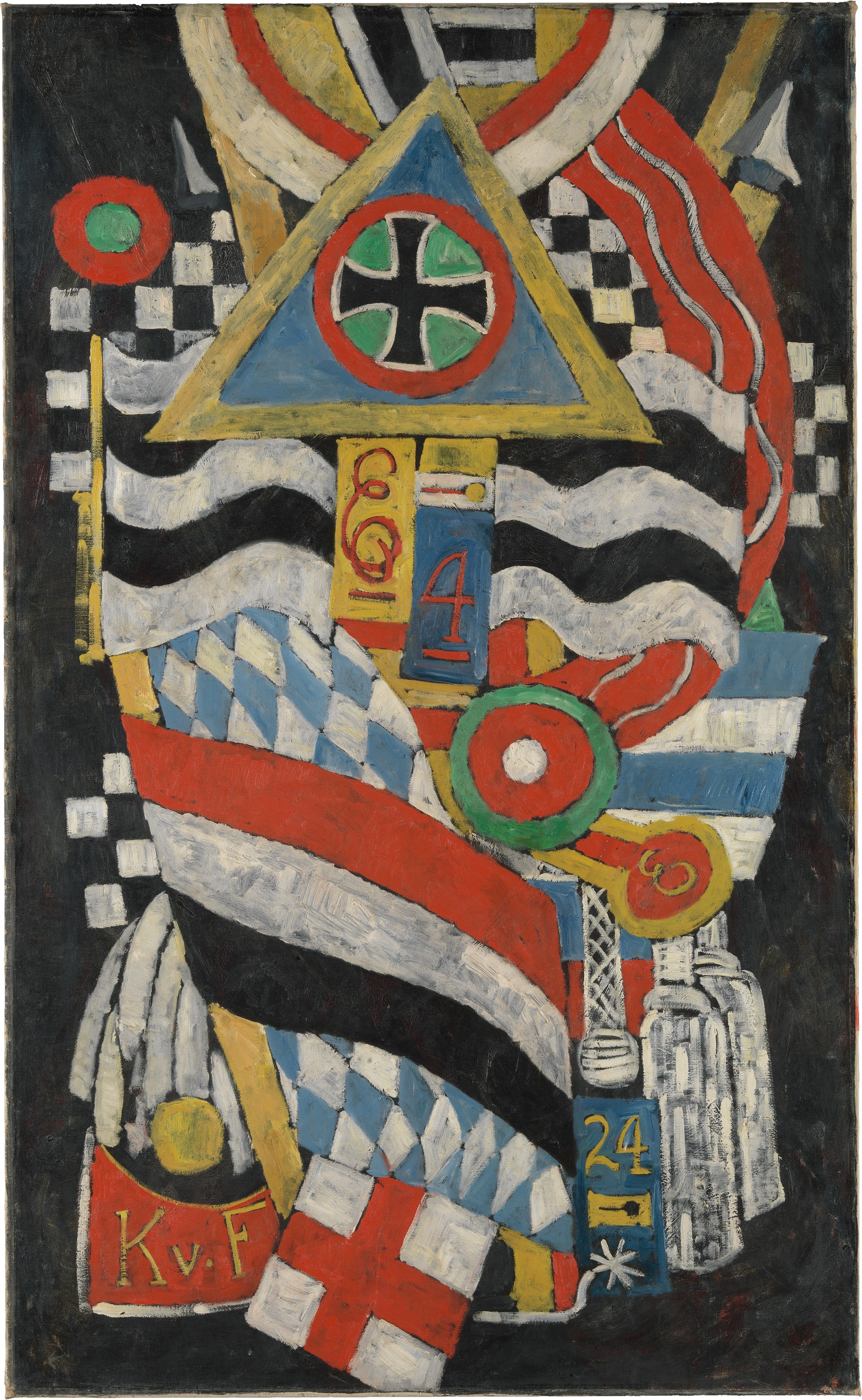
Traipsing Through The Arts-All Serious 20th Century Art Is About Sex-Forget That Stuff You Learned In Art Class About The Search For The Sublime-In The Time Of His Time-The Homoerotic Art Of Marsden Hartley-Portrait Of A German Officer (1914)


Traipsing Through The Arts-All Serious 20th Century Art Is About Sex-Forget That Stuff You Learned In Art Class About The Search For The Sublime-In The Time Of His Time-The Homoerotic Art Of Marsden Hartley-Portrait Of A German Officer (1914)


By Laura Perkins 

It is no secret at this point that I am wedded to the idea that all serious 20th art, who knows maybe all art but I won’t go out on a limb for that proposition just as I have acknowledged that the jury is still out of 21st century art that is massively influenced by digital technology among other trends, is centered on the search for the sexual and erotic courtesy of Mr. Freud’s insights. This seemingly rationale approach to an overview of 20th century art has had many detractors, nay-sayers, who have not spared the cyber-ink in attempting to refute my theory and have to the extent that anybody has offered a viable alternate been promoting such ideas as the search for the sublime (or in the alternate if they are old-fashioned or if “sublime” seems too sexy a word-beauty) in this wicked old world or touted the now hoary “art for art’s sake” scam. (I am sorry but every time I write that term I have to snicker and think of all the rolled eyes and sneers of those fellow writers around the office water cooler when I mention the expression. Even those who don’t know art from a hold in the wall and last entered, trembling, into an art museum on a fifth-grade yellow bus field trip that they never got over.)   

Of course, the search for the sublime (usually called the search for beauty since most elementary and junior high school students would probably not know or relate to the word “sublime”) is the way art teachers in that just mentioned junior high school would present the subject for most of that century and certainly was a familiar term to me after I took art appreciation classes in college. That “sublime” language had been used from junior high school to the pinnacles of the modern art cabal (museum curators, directors, hired flaks, flattered and hired press agents and pundits, art critics for glossy journals, well-heeled art patrons and the key link in the chain the ever hustling art gallery owners) to avoid the then somewhat socially disturbing use of the word “sex” and “eroticism” to the uninitiated.

Certainly junior high school kids (and their prudish parents) would have freaked out at such terminology, would have red-faced laughed the teacher out of the room if she or he had used the word sublime since those racing hormones would have worked overtime to fathom that word in public. (Those parents would have been more forgiving talking about child molesters or running them out of town on a rail, things like that.) Hence the shorthand “beauty” business with the added distraction of “art for art’s sake” (what does that mean anyway except as gibberish to throw sand in the eyes by dunking everything created for whatever purpose from Impressionism to Op-Pop-Bop Art into the same cauldron). The attacks by the chief advocate of this “art for art’s sake” drone recently has been by one Clarence Dewar a professional art critic at Art Today (and who has made everybody very aware as if it needed comment that he is a pro and I am not, and I have never claimed such status).

(We have received communications from smaller fry spouting forth the same gibberish but either that bilious talk was from well-known art gallery press agents, hired guns to protect the value of unsold and unsaleable merchandise or art majors on the make who need jobs after graduation to get themselves or their parents or both out from that mountain of student debt when said student against all advise decided to cast his or her fate with the muses. We target, a very good word here, Mr. Dewar since he was an acolyte of the well-known late art critic Clement Greenberg who started all the gibberish. Beside we know from very close at hand sources that Mr. Dewar used to plagiarize, maybe still does, Greenberg’s articles merely throwing his name on the top for which he was summarily canned back when journalism standards were higher, and editors had more backbone.)     


Of course as usual with this denizen of the deep Dewar is once again retailing somebody else’s idea specifically if I recall the painter James Abbott McNeil Whistler’s back in the 19th century (via that same Greenberg who added the theoretical flourishes and some nifty thefts from Vasari’s stockpile of odds and ends not seen since about the 15th century and I remember waiting for the old “art is timeless” gag to buttress his argument but Dewar at least had enough sense to omit that noise). At least Whistler was using that idea to hustle money to ward off his creditors (and “advertise” his various mistresses’ availability for “escort service” as a high-end procurer of women for the artsy gentlemen clientele). I might add, which I do every time I can just as Dewar touts his professional status, and gladly do it twice here that earlier in his career in the days when he was nothing  but Clement Greenberg’s shill that he would submit copy as his own when he just was regurgitating his boss’ work and was fired for plagiarism. (Check the archives of Art Today for verification.)

What galls Mister Dewar these days is my statement in a review of one of the novelist John Updike’s three volumes of musings on art (the Looking series of 1989, 2005, 2012) that there was plenty of room for homoerotic art under the expansive art tent. I cited the late work of painter Marsden Hartley who whatever else grew immensely from his earlier Maine coast and mountains European rough trade blah-blah as he aged into a fully-coded partisan of homoerotic art as way to explain his personal sexual preferences. Totally legitimate then and now although then fraught with more danger given the extreme legal, social and political implications of revealing your sexual preferences to busy-body eyes, private and public. Dewar (and for this he only deserves to be called by his last name) claims, get this, that there has been no serious homoerotic art since Grecian times and one would have to look very, very carefully to see any such “closeted art,” his term worth the name in the 20th century. Moreover, and maybe he had been drinking too heavily or gotten too deeply into the bong pipe, Dewar claimed that the coded art of (the few) known homosexuals in the 20th century including Hartley did not prove decisive.

(To give a better idea what a total prude this so-called professional art critic is, a critic who seems only to have eyes to read my little scribblings and no other, a couple of reviews back I mentioned that 19th century French painter Vuillard’s Woman In Stripe Dress was done in honor of their affair even though the musical Misia, the woman in the stripe dress, was married and her husband was paying the freight for the painting. A husband who was a patron of Vuillard’s work. Like it was impossible for a painter and what amounted to his model and muse to get under the silk sheets, married or not, friendly with husband or not. What art world does this guy live in. Doesn’t he remember the notorious Madame X painted by Singer Sargent which scandalized all Paris just a few years before. That is what the search for the sublime does to your brain, what is left of it after you smell the paints for too long. Misia and Vuillard would have had a good laugh if they heard about Brother Dewar’s musings.)                   
                  
Back to poor Hartley though who that same Greenberg (although I have never seen Dewar parrot his old boss on this subject) mentioned at a cocktail party in post-war New York long after the bugger had passed away had a face only a mother could love. From the few photographs I have seen when he was younger I am not sure what Greenberg was talking about although older photos show some serious dissipation, the tell-tale drug, drink, debauchery trifecta at work. (Sam Lowell, ever the class clown, responded when I told him about Greenberg’s comment said to me the famed art critic was a man only a mother could love.) Here is where Dewar (parroting Greenberg) is way off the line. He claims that the Greeks, all the various tribes but especially Sparta and Athens, were proud as shown on their dinnerware and earthenware to show all kinds of sexual antics, including scenes of men putting their penises in other men’s bungholes. (Fewer scenes of open lesbian love but what the heck was the isle of Lebos about anyway except to glorify that feminine love.)         

That was then when such sexual practices were rights of passages among certain classes of citizens, men. When even big named philosopher-kings like Plato, Socrates, Cynos had boyfriends morning, noon, and night. The Christian era, all forms of the doctrines and civil society together made such freedoms very danger to display in person or in art, public art anyway. Much easier to dangle the notorious severed head cults started by Salome taking down chaste John the Baptist, Jesus’ friend and some historians say lover and carried down to the present day through a drug-warped cult. Much easier to have a woman of the evening, a tart, like Mary Madeline, who got sainted for her efforts, half naked before repentance. Much easier to using the case of Whistler already mentioned above as a max daddy pimp (expression courtesy of Sam Lowell) and the wolf and fur used to advertise a woman’s availability for sex ever since the Whore of Babylon worked the palaces way back in the day. Much easier to have a painting disguised to the private initiates rather than bring edge of society sexual practices into public view.

Hartley, once he figured out his sexual preferences could hardly have been unaware of the social taboos to speak nothing of the risks of exposure in his growing up Maine, and even in Bohemian Greenwich Village one had to be cautious against getting caught doing the “love that dare not speak its name.” Some of Hartley’s earlier works from farm Maine times show a clear path to the coded language he would use to signal his sexual preferences and desires. The famous Portrait of a German Soldier from significant 1914 is what I want to decode today since it is unambiguous in its longings. It is well-known that Hartley was smitten with a young good-looking German officer who was killed early in World War I. (I checked with the English poet W.H. Auden whose other claim to fame beyond his poetry was his listing, private listings back then of gay men he claimed for a thing he called the “Homintern” Hartley and more importantly that young German officer were both on his listings even though the dates indicate that England was at war with Germany when he made the entries for the pair).               

I try, and maybe not always successfully, to not be too judgmental about the personal lives of painters and sculptors. (a big exception being that pimp Whistler and his art for art’s sake cover from running his mistresses ragged on the streets just to make rent money). Clearly Hartley was drawn, maybe addicted is the better way to put the matter to the “rough trade” side of same-sex relationships. The giveaway, remember everything is coded in 1914, is the triangle and the German cross inside which not only had military significance but was the “badge” of those who frequented the S&M cabarets on the back streets of Berlin. Some of that rough trade was pretty raw from what later devotees like French writer Jean Genet detailed about his wharf rats. The triangle itself means that the wearer is the “passive” one if that is all the badge shows. The iron cross means the wearer is the aggressor. Hartley was the punk and the German soldier did whatever he liked to him. If I am not mistaken Hartley took some social heat not because his was somebody’s slave girl but because his owner was a German at a time when that was not good in places like England or the United States even before the American entry into the war. That he never condemned his slave owner soldier boy was held against him even in Greenwich Village society.

Art critics have mistaken the bottles at the lower left corner for some kind of elixir before sex but I have it on good authority from Sam Lowell’s longtime growing up neighborhood friend Timmy Riley now known as Miss Judy Garland, a drag queen, who runs the notoriously famous KitKat Club in North Beach out in San Francisco that this is actually a “tool” used as part of the penetration process and let’s leave it at that. Maybe Hartley missed that, maybe he was sentimental about it. There is also a question about that number 24 with many assuming that it was Hartley’s lover’s regimental unit. Again the code comes into pay since those numbers usually represent the fact that oral sex is part of the proceedings. I think even this little without getting into the symbolism of the shield and the whips and chains that we are witnessing a great piece of pre-Stonewall coded homoerotic art.

Hartley would as his got older become more open in subject matter and aspiration concerning his sexual desires, look at his lumberjack on the beach, his fisherman, his fishermen with Jesus and a bunch more. Here is the funny thing, maybe not funny but sad in a way even Grady Lamont in the 1980s (not now) had to be coded in his heterosexual sexual references with his famous pine trees delving deeply into loose soil. Thanks Marsden for what you could do when you could do it.   

SAVE THE DATE! Sunday, June 2 -- DORCHESTER DAY PARADE and cookout after!

Jeff Klein<jjk123@comcast.net>
To  Jeff Klein  
Get Ready to
March Together in the DORCHESTER DAY PARADE!
(AND COOKOUT AFTER!)
Sunday, June 2
Gather in Lower Mills by 12:30pm
cid:image001.png@01CE5177.B607B6C0

Dorchester People for Peace will be marching again this year in the Dorchester Day Parade on June 4 along with our friends and allied organizations. 

We’re in Division 2 this year:  Line up by 12:30 (or earlier if you like – our blue Honda-CRV will be there from at least 11am) on Richmond St. between Dorchester Ave. and Adams St. (see map below)

Every year Dorchester People for Peace reserves a place in the parade, then invites our friends. Together we bring our vision and our values to thousands of people along the four-mile route. Join us this year!

Our message will focus on building a neighborhood-based movement to resist wars and military interventions abroad – while opposing racism, dispossession and budget cuts at home; reducing excessive military spending; and funding urgent needs in our communities.  Thousands of marchers and parade watchers will see our banners and get our anti-war flyers. 

Marchers will gather around Noon in Dorchester Lower Mills (Richmond St.) with the parade kick-off about 1pm.  We’ll have our after-Parade barbeque and celebration at Jeff Klein’s house, 123 Cushing Ave. from about 3:30pm. We’ll have hamburgers and hotdogs – please bring a dish or drinks if you’re able (You can drop off what you are bringing before the parade – Jeff’s house is walking distance from the Savin Hill T-stop)

WHERE: Lower Mills, Dorchester

Richmond Street between Dorchester Ave and Adams Street (Division 2)

Look for the Dorchester People for Peace vehicle

You can’t drive or park anywhere near there on Dorchester Day, so travel early and travel by T (to Ashmont Station on the Red Line, Butler or Milton on the Mattapan trolley) …. Or park a ways away and walk.

Please let us know if you can make it by responding to this email, writing to dotpeoplepeace@gmail.com
or phoning 617-288-4578

cid:image004.jpg@01D09D27.FE3D9B00

BRING: A sun hat, comfortable walking shoes (it’s four miles), water. You can bring a banner for your organization if you have the people to carry it.

COOKOUT: After the parade at Jeff Klein’s, 123 Cushing Ave (near the end of the parade and near Savin Hill T station). We’ll have hamburgers and hotdogs – bring a dish or drinks if you can.

cid:image004.jpg@01CE5177.B607B6C0
Dorchester People for Peace
works to end the wars; to build a multi-racial peace movement against violence and militarism at home and abroad; to oppose budget cuts, racism and political repression.      
617-282-3783  *  dotpeoplepeace@gmail.com