This space is dedicated to the proposition that we need to know the history of the struggles on the left and of earlier progressive movements here and world-wide. If we can learn from the mistakes made in the past (as well as what went right) we can move forward in the future to create a more just and equitable society. We will be reviewing books, CDs, and movies we believe everyone needs to read, hear and look at as well as making commentary from time to time. Greg Green, site manager
In Honor Of Our Class-War Prisoners- Free All The Class-War Prisoners!- Sundiata Acoli
http://www.thejerichomovement.com/prisoners.html
A link above to more information about the class-war prisoner honored in this entry.
Make June Class-War Prisoners Freedom Month
Markin comment (reposted from 2010)
In “surfing” the National Jericho Movement Website recently in order to find out more, if possible, about class- war prisoner and 1960s radical, Marilyn Buck, whom I had read about in a The Rag Blog post I linked to the Jericho list of class war prisoners. I found Marilyn Buck listed there but also others, some of whose cases, like that of the “voice of the voiceless” Pennsylvania death row prisoner, Mumia Abu-Jamal, are well-known and others who seemingly have languished in obscurity. All of the cases, at least from the information that I could glean from the site, seemed compelling. And all seemed worthy of far more publicity and of a more public fight for their freedom.
That last notion set me to the task at hand. Readers of this space know that I am a long-time supporter of the Partisan Defense Committee, a class struggle, non-sectarian legal and social defense organization which supports class war prisoners as part of the process of advancing the international working class’ struggle for socialism. In that spirit I am honoring the class war prisoners on the National Jericho Movement list this June as the start of what I hope will be an on-going attempt by all serious leftist militants to do their duty- fighting for freedom for these brothers and sisters. We will fight out our political differences and disagreements as a separate matter. What matters here and now is the old Wobblie (IWW) slogan - An injury to one is an injury to all.
Note: This list, right now, is composed of class-war prisoners held in American detention. If others are likewise incarcerated that are not listed here feel free to leave information on their cases in the comment section. Likewise any cases, internationally, that come to your attention. I am sure there are many, many such cases out there. Make this June, and every June, a Class-War Prisoners Freedom Month- Free All Class-War Prisoners Now!
Who is Sundiata Acoli?
Sundiata Acoli, a New Afrikan political prisoner of war, mathematician, and computer analyst, was born January 14, 1937, in Decatur, Texas, and raised in Vernon, Texas. He graduated from Prairie View A & M College of Texas in 1956 with a B.S. in mathematics and for the next 13 years worked for various computer-oriented firms, mostly in the New York area.
During the summer of 1964 he did voter registration work in Mississippi. In 1968 he joined the Harlem Black Panther Party and did community work around issues of schools, housing, jobs, child care, drugs, and police brutality.
In 1969 he and 13 others were arrested in the Panther 21 conspiracy case. He was held in jail without bail and on trial for two years before being acquitted, along with all other defendants, by a jury deliberating less than two hours. Read More…
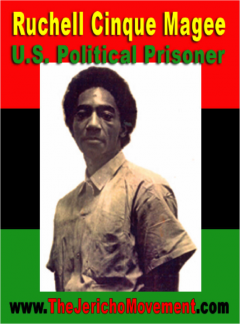
*In Honor Of Our Class-War Prisoners- Free All The Class-War Prisoners!-Ruchell Cinque Magee (Co-defendant from the Angela Davis Case, the forgotten one when CP defense publicity time came)
Ruchell Cinque Magee
http://www.thejerichomovement.com/prisoners.html
A link above to more information about the class-war prisoner honored in this entry.
Make June Class-War Prisoners Freedom Month
Markin comment (reposted from 2010)
In “surfing” the National Jericho Movement Website recently in order to find out more, if possible, about class- war prisoner and 1960s radical, Marilyn Buck, whom I had read about in a The Rag Blog post I linked to the Jericho list of class war prisoners. I found Marilyn Buck listed there but also others, some of whose cases, like that of the “voice of the voiceless” Pennsylvania death row prisoner, Mumia Abu-Jamal, are well-known and others who seemingly have languished in obscurity. All of the cases, at least from the information that I could glean from the site, seemed compelling. And all seemed worthy of far more publicity and of a more public fight for their freedom.
That last notion set me to the task at hand. Readers of this space know that I am a longtime supporter of the Partisan Defense Committee, a class struggle, non-sectarian legal and social defense organization which supports class war prisoners as part of the process of advancing the international working class’ struggle for socialism. In that spirit I am honoring the class war prisoners on the National Jericho Movement list this June as the start of what I hope will be an on-going attempt by all serious leftist militants to do their duty- fighting for freedom for these brothers and sisters. We will fight out our political differences and disagreements as a separate matter. What matters here and now is the old Wobblie (IWW) slogan - An injury to one is an injury to all.
Note: This list, right now, is composed of class-war prisoners held in American detention. If others are likewise incarcerated that are not listed here feel free to leave information on their cases in the comment section. Likewise any cases, internationally, that come to your attention. I am sure there are many, many such cases out there. Make this June, and every June, a Class-War Prisoners Freedom Month- Free All Class-War Prisoners Now!
*In Honor Of Our Class-War Prisoners- Free All The Class-War Prisoners!-Abdul Majid (Anthony Laborde)
http://www.thejerichomovement.com/prisoners.html
A link above to more information about the class-war prisoner honored in this entry.
Make June Class-War Prisoners Freedom Month
Markin comment (reposted from 2010)
In “surfing” the National Jericho Movement Website recently in order to find out more, if possible, about class- war prisoner and 1960s radical, Marilyn Buck, whom I had read about in a The Rag Blog post I linked to the Jericho list of class war prisoners. I found Marilyn Buck listed there but also others, some of whose cases, like that of the “voice of the voiceless” Pennsylvania death row prisoner, Mumia Abu-Jamal, are well-known and others who seemingly have languished in obscurity. All of the cases, at least from the information that I could glean from the site, seemed compelling. And all seemed worthy of far more publicity and of a more public fight for their freedom.
That last notion set me to the task at hand. Readers of this space know that I am a longtime supporter of the Partisan Defense Committee, a class struggle, non-sectarian legal and social defense organization which supports class war prisoners as part of the process of advancing the international working class’ struggle for socialism. In that spirit I am honoring the class war prisoners on the National Jericho Movement list this June as the start of what I hope will be an on-going attempt by all serious leftist militants to do their duty- fighting for freedom for these brothers and sisters. We will fight out our political differences and disagreements as a separate matter. What matters here and now is the old Wobblie (IWW) slogan - An injury to one is an injury to all.
Note: This list, right now, is composed of class-war prisoners held in American detention. If others are likewise incarcerated that are not listed here feel free to leave information on their cases in the comment section. Likewise any cases, internationally, that come to your attention. I am sure there are many, many such cases out there. Make this June, and every June, a Class-War Prisoners Freedom Month- Free All Class-War Prisoners Now!
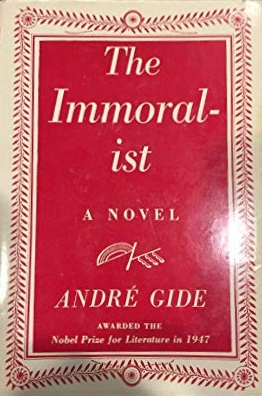
"Man and Superman"-The Immoralist, Andre Gide-A Book Review
BOOK REVIEW
The Immoralist, Andre Gide, Penguin Classics, New York, 2001
Andre Gide was always justly famous for writing tight little novels that presented unusual moral dilemmas that did not, as in real life, necessarily get resolved or resolved in a way that one would think. That is the case here with one of his early and perhaps most famous offerings. The story line centers on the bedraggled life of a consummate French bourgeois scholar who is going through a personal crisis after the death of his father and his unsought `shot gun' marriage in the early part of the 20th century. The newly weds travel to various exotic outposts of French imperialism, including the dry Northern African coast. Along the way he becomes sick with a life-threatening illness but by an act of will, and the extraordinary care of his new wife, overcomes that crisis. As a result of her loving efforts she in turn gets sick (during her pregnancy). He is decidedly inattentive to her illness. The scholar, in the final analysis, permits her to die by his self-centered actions.
Now, after his illness, and as a result of overcoming that experience the scholar begins to believes that he is `superman' a la Nietzsche and therefore consciously or unconsciously becomes the agent of his wife's descend into greater illness and eventually death. Quite a dilemma, to be sure, but he is not crying over it. The real question here is whether, in a hard and unforgiving world where each person is his or her own agent, that it was his duty to thoughtfully care for his wife or whether his need to take actions to `understand' himself was paramount.
Some other moral questions concerning his role as landlord in his inherited rural estate pop up along the way, as well. Also, just a hint of homosexual tension in his dealings with the young Arab boys in the neighborhood hovers in the background. This is a subject that then was almost always covered in discreet language so it is hard to tell the full extent of the attraction. And whether he did anything about it. This is a question that concerned Gide personally, as well.
I would note that this theme (and the sub theme of homosexuality) and the book itself at the start of the 20th century may have been somewhat scandalous but reading it after some of the harrowing events done by humankind in the last century has cut deeply into the impact that it was intended to have. Still it is a great book and a quick read. Any lessons to be drawn about the dark side of human nature, as it has evolved thus far, take a lot longer.
An Encore -Out In The Be-Bop 1950s Night- The Time Of Motorcycle Bill-Take Two
From The Pen Of Joshua Lawrence Breslin
[My old friend, Sam Lowell, whom I have known since the summer of love days out in Frisco days in the late 1960s when we though all the world could be turned upside down and we were the hail fellows, well met who were going to help do it and all we got for our troubles was tear gas, cops' nightsticks and the bastinado for our efforts, oh yeah, and forty year blow-back from the night-takers, and who hails from Carver down in Massachusetts asked me to fill in a few more details about this relationship between Motorcycle Bill and Lily. He thought I was originally kind of skimpy on why a nice Catholic girl would go all to pieces over a motorcycle guy, would get on his bike like she was some low-rent tart from the wrong side of town the usual type that went for motorcycle guys in his book. Sam didn’t get the idea that when that cycle surge came along just like us with the heroic antics of the summer of love lots of ordinary teens went with the flow. So here is a little extra, a take two for Sam, and maybe for others who missed that big motorcycle moment.]
********
There was a scourge in the land, in the 1950s American land. No, not the one you are thinking of from your youth or from your history book, not the dreaded but fatalistically expected BIG ONE, the mega-bomb that would send old mother earth back to square one, or worst, maybe only the amoebas would survive to start the long train of civilization up the hill once again. Everybody expected that blow to come if it did come and we in America were not vigilant, did not keep our shoulders to the wheel and not ask questions from the nefarious Russkies (of course we that were just coming to age in the rock and roll night would not have had a clue as to what questions to ask if asking questions was acceptable then and it was not and we as young as were knew that it was not from parents to teachers to Grandpa Ike and his cabinet). We, if not vigilant, would take it in the back from a guy named Joe Stalin which one of our teachers said meant “steel” in Russian but it could have been from any Russian guy as we learned later after Stalin died and other atomic bomb-wielding guys took over in Red Square.
Sure that red scare Cold War was in the air and every school boy and girl had their giggling tales of having to hide, hide ass up, under some desk or other useless defense in air raid drill preparations for that eventually. I wasn’t any revolutionary or radical or “red” although one teacher looked at me kind of funny when I mentioned it but I couldn’t get behind the purpose of hiding under some old-timey elementary school wooden desk when every film I ever saw of what an atomic blast looked like said you might as well not have your ass sticking up in the air when Armageddon came. Like I said one teacher looked at me very funny. So sure the air stunk of red scare, military build-up cold war “your mommy is a commie turn her in" (and there were foolish kids who did try to use that ploy when dear mother said no to some perfectly reasonable request and junior thought to get even he would rat her out).
But the red scare, the Cold War ice tamp down on society to go along to get along was not the day to day scare for every self-respecting parent from Portsmouth to the Pacific. That fear was reserved for the deadly dreaded motorcycle scare that had every father telling his son to beware of falling under the Marlon Brando sway once they had seen the man complete with leather jacket, rakish cap and surly snarl playing Johnny Bad in The Wild One at the Strand Theater on Saturday afternoon and deciding contrary to the cautionary tale of the film that these Johnnies were losers spiraling down to a life, a low life of crime and debauchery (of course said son not knowing of the word, the meaning of debauchery, until much later) just shrugged his innocent shoulders.
More importantly, more in need of a five alarm warning, every mother, every blessed mother, self-respecting or not, secretly thinking maybe a toss in the hay with Marlon would bring some spice to her otherwise staid ranch house with breezeway existence warned off their daughters against this madness and perversity in leather. Warned those gleaming-eyed daughters also fresh from the Saturday afternoon matinee Stand Theater to not even think about hanging with such rascals contrary to the lesson that cute waitress in the film gave about blowing Johnny off as so much bad air. (Of course forgetting, as dad had with junior, to bring up the question of sex which is what Sissy had on her mind after one look at that cool attire of Johnny and her dream about how she could get that surly smirk off of his face.)
Of course that did not stop the wayward sons of millworkers slated for work in the mills when their times came from mooning over every Harley cat that rode his ride down Main Street, Olde Saco (really U.S. Route One but everybody called it Main Street and it was) or the daughters slated for early motherhood under proper marriage or maybe sales clerks in the Monmouth Store from mooning (and maybe more) over the low- riders churning the metal on those bad ass machines when they went with their girlfriends over to Old Orchard Beach on sultry sweaty weekend nights in summer.
This is how bad things were, how the cool cats on the bikes sucked the air out of any other guys who were looking for, well, looking whatever they could get from the bevies of girls watching their every move like hawks. Even prime and proper Lily Dumont, the queen of Saint Brigitte’s Catholic Church rectitude on Sunday and wanna-be “mama” every other waking minute of late. Now this Lily was “hot” no question so hot that my best friend in high school Rene Dubois, the best looking guy around the Acre where we all lived and who already had two girlfriends (and later in life would have four, count them, four wives before he gave the marriage game up and just shacked up with whatever romantic interest he had at the moment), would go to eight o’clock Mass every Sunday and sit a couple of rows in back of her and just watch her ass. (I know because I was sitting beside him watching that same ass). He never got anywhere with her, she knew about the two girlfriends since they were friends of hers, and neither did I. Lily was a classic French-Canadian beauty long thin legs, petite shape but with nice curves, long black hair and pop-out blue eyes. Nice but like I said but strictly the ice queen as far as we could tell. Especially when she would constantly talk about her friendship with Jesus and the need to say plenty of rosaries and attend many novenas to keep in touch with him.
In this time of the motorcycle craze though something awoken in her, maybe just the realization that Jesus was okay but guys who thought she was hot maybe needed some tending too. In any case, and I didn’t find this out until several years later after Lily had left town, my sister who was one of Lily’s close friends then and Lily could confide girl talk to her during this motorcycle dust up Lily would find herself restless at night, late at night and contrary to all good Catholic teachings would put her hand in a place where she shouldn’t (this is the way my sister put it you know Lily was just playingwith herself a perfectly natural feeling for teenagers, and older people too) and she was embarrassed about it, didn’t know if she could go to confession and say what sin she committed to old Father Pierre. I don’t know if she ever did confess or things got resolved a different way and that idea was out of play but there you have it.
And the object of her desire? One “Motorcycle Bill,” the baddest low- rider in all of Olde Saco. Now baddest in Olde Saco (that’s up in ocean edge Maine for the heathens and others not in the know) was not exactly baddest in the whole wide world, nowhere as near as bad as say Sonny Barger and his henchmen outlaws-for- real bikers out in Hell’s Angels Oakland as chronicled by Doctor Gonzo (before he was Gonzo), Hunter S. Thompson in his saga of murder and mayhem sociological- literary study Hell’s Angels. But as much is true in life one must accept the context. And the context here is that in sleepy dying mill town Olde Saco mere ownership, hell maybe mere desire for ownership, of a bike was prima facie evidence of badness. So every precious daughter was specifically warned away from Motorcycle Bill and his Vincent Black Lightning 1952 (although no mother, and maybe no daughter either, could probably tell the difference between that sleek English bike and a big pig Harley). But Madame Dumont felt no need to do so with her sweet sixteen Lily who, maybe, pretty please maybe was going to be one of god’s women, maybe enter the convent over in Cedars Of Lebanon Springs in a couple of years after she graduated from Olde Saco High along with her Class of 1960.
But that was before Motorcycle Bill appeared on the horizon. One afternoon after school walking home to Olde Saco’s French- Canadian (F-C) quarter, the Acre like I said where we all lived, all French-Canadians (on my mother’s side, nee LeBlanc for me) on Atlantic Avenue with classmate and best friend Clara Dubois (my sister was close to Lily but not as close as Clara since they had gone to elementary school together), Lily heard the thunder of Bill’s bike coming up behind them, stopping, Bill giving Lily a bow, and them revving the machine up and doing a couple of circle cuts within a hair’s breathe of the girls. Then just a suddenly he was off, and Lily, well, Lily was hooked, hooked on Motorcycle Bill, although she did not know it, know it for certain until that night in her room when she tossed and turned all night and did not ask god, or any of his associates, to guide her in the matter (the matter of that wayward hand for those who might have forgotten).
One thing about living in a sleepy old town, a sleepy old dying mill town, is that everybody knows everybody’s business at least as far as any person wants that information out on the public square. Two things are important before we go on. One is that everybody in town that counted which meant every junior and senior class high schooler in Olde Saco knew that Bill had made a “play” for Lily. And the buzz got its start from none other than Clara Dubois who had her own hankerings after the motorcycle man (her source of wonder though was more, well lets’ call it crass than Lily’s, Clara wanted to know if Bill was build, build with some sexual power, power like his motorcycle. She had innocently, perhaps, understood the Marlon mystique). The second was that Bill, other than his bike, was not a low life low- rider but just a guy who liked to ride the roads free and easy. See Bill was a freshman over at Bowdoin and he used the bike as much to get back and forth to school from his home in Scarborough as to do wheelies in front of impressionable teenage girls from the Acre.
One day, one afternoon, a few days after their Motorcycle Bill “introduction,” when Lily and Clara were over at Seal Rock at the far end of Olde Saco Beach Bill came up behind them sans his bike. (Not its real name but had been given the name Seal Rock because the place was the local lovers’ lane at night and many things had been sealed there including a fair share of “doing the do,” you know hard and serious sex. During the day it was just a good place to catch a sea breeze and look for interesting clam shells which washed up in the swirling surf there.) Now not on his bike, without a helmet, and carrying books, books of all things, he looked like any student except maybe a little bolder and a little less reserved.
He started talking to Lily and something in his demeanor attracted her to him. (Clara swore, swore on seven bibles, that Lily was kind of stand-offish at first but Lily said no, said she was just blushing a lot.) They talked for a while and then Bill asked Lily if she wanted a ride home. She hemmed and hawed but there was just something about him that spoke of mystery (who knows what Clara thought about what Lily thought about that idea). She agreed and they walked a couple of blocks to where he was parked. And there Lily saw that Vincent Black Lightning 1952 of her dreams. Without a word, without anything done by her except to tie her hair back and unbutton a couple of buttons from her starched white shirt she climbed on the back of the bike at Bill’s beckon. And that is how one Lily Dumont became William Kelly’s motorcycle “mama” when the high tide of the motorcycle as sex symbol hit our town.
Once Again-Go Where The
Money Is-Robert Redford’s “The Old Man And The Gun” (2018)- Film Review
By Lance Lawrence
The Old Man and the Gun,
Robert Redford, Sissy Spacek, Danny Glover, Tom Waits, 2018
Around our neighborhood,
our growing up neighborhood in Riverdale west of Boston, in the late 1950s we
had our fair share of heroes. Mostly guys who had made the coppers cry for one
reason or another or who had pulled some fast one on some high roller. Best of
all were the guys who pulled armed robberies, stick-ups. Part of that lure was
that the infamous Trigger Burke had set the tone having taken part in the
famous Brink’s armored truck robbery of the early 1950s. Part of it was from my
our household, and that of a few others when my late oldest brother, Prescott,
started his long criminal career robbing the local Esso gas station at gunpoint
at the age of seventeen (he got about thirty dollars, got caught and was given
“the choice” by the judge-go in the military or go to jail for a long while-he
took the military but I remember him saying after the service, he got a bad
conduct discharge for some reason I can’t remember, but you can figure it out
that he had made the wrong decision.) Something like he could have learned more
important career skills in the slammer.
All of this to lead up
to two things. First one of the key anthems of the neighborhood toughs when
figuring out how to get money was to think about what the famous bank robber
Willie Sutton said when, presumably captured after a heist, why he did it. And
came back with the classic (and by his lights rational reason)- “that’s where
the money is.” Fair enough. But as a recently watched film produced and starring
ancient Robert Redford The Old Man and
The Gun suggests that is only part of the motivation for a guy like the
famous “gentleman” bank robber Forrest Tucker when he held sway back in the
days. Maybe it was the excitement, the planning, the cunning or just liking the
“life” but the actual money was just something shiny to pursue. All of these ideas
got connected through my brother Prescott who actually did time with Forrest
back in the early 1960s and so rather than the abstract Sutton that we were not
that familiar with the big-time bank robber we knew about was Tucker. Probably
if the film had not been made I would have thought nothing about it but since
it was made the plot brought back memories of Prescott and his always having
what we called his “wanting habits,” his almost constant scheming up some job, some
robbery, or some con usually of women to get front money for a job. (Prescott
was particularly attractive to women, and not just whores and bar girls there
were always college girls around him, even one lawyer, looking for kicks before
going off to the suburbs and that kind of good life not on the wild side.)
The way the story line
played out Redford was trying to pitch to the idea that to some guys the “life”
is in their DNA, to live to figure out the next scheme. Maybe if Bertolt Brecht
was right in his play The Three Penny
Opera the line as to personality types between criminal and businessman is
not so far apart. The telling detail of this thought came graphically through
at the end of the film when after a big bank robbery spree (which you probably
can’t do anymore with the way banks are set up now and where, probably easier
to rob ATMs I don’t know) he is finally caught, again, does some time and then
is released to his lady friend, played by previously clueless Sissy Spacek who
wants him to stay put-with her on her ranch. But it does not take much
intuition to know that every look, every move Tucker makes is calling him back
to the “life” as old and he was. Just one more spree. And that would be the
last spree since he died in prison.
Let’s give few
highlights of the film, points about his professional skills (including many escapes
from prison and many dodging the coppers) though because Forrest was very
clever and smart about the way he worked his grift. As mentioned above his act involved
his acting the “gentleman” robber, sometimes on his own and others with a couple
of ex-cons dubbed by the media the Over the Hill Gang played by Danny Glover
and Tom Waits). Here’s the beauty of his scheme-mild-mannered old guy, an
average harmless depositor Forrest walks up to a teller or a manager and indicated
he had a gun aimed right at them. That will usually loosen up those parties to
give him what he wants-the dough and then he just as casually walks out the
door and all hell breaks loose once the coppers are notified. But see he has a police
scanner, extra well-placed automobiles and a route away from danger-usually. Of
course the many escapes from prison us that he wasn’t always successful and so perhaps
one had better think about a more rational occupation for his energies. Still although
it was a close thing, very close in my case as a kid it seemed pretty exciting
to live on the edge like that.
Oh, Rosalita-With
Marilyn Monroe, Montgomery Clift and Clark Gable’s Film Adaptation Of Arthur
Miller’s “The Misfits” In Mind
By Zack James
Maybe it was something
in the drinking water but Louis Lyons was beside himself once he figured out
the real reason why he spent a couple of weekend nights watching a couple of
old-time flicks, films which he had gathered in from his Netflix service. Lou
had been on a long term kick about watching, or rather re-watching, films,
mostly black and white from his checkered seedy random youth. In those days he
would have viewed such films not on his HD television or via the stream of his
computer but at his local theater, The Majestic, in his hometown of Oxford out
in Western Massachusetts now long since closed where he would spent many an
ungodly Saturday afternoonviewing the
current fare. The “ungodly’ part for real his parents were devout Sixth Day
Anabaptists whose day of worship started midday Saturday and ended at dawn
Sunday morning and although they were liberal enough to see that Lou would have
snuck out anyway always cast that epitaph his way when he came sheepishly
through the door after being hunkered with a box of made last popcorn and some
candy bars purchased at Billy’s Variety and “snuck” in under the watch-less
eyes of the ushers. Later in high school, having grown out of kids’ clothing
and Saturday matinees about the same time, he let those epitaphs flow off his
back like water off a duck after coming in late on Saturday nights. Reason: or
one of the reasons, Lottie Larson who was the first girl who accepted his
invitation when he asked her the locally famous, locally high school movie date
night, question-balcony or orchestra? Orchestra meant maybe one date and out
but balcony meant promise of anything from a “feel” inside or out of some
girl’s cashmere sweater to a tight space blow job.
This trip, this
diversion down rural hills nostalgia road, has a purpose since it was on the
same track that was bothering Lou’s old mind. The eternal, infernal, ways of
sex which had one way or another bothered Lou’s mind since puberty, maybe
before if Doctor Freud and his acolytes were right. The association played out
this way. On Friday night he had watched for the umpteenth time one of his
all-time favorite films the film adaptation of Ernest Hemingway’s To Have And Have Not starring Lauren
Bacall and Humphrey Bogart. One of the reasons that he favored that film is
that although he did not see it when it had come out since he was only a dream
in his parents’ way of life in 1941 when the film had come out when he saw it
in retrospective in college at the Brattle Theater in Harvard Square he had
told his date, name now long forgotten in memory, that some of the scenes in
that classic were as hot, maybe hotter, between two people with their clothes
fully on than half the porno being featured in the Combat Zone in downtown
Boston. (Lou vaguely remembered that night was a hot date night with that
unremembered young woman when they had gone back to her place on Commonwealth
Avenue.) After that recent viewing though he had remarked to his wife, his
third wife, Moira, that given the best of it Captain Morgan, Bogie’s role, a
craggy sea salt, and Marie, the Bacall role, that he had to be at least twice
her age, maybe more. (He had actually looked it up on Wikipedia and found Bogie was forty-five and Bacall nineteen at the
time so the “maybe more” was definitely in play). That started a short
discussion between them about younger women being attracted to older men (as a
sign of some kind of distorted social norm older men being attracted to younger
women never made it to the conversation table). No conclusions were drawn at
the time by Lou.
Saturday night Moira was
out attending her weekly bridge party with some of her girlfriends and Lou
wound up watching the other film the film adaptation of Arthur Miller’s The Misfits starring Marilyn Monroe and
Clark Gable (with serious supporting roles by Montgomery Clift, Eli Wallach,
and Thelma Ritter). Once again maybe giving Clark, playing Gaye, a decided edge
in the looks department over Bogie and the fact of being a real cowboy over a
sea captain an older man was attractive to a younger woman, Rosalyn, played by
Marilyn Monroe. Lou, a little younger than the older brothers and fathers who
saw Ms. Monroe as the epitome of 1950s sexual allure and beauty, had seen the
film when he was in high school, alone if he recalled.
The question of younger
women being attracted to older men would not have stuck out as much it had
those nights on the first viewing of the films back in the day but since then
there had been Rosalita, his second wife, the wife that Lou had left for Moira.
The main reason, although not the only reason, had been the wide gap in age
between them, Rosalita had been twenty-five and he almost fifty when he spied
her one night in San Francisco at the City Lights Bookstore, the famous one run
by Lawrence Ferlinghetti and the big “beat” hang-out back in the 1950s when
being “beat” mean something socially unlike later when he tried to emulate them
and got nothing but laughs for digging something, a scene so passé. He was
trolling the place, literally, since he had just got divorced back in
Massachusetts from his first wife, Anna, and after the acrimonious settlement
decided he needed to head west and make a new start. Needed the company of a
woman as well and somebody he had run into at Ginny’s Bar in North Beach had
told him that if you were looking for a certain type woman, intellectually curious,
maybe a little off-kilter, maybe easy too then in San Francisco you hit the
bookstores and City Lights was a magnet. (That “custom” was not confined to
Frisco Town he had met Moira at the Museum of Fine Arts in Boston under the
same imperative).
Lou had been looking for
a copy of Allen Ginsberg’s poem Howl
(in a book which came with other poems as well) since that was one of
his favorite poems, if
not his most favorite then. Then this thin, brown-eyed, black-haired
good-looking young women whom he at first thought was Spanish, maybe from
Mexico given where he was came up behind him and started going on and on about
Ginsberg who had just died a few years before. (Rosalita was not Spanish at all
but Irish her mother just liked the name.) He was shocked that anybody under
the age of forty would know anything about Ginsberg and the important of his
poem not only as a break in the kind of poem that was acceptable in polite
society but the harsh social message Ginsberg was laying down. She, not he,
asked if he would like to stop at the café and have a cup of coffee. He figured
why not (he did not find out until after they had a couple of subsequent dates
that women, women of all ages, also trolled the bookstores looking for men, men
who say would be looking at something like Howl
which told them the guy could at least read unlike some of the beasts they
had run across in the bars or at some off-beat party).
That afternoon started
their affair but Lou was from the start apprehensive about their differences in
ages which came up often along the way, for example, when he mentioned that he
had been in Washington on May Day, 1971 and had been arrested in the dragnet
that the cops and military had set up that day she didn’t understand, could not
get around the idea that people would try to shut down the government if it did
not stop the Vietnam War. At times they could work through it like that first
day with Ginsberg (she turned out to have been an English major at Berkeley)
but other times, times when she tried to coax him into jogging which she was
crazy about they would fight civil war worthy battles. He always had the
sneaking suspicion that Rosalita was not telling the truth when she mentioned
that she had had trouble with her male peers, boys she called them, and had
been attracted to older men ever since her father had abandoned her family when
she was twelve. She had told him repeatedly that she was looking for the
maturity and security that an older man would bring. Lou could never really get
that through his head and eventually his tilted his behavior toward giving dear
Rosalita reason to boot him out the door. (On top of meeting Moira closer in
age to him at the museum when for one last effort to reconcile they had moved
to Boston).
That The Misfits movie night Lou had finally
figured out, too late like lots things in his life, maybe Rosalita had been
just like Marie and Rosalyn needing a safe harbor. Damn.
The Roots Is The Toots: The Music That Got The Generation Of ’68 Through The 1950s Red Scare Cold War Night-You Got That Right Brother-The Blues Ain’t Nothing But A Good Woman On Your Mind -With Arthur Alexander's Anna In Mind
A YouTube film clip of Arthur Alexander performing his classic Anna later coveted on a cover by the Beatles.
Introduction by Allan Jackson
[Who said it, Tupac or Biggy Smalls, Tupac now that I think about it, that “Christmas kind of missed us, birthdays were the worst days” in growing up poor wherever they hailed from. That sure was the case, despite the difference in race, not an unimportant in haughty white bread America now, or then, in my growing up Acre neighborhood of North Adamsville where the wanting habits were just as hunger-driven as any community of color on the economic level. In the story below the kid is causing holy hell and damnation because she can’t get some modern gizmo to seem hip or something. I knew the kid who the story was based on and even he will say he was being weird when compared to my even poorer existence. Painful as it is to speak of even today when I have cash and credit to see me through we didn’t even have that margin to get some extra gizmo, not even close.
My mother was the world champion at “the envelopes” each weekly payday. Those enveloped neatly marked in her steady for all the various bills due each week. Of course, never, never as far as I remember did the dough match the bills, and so the envelopes were divvied up on the basic of lateness due and on giving just enough money to not be evicted, or dunned for a million bills. She had the thing down to a science about how much she could tender without ever getting straight. If things were really bad and I could always tell before I got old enough to refuse to do the dirty work anymore she would sent me hat in hand to pay let’s say the rent with my dour face hopefully I would not get yelled at by the clerk who seemed to thing we were stiffing her personally. The stoolie thing worked though since we never were evicted as close at things were at times.
Worse, worse in growing up in the serious golden age of the automobile in America in the days when every self-respecting family had an automobile and exchanged for a new version every three years we walked, walked everywhere and on the few occasions when we did have a car the thing was a monster that I was ashamed to be seen in and so I walked, walked desperate walks of shame. So can you really be naïve enough to feign wondering why when corner boy time came and Scribe figured out ways to get dough without much risk I was in with all my hands. Allan Jackson]
***********
Johnny Prescott daydreamed his way through the music that he was listening to just then on the little transistor radio that Ma Prescott, Martha to adults, and Pa too, Paul to adults, but the main battles over the gift had been with Ma, had given him for Christmas. In those days we are talking about, the post-World War II red scare Cold War 1950s in America, the days of the dreamy man in the family being the sole provider fathers didn’t get embroiled in the day to day household kids wars and remained a distant and at times foreboding presence called in only when the dust-up had gotten out of hand. And then Papa pulled the hammer down via a classic united front with Ma. Johnny had taken a fit around the first week in December in 1960 when Ma quite reasonable suggested that a new set of ties to go with his white long-sleeved shirts might be a better gift, a better Christmas gift and more practical too, for a sixteen year old boy. Reasonable since alongside Pa being that sole provider, being a distant presence, and being called in only when World War III was about to erupt in the household he also worked like a slave for low wages at the Boston Gear Works, worked for low wages since he was an unskilled laborer in a world where skills paid money (and even the skills that he did have, farm hand skills, were not very useful in the Boston labor market). So yes ties, an item that at Christmas time usually would be the product of glad-handing grandmothers or maiden aunts would in the Prescott household be relegated to the immediate family. And that holiday along with Easter was a time when the Prescott boys had in previous years had gotten their semi-annual wardrobe additions, additions provided via the Bargain Center, a low-cost, low rent forerunner of the merchandise provided at Wal-Mart.
This year, this sixteen year old year, Johnny said no to being pieced off with thick plaid ties, or worse, wide striped ties in color combinations like gold and black or some other uncool combination, uncool that year although maybe not in say 1952 when he did not know better, uncool in any case against those thin solid colored ties all the cool guys were wearing to the weekly Friday night school dances or the twice monthly Sacred Heart Parish dances the latter held in order to keep sixteen year old boys, girls too, in check against the worst excesses of what the parish priests (and thankful parents) thought was happening among the heathen young.
No, that is not quite right, that “Johnny said no” part, no, he screamed that he wanted a radio, a transistor radio, batteries included, of his own so that he could listen to whatever he liked up in his room, or wherever he was. Could listen to what he liked against errant younger brothers who were clueless, clueless about rock and roll, clueless about what was what coming through the radio heralding a new breeze in the land, a breeze Johnny was not sure what it meant but all he knew was that he, and his buddies, knew some jail-break movement was coming to unglue all the square-ness in the over- heated night. Could listen in privacy, and didn’t have to, understand, didn’t have to listen to some Vaughn Monroe or Harry James 1940s war drum thing on the huge immobile RCA radio monster downstairs in the Prescott living room. Didn’t have to listen to, endlessly Saturday night listen, captive nation-like listen to WJDA and the smooth music, you know, Frank Sinatra, Andrews Sisters, Bing Crosby, and so on listen to the music of Ma and Pa Prescott’s youth, the music that got them through the Depression and the war. Strictly squaresville, cubed.
Something was out of joint though, something had changed since he had begun his campaign the year before to get that transistor radio, something or someone had played false with the music that he had heard when somebody played the jukebox at Freddy’s Hamburger House where he heard Elvis, Buddy, Chuck, Wanda (who was hot, hot for a girl rocker, all flowing black hair and ruby red lips from what he had seen at Big Max’s Record Shop when her Let’s Have A Party was released), the Big Bopper, Jerry Lee, Bo, and a million others who made the whole world jump to a different tune, to something he could call his own. But as he listened to this Shangra-la by The Four Coins that had just finished up a few seconds ago and as this Banana Boat song by The Tarriers was starting its dreary trip through his brain he was not sure that those ties, thick or uncool as they would be, wouldn’t have been a better Christmas deal, and more practical too.
Yeah, this so-called rock station, WAPX, that he and his friends had been devoted to since 1957, had listened to avidly every night when Johnny Peeper, the Midnight Creeper and Leaping Lenny Penny held forth in their respective DJ slots, had sold out to, well, sold out to somebody, because except for late at night, midnight late at night, one could not hear the likes of Jerry Lee, Carl, Little Richard, Fats, and the new rocker blasts, now that Elvis had gone who knows where. Killer rocker Chuck Berry had said it best, had touched a youth nation nerve, had proclaimed the new dispensation when he had proclaimed loud and clear that Mr. Beethoven had better move alone, and said Mr. Beethoven best tell one and all of his confederates, including Mr. Tchaikovsky, that rock ‘n’ roll was the new sheriff in town. But where was Chuck, where was that rock blaster all sexed up talk and riffs to match now that everybody was reduced to Bobby Darin, Bobby Rydell, and Bobby, hell, they were all Bobbys and Jimmys and Eddies and every other vanilla name under the sun now not a righteous name in the house. As Johnny turned the volume down a little lower (that tells the tale right there, friends) as Rainbow (where the hell do they get these creepy songs from) by Russ Hamilton he was ready to throw in the towel though. Ready to face the fact that maybe, just maybe the jail-break that he desperately had been looking forward to might have been just a blip, might have been an illusion and that the world after all belonged to Bing, Frank, Tommy and Jimmy and that he better get used to that hard reality.
Desperate, Johnny fingered the dial looking for some other station when he heard this crazy piano riff starting to breeze through the night air, the heated night air, and all of a sudden Ike Turner’s Rocket 88 blasted the airwaves. Ike whose Rocket 88 had been the champion choice of Jimmy Jenkins, one of his friends from after school, when they would sit endlessly in Freddy’s and seriously try to figure out whose song started the road to rock and roll. Johnny had latched onto Big Joe Turner’s Shake, Rattle and Roll which Elvis did a smash cover of but who in Joe’s version you can definitely heart that dah-da-dah beat that was the calling card of his break-out generation, as well as the serious sexual innuendo which Frankie Riley explained to one and all one girl-less Friday night at the high school hop. Billy Bradley, a high school friend who had put an assortment of bands together and so knew more than the rest of them combined, had posited Elmore James’ Look Yonder Wall as his selection but nobody had ever heard the song then, or of James. Johnny later did give it some consideration after he had had heard the song when Billy’s band covered it and broke the place up.
But funny as Johnny listened that night it didn’t sound like the whinny Ike’s voice on Rocket 88 so he listened for a little longer, and as he later found out from the DJ, it had actually been a James Cotton Blues Band cover. After that band’s performance was finished fish-tailing right after that one was a huge harmonica intro and what could only be mad-hatter Junior Wells doing When My Baby Left Me splashed through. No need to turn the dial further now because what Johnny Prescott had found in the crazy night air, radio beams bouncing every which way, was direct from Chicago, and maybe right off those hard-hearted Maxwell streets was Be-Bop Benny’s Chicago Blues Radio Hour. Be-Bop Benny who everybody who read the rock and roll magazines found easier at Doc’s Drugstore over on Hancock Street knew, had started Chuck Berry, Little Richard, and Fats Domino on their careers, or helped.
Now Johnny, like every young high-schooler, every "with it" high schooler in the USA, had heard of this show, because even though everybody was crazy for rock and roll, just now the airwaves sounded like, well, sounded like music your parents would dance to, no, sit to at a dance, some kids still craved high rock. So this show was known mainly through the teenage grapevine but Johnny had never heard it before because, no way, no way in hell was his punk little Radio Shack transistor radio with two dinky batteries going to ever have enough strength to pick Be-Bop Benny’s show out in Chicago. So Johnny, and maybe rightly so, took this turn of events for a sign. When Johnny heard that distinctive tinkle of the Otis Spann piano warming up to Spann’s Stomp and jumped up with his Someday added in he was hooked. You know he started to see what Billy, Billy Bradley who had championed Elmore James way before anybody knew who he was, meant when at a school dance where he had been performing with his band, Billie and the Jets, he mentioned from the stage before introducing a song that if you wanted to get rock and roll back from the vanilla guys who had hijacked it while Jerry Lee, Chuck and Elvis had turned their backs then you had better listen to the blues. And if you wanted to listen to blues, blues that rocked then you had very definitely had better get in touch with the Chicago blues as they came north from Mississippi and places like that.
And Johnny thought, Johnny who have never been too much south of Gloversville, or west of Albany, and didn’t know too many people who had, couldn’t understand why that beat, that dah, da, dah, Chicago beat sounded like something out of the womb in his head. But when he heard Big Walter Horton wailing on that harmonica on Rockin’ My Boogie he knew it had to be in his genes.
Here’s the funniest part of all though later, later in the 1960s after everybody had become a serious aficionado of the blues either through exposure like Johnny to the country blues that got revived during the folk minute that flashed through the urban areas of the country and got big play at places like the Newport Folk Festival or like Jimmy Jenkins through the British rock invasion the blues became the dues. It was especially ironic that a bunch of guys from England like the Stones and Beatles were grabbing every freaking 45 RPM record they could get their mitts on. So if you listened to the early work of those groups you would find thing covered like Shake, Rattle and Roll (Big Joe’s version), Arthur Alexander’s Anna, Howlin’ Wolf’s Little Red Rooster and a ton of stuff by Muddy Waters. Yeah, the drought was over.
***Sagas Of The Irish-American Diaspora- Albany-Style- William Kennedy's "Very Old Bones"
Book Review
Very Old Bones, William Kennedy, Viking Press, New York, 1992
Recently, in reviewing an early William Kennedy Albany-cycle novel, “Ironweed” I mentioned that he was my kind of writer. I will let what I stated there stand on that score here. Here is what I said:
“William Kennedy is, at least in his Albany stories, my kind of writer. He writes about the trials and tribulations of the Irish diaspora as it penetrated the rough and tumble of American urban WASP-run society, for good or evil. I know these people, my people, their follies and foibles like the back of my hand. Check. Kennedy writes, as here with the main characters Fran Phelan and Helen Archer two down at the heels sorts, about that pervasive hold that Catholicism has even on its most debased sons and daughters, saint and sinner alike. I know those characteristics all too well. Check. He writes about that place in class society where the working class meets the lumpen-proletariat-the thieves, grifters, drifters and con men- the human dust. I know that place well, much better than I would ever let on. Check. He writes about the sorrows and dangers of the effects alcohol on working class families. I know that place too. Check. And so on. Oh, by the way, did I mention that he also, at some point, was an editor of some sort associated with the late Hunter S. Thompson down in Puerto Rico. I know that mad man’s work well. He remains something of a muse for me. Check.”
Although “Very Old Bones” is structurally part of Kennedy’s Albany-cycle of novels it is far more ambitious than the other novels in the cycle that I have read. Those previous efforts, led by the premier example, “Ironweed” set themselves the task of telling stories about particular characters in the Phelan clan and their neighbors in particular periods of the cycle that runs from approximately the 1880s to, as in the present novel, the late 1950s. Here we get a vast view of the clan, its trials and tribulations and its cursedness as a result of the insularity of the Irish diaspora, Albany style.
I am, frankly, ambitious about the success of this endeavor. While it is very good to have a summing up of the history of the Phelan clan, it struggle for "lace curtain" respectablity, and its remarkable stretch of characters from the cursed Malachi generation through to Fran (of “Ironweed”), and here his brother Peter as well, and on to Orton, the narrator’s generation (and Billy Phelan’s) there is almost too much of this and it gets in the way of the plot line here, basically the current survivors trying to cope with the traumas brought on by those previous generations. Conversely, I ran through the book at breakneck speed. Why? Change the names and a few of the incidentals, and a few f the specific pathologies, and this could have been the story of my Irish-derived family in that other diaspora enclave, Boston. Hence the ambiguity. Moreover, there is just a little too much of that “magical realism” in the plot that was all the rage in the 1990s in telling the sub-stories here and then expecting us the sober, no nonsense reader to suspend our disbelieve. Is this effort as good as "Ironweed"? No, that is the standard by which to judge a Kennedy work and still the number one contender from this reviewer's vantage point.
The 50th Anniversary Of The Summer Of Love (1967)-In The Time Of Hunter Thompson’s Time –Hey, Rube- A Short Book Clip
Short Book Clip
Hey, Rube, Hunter Thompson, 2004
Make no mistake the late, lamented Hunter Thompson was always something of a muse for me going way back to the early 1970’s when I first read his seminal work on the outlaw bikers The Hell’s Angels. Since then I have devoured, and re-devoured virtually everything that he has written. However the present book leaves me cold. This is a case where ‘greed’ (on whose part I do not know although the proliferating pile of remembrances of Thompson may give a hint) got the better of literary wisdom. This compilation of articles started life as commentary on the ESPN.com, part of the cable sports network. And perhaps that is where the project should have ended. Hey, this stuff has a half-life in cyberspace so nothing would have been lost.
So what is the basis for my objection? Part of Hunter’s attraction always has been a fine sense of the hypocrisy of American politics. Although we marched to different drummers politically I have always appreciated his ability to skewer the latest political heavyweight- in- chief, friend or foe. That is missing here although he does get a few whacks in on the then current child-president Bush. But this is not enough. What this screed is really about is the whys and wherefores of his lifelong addiction to sports betting and particularly professional football, the NFL. A run through the ups and downs of previous seasons’(2000-2003) gambling wins and losses, however, does not date well. Hell, I can barely remember last week’s bets.
But the real problem is that like in politics we listen to different drummers. I am a long-time fan of‘pristine and pure’ big time college football and would not sully my hands to bet on the NFL so his whining about the San Francisco 49’ers or the Denver Broncos is so much hot air. However, I will take Notre Dame and 3 points against Alabama in the2012 major college national championship game. That’s the ticket. I miss Hunter and his wild and wooly writing that made me laugh many a time when I was down and needed a boost but not here. Enough said.
The 50th Anniversary Of The Summer Of Love-Ivan Koop Kuper : Ken Kesey's Houston Acid Test
01 December 2010
Ivan Koop Kuper : Ken Kesey's Houston Acid Test The original "Furthur," the magic bus of Ken Kesey and the Merry Pranksters, on the road. Photo from NoFurthur.
Paying Larry McMurtry a visit: The Merry Pranksters' last acid test
By Ivan Koop Kuper / The Rag Blog / December 1, 2010
HOUSTON -- In the heat of a July Houston morning in 1964, residents of the quiet Southampton neighborhood woke up to find a strangely painted school bus parked in front of an unassuming two-story brick house in the middle of the block.
The vintage 1939 International Harvester with its passengers of “Merry Pranksters” drove half way across the United States and was now parked in front of the house of novelist and Rice University professor, Larry McMurtry. The Southampton neighbors would learn that the brightly painted bus whose destination plate read “FURTHUR,” with two u's, was filled with strangely acting and even stranger looking people from California.
The leader of the Merry Pranksters was author Ken Kesey, whose novel, Sometimes a Great Notion, had just been published that summer. Their cross-country road trip to New York City was in part a celebration to commemorate the publication of his second novel, as well as the fulfillment of a request by his publisher for a personal appearance and an excuse to visit the World’s Fair taking place in the borough of Queens.
Fueled by the then-legal hallucinogenic drug LSD, Kesey and the Pranksters stopped in Houston along the way to visit McMurtry, who Kesey knew from their days at Stanford.
McMurtry lived with his 2-year-old son, James, on the oak-lined street near Rice University, where he taught undergraduate English.
Larry McMurtry and son, James, 1964. Photo from The Magic Bus.
McMurtry was also experiencing success in his life during this time. His inaugural novel, Horseman, Pass By, had been adapted into a screenplay and released as the feature-length movie, Hud, staring Paul Newman and Melvyn Douglas, the previous year.
“I remember walking down Quenby Street one afternoon and seeing the school bus parked in front of the McMurtry’s house,” said Kentucky-based artist Joan Wilhoit. “It was very atypical and pretty damn psychedelic with lots of colors. The Pranksters were very accommodating and invited us on the bus. They were very different, sort of proto-hippies, and I remember they painted their sneakers with Day-Glo paint. My parents befriended them and brought old clothes and hand-me-downs to those who needed it. My parents weren’t rude like some of the other neighbors were.”
Wilhoit, who was nine at the time. remembers that not all the neighbors were as welcoming as her parents and that some made sarcastic remarks about the Pranksters.
“’Do you have a bathroom on that bus?’ I remember one our neighbors asking the Pranksters through the school bus window,” the former Houstonian recounted. “I also remember hearing about the ‘naked girl’ and I thought it was the strangest thing how the police were called and how she had to be admitted to a psych ward of some Houston hospital.”
“Stark Naked,” as she was referred to in Tom Wolfe’s Electric Kool-Aid Acid Test, the novel that chronicled the exploits of Kesey and the Pranksters in the 1960s, was a bus passenger apparently “tripping” throughout her bus ride to Houston, who discarded her clothing in favor of a blanket that she wore for the duration of the journey. Upon her arrival in Houston, she experienced an episode of “lysergically-induced” psychosis, and confused McMurtry’s toddler son with her own estranged child, “Frankie.”
"Stark Naked" (aka "The Beauty Witch") wore nothing but a blanket. Photo from The Magic Bus.
Three years later, the brightly painted bus was parked once again in front of McMurtry’s house on the oak-lined street near Rice Village. Kesey and the Pranksters returned to Houston in March 1967 to visit their old friend and to conduct what is purported to have been the last “acid test.” The social experiment was staged in the dining room of Brown College, a residential facility on the campus of Rice University, with McMurtry acting as faculty sponsor.
“I would have been 14 years old when they returned,” said Pricilla Boston (nee Ebersole), an employee of the department of state health services in Austin and the mother of two teen-aged sons. I remember getting off the school bus from junior high one afternoon and seeing that the painted bus was parked in front of Mr. McMurtry’s house again. It was immensely colorful and there was no missing it, that’s for sure. All the kids in the neighborhood used to play street games at night a lot and it was almost like there was another set of kids in the neighborhood.
They had a youthful, fun vibe about them. I remember this one skinny guy in particular who would interact with us; he was younger than the others and he showed us the inside of the bus. He once asked us to go home and look in our parents’ medicine cabinet to see if they had any bottles of pills and bring them to him. I was asking myself "Why would he want those?" Boston recounted following the skinny Prankster’s instructions and looking in her parent’s cabinet. “I don’t remember whether I brought him anything or not,” she said, “I just remember having a sense of what I was doing as being a little bit naughty.”
Although Kesey’s arrival and the ensuing acid test were promoted as a “concert” in the March 9 issue of the Rice Thresher, the campus student newspaper, this non-event turned out to be an acid test in name only. The promise of a reenactment of the “tests” conducted in California between 1965 and 1966 never materialized. Absent was the liquid light show, the live, amplified rock music, the pulsating strobe lights and movie projector images on the walls.
Also conspicuously absent was the mass dispensation and ingestion of psychotropic drugs by the Rice student body and other “assorted weirdos” in attendance. Instead, the Pranksters indulged the more than 200 attendees with a “madcap improvisation” of toy dart-gun fights, human dog piles, deep breathing demonstrations by Kesey himself, and rides on the “magic bus” around the Rice campus.
“The great Kesey affair was an absolute dud,” reported the Houston Post on March 21. “Some of the kids hissed while he [Kesey] read some kind of incantation, and others just left talking about what a drag it was.”
[Ivan Koop Kuper is a graduate student at the University of St. Thomas, Houston, Texas, and maintains a healthy diet of music, media, and popular culture. He can be reached at kuperi@stthom.edu.]
Merry Pranksters in the news, 1964. Top, in Houston, and below, in Springfield, Ohio.
Prankster Hermit and the original bus. Photo from Lysergic Pranksters in Texas.
Top, Ken Kesey with restored bus, by then renamed "Further" with an "e". Below, the 1939 International Harvester, before restoration, at the Kesey family farm in Pleasant Hill, Oregon, after being stored in the swamp for 15 years. Photo by Jeff Barnard / AP
The Rag Blog
Posted by thorne dreyer at 10:50 AM Labels: American History, Drug Culture, Houston, Ivan Koop Kooper, Ken Kesey, Larry McMurtry, LSD, Merry Prankstes, Psychedelics, Rag Bloggers, Rice University, Sixties, Tom Wolfe