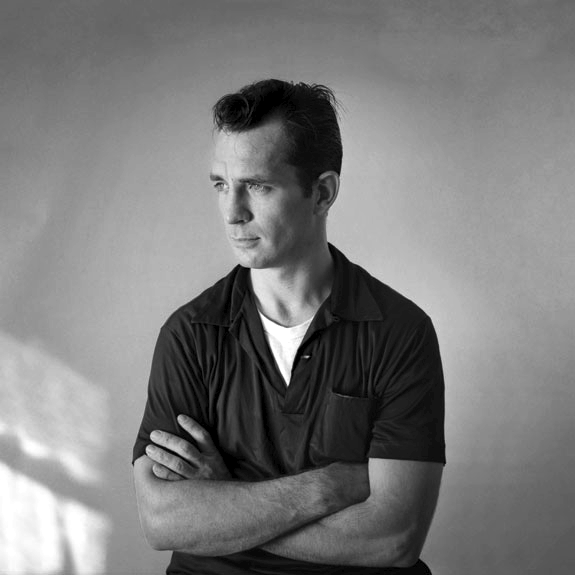
Upon The 50th Anniversary Of The Death Of "King OF The Beats" Jack Kerouac- The Fire This Time With Kudos To James Baldwin-
By Lance Lawrence
Sometimes you just cannot win. Sometimes you just let it pass and other times as now anything less than incarceration, some black hole op, or the bastinado will not stop me from saying some words on a subject that I care about. Attentive readers of Growing Up Absurd In The 1950s or its sister publications where such material is something like syndicated know that I, and most of the older writers here and for that matter other publications who grew up in the 1950s have some relationship to “the Beats” to Jack Kerouac and the mad monk poet Allan Ginsberg although maybe not as familiar with the lesser lights stationed in North Beach, San Francisco and Greenwich Village, New York City and other sullen outposts. Guys like Gary Snyder, Phil Larkin, Gregory Corso, Mike Macklin, and maybe Diane Johnson although there were not nearly enough women recognized as part of that movement and only now are a few getting the notice they deserve. Know that although we were way too young or too interested in our generation’s salvation-rock and roll music-to be washed clean by the Beats that by some process of osmosis we picked up some of the ideas, words, be-bop, lust, gangster hep talk, that mainly through endless Saturday afternoon matiness though, homosexual slang, road terminology. Courtesy of Jack Kerouac and the crowd whether he accepted the honorific “King of the Beats” or like Bob Dylan dubbed by the mass media always looking for a hook “King of the Folkies” for the next generation, a title of the folkie-hippie counterculture from which he consciously abdicated as Jack had done going down Florida way with Mere, with mother to drink himself to death after writing that two million words he kept in notebooks in his flannelled shirt pockets. Jesus, imagine if he had, or Fitzgerald or Hemingway had, word processors to glide the way-we would still be reading their stuff first time through now and never get finished.
Personally, and I have the scars and restless writerly nights to prove it, I was very second-wave influenced by Kerouac and not only by his most famous book On The Road. When the time to learn how to fly on your own came and the house you grew up in and its denizens didn’t fit so well anymore. Maybe in the long haul though less than books like Big Sur which got me to Todo el Mundo just south of Big Sur and some wild escapades and near fatal escapes toked to the gills on weed or whatever came through the very open door. (And where one night after Jack passed I met Jan his daughter also a budding writer but just then hurt beyond belief that Jack never claimed her as his own.) Influences which have made it natural to recount some of those adventures in print of one sort or another. Natural as well this 50th anniversary year since Jack Kerouac’s death in 1969 to make a big deal out of that milestone. To write some fresh material as below or to republish some older material. And not just memories of Kerouac’s influence but what I called in one article the “assistant king of the beats” Allan Ginsberg’s as well.
That is where the sometimes you can’t win comes in and the have to “speak to the issue” rears its head as well. Recently both to acknowledge the 50th anniversary of Kerouac’s passing and to honor Allan Ginsberg as well I had an article Hard Rain’s A Going To Fall originally published in Poetry Today in 1997 republished in several publications under the title For Ti Jean Kerouac On The 50th Anniversary Of His Death And The “Assistant King Of The Beats” Allan Ginsberg-Hard Rain’s A Going To Fall With Kudos To Bob Dylan “King Of The Folkies."
In a new introduction to the piece I mentioned that in the interest of today’s endless pursue of transparency which in many cases covers up the real deal with a few fake pieces of fluff admitted that I knew Jack Kerouac’s daughter, always called by me and my crowd Jan, his now late daughter whom he never recognized for whatever cramped reason and which took its toll on her with an also early death, met out in Todo el Mundo south of Big Sur off the famous Pacific Coast Highway. Those were the fast and loose days when everybody wanted to be out somewhere around Big Sur and one day I happened to be in The Lost Way restaurant (now still open under another name serving wholesome food unlike the burgers and fries and beer that sustained us then) and somebody mentioned that Jack’s daughter, unacknowledged daughter as I said, Jan was sitting a few tables away having as I learned later from her just come from Pfeiffer Beach which played a role in a few of Jack’s books, especially Big Sur. One thing led to another and we wound up taking Jan with us to our digs (house) in Todo el Mundo several miles away.
That simple fact has now led in 2019 to some fool, a fool with a name very familiar in the age of the Internet of Anonymous, to assume without proof that Jan and I, or Jan and somebody in the house were having an affair, and most probably me. The only “proof” given, maybe asserted is better was that a guy by the name of Johnny Spain told him that he had been there at our house when Jan came tumbling in and that we had a party for about four days when booze, sex, and drugs flowed freely. I knew Johnny Spain back in those days so that part is real. He was on the run from the coppers for either drug possession or for assault I forget which since we had a few such characters come our way and since we were not fond of the coppers then, maybe not now either, we gave him shelter. Johnny probably saw many things as he imbibed in whatever was around the place, but he would not have seen me hanging with Jan. Simple reason: one Carol Riley forever known as Butterfly Swirl in those times when many of us, including me the Duke of Earl (yes from the 1950s hit single), were carrying monikers to reflect our new-found freedoms was slumming from her perfect wave boyfriend existence down in Carlsbad in the days before young women took to the surf themselves and had come north to see what was happening. Butterfly was very possessive which I didn’t mind but would have ditched me and/or has it out with Jan if we had been having an affair. End of story, well, not quite the end Butterfly returned to Carol and her perfect wave surfer before long after finding out “what was what.”
This is really where my real ire is hanging though. In that same introduction I mentioned that I also knew Allan Ginsberg in his Om-ish days long before he became a professor when we fired up more than one blunt (marijuana cigarette for those who are clueless or use another term for the stick) to see what we could see out in the D.C. National Mall and later Greenwich Village night. Like I said that piece which formed the basis for republication first appeared in Poetry Today shortly after Allan Ginsberg’s Father Death death and caused a great deal of confusion among the readers. I gave a few examples of what went awry in the responses. Some readers thought because I mentioned the word “cat” I was paying homage to T.S. Eliot generally recognized in pre-Beat times as the ultimate modernist poet. That reference actually referred to “hep cats” as in a slang expression from the 1940s and 1950s before Beat went into high gear not a cat. In any case there was no way the staid and high Victorian sensibilities Eliot would know anything about the bohemia of his day except maybe knowing some bonkers Bloomsbury cadre. One would be totally remiss to call him the max daddy of anything as I called Allan in my homage. Maybe “square” if that old term does not confuse anybody.
Some readers, and I really was scratching my head over this one since this was published in a poetry magazine for aficionados and not for some dinky survey freshman college English class, that because I mentioned the word “homosexual” and some jargon associated with that sexual orientation when everybody was “in the closet” except maybe Allan Ginsburg thought I was referring to W.H. Auden. Jesus, Auden, a great poet no question if not a brave one slinking off to America when things got too hot in his beloved England in September 1939 and a self-confessed homosexual in the days when that was dangerous to declare in late Victorian public morality England especially after what happened to Oscar Wilde when they pulled down the hammer was hardly the only homosexual possibility despite his game of claiming every good-looking guy for what he called the Homintern. Frankly I didn’t personally think anybody even read him anymore once the Beats be-bopped.
There were a few others who were presented as the person I was championing. James Lawson because some of his exploits were similar to the ones I described but those events were hardly rare in the burned over 1950s down in the mud of society. If anybody recalls Lawson is the guy who first used the word “beat” to describe the post-World War II malaise affecting the young who either didn’t serve in the war or who as a result of serving were not ready to go back to what Sam Lowell called for his Vietnam War “the real world.” His poetry though was good enough for Village jazz clubs and coffeehouses, the main hang-out venues for beats but hardly the epic stuff that would stir youth nation. Young nation which had had it with normalcy. The flight from downtrodden home life made worse by plodding square parents whose dreams for their off-spring were life-deadening civil servant jobs although admittedly a step up from the dregs down at the working poor base of society. Jack Weir because of some West Coast references, the usual suspects North Beach, Big Sur, Todo el Mundo (where Allan Ginsberg never went or never went while I was there hanging his hat in Big Sur a stop on the Greyhound bus line unlike Todo with Jack), Fillmore Street dreams and drugs, the inevitable Golden Gate reference. Jeffery Stein, the poet of the new age shtetl because of the dope and self-identification with the downtrodden and the caged inmates at the mental hospitals which he frequented more times than he liked to admit.
All wrong. That poet had a name an honored name Allan Ginsberg who howled in the night at the oddness and injustice of the world after saying Kaddish to his mother’s memory and not be confused with this bag of bones rough crowd readership who refused to learn from the silly bastard. This piece was, is for ALLAN GINSBERG who wrote for Carl Solomon in his hours of sorrow just before he went under the knife and I for him, for Allan the sad day when he went under the ground.
That all was twenty some years ago and while those readers responses were stone-cold crazy they at least had the virtue of ignorance since I did not mention the name Allan Ginsberg in the title nor in the piece. Frankly I did not think I had to do so. What, however, is to be made of readers in 2019 who I assume had read my introduction and its named poet in bold print who still believe that I am referring to some other poet, some of them pretty obscure and old school which makes me think these readers were maybe college freshman survey course takers. I won’t go through them all since unlike 1997 where people actually had to write and mail with proper postage whatever was on their minds today they can just flail away and done so many more responses showed up at my in-box.
Here is today’s list of scratching my head entries. What Sam Lowell a fellow writer here has seen it all in his forty plus years as a film critic calls trolls since they are tied to alternate facts and more importantly whatever they have on their minds, if that is what they have. Maybe they just don’t read introductions or are among the dwindling few who still take umbrage that someone would tout the virtues of a long-time known homosexual when everybody else has moved on, has bought into a very sensible idea that it is nobody else’s business who you love-and now wed. So a few of the rabid went along that line but rather than grab onto Ginsberg have assumed that I was writing about Walt Whitman, since I mentioned the grand civil war and the fate of boys and men including a semi-erotic paean to Abe Lincoln by Walt. Of course they got that wrong since Whitman’s ode to Lincoln Oh Captain, My Captain is one of the few truly chaste and un-coded poems he wrote. But that is a classic example of this troll contingent’s faking reality to suit some odd-ball political agenda from we should all run like hell.
It only got worse after Greg Green, site manager for the on-line publications here who in the old hard copy days would have been called the editor, started publishing some of the e-mails which only fueled the flames. Declared open season on reason until on advice of wise Sam Lowell mentioned above who chairs the Editorial Board that sits to clamp down on an editor’s more off-the-wall decisions told him to stop giving these lonely hearts a platform. To continue though a vague off-hand reference to the various Eggs off Long Island Sound got one F. Scott Fitzgerald the brass ring mainly so that Jay Gatsby could be extolled as the upwardly mobile paragon of American virtue for a new century (that is exactly what was said if you can believe that since in the unlamented Jazz Age except for the jazz Jay got himself shot and dumped in some coal bin.) A couple more to make my point since I suddenly realized that to even present these holy goofs, an expression learned at the feet of one Jack Kerouac who had I believe more talented types in mind, but the expression just popped out at me. Yeats, Yeats of all poets drew some fan-dom based on talk of Irish girls losing their virtues in sullen Cape Cod gin mills. How that goes with muse Maude Gonne escapes me. Finally, and at least this person had some literary sense he thought because I mentioned Time Square hipsters, drifters and grifters waking up in sullen midnight sweats looking for some savior not the Lord fixer man to get them well and ready to do an occasional soft-core armed robbery or jack-roll (I was impressed with the use of that term since nobody uses that expression for a very old trick of taking a slender club or maybe a roll of fisted quarters and bopping some drunk or old lady for their ready cash I was speaking of one Gregory Corso the bandit-poet. Sorry I was reaching for the big Howl and Kaddish master and beautiful lumpen dream Corso was a secondary player back in those long-gone daddy days. Enough. Lance Lawrence]
“Advertisements for Myself”-Introduction by Allan Jackson, a founding member of the American Left History publication back in 1974 when it was a hard copy journal and until 2017 site manager of the on-line edition.
[He’s back. Jack Kerouac, as described in the headline, “the king of the beats” and maybe the last true beat standing. That is the basis of this introduction by me as we commemorate the 50th anniversary of his untimely death at 47. But before we go down and dirty with the legendary writer I stand before you, the regular reader, and those who have not been around for a while to know that I was relieved of my site manage duties in 2017 in what amounted to a coup by the younger writers who resented the direction I was taking the publication in and replaced me with Greg Green who I had brought on board from American Film Gazette to run the day to day operations while I oversaw the whole operation and planned my retirement. Over the past year or so a million rumors have, had mostly now, swirled around this publication and the industry in general about what had happened, and I will get to that in a minute before dealing with Jack Kerouac’s role in the whole mess.
What you need to know first, if you don’t know already is that Greg Green took me back to do the introductions to an encore presentation of a long-term history of rock and roll series that I edited and essentially created after an unnamed older writer who had not been part of the project balled it all up, got catch flat-footed talking bullshit and other assorted nonsense since he knew nada, nada nunca and less, about the subject having been apparently asleep when the late Peter Markin “took us to school” that history. Since then Greg and I have had an “armed truce,” meaning I could contribute as here to introductions of some encore and some origin material as long as I didn’t go crazy, his term, for what he called so-called nostalgia stuff from the 1950s and 1960s and meaning as well that Greg will not go crazy, my term, and will refrain from his ill-advised attempt to reach a younger audience by “dumbing down” the publication with odd-ball comic book character reviews of films, graphic novels and strange musical interludes. Fair is fair.
What I need to mention, alluded to above, is those rumors that ran amok while I was on the ropes, when I had lost that decisive vote of no confidence by one sullen vote. People here, and my enemies in the industry as well, seeing a wounded Allan Jackson went for the kill, went for the jugular that the seedy always thrive on and began a raggedy-ass trail of noise you would not believe. In the interest of elementary hygiene, and to frankly clear the air, a little, since there will always be those who have evil, and worse in their hearts when “the mighty have fallen.” Kick when somebody is down their main interest in life.
I won’t go through the horrible rumors like I was panhandling down in Washington, D.C., I was homeless in Olde Saco, Maine (how could that be when old friend and writer here Josh Breslin lives there and would have provided alms to me so at least get an approximation of the facts before spinning the wild woolly tale), I had become a male prostitute in New York City (presumably after forces here and in that city hostile to me put in the fatal “hard to work with” tag on me ruining any chances on the East Coast of getting work, getting enough dough to keep the wolves from my door, my three ex-wives and that bevy of kids, nice kids, who nevertheless were sucking me dry with alimony and college tuitions), writing press releases under the name Leonard Bloom for a Madison Avenue ad agency. On a lesser scale of disbelief I had taken a job as a ticket-taker in a multi-plex in Nashua, New Hampshire, had been a line dishwasher at the Ritz in Philadelphia when they needed day labor for parties and convention banquets, had been kicking kids out of their newspaper routes and taking that task on myself, and to finish off although I have not given a complete rundown rummaging through trash barrels looking for bottles with deposits. Christ.
Needless to say, how does one actually answer such idiocies, and why. A couple of others stick out about me and some surfer girl out in Carlsbad in California who I was pimping while getting my sack time with her and this one hurt because it hurt a dear friend and former “hippie girl” lover of mine, Madame La Rue, back in the day that I was running a whorehouse with her in Luna Bay for rich Asian businessmen with a taste for kinky stuff. I did stop off there and Madame does run a high-end brothel in Luna Bay but I had nothing to do with it. The reason Madame was hurt was because I had lent her the money to buy the place when it was a rundown hotel and built it up from there with periodic additional funds from me so she could not understand why my act of kindness would create such degenerate noise from my enemies who were clueless about the relationship between us.
I will, must deal with two big lies which also center of my reluctant journey west (caused remember by that smear campaign which ruined by job opportunities in the East, particularly New York City). The first which is really unbelievable on its face is that I hightailed it directly to Utah, to Salt Lake City, when I busted out in NYC looking for one Mitt Romney, “Mr. Flip-Flop,” former Governor of Massachusetts, Presidential candidate against Barack Obama then planning on running for U.S. Senator from Utah (now successful taking office in January) to “get well.” The premise for this big lie was supposedly that since I have skewered the guy while he was governor and running for president with stuff like the Mormon fetish for white underwear and the old time polygamy of his great-grand-father who had five wives (and who showed great executive skill I think in keeping the peace in that extended family situation). The unbelievable part is that those Mormon folks, who have long memories and have pitchforks at the ready to rumble with the damned, would let a sinner like me, a non-Mormon for one thing anywhere the Romney press operation. Christ, I must be some part latter day saint since I barely got out of that damn state alive if the real truth were known after I applied for a job with the Salt Lake Sentinel not knowing the rag was totally linked to the Mormons. Pitchforks, indeed.
The biggest lie though is the one that had me as the M.C. in complete “drag” as Elsa Maxwell at the “notorious” KitKat Club in San Francisco which has been run for about the past thirty years or so by Miss Judy Garland, at one time and maybe still is in some quarters the “drag queen” Queen of that city. This will show you how ignorant, or blinded by hate, some people are. Miss Judy Garland is none other than one of our old corner boys from the Acre section of North Adamsville, Timmy Riley. Timmy who like the rest of us on the corner used to “fag bait” and beat up anybody, any guy who seemed effeminate, at what cost to Timmy’s real feelings we will never really know although he was always the leader in the gay-bashing orgy. Finally between his own feeling and Stonewall in New York in 1969 which did a great deal to make gays, with or with the drag queen orientation, a little less timid Timmy fled the Acre (and his hateful family and friends) to go to friendlier Frisco. He was in deep personal financial trouble before I was able to arrange some loans from myself and some of his other old corner boys (a few still hate Timmy for what he has become, his true self) to buy the El Lobo Club, his first drag queen club, and when that went under, the now thriving tourist trap KitKat Club. So yes, yes, indeed, I stayed with my old friend at his place and that was that. Nothing more than I had done many times before while I ran the publication.
But enough of this tiresome business because I want to introduce this series dedicated to the memory of Jack Kerouac who had a lot of influence on me for a long time, mostly after he died in 1969
******
All roads about Jack Kerouac, about who was the king of the beats, about what were the “beats” lead back to the late Pete Markin who, one way or another, taught the working poor Acre neighborhood of North Adamsville corner boys what was up with that movement. Funny, because we young guys were a serious generation removed from that scene, really our fathers’ contemporaries and you know how far removed fathers were from kids in those days especially among the working poor trying to avoid going “under water” and not just about mortgages but food on tables and clothing on backs, were children of rock and roll, not jazz, the Beat musical medium, and later the core of the “Generation of ‘68” which took off, at least partially, with the “hippie” scene, where the dying embers of the beat scene left off. Those dying embers exactly the way to put it since most of our knowledge or interest came from the stereotypes-beards before beards were cool and before grandfather times -for guys, okay, berets, black and beaten down looks. Ditto on black for the gals, including black nylons which no Acre girl would have dreamed of wearing, not in the early 1960s anyway. Our “model” beatnik really came, as we were also children of television, from sitcom stories like Dobie Gillis with stick character Maynard G. Krebs standing in for all be-bop-dom.
So it is easy to see where except to ostracize, meaning harass, maybe beat up if that was our wont that day, we would have passed by the “beat” scene, passed by Jack Kerouac too without the good offices, not a term we would have used then, if not for nerdish, goof, wild and woolly in the idea world Markin (always called Scribe for obvious reasons but we will keep with Markin here). He was the guy who always looked for some secret meaning to the universe, that certain breezes, winds, metaphorical breezes and winds, were going to turn things around, were going to make the world a place where Markin could thrive. Markin was the one who first read Kerouac’s breakthrough travelogue of a different sort novel On The Road.
Now Markin was the kind of guy, and sometimes we let him go on and sometimes stopped him in his tracks, who when he was on to something would bear down on us to pay attention. Christ some weekend nights he would read passages from the book like it was the Bible (which it turned out to be in a way later) when all we basically cared about is which girls were going to show up at our hang-out spot, the well-known Tonio’s Pizza Parlor and play the jukebox and we would go from there. Most of us, including me, kind of yawned at the whole thing even when Markin made a big deal that Kerouac was a working-class guy like us from up in Lowell cut right along the Merrimac River.
The whole thing seemed way too exotic and moreover there was too much homosexual stuff implied which in our strict Irish-Italian Catholic neighborhood did not go down well at all -made us dismiss the whole thing and want to if I recall correctly “beat up” that Allan Ginsberg character. Even Dean Moriarty, the Neal Cassidy character, didn’t move us since although we were as larcenous and “clip” crazy as any character in that book we kind of took Dean as a tough car crazy guide like Sonny Jones from our neighborhood who was nothing but a hood in Red Riley’s bad ass motorcycle gang which hung out at Harry’s Variety Store. We avoided him and more so Red like the plague. Both wound up dead, very dead, in separate attempted armed robberies in broad daylight if you can believe that.
Our first run through of our experiences with Kerouac and through him the beat movement was therefore kind of marginal-even as Markin touted for a while that whole scene he agreed with us that jazz-be-bop jazz always associated with the beat-ness was not our music, was grating to our rock and roll-refined and defined ears.
Here is where Markin was always on to something though, always had some idea percolating in his head. There was a point where he, we as well I think, got tired of rock and roll, a time when it had run out of steam for a while and along with his crazy home life which really was bad drove him to go to Harvard Square and check out what he had heard was a lot of stuff going on. Harvard Square was, is still to the extent that any have survived like Club Passim, the home of the coffeehouse. A place that kind of went with the times first as the extension of the beat generation hang-out where poetry and jazz would be read and played. But in Markin’s time, our time there was the beginnings of a switch because when he went to the old long gone Café Nana he heard folk music and not jazz, although some poetry was still being read. I remember Markin telling me how he figured the change when I think it was the late Dave Von Ronk performed at some club and mentioned that when he started out in the mid-1950s in the heat of beat time folk singers were hired at the coffeehouses in Greenwich Village to “clear the house” for the next set of poetry performers but that now folk-singing eclipsed poetry in the clubs. Markin loved it, loved the whole scene of which he was an early devotee. Me, well, strangely considering where I wound up and what I did as a career, I always, still do, hated the music. Thought it was too whinny and boring. Enough said though.
Let’s fast forward to see where Kerouac really affected us in a way that when Markin was spouting forth early on we could not appreciate. As Markin sensed in his own otherworldly way a new breeze was coming down the cultural highway, a breeze push forward by the beats I will confess, by the folk music scene, by the search for roots which the previous generation, our parents’ generation, spent their adulthoods attempting to banish and become part of the great American vanilla melt, and by a struggling desire to question everything that had come before, had been part of what we had had no say in creating, weren’t even asked about. Heady stuff and Markin before he made a very bad decision to quit college in his sophomore years and “find himself,” my expression not his, spent many of his waking hours figuring out how to make his world a place where he could thrive.
That is when one night, this is when we were well out of high school, some of us corner boys had gone our separate ways and those who remained in contact with the brethren spent less time hanging out at Tonio’s, Markin once again pulled out On The Road, pulled out Jack’s exotic travelogue. The difference is we were all ears then and some of us after that night brought our own copies or went to the Thomas Murphy Public Library and took out the book. This was the spring of the historic year 1967 when the first buds of the Summer of Love which wracked San Francisco and the Bay Area to its core and once Markin started working on us, started to make us see his vision of what he would later called, culling from Tennyson if I am not mistaken a “newer world.” Pulling us all in his train, even as with Bart Webber and if I recall Si Lannon a little, he had to pull out all the stops to have them, us, join him in the Summer of Love experience.
Maybe the whole thing with Jack Kerouac was a pipe dream I remember reading about him in the Literary Gazette when he was down in Florida living with his ancient mother and he was seriously critical of the “hippies,” kind of banged on his own beat roots explaining that he was talking about something almost Catholic beatitude spiritual and not personal freedom, of the road or anything else. A lot of guys and not just writing junkies looking for some way to alleviate their inner pains have repudiated their pasts but all I know is that when Jack was king of the hill, when he spoke to us those were the days all roads to Kerouac were led by Markin. Got it. Allan Jackson
*************
In Honor Of Jean Bon Kerouac On The 60th Anniversary Of “On The Road” (1957)
By Book Critic Zack James
To be honest I know about On The Road Jack Kerouac’s epic tale of his generation’s search for something, maybe the truth, maybe just for kicks, for stuff, important stuff that had happened down in the base of society where nobody in authority was looking or some such happening strictly second-hand. His generation’s search looking for a name, found what he, or someone associated with him, maybe the bandit poet Gregory Corso, king of the mean New York streets, mean, very mean indeed in a junkie-hang-out world around Times Square when that place was up to its neck in flea-bit hotels, all-night Joe and Nemo’s and the trail of the “fixer” man on every corner, con men coming out your ass too, called the “beat” generation. (Yes, I know that the actual term “beat” was first used by Kerouac writer friend John Clemmon Holmes in an article in some arcane journal but the “feel” had to have come from a less academic source so I will crown the bandit prince Corso as genesis)
Beat, beat of the jazzed up drum line backing some sax player searching for the high white note, what somebody told me, maybe my oldest brother Alex who was washed clean in the Summer of Love, 1967 but must have known the edges of Jack’s time since he was in high school when real beat exploded on the scene in Jack-filled 1957, they called “blowing to the China seas” out in West Coast jazz and blues circles, that high white note he heard achieved one skinny night by famed sax man Sonny Johns, dead beat, run out on money, women, life, leaving, and this is important no forwarding address for the desolate repo man to hang onto, dread beat, nine to five, 24/7/365 that you will get caught back up in the spire wind up like your freaking staid, stay at home parents, beaten down, ground down like dust puffed away just for being, hell, let’s just call it being, beatified beat like saintly and all Jack’s kid stuff high holy Catholic incense and a story goes with it about a young man caught up in a dream, like there were not ten thousand other religions in the world to feast on- you can take your pick of the meanings, beat time meanings. Hell, join the club they all did, the guys, and it was mostly guys who hung out on the poet princely mean streets of New York, Chi town, Mecca beckoning North Beach in Frisco town cadging twenty-five cents a night flea-bag sleeps (and the fleas were real no time for metaphor down in the bowels where the cowboy junkies drowse in endless sleeps, raggedy winos toothless suck dry the dregs and hipster con men prey on whoever floats down), half stirred left on corner diners’ coffees and groundling cigarette stubs when the Bull Durham ran out).
I was too young to have had anything but a vague passing reference to the thing, to that “beat” thing since I was probably just pulling out of diapers then, maybe a shade bit older but not much. I got my fill, my brim fill later through my oldest brother Alex. Alex, and his crowd, more about that in a minute, but even he was only washed clean by the “beat” experiment at a very low level, mostly through reading the book (need I say the book was On The Road) and having his mandatory two years of living on the road around the time of the Summer of Love, 1967 an event whose 50th anniversary is being commemorated this year as well and so very appropriate to mention since there were a million threads, fibers, connections between “beat” and “hippie” despite dour grandpa Jack’s attempts to trash those connection when the acolytes and bandit hangers-on came calling looking for the “word.” So even Alex and his crowd were really too young to have been washed by the beat wave that crashed the continent toward the end of the 1950s on the wings of Allan Ginsburg’s Howl and Jack’s travel book of a different kind (not found on the AAA, Traveler’s Aid, Youth Hostel brochure circuit if you please although Jack and the crowd, my brother and his crowd later would use such services when up against it in let’s say a place like Winnemucca in the Nevadas or Neola in the heartlands).
Literary stuff for sure but the kind of stuff that moves generations, or I like to think the best parts of those cohorts. These were the creation documents the latter of which would drive Alex west before he finally settled down to his career life as a high-road lawyer (and to my sorrow and anger never looked back which has caused more riffs and bad words than I want to yell about here).
Of course anytime you talk about books and poetry and then add my brother’s Alex name into the mix that automatically brings up memories of another name, the name of the late Peter Paul Markin. Markin, for whom Alex and the rest of the North Adamsville corner boys, Frankie, Jack, Jimmy, Si, Josh (he a separate story from up in Olde Saco, Maine and so only an honorary corner boy after hitching up with the Scribe out on a Russian Hill dope-filled park), Bart, and a few others still alive recently had me put together a tribute book for in connection with that Summer of Love, 1967, their birthright event, just mentioned. Markin was the vanguard guy, the volunteer odd-ball unkempt mad monk seeker, what did Jack call his generation’s such, oh yeah, holy goofs, who got several of them off their asses and out to the West Coast to see what there was to see. To see some stuff that Markin had been speaking of for a number of years before 1967 (and which nobody in the crowd paid any attention to, or dismissed out of hand, what they called “could give a rat’s ass” about in the local jargon which I also inherited in those cold, hungry bleak 1950s cultural days in America) and which can be indirectly attributed to the activities of Jack, Allen Ginsburg, Gregory Corso, that aforementioned bandit poet who ran wild on the mean streets among the hustlers, conmen and whores of the major towns of the continent, William Burroughs, the Harvard-trained junkie and a bunch of other guys who took a very different route for our parents who were of the same generation as them but of a very different world.
But it was above all Jack’s book, Jack’s travel adventure book which had caused a big splash in 1957(after an incredible publishing travail since the story line actually related to events in the late 1940s and which would cause Jack no end of trauma when the kids showed up at his door looking to hitch a ride on the motherlode star, and had ripple effects into the early 1960s and even now certain “hip” kids acknowledge the power of attraction that book had for their own developments, especially that living simple, fast and hard part). Made the young, some of them anyway, like I say I think the best part, have to spend some time thinking through the path of life ahead by hitting the vagrant dusty sweaty road. Maybe not hitchhiking, maybe not going high speed high through the ocean, plains, mountain, desert night but staying unsettled for a while anyway.
Like I said above Alex was out on the road two years and other guys, other corner boys for whatever else you wanted to call them that was their niche back in those days and were recognized as such in the town not always to their benefit, from a few months to a few years. Markin started first back in the spring of 1967 but was interrupted by his fateful induction into the Army and service, if you can call it that, in Vietnam and then several more years upon his return before his untimely and semi-tragic end down some dusty Jack-strewn road in Mexico cocaine deal blues. With maybe this difference from today’s young who are seeking alternative roads away from what is frankly bourgeois society and was when Jack wrote although nobody except commies and pinkos called it that for fear of being tarred with those brushes. Alex, Frankie Riley the acknowledged leader, Jack Callahan and the rest, Markin included, were strictly “from hunger” working class kids who when they hung around Tonio Pizza Parlor were as likely to be thinking up ways to grab money fast any way they could or of getting into some hot chick’s pants any way they could as anything else. Down at the base of society when you don’t have enough of life’s goods or have to struggle too much to get even that little bit “from hunger” takes a big toll on your life. I can testify to that part because Alex was not the only one in the James family to go toe to toe with the law back then when the coppers were just waiting for corner boy capers to explode any Friday or Saturday night, it was a close thing for all us boys as it had been with Jack when all is said and done. But back then dough and sex after all was what was what for corner boys, maybe now too although you don’t see many guys hanging on forlorn Friday night corners anymore.
What made this tribe different, the Tonio Pizza Parlor corner boys, was mad monk Markin. Markin called by Frankie Riley “Scribe” from the time he came to North Adamsville from across town in junior high school and that stuck all through high school. The name stuck because although Markin was as larcenous and lovesick as the rest of them he was also crazy for books and poetry. Christ according to Alex, Markin was the guy who planned most of the “midnight creeps” they called then. Although nobody in their right minds would have the inept Markin actually execute the plan. That was for smooth as silk Frankie now also like Alex a high-road lawyer to lead. That operational sense was why Frankie was the leader then (and maybe why he was a locally famous lawyer later who you definitely did not want to be on the other side against him). Markin was also the guy who all the girls for some strange reason would confide in and thus was the source of intelligence about who was who in the social pecking order, in other words, who was available, sexually or otherwise. That sexually much more important than otherwise. See Markin always had about ten billion facts running around his head in case anybody, boy or girl, asked him about anything so he was ready to do battle, for or against take your pick.
The books and the poetry is where Jack Kerouac and On The Road come into the corner boy life of the Tonio’s Pizza Parlor life. Markin was something like an antenna for anything that seemed like it might help create a jailbreak, help them get out from under. Later he would be the guy who introduced some of the guys to folk music when that was a big thing. (Alex never bought into that genre, still doesn’t, despite Markin’s desperate pleas for him to check it out. Hated whinny Bob Dylan above all else.) Others too like Kerouac’s friend Allen Ginsburg and his wooly homo poem Howl from 1956 which Markin would read sections out loud from on lowdown dough-less, girl-less Friday nights. And drive the strictly hetero guys crazy when he insisted that they read the poem, read what he called a new breeze was coming down the road. They could, using that term from the times again, have given a rat’s ass about some fucking homo faggot poem from some whacko Jewish guy who belonged in a mental hospital. (That is a direct quote from Frankie Riley at the time via my brother Alex’s memory bank.)
Markin flipped out when he found out that Kerouac had grown up in Lowell, a working class town very much like North Adamsville, and that he had broken out of the mold that had been set for him and gave the world some grand literature and something to spark the imagination of guys down at the base of society like his crowd with little chance of grabbing the brass ring. So Markin force-marched the crowd to read the book, especially putting pressure on my brother who was his closest friend then. Alex read it, read it several times and left the dog- eared copy around which I picked up one day when I was having one of my high school summertime blues. Read it through without stopping almost like Jack wrote the final version of the thing on a damn newspaper scroll in about three weeks. So it was through the Scribe via Alex that I got the Kerouac bug. And now on the 60th anniversary I am passing on the bug to you.
Book Review
Atop The Underwood: Early Stories And Other Writings, Jack Kerouac, edited by Paul Marion, Viking Press, New York, 1999
For starters, for the benefit of the younger set, I should explain the word Underwood used in the title of this compilation refers to a typewriter, an ancient tool used by writers and others in pre-historical times (before the digital age) in order to more quickly tell what they had to say to the world. How primitive, right? Except, typewriter or word processor, a writer is still obliged to have a plan (or plans) to tell his woes to the world. Now I have spent considerable time in this space reviewing many of the major works of the “beat writer Jack Kerouac, including masterpieces of his generation (and my later one) like “On The Road”, “Dharma Bums”, and “Desolation Angels”. And rightly so. Now we come to a compilation of his early writings, thoughts, half –thoughts, sketches for thoughts and a few poems thrown in. In short, we are now in the stage of interest to the aficionado.
The editor of the compilation, Paul Marion, a younger fellow Lowell compatriot and writer of Kerouac’s has what can only be described as a labor of love in organizing this work. Jack Kerouac may not have always written material that was unalloyed gold but he wrote a ton of stories and ideas for stories starting from his youth in junior high school in Lowell. Marion has separated out the best or otherwise most representative of the work from about 1936 to 1943 (just before the decisive meetings with the New York crowd, Allen Ginsberg, William Burroughs, Lucien Carr, etc., with whom he would make literary history as the core of the “beat” generation writers). For those who want to trace Kerouac’s evolution as a writer, what animated him at any given time, how he created that spontaneous writing form that he became famous for, or those who just want to be entertained by stories form the old days of the 1930s and 1940s this is good stuff to run through. For the rest us you NEED to read those three novels listed in the first paragraph, and you had better get to it.